Whereabouts by Jhumpa Lahiri

In Whereabouts, we are introduced to the narrator, a single woman in her mid-forties who is a writer and professor, an astute observer of life around her. With each brief chapter, she shares with us a glimpse of this life, a series of sometimes ordinary, sometimes unsettling experiences that range from a visit to the shore for a friend’s baby’s christening to a trip to the local stationary store that has, to her acute disappointment, suddenly been repurposed as a luggage store. Woven through these stories is an undertone of a guilty resentment toward her aging mother, for feeling criticized all her life for being who she is and for being who she is not.

There are many fascinating aspects of the way Lahiri has chosen to approach the writing of this novel. Leaving her narrator without a name, for example,  universalizes her character – potentially makes her the everywoman of her age and circumstance. She may speak for the middle-aged woman, mulling on her past while contemplating her future.

She is admired by the young and by her peers for her uncluttered independence, but yet she simmers with inner rage. Her mother who is now small and frail looms large and loud in her memory, the ancient critical and jarring comments from her past playing on repeat in her mind, as if they are being uttered today still. It is impossible to forgive but so hard to live with this resentment too.

She participates in groups of friend gatherings, but reports on them as if from afar. She is with them but not of them. It feels as if her rage prevents her from truly connecting to anyone beyond the surface and she cannot overcome this. There is contemplation without real insight, or so it feels. Does this come from the narrator herself or from the fact that she speaks to us through vignettes as opposed to telling us a linear story? Is this disconnect intentional?

And so the telling is as unique as the character herself, which makes for an original, contemplative, and, apparently, Pulitzer-Prize-winning read.

I’m so curious to hear what others think about this one!
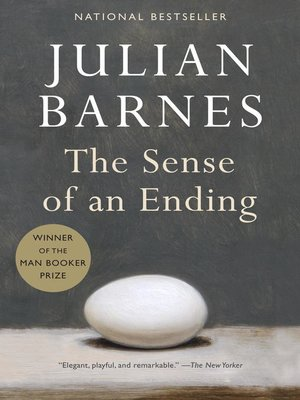
The Sense of an Ending by Julian Barnes

As Tony Webster reflects back on his life, he begins his account with his early days in high school, describing his friendship with a small group of lads who considered themselves cynically intellectual. When a newcomer, Adrian, joins their group, they realize that he is truly the superior of them all, and they subtly vie for his approval, though each would deny it fully. What distracts them from their everyday rhythm, however, is the news of a suicide by a fellow classmate. This, they feel at the time, is a truly brave philosophical comment on life itself. What Tony doesn’t realize is how he will come to understand this very differently as he ages, as he gains understanding and experience. But will he ever gain true wisdom?

This is one book that I may actually go back and reread at some point, in order to fully appreciate what it has to teach me. There is so much to unpack here in this short yet deceivingly rambling novel. Tony mulls and overthinks and constantly questions his past, sharing and reexamining details, pondering the reliability of memory itself. We’re not clear why it all bothers him so, as it seems all to be benign enough, so much the typical male adolescent bravado. Even his relationship during college with Veronica, while hard to understand given her cold and disparaging manner, we attribute to his naivety and we applaud him for moving on from her when he finally does. We come to know his overly sensitive and analytic nature, his coming to terms with his own mediocrity, and what he sees as his inability to effect change in others.

What we – and Tony – don’t see until it’s very late is what we should all know: our words impact others always. Our relationships and how we conduct them have consequences always and our actions have a ripple effect much in the “butterfly effect’ analogy. We may not know what they are now, we may never know what they are. But they are there. I believe this is the message of this novel, delivered in its final twisty pages.

The writing here is a bit ponderous but it’s as if you’re walking along the beach and if you’re looking, you find the shells and pearls of wisdom if your eyes are open to them. It feels as if each word is intentional, each fact placed where we are meant to find it. In this way it builds so that we are as flummoxed as Tony, then, by the ending.

Perhaps not a MUST READ, but I highly recommend this to those of you who are more philosophically inclined. Also to those of you who enjoy a surprise!

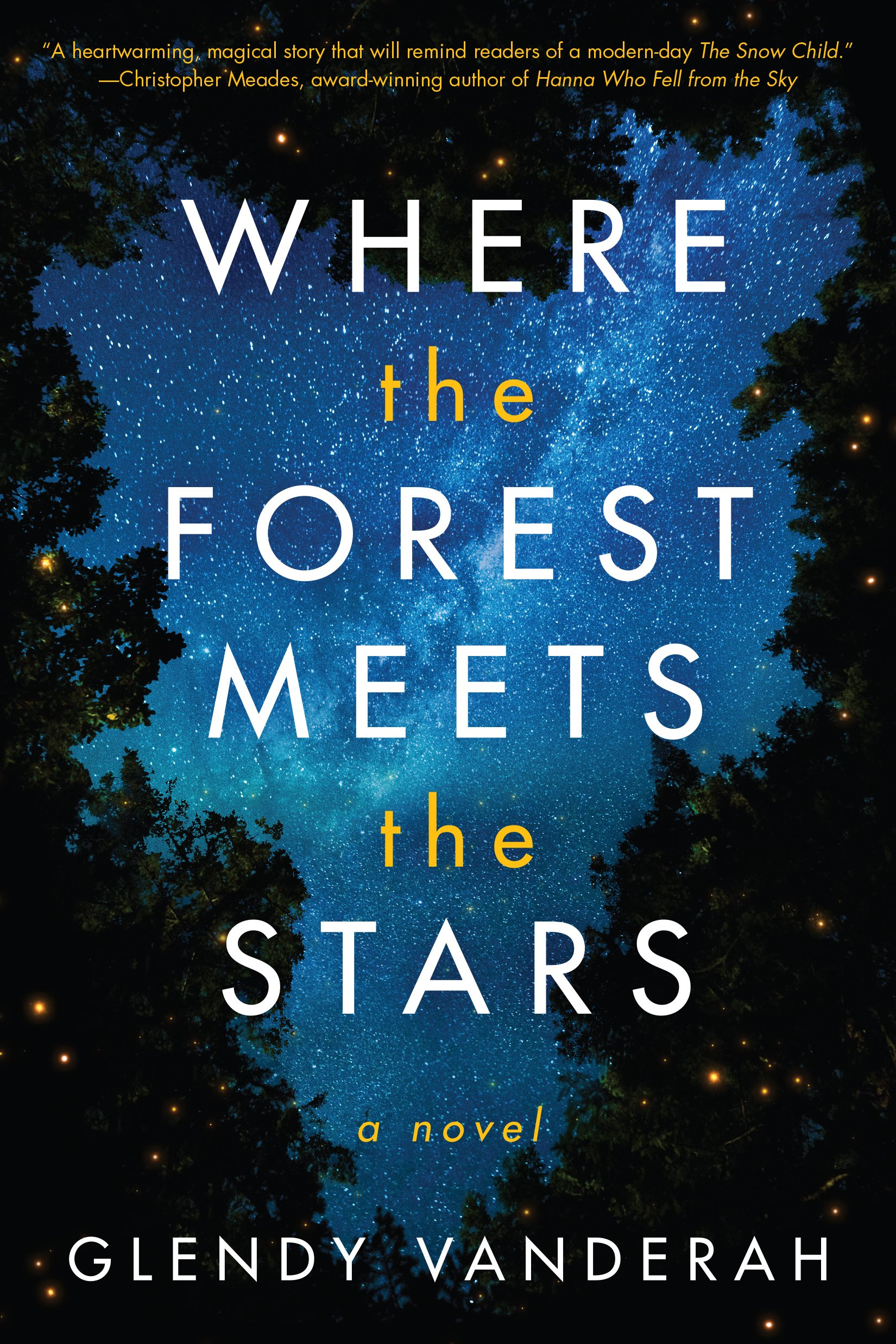
Where the Forest Meets the Stars by Glendy Vanderah

Jo is exhausted from her day of moving from nest to nest, from observing the details of nature that will add to her data for her dissertation research. All she wants to do is get some dinner prepared on the grill so that she can eat quickly and get some sleep before the cycle starts again tomorrow. Suddenly she sees a small, thin, unwashed, shoeless girl in pajamas step out from amidst the trees, claiming to be an alien who has newly inhabited the body of a human girl named Ursa Major. As reluctant as Jo is to feed her in, she also cannot abandon her, especially because she appears to have already been. And so begins the magical and starlit journey the two begin together, each bringing hope and light into each other’s lives, albeit in somewhat unpredictable ways.

This is a sweet and engaging novel that you’ll need to, in your mind, suspend reality somewhat first in order to go along for the pleasant ride. I guess what I mean is that it is just a bit too saccharine sweet for my taste. For example, while each character has a complicated past giving them some depth, they seem to overcome their personality flaws almost miraculously just by having been brought together by their circumstance. Gabe, the neighbor who has, for all his life, never been able to overcome his social anxiety to make any friends, suddenly becomes a graceful and articulate partner to Jo in her caring for Ursa. Likewise, later when more of Gabe’s story is revealed, and we learn the root of the tension between Gabe and his sister, we learn that just one conversation between them resolves years of built-up conflict and resentment. Many things are just too smooth, just too perfect. And don’t get me started about the ending…

Nevertheless, it is a decent story with likable characters, even with some suspense at points.  And if you like endings that are wrapped up and tidied, this one will be delivered to you absolutely perfectly – even with a bow on top! 


The Song of Achilles by Madeline Miller

While still a boy, Patroclus is brought by his father, a king, to compete for the marriage of Helen, considered the most beautiful woman in all of Greece. They bring gifts, and the bashful boy is expected to demonstrate his wit and intelligence measured against the famous princes and demigods around him. While his father speaks up for him, his unabashed disdain for the boy is apparent. It is no surprise when Helen chooses another. Upon their return home, when disaster strikes, Patroclus is not surprised when he is sent away from his home, forced to live in exile, with a king known to take in other exiles like himself. While he does what he can to avoid attention, he inadvertently catches the eye of the son of the king, none other than Achilles, a demigod himself. Their friendship grows and leads to adventures that Patroclus can not even imagine.

Not being so well-versed in Greek mythology myself (having read the Odyssey in high school and little beyond that- not generally a huge fan) I can’t comment with much authority on how this compares to the original . What I can say is that while some of the themes of vanity and hubris are well-preserved, this was certainly a modernized version of the events told in those ancient texts.

What is done so subtly and beautifully, I believe, is while Patroclus tries to uplift the Achilles heroic narrative, he (or the author), in fact, reveals himself as the true hero: the one who maintains humility, kindness, and true loyalty even in the midst of what becomes chaos. While he always folds himself into the background, always shining the light toward Achilles – who accepts this with no hesitation, as his position and stature would dictate – Patroclus meanwhile bolsters, soothes, even guides Achilles toward the proper direction. Few see him for who he really is. Some even hate him – and none more than Achilles’ mother. (Could it be that she hates him because she sees him for who he really is?)

So while I did read The Odyssey quite a long time ago, I did enjoy this adventure much more than that one! I’m curious if you out there in cyberspace did as well! I’d love to hear your opinions!