This is my online book club… Please let me know what you think about the books I’m reviewing. I’d love to hear your opinion!
I’m also always looking for the next book to read. Please help me compile a list of great books with your suggestions right here in the comments for this post…
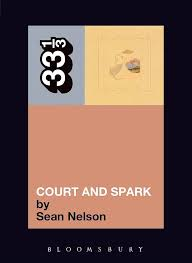
This tiny book, one of a series, each of which strives to analyze a chosen music album, provides the author’s insight into Joni Mitchell’s Court and Spark. One of my favorite Joni Mitchell albums, this one is apparently the author’s favorite of hers as well. Nelson begins with some context of how this album might have been conceived, how it logically grows and expands from her former works. He then delves into each of the songs themselves, primarily focusing on the lyrics and how they reflect a message of confusion and frustration over relationships, loneliness. And then he ends with his perspective on her works that follow.
The initial chapters are frustrating. The author is meant to be speaking about Court and Spark, yet his analysis wanders from album to album, giving the feeling that he is circling around the album but doesn’t know quite where to land. He writes in detail about “related” songs from other albums, which might have been acceptable had they been quick references rather than the diatribes they amounted to. It was challenging to follow, to be honest.
Nevertheless, once he settled in to the actual album, focusing on each individual song on this album, his thoughts were interesting and his ideas were expressed more coherently. He provides evidence for his opinion that there is a unifying theme throughout the album, and while I disagree with him on which songs are best/worst, I can appreciate his analysis of the poetry found here. I would have liked, however, to hear more about how the music supports the lyrics so aptly, which he touches upon sometimes, but avoids often.
And while I am to this day a huge Joni Mitchell fan, I do agree with the author that after Court and Spark and Miles of Aisles, her music spiraled into a jazz/fusion/dissonance that while musically more sophisticated is just less appealing, less fun to listen to (at least to both the author and myself). And isn’t that what music should be about? Joy?
On the whole, I am grateful to have read this book. I suggest investigating these easy, short, monographs if you’re interested in learning more about the vinyl you may still own – or wish you did.
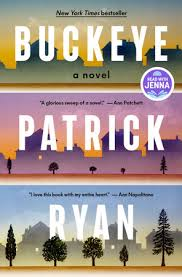
One might imagine that in the small town of Bonhomie, OH, it would be hard to keep secrets – even in the early 1940’s, as the town is distracted by the second World War. Nevertheless, Cal and Becky Jenkins, are drifting apart because of differences and broken confidences, and secrets are fomenting between them. Likewise, Felix and Margaret Salt, separated by Felix’s service overseas, are also harboring secrets of their own. How their secrets collide is at the heart of this drama and the tension arises from whether or not they will reveal their respective truths.
There is quite a bit of hype surrounding this novel, as it is on many lists of best books of 2025. I have to say that I am surprised by this, as I found it disappointing. While there are good ideas embedded here, with quite a bit of interesting potential, I found the writing to be flat, the characters not well-developed, and the whole story written almost as if it were a chore to be gotten over with. Dialogue, if present, is completely trite, with so little passing between characters that I wonder why they bother with each other (I wouldn’t). Even when there are supposedly “tender” moments, they are so bland they could pass completely under the radar.
The only character with any color at all, in fact, is Cal’s father, Everett, who is considered a bit wacky by everyone else. He has survived serving in the first World War, and is thrilled that Cal cannot serve in the second because of his leg length discrepancy (something Cal is ashamed of). He has had multiple life traumas and copes by drinking, hoarding, and essentially living as a loner. But he regularly types out letters to the President of the United States that actually articulate (perhaps not in the prettiest language) more sense than most of his more “esteemed” peers, voicing his anti-war, anti-prejudice, and pro-democracy values.
I know others liked this one more than I did – I would love to know why/how. If you’re willing to comment, I’d love to hear your opinion! In the meantime, I am stumped.
As Cora pushes the pram with her newborn son to the Registry Office, having been informed by her husband that registering the baby’s name is today’s mission, she discusses this concept of name choice with her daughter, Maia. Her husband, Gordon, has chosen the name Gordon, because, after all, his father was Gordon and therefore this was certainly going to be the boy’s name. Cora, has secretly harbored the wish to name him Julian, and Maia fancies the name Bear. As we read on, we learn how this one decision can potentially impact what happens not only to this baby, but to their whole family.
This is a brilliant idea exquisitely executed. We actually follow the family down the path of each possibility: one name foisted on the baby by the manipulative and frighteningly abusive father; one name chosen by the mother in the hopes that it will liberate him from the fate she fears for him; and the third an imaginative and spirited name chosen by his sister. There are consequences for each choice, which we learn as we follow each story over time. One might think this would become confusing, but the author does a magnificent job of keeping the details of each plot line so illuminated in our minds that each remains separate and equally intriguing.
The novel also highlights how domestic abuse affects not only the victim, but all those around her. Children, even if not directly physically hurt themselves, become victims just being in the home where violence is occurring. Their lives are directly impacted by the examples that are set for them, their personalities formed around this. In addition, the depiction of the father is incredibly thoughtful and realistic. As eerily calculating and evil as the father is in the home, particularly over Cora, he is equally charming and charismatic toward everyone else. This compounds Cora’s entrapment, as no one can imagine that he is capable of cruelty.
There is so much to unpack in this novel – but I will leave the rest to you. I cannot recommend this book enough – and yes, we have another MUST READ here.
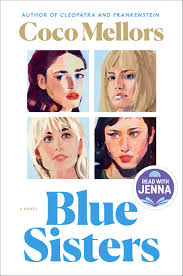
Avery, Lucky, and Bonnie are all too well aware of what day it is – and not just because it’s the Fourth of July. They have been acutely aware of this date since last year on this dark day, when they lost their treasured sister, Nicky. She was the extroverted, kind, and “girly” one of the quartet, the one everyone loved. Ever since her death, each sister has been grieving her loss, each in her own way. Making matters even worse, the sisters receive an email from their mother alerting them that she will be selling the family apartment where Nicky lived, and that this apartment needs to be emptied by the end of the month. This insurmountable challenge – dealing with Nicky’s belongings no one has had the courage to dispose of – may in fact be just what the sisters need.
This is a beautifully written account of the unique relationship between siblings and how a loss can be traumatic, even during adulthood. The sisters, each prone to coping by utilizing self-destructive habits, have been suffering over the year since Nicky’s death. Not having their parents’ support – and having turned away from each other – has only added fuel onto their inner fires. And because each sister’s character is painted so artfully, we become entangled in each story, every challenge. We are compelled to keep turning the pages because we HAVE to learn what happens next.
I highly recommend this novel. While it sometimes feels as if you’re watching a car accident about to happen – and you want to jump in front of the car – it also has moments of such raw tenderness that it is worth every tear you might shed.
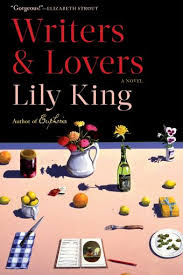
Still reeling from her mother’s death, Casey has been trying to battle her demons and feels she is losing. Overwhelmed by college debt and a recently failed relationship, she is trying just to put one foot in front of the other, keeping to her schedule of writing in early mornings, and waiting tables days and evenings. As she finds herself caught between two budding relationships, she also finally completes her first novel – and she is utterly unsure, and of course terrified, how any of it will turn out.
I have to admit that this book took some degree of patience, at least for me. I found it was a very slow build, with the beginning baldly depressing and flat. As it progressed, however, as more happened and the characters grew, and I began to feel more invested. I am glad I stuck with it, but it was a bit of work.
I think the issue was that Casey was hard to get to know and to like. We see flickers of her warmth, her kindness when she banters with other waitstaff at her restaurant. We also see this really shine when she connects deeply with one of her boyfriend’s two sons. But for so long, all we see is a doleful existence: her panic attacks, her worries, her fears. When her wit and personality only come through so much later, it’s almost too late. We’re surprised we like her so much. Perhaps the point is that she doesn’t like herself enough to be this person. I am not sure…
We also have here another writer writing about writing. Yes, write what you know, but I also think this topic has been covered already. Perhaps unfair of me, but as someone who is not a writer but a reader, I like variation. What can I say???
Ultimately, it is readable, a decent novel. But if you’re limited on time, I’d focus elsewhere.
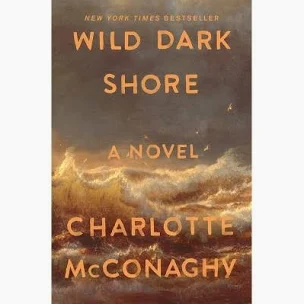
Dominic already has his hands full. He is preparing his already diminished family – his daughter and two sons – to evacuate their tiny Shearwater Island along with its UN-funded vault supplying the essential seeds for a would-be ecocrisis. But when a frightening storm causes a shipwreck near their coast, Fen, Dominic’s daughter, discovers a woman’s body floating near shore. Being an exceptionally strong swimmer, she pulls the body to the beach and finds that this woman is miraculously still alive. As the family together care for this mysterious woman, Rowan, their secrets emerge, their conflicts come to light, and Rowan’s own story becomes intertwined with theirs in dangerously unexpected ways.
There is a good reason for this book being on so many “favorite” lists of 2025. It truly has everything: characters who are struggling with their circumstances and with whom we can identify; a setting that is both picturesque and tragic; themes that are crucial for us to ponder; and a plot that builds to a physically tremulous crescendo. And all told in writing that is vivid and tactile.
The narration rotates around from character to character, so that the story can build around each character’s perspective. This provides great depth to both the plot and the character development, as we see from each of them how the story is built, where their thoughts are based, and what they are experiencing emotionally. And it is a profoundly emotional story, from all sides. And it builds and builds and surprises and shocks – and I, for one, was up until the wee hours of the morning just to finish this book, which I cannot say I do often.
One underlying theme here is that our world is sinking. Not just this tiny island near Australia, but all of it. Perhaps not this week or next, but within our lifetimes, and certainly within our children’s lifetimes. And while it’s terrifying to think about, we cannot deny facts. How many wildfires or vicious storms do we have to live through to understand that our world is changing because of what we’ve done to it? Receding back to reliance on oil and gas when we were going forward to renewable energy sources is a dangerous strategy. We can make a difference by whom we vote for, what strategies we support, what we invest in. We can effect change.
And yes, this is a MUST READ, as you might have guessed. Because yes, you really must read this one!
Emma has just found herself a new undertaking. While on a visit to her neighbors’ – a kindness she spared in spite of their lower social status – she has met a younger woman, Harriet Smith, naive to the ways of the world and whom she feels she can mold into possibility. Her first hurdle is convincing poor Harriet that she is not in love with the crude Mr. Martin, but should rather save herself for other prospects more suitable. As time passes, however, Emma gradually learns that in spite of her good intentions, she in fact can not improve on what human nature ordains.
Every so often, I like to revert to the classics, searching out what folks have loved in the past. I have to admit that I am fairly stunned that this is in that category (and yet it is, according to almost any listing you may search). While it is somewhat entertaining, it is, at best, a soap-opera-ish, romance novel. There are mind-numbing details about the histories of each character’s social status, their day-to-day routines of meetings and inane conversations, and the gossip that stirs around each of them that is typical for a tiny, intimate town.
We do see growth of Emma’s character. She begins with little insight as to her own naivety, not seeing her own willfulness, her own egocentrism as being problematic. She tries to interfere in everyone’s world. Gradually, however, she learns that this interference can backfire, and painfully so. She not only acknowledges her errors, but she changes her ways: she holds her tongue even when she might not have before, steps back, and listens more. For this, she is ultimately rewarded.
I suppose there is a lesson here for us all, no?
I would love to hear what others think of this novel as it is very likely some of you have read it. Thoughts???
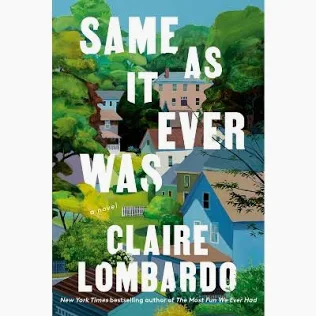
Aviva Grossman is young, perhaps naive, and ambitious. She’s smart, but not smart enough to keep herself out of trouble. Her mother, Rachel, will attest to that, for sure. They have been very close, more like friends than mother and daughter, perhaps. But when Aviva comes to Rachel to confess that she is having an affair with a married man – a well-known married man, at least in their part of South Florida, because of his political ambitions – Rachel is every bit Aviva’s mother, you can bet on that. She pleads with her, begs her, implores her to break up with him, even going so far as to try to bribe her, threaten her even. She knows the toll it will take on her reputation. But even Rachel has no clue that Aviva has been keeping an anonymous blog about her experience – and this before most folks even knew what a blog was, when the internet was like a new toy, seemingly harmless. When the affair blows up, Aviva’s life blows up with it. How will she survive?
This book is very Jewish, very South Florida, and steeped in stereotypes. Nonetheless, it is a quick, light, and amusing read. Aviva’s character builds into a relatable, vulnerable woman who earns both our sympathy, our understanding, and our respect. There are often many ways to see a situation, and we are often quick to judge. This is an example of one such situation. And that is the point.
Not ever going to be a Pulitzer Prize winner, but it’s fun and entertaining and has an important message to share.
Johnson & Johnson is probably the most venerated pharmaceutical company in the US. They may not even be thought of as a pharmaceutical company (which we normally associate with prescription drugs), because most know them best for their baby products, bandages, and skin care lines. Their story, as they love to tell it, is more about how they are the most honest, most trustworthy, family-run company, having recalled their tainted Tylenol decades ago, at great cost to them. Well, this revelatory, painstakingly-researched book will call into question everything we have believed about this company, reducing their golden reputation to a mythology. Time and again, this company has chosen to spend billions of dollars on litigation defending their repetitive deceptions rather than admit that a product is harmful. They have released products before being tested, not tested enough subjects, hidden data that has not been favorable, and have falsified data on tests they have submitted for review. Their executives have lied under oath about their products. Even after seeing horrific harm result from their products, they have continued to conceal evidence in order to continue to make money. No matter the human toll (including deaths in the millions). Because, of course, it is always about the money.
This book is, of course, a MUST READ. It is relevant not only to anyone in the medical or pharmaceutical field. lt is relevant because it is a perfect example of how money and power are so inextricably linked. As J & J grew, so too did its influence and lobbying power. We see how the independence and integrity of the FDA, for example, has been compromised to the detriment of all of us – because those who make decisions on what drugs and devices are approved for use are also the ones who benefit financially from them being approved. How can anyone possibly be objective when these decisions affect whether or not they may keep their job? Or perhaps their future one? In addition, the company uses FDA approval (for what it’s worth) to shield them from litigation. And those medications and/or devices that are approved by this compromised agency will be used by you, or by your family member, or by your best friend. Are you comfortable with that?
I would encourage everyone to read this book. It’s distressing, yes, but so important to be informed. This “trustworthy” company may no longer be so. And there is much to be done to fix the system that has allowed it to become this way.
Julia has found an equilibrium with her life as it is now. Yes, her daughter treats her with disdain, but isn’t that how every adolescent treats their mother? And while her son is always sweet to her, he has been somewhat distant lately. But at least, she and Mark, her husband, are still together, having survived their “rough patch” (definitely an understatement) so many years ago. And just as she thinks she’s in the clear, she runs into Helen – yes, Helen, the woman who symbolizes that most challenging period for Julia all those years ago.
This novel had a solid premise, excellent character development, and even good writing, but I believe was just too repetitive, too long. We understand that Julia had been traumatized by her childhood, with her mother having been harsh, cold, even emotionally abusive, leading to her having no self-esteem, no ability to trust anyone. When her husband, Mark, showed her kindness, she had trouble believing she deserved it. It was no surprise therefore, that when she met Helen, an older woman who showed her almost maternal warmth and friendship, Julia attached herself to her immediately. But I felt that the author might have spared some detail – that we did not need to hear about every encounter (which was repetitive). Moreover, there was not really a crescendo to the story. There was a crisis, yes, but it was not as dramatic as one might have hoped, considering all the detailed build-up.
I suppose this is another example of well-formulated characters in an interesting plot with decent potential but not ideal editing. Not a total loss, but you may find yourself counting the pages you have left, as I did periodically.




 kindread spirits