This is my online book club… Please let me know what you think about the books I’m reviewing. I’d love to hear your opinion!
I’m also always looking for the next book to read. Please help me compile a list of great books with your suggestions right here in the comments for this post…
Tilly has suffered a loss she believes she will never get over: the untimely death of the love of her life, her husband Joe. As she dives into her work as an editor, she relinquishes everything else that she loves, even reading for pleasure which had been her favorite pastime. When she receives a call from the owner of a local bookstore saying that he has a package for her, she is baffled by what this could be. What she discovers there is a gift that will change the course of her life, and remind her of the person she still is underneath her grief.
This is a beautiful story, replete with characters who will melt your heart, and with a message so clear and vital. Loss can be devastating, but it is how we cope that determines how the rest of our lives will play out. The bottom line is that we are not weak because we lean on others to get us through; on the other hand, it is often others who will enable us to climb out of the depths of despair. We may just need to find the right ones to do this with us, and that is what this book is about. Support for grief may come from people or experiences that we might never guess are even out there. We just have to open our hearts to possibility (and this may be hard, of course).
One of my favorite characters here is Harper, Tilly’s adventurous and outgoing sister. She adores Tilly and will truly do anything for her. She goes out of her way, if perhaps overreaching a bit in her determination to help Tilly over her sorrow. But she is loyal to her core, and we have to love her for that.
I listened to this book and loved the accents, but I imagine that reading it would also be a lovely experience. Either way, I do recommend this. It’s a lovely story that inspires and heals. (And of course, it encourages reading, which is ALWAYS a good thing!)
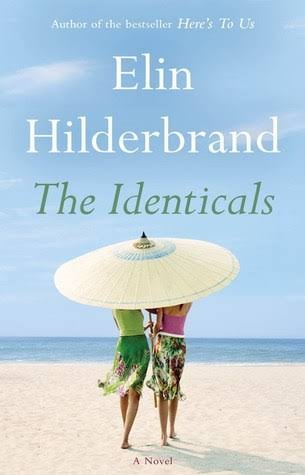
Harper is feeling overwhelmed by her many responsibilities and life complications on Martha’s Vineyard: the care of her very ill father, her work – such as it is – and not one but two relationships (both complicated). When her father dies and her estranged twin sister, Tabitha, Tabitha’s daughter, and her own mother come to the memorial service, the secrets Harper has been harboring pretty much explode wide open. On the other hand, life has not been easy for Tabitha either, in her home on Nantucket. She is juggling her flailing business (started by her renowned mother), her out-of-control daughter, who has become a (mean and spoiled) queen bee, even while nursing her own longtime loss. When her father dies, she feels an obligation to attend his memorial service and her life pretty much explodes open as well.
This is another cleverly crafted, fun-but-not-fluffy read from Elin Hilderbrand. The narrative manages to maintain just enough cringe, humor, and painful secrets that it builds into quite a twisted plot involving both sisters. We see how the rival islands, Martha’s Vineyard and Nantucket personify the rival between the sisters, which in turn echoes the rival between their parents. As their stories are gradually revealed, we learn how secrets can completely undo a family, almost irrevocably.
We also learn how loss can be devastating and how we cope can determine our future happiness. When we allow blame, guilt and regret to overwhelm us, we can cripple ourselves emotionally. On the other hand, when we look inward and find a way toward forgiveness – of ourselves and of others – we may find release. This is not easy and often it may take outside support, but it may be the only way to achieve joy.
Hildebrand has a way of allowing us to meet her beautiful characters, follow them through their twisty journeys, and enjoy the ride alongside them. You may find your heart opening in unexpected ways!
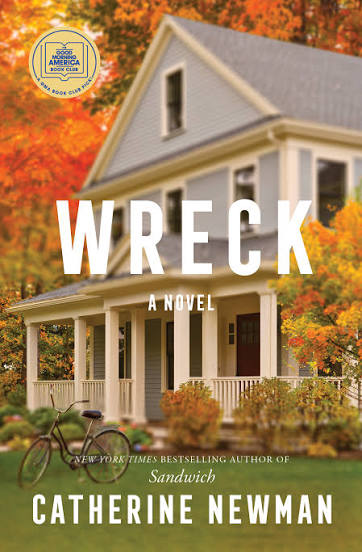
Rocky is a devoted mom who just cannot help herself – she is anxiously devoted to her children in a way that manifests physically. Just as overwhelming as her love for them is her fear of harm befalling them. This anxiety only escalates when she learns of a fatal crash in which a local boy’s car is hit by a train. And the more Rocky learns about the details of the crash – and how close to home those details are – the more she suffers, both physically and emotionally.
While this novel centers around a truly horrifying event, the story is told by using clever, sarcastic, even comical dialogue. Even while Rocky is trying to cope with potentially paralyzing anxiety, she is also narrating with the running catastrophizing going on in her brain along with the witty dialogue she has with her husband, her kids, and even her father who has moved in to live with them since her mother’s recent death. It provides a way to create a story that is both tragic and accessible, as well as a book that is, in spite of the underlying tension, actually fun to read.
That said, I felt it is also somewhat anticlimactic. There is an enormous conflict that is created here, in trying to assess responsibility for the crash, prevention of future disasters. Yet, in my opinion, the author fails to fully resolve this; in a sense, copping out, forgiving everyone. I feel there might have been a more satisfying resolution here.
Either way, this book was interesting, with well-formed characters, and sharp, entertaining dialogue that held up throughout. A worthwhile read!
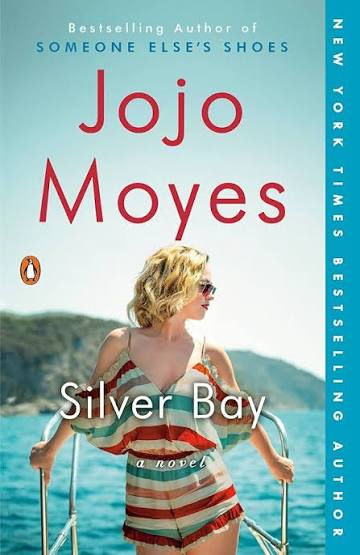
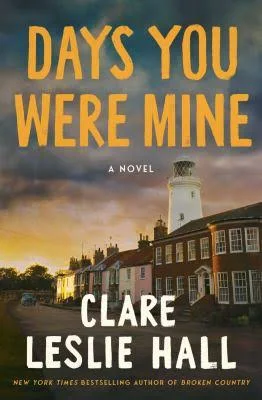
Liza McCullen is doing just fine, now, thanks to the refuge she and her daughter Hannah have been given by her aunt, Kathleen. Though she still keeps her painful past close to her chest, in fierce protection of her daughter, she has come to befriend some of the other whale- and dolphin-watching ship captains who hang out each evening at her aunt’s Australian, seaside hotel. When a British businessman comes to stay at the hotel with his own ulterior motives, he befriends the small town folks in spite of himself, and gets caught up in their quest to save the marine life in their small harbor.
I defy any reader of this novel to not get caught up in the romance and suspense of these characters’ lives. Liza is both coldly guarded and avidly loyal to her family and the wildlife she seeks to defend. Kathleen has an ornery exterior but is generous and kind in the most important ways. And even Mike Dormer, initially awkward and unwelcome as a newcomer to this closed community, warms to their small town characters and their devotion to the sea life they promote. Even Hannah, Liza’s 11-year-old daughter, with her old soul and yet limited exposure to the outer world, becomes a character we cannot help but love. As each of these characters become more intertwined, we are bound up with them as well, and we care deeply about the welfare of each of them.
I also defy anyone to read this without shedding at least a few tears at the resolution of this story.
This is a MUST READ just because I loved it and suspect you will too.
Abe and Jane really do love each other, though they have their differences. Abe is pragmatic, in that while he does want to write, he also sees the necessity of maintaining his family business in order for them to have a reliable livelihood. Jane cannot deny her artistic expression, and makes art from all varieties of media. Abe is also mostly responsible to seeing to their son, Max, throughout Jane’s postpartum depression, which is both good and harmful to some extent. Now that Jane is in her decline from cancer, Abe is expressing his undying love for her through this story.
It took me a minute to dive into this book, as the writing begins in first person, almost as a love letter from Abe to Jane. He reminds her of their beginning, when they met. He reminds her of how she inspired him and encouraged his writing. And the repetition of these reminders becomes almost a poem, an ode to his love. On the other hand, the chapters written from Max’s perspective are harsher, even cruder, as this is more true to Max’s personality. There is a fineness of writing, a beauty in the words themselves, even as the story develops and expands in the subtlest of ways.
What is also unique is that Central Park, yes the enormous park at the heart of Manhattan, becomes almost another character in the story. There are intervening chapters that provide details of its origins, verbal maps of its gorgeous terrain and treasures, and descriptions of the scenes one might encounter in its many varied locations within. It also serves as a literal grounding for Jane and Abe, bringing them back to their origin story, reminding them of their love for each other and the memories they’ve created together.
The beauty of the writing, the characters who grow and become three-dimensional, and the narrative itself is all so unique that I would recommend this book just as an exercise in learning what writing can become.
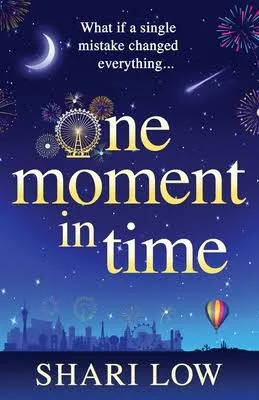
Zara and Millie are so excited. They have planned the very best of surprises for their parents’ 30th wedding anniversary and they are sure their parents will be over the moon. What could be better than taking them to the original location of their wedding to renew their vows, especially when it was in as romantic a location as Las Vegas? Perhaps the only thing that will surprise them more is if they can locate the two old friends in the picture they’ve found from their parents’ time there, in order to truly recreate this special moment in their lives. Unfortunately, the sisters are unaware of what is happening between their parents as well as what happened with these two old friends. And this is where the surprise goes a bit off the rails…
This book begins well. We feel the tension between the sisters planning and the parents struggling, without each knowing what the other is experiencing. We feel this tension mount as Zara reaches out to the son of the other couple in the photo via Facebook and is able to encourage him to arrange the trip and the meet up. The characters created are interesting and complex and have their secrets that keep the plot moving. But once they all arrive in Las Vegas, it all pretty much falls apart as a story. The results are utterly predictable, even outrageous, as the author appears to reach for absurdity in order to resolve the conflict she’s created.
What could have been a lovely and entertaining narrative dissolves into an inane and shallow romcom (with more rom than com). Very disappointing…
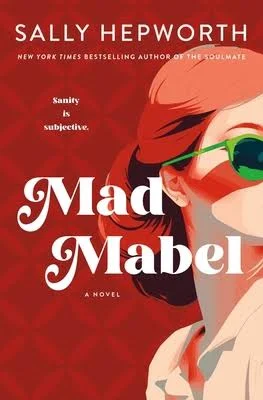
Elsie believes she has found the perfect, quiet street to live on, during her aging years. Yes, there is the annoying neighbor Ishaan with his yappy dog, and there is the distinctly unfriendly Joan across the street, and so on; but for the most part, she finds she is left alone. Thank goodness for her best (and only) friend, Daphne, who does come often to keep her company and entertain her. When Elsie finds Ishaan dead in his home (at the age of 93), her life and the life story she’s been carefully guarding suddenly become public, and she finds her world turned upside down.
This is a brilliantly written novel. While there is much in Elsie’s story that is tragic – the moniker she is given by her father of Mad Mabel being the least of it – the story is nevertheless told with a biting wit and tremendous warmth. We cannot help loving Elsie herself, despite her being the epitome of snarky and ornery. And while she claims to detest children, she develops a relationship with the little girl down her street, Persephone, which is utterly tender and beautiful.
Elsie’s story is not unique, sadly. Her history of neglect and abuse at the hand of her father is devastating and yet we know it occurs rampantly, with no regard for class, color, or creed. While she has an aunt who cares deeply for her and is her only advocate among a sea of adults who desert her, she is mostly alone, isolated, and vulnerable. She becomes the victim of circumstance again and again, but it is not by coincidence – it is by design. And it is so important for us as readers to be exposed to these circumstances, again and again.
I was surprised at how much I enjoyed this novel, with its humor, its depth, and the multiple twists at the end. I think it just might be a MUST READ!
Now: Luke has struggled his whole life, feeling as though he’s never quite fitted in. Having been adopted has had him wondering who his biological mother is and why she’d given him up. Now, he can finally meet her and just maybe learn the answers to his many questions.
Then: Alice, a first year student at her prestigious art school, feels she has been chosen to be here by error. She can’t possibly compete with the likes of her best friend, Rick, whose self-portrait has already been chosen to be hung in a gallery of note. But when she is introduced to Jacob, a singer in a rock band who shows great promise, and when he chooses her to paint the cover of their next album, her entire world is turned on its head.
This novel has all the makings of a superior narrative: a dual time line, lovely characters, a passionate love story. Unfortunately, there are so many foreshadowings that it becomes just too predictable. What is the “great reveal” has already been hinted at so many times that it is anti-climactic and disappointing by the time it happens.
At the same time, this story is not without merit. I have not encountered many other novels about mental health issues around adoption, which this one accomplishes. While many adopted children do fine, they are, in fact, at higher risk for attachment issues, PTSD, and other mental health challenges. One might think that meeting one’s biological mother or father would appease some of these issues; that being able to ask questions, knowing the circumstances of why the parent gave up the child, etc, could possibly help the child regain a sense of understanding that might lead to improved self-image, overall mental health. What we learn from this novel is that it is quite complex and not so easily rectified.
I found this book to be worthy of reading, just, as I’ve said, a bit too predictable for my taste. I’m curious to hear what others think?
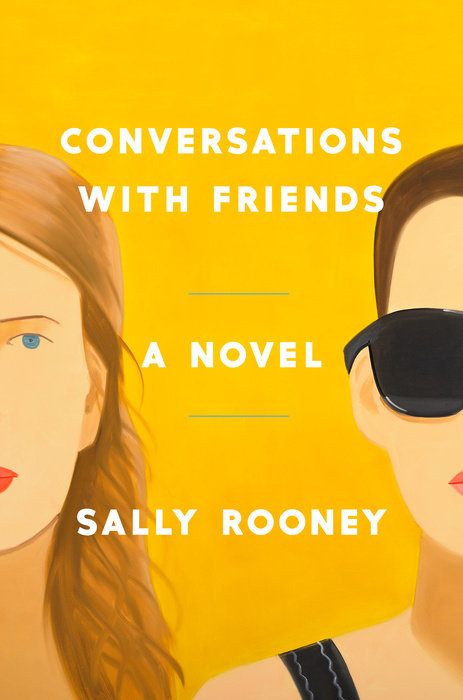
Frances and Bobbi, formerly lovers and now best friends, perform spoken word poetry together, mostly of the poems written by Frances. Frances can’t help but admire Bobbi for her extroverted and confident manner, especially as she feels detached and self-conscious most of the time. At one such performance, they meet Melissa, a journalist seeking to write a magazine profile of the two of them. When Melissa invites them to her home and introduces them to her husband, this sparks a journey of romantic entanglements that are both confusing and overwhelming for all of them.
Honestly, I didn’t see the point of this book. Throughout, I kept expecting something more interesting to happen than the banal dialogue, the gratuitous sex, and the empty relationships that were depicted here. Not one of the characters is in the least likable – Frances herself acknowledges that she isn’t a nice person. There is no explanation for the attraction that develops between Frances and Melissa’s husband, Nick, besides a physical one, as they rarely spoke about anything more than skin deep. It is only Frances and Bobbi who seem to ever discuss something of substance, but even that is overly intellectualized and dull, never truly revelatory or personal.
It is also remarkable that the few threads of interest were never developed. Frances has a complicated relationship with her father, who is an alcoholic and struggles with depression and anxiety. There was a potential for this aspect of the story to reach a climax of sorts, but even that goes nowhere. We are, in a sense, left hanging as to his fate and the underlying reasons for his failures as a father.
If I hadn’t been listening to it via audiobook (and trapped in the car for long periods of time), I probably would have given up on it earlier. Alas, I was stuck – and endured the entirety of the novel. Most shocking is that this was apparently made into a television series. I cannot imagine why. Perhaps the series developed the characters more than the book did?
What an unlikely pair to team up to bring down the notorious mob boss, “Lucky” Luciano! First meet Eunice Carter, the first Black woman to serve as a Manhattan’s prosecutor and who was chosen to be on the DA’s team to eliminate the tyranny of the mob in the 1920’s and 1930’s. While she was at first generally ignored and pushed aside, her out-of-the-box thinking and utter ingenuity was the ultimate key to permeating the cracks in the mob’s defense. But she could not do this alone. She was smart enough to enlist the assistance of the most famous madame in Manhattan: Polly Adler. Polly, who came to NY, alone, as a twelve year old Russian Jewish immigrant and worked her way up after much trauma and determination, provided the ultimate material to be used in the trial. This story is the fictionalized version of their dramatic and dangerous teamwork.
Reflecting the teamwork of the actual story was the teamwork required to write this novel. The two authors wrote seamlessly to depict the strain and the challenges of each woman and her role in being caught up in this legal morass. We learn of the toll the investigation and trial took on Eunice’s marriage and family life, as she risked both physical and emotional danger. We also learn of Polly’s determination not to be engulfed by the mob’s plan to centralize all prostitution in the city, primarily because of the toll it would take on the women she was determined to protect.
I also love this narrative, as it demonstrates how we are stronger together. While both women had challenging lives in different ways, and both experienced prejudice and malice and mistreatment, and lived in entirely different worlds, they were able to come to understand each other’s challenges, grief, and resentments. They were able to put aside their differences to come together, to work together and to trust each other in order to accomplish a shared goal. This is a lesson for us all, I believe.
This is a dramatic story – based in actual history – that was meant to be told. I cannot think of two more capable women to do this telling!