
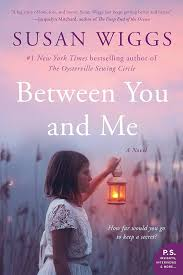
Caleb thinks it will be a usual morning, getting ready for his day on his Amish farm, urging his nephew, Jonah, to get off to the neighbor’s farm to do his part in helping with the chores there. However, when one of the neighbor’s children come running back to alert them to the accident that befalls his nephew, he has no idea that his entire world will be turned upside down in a single moment.
Meanwhile, in central Philly, Reese finds herself in the ER, amidst the incoming trauma where she is a fourth-year student. She is trying not to connect with each patient who comes in, but finding herself connecting nonetheless. She cannot understand how the staff are able to get so involved with the patients for the intensive, momentary care and then send them off, to the OR, to the ICU, or home, without being able to know what comes next. But this is the life she’s chosen. Or has she? Is it not really the life her parents, successful doctors both, have chosen for her, from her very inception? How does she break out from under their domineering force and decide for herself? When she meets Caleb, transfixed by his very different manner and lifestyle, she sees an alternative to the treadmill she’s been living her life on.
While this is a bit of a predictable story, it is so very sweet and the characters so likable that it almost doesn’t matter. Who doesn’t love an unlikely love story? Who can resist a Romeo and Juliet? Reese and Caleb come from two different worlds, speak two different languages, and have very different life experiences. But fundamentally, they have similar values. They appreciate love, family, and the freedom to choose their own path, which binds them together more than even they realize.
The story also highlights something I’ve discussed before: when a community is insular, it can be very close-knit in a good way. It can mean that folks are there for each other in good times and in bad. But it can also mean that folks hide the bad stuff to the point of endangering others. It can mean that when someone is suffering, there is denial in the name of religion or righteousness, and that evil-doers can be protected to a fault. This can be dangerous in any community, but particularly when a community colludes in that hiding, in that burying of the guilt. Abuse of women and children are notoriously hidden in such communities, and this is can be dangerous.
I’d recommend this book, as a way to learn about the Amish, as a way to learn about the way we are all more similar than different, as a way to learn about the world.
 kindread spirits