Becoming by Michelle Obama

becoming

When Michelle Obama was quite young, she began to learn to play the piano, taught by her very strict aunt who lived downstairs.  The piano on which she studied and practiced had chips and imperfections that enabled her always to find the middle C, sort of grounding her and guiding her.  When she had her first formal recital, she suddenly found herself seated at a perfect, symmetric and distinctly un-chipped piano, and had to pause and figure out what to do to find her way.  With the help of her teacher/aunt, she managed to steady herself and to play her piece with great success.  This became a sort of metaphor for her life.  Michelle Obama has always worked hard, relied on important mentors to guide her, and whenever she encountered obstacles, she leaned on those she loved and who loved her to help her regain her center of gravity and succeed in a dramatic fashion.

Mrs. Obama’s story is a rags to riches story in some ways, but in many ways it is not.  It is true that she was raised in a poor neighborhood in Chicago and she may not have had much in the way of what money could buy.  On the other hand, however, she was rich in the ways that really mattered.  She had a loving family with mother, father and brother and many extended family members who were quite close and affectionate.  Her mother strongly advocated for her so that she was able to access an excellent education, which enabled her to attend Princeton and Harvard Law School, where she was able to raise her financial standing, in spite of where she came from.  She acquired an incredibly strong work ethic and was generous about helping others come along with her, rather than stepping on others to get ahead.  Her constant mission was to find mentors to assist her with moving forward, but also to then pay it forward and mentor others in return.  And each position that she held after her first job out of law school helped her to dive deeper and deeper into fields in which she could do good for others, which seemed to always be her driving force.

The discouraging part for me, of course, is the contrast between what was then and what is now.  The Obama’s were devoted to their country, both working so very hard to try to make things better for the people they were serving, both working to expand human rights, to give access to health care, to create jobs and improve the environment and to promote peace.  Barack Obama surrounded himself with wise advisers and listened to the advice of others and was thoughtful and respectful to others and read incessantly to learn as much as he could about an issue so that he could make the most informed decision.

Sadly, this is not what is happening in our White House now.

So while this book was inspiring, it was also quite sad, as it reminded me of what we’ve lost since 2016.

The Obamas were smart, dedicated to our country and to humanity, and were a class act.   I hope we find our way back to this again.


Educated by Tara Westover

educaated

Deep in the hills of Idaho, among the potato farms and tiny villages, poverty reigns over large families like the Westovers, who cling to their Mormon faith for the little bit of truth that they can believe in.  Dad preaches to his children his beliefs that the government is part of a socialist plot to undermine the Lord’s will and public education is just a manifest of this.  So while the older children might have benefitted from having gone to school, the younger ones, Tara being the youngest of those, did not.  So the kitchen where Tara mixes herbs with her mother and the junkyard where Tara sorts metals with her father and brothers become Tara’s classrooms.   And the random, outdated history or mathematics textbooks that left around the house became her only source of book learning, such as it was. Sadly, her emotional learning was blunted by the abuse at the behest of her brother Shawn, and her ability to survive in her home was made possible only by quelling any feeling or reaction to what was going on around her. When she finally did allow herself to feel, she realized there was just too much rage at her whole family to do anything with it.  This was the face of mental illness and this was the face of her family.

This is the true account of the life of Tara Westover – and it’s truly a miracle that all of the children actually survived, especially Tara.  The severity of the neglect and abuse at the hand of her father (and her mother) is staggering.  It is really not entirely their fault, as they clearly are mentally ill – at least her father is severely so.  The most egregiously violent and abusive one, however, is her brother Shawn, who is viciously violent and his parents repeatedly turn a blind eye to his cruelty.

I find that the one I am most angry with by the end of the book, interestingly, is Tara’s mother.  She has so many opportunities to come through for Tara.  There are moments when it appears she just might finally side with Tara.  That she might stand up against Tara’s father, or against Shawn, and say that Tara may be right in accusing Shawn of acting violently toward Tara, or of Dad having mistreated Tara when she was younger, not having given her opportunities or believed her when she was telling the truth (that she was NOT a whore, as she was so often accused of being).   Even later, when her mother had more financial success and independence and might have had a chance to break free and it might have appeared she’d stand up for herself.  But no, she did not.  Such. a disappointment for Tara.  No wonder there was such heartbreak and fury.

The fact that Tara has achieved the success that she has is miraculous and I applaud her intellect and courage.  I only pray for her that she is able to find the support that will allow her to find kindness toward herself that will allow her to heal from all the hurt.

I thank her for sharing her story with all of us.  It has been so powerful.  Mental illness rears its ugly head in so many ways.  Sadly, the worst is toward children.


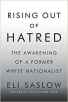
Rising Out of Hatred by Eli Saslow

rising out of hatred

Derek Black has been nurtured from the time he was born until the time he went off to college to be the great white hope for the future of the white nationalist movement.  His father, Don, established Stormfront.com, the earliest and largest promoter of racist propaganda on the internet, and David Duke, his godfather, is the well-known KKK/Nazi politician.  Everyone in this underworld knows Derek and believes he will take over for Don and Duke, as Derek has already begun to co-host their radio show, assist with the website, and even help organize their annual conference.  But as Derek enters college, he decides to keep this part of his identity secret, interacting with the diverse students in his classes and activities, even while he maintains his connection with his radio show daily.  However, what happens very gradually, when Derek is later exposed, ostracized and then quietly invited to the regular Shabbat dinner of an Orthodox Jewish friend of his, begins the process of challenging his deepest convictions — and is absolutely stunning.

This true story has been featured on various podcasts (The Daily is one) and has been written about in various newspapers, so you may know the basic story.  Derek himself has written opinion pieces for the New York Times.  But in this moment of unleashing of hatred and bigotry, this story is a crucial one – and the details matter.  It is crucial because it shows how hatred has been simmering underground for so long among those who are living their very insular lives, among those who think only like they do.  And it is crucial because it demonstrates, most importantly, that if we look at those who think differently from ourselves as human beings, only then can we start to have a civil and respectful enough discourse to come together on ideas.

I am in awe of the courage of the students who showed friendship to Derek even after he was “outed” as the co-host of the morning show on Stormfront.  They stuck by him, braving the derision of most of their peers, showing steadfast friendship to the the hero of the dark side, even as he degraded their racial groups on his radio show, even as they questioned their own wisdom in doing so.

And I am in awe of Derek himself, who has truly shown courage in the thought and heart that he has put into his own journey.  It is so much easier to go along with what your family and community preaches and to stick to your original beliefs.  It is so much harder to go against your family wishes, to turn around what you’ve been taught is right, to go against your indoctrination and open up your heart to other ideas.

But I am also not sorry he has accepted his responsibility to go public with his journey, because he has to share with others that those narrow-minded, absurd ideas about white supremacy are just wrong – and that the harm they do to others can not, under any circumstances, be justified.

In this moment, this book is absolutely a MUST-READ!

Hunger by Roxane Gay

hunger

This memoir by Roxane Gay — an author, celebrated feminist, and educator — is the story of her experience as a person going through life extremely fat.  She reveals early on that she had been raped at the young age of 12 years, and, sadly, did not feel able to tell anyone about it for years.  Her way of coping was to eat in order to gain weight, to make herself unappealing so that she would protect herself from letting that ever happen again.  Unfortunately, it also had an impact on everything else in her life as well.

While the book does tell the story of her life, regrettably it does so in a very rambling, stream-of-consciousness sort of way that is extraordinarily repetitive.  There are segments that wind back around to prior themes and scenes that are repeated over and over again, much like her thoughts.

Nevertheless, it is also extremely enlightening and enables the reader to really understand and what it means to be in the shoes of someone who, as she describes, takes up the space that she does.  Her descriptions of having to research restaurants in advance to assess the seating situation, for example, is something that I might not have appreciated.  Because of her size, she cannot feel comfortable in most chairs with arms, nor in most booths that have a fixed distance between the seat and the table.  Hence, she checks that there will be seating that can accommodate her before she will go to a particular restaurant.  Sometimes, when she doesn’t, and she has to sit in a chair with arms, she sustains bruises that cause her pain that can last for days.

This broke my heart.

There is a daily onslaught of taunts, sidebar commentary from strangers, suggestions – people even taking items out of her shopping cart at the supermarket!  Having to endure the humiliations that people throw at her, both intentionally and unintentionally is both unfair and relentless.

So while the writing and probably more so the editing of this book is not ideal, I think the author is incredibly brave in sharing her experience with all of us.  I think it is important for people to understand how it feels to walk in her shoes so that we can all be a little kinder to those who are different sizes than we are.


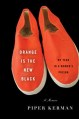
Orange is the New Black by Piper Kerman

orange-is-the-new-black-book-cover

I’m probably the only person on the planet who has not watched the series on Netflix – and, nerd that I am, I have read the book instead.  But actually, I’m really glad I did.

Piper Kerman had just graduated Smith College and was unsure of her next step.  As she drifted toward an older, cooler crowd, she found herself falling for Nora, an older woman who she perceived as quirky but sophisticated and who had set herself apart by making quite a bit of money – by coordinating drug runners.  When Nora invited Piper to join her in Indonesia, Piper jumped at the opportunity and indulged in the opulent lifestyle that Nora’s business afforded them. When Nora asked Piper to transport money back into the States, Piper felt obligated to say yes, never thinking that years later, she’d be served papers that would charge her with a federal crime.  After court appearances and delays, Piper was finally required to serve a 15 month sentence in federal prison.  This book is the true story of her experience of that prison sentence in Danbury, CT.

Kerman writes about her experience with honesty, sadness, humor, and heart.  She describes how she’s finally matured into a life –  a successful job which she loves, an engagement to a man whom she adores and who adores her – and how painful it is to leave this behind.  She writes of the guilt she has about the agony she knows she’s inflicting on her family because of what she’s done. And she writes about how even as horrific as this experience is for her, she is aware of how privileged she is as a well-to-do, educated, white woman with resources and a supportive family, which is vastly different from the experience of most of the women with whom she’s incarcerated.  She describes so eloquently the bond which develops between her and so many of these other women because, at the end of the day, they are all in the same boat.  They need each other to survive and those who understand this develop a mutual respect that underlies the kindnesses they show each other.  It is these small kindnesses and empathy toward each other that help them to survive with their dignity and their sanity intact.

While this story is a few years old, it is still painfully relevant.  Our penal system is woefully broken and unjust.  Because of mandatory sentences on non-violent, drug-related crime, there are way too many people who are incarcerated for way too many years and a disproportionate number of these people are African-American and Latino.  In addition, there is an inordinate emphasis on punishment rather than rehabilitation and education and this only perpetuates the problem.  Piper never feels that she should not have been punished, but she does feel that there are random, myriad abuses of an inadequate system that she was witness to and that that need remediation.

I would highly recommend this book to others – and maybe I’ll watch some of the series now just to compare it to the book!


The Bright Hour by Nina Riggs

bright hour

Wow, this is a book you definitely have to prepare yourself for.   Written by an actual descendent of Ralph Waldo Emerson, this memoir is a beautiful, almost poetic reflection on dying.   Not only does the author contend with the death of her mother from multiple myeloma (a form of cancer), but then she has to face her own impending mortality, as she battles her own aggressive form of metastatic breast cancer.  As we follow her through her musings and her fears, we glimpse into her very heart — sometimes full of self-deprecating humor, sometimes of abject sadness, and sometimes of sheer tranquility.

There is, of course, a lot of sadness here.  You cannot escape that when you’re talking about cancer.  But there is a lot of sweetness and humor as well.  Nina did not have a polyannish view of life at all – on the contrary, she was fairly sarcastic – but she did keep a faith and a hope for her future that was positive while still being realistic.  Her discussions with her 2 boys are honest and yet often comical, maintaining the innocence that young boys deserve.  She includes some details of her pain and suffering without dwelling on these.  She chooses to appreciate the days she has rather than lament those she has not.  This is something I think we can all learn from!

So while your heart will inevitably break from this book, it will also be touched in important ways, if you choose to read this one.

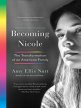
Becoming Nicole by Amy Ellis Nutt

becoming nicole

This is a beautiful, heart-wrenching story that is told with a clinical detachment that is utterly unfortunate.

Nicole, who begins her life as Wyatt, an identical twin to brother Jonas, feels from day one that she is a girl.  Already identifying with female characters in movies they’d watch, she, before even turning 3 years old, told her father that she “hated her penis.”  She consistently yearned to wear girls’ clothing and to play with girls’ toys and fortunately for her, her mother, Kelly, was sensitive to her yearnings and did what she could to support her.  Wayne, her father, had a much harder time accepting this side of her and while he loved her, he took many years to mourn the loss of the second son he thought he had.  Finally, though, he did come around and rallied to her support and both parents fought for her legal right to use the girls’ bathroom in her school (although it did not save her from being horribly bullied by a boy in her school throughout middle school, egged on by his nasty grandfather).   Nicole and her family bravely fought to set legal precedents to protect future trans children from prejudicial and ridiculous harassment because of gender identity, at least in certain states.  Hopefully, they will lead others to continue the fight for equality for these people who only want the freedom to be who they are inside.

The only benefit of the “clinical” aspect of the writing is that there are segments of the book devoted to the scientific evidence for brain differences in transgender individuals.  I think that in addition to being extremely interesting from a clinical point of view, it also fuels the argument that these people are not going through “phases,” nor are they “seeking attention” as they are often erroneously accused of doing.  It gives more objective data for those who cannot just support people for who they believe they are – rather it gives medical justification for those who require this.

On the other hand, it is a shame that the writing could not be as beautiful and as engaging as the story itself was.  There was certainly the material there to work with.  The characters were certainly heroic and beautiful, the setting was pure Americana, and the story was definitely dramatic, culminating with a huge and wonderful courtroom win.  The only tragedy was that the telling of this young woman’s triumph was so terribly dry.

I hope that Nicole and her family know how much we all admire their bravery and hope that she and they do not have to fight any further for her to be accepted for who she is.

Option B by Sheryl Sandberg and Adam Grant

option b

So as you can see by this blog, I am not a huge reader of self-help books.  Not because I am not in need of any help (!), but there are just too many other books that I’d rather read.  This one, however, captured my attention.  Sheryl Sandberg, the COO of Facebook, experienced the tragic, sudden death of her husband, to whom she’d only been married for 10 years.  In trying to cope, she speaks with her psychologist friend, Adam Grant, who suggests that since she can’t have her husband back (Option A), she has to just kick the s–t out of Option B.  And there is the birth of this book and her finding her way out of her despair and learning the basic building blocks of resilience.

I think there are many useful and inspiring lessons here.  I love her 3 P’s, most of all.  She teaches that when we have a crisis, our first inclination is to assign it the 3 P’s:  Personalization, Pervasiveness, and Permanence.  That is, everything is personal – ie. it’s our fault.  We might have been able to prevent the catastrophe that has occurred, even when rational thought would have us know that this isn’t true.  That the issue is pervasive – that everything is terrible and bad and that this will affect everything.  Most of the time, this, again, is not true.  And that the catastrophic event will have effects that will last forever.  Of course, if you are dealing with the death of a loved one, that is permanent; nevertheless, the affect of this on your life will evolve over time and your life goes on even if that of the loved one does not.  These are probably much easier to read about than incorporate into one’s life, but certainly they are important concepts and seemed to have been extraordinarily comforting to her as she was going through her crisis.

I found that the vignettes and stories that Sandberg uses to illustrate points are also useful to drive home her points.  She uses others’ stories as well as her own to generalize the concepts that she discusses, so that it is not all about her.  But she also bravely reveals a lot of herself in this book as well.  I am hoping it was somewhat cathartic for her to write about her experience – I’m sure it was extremely painful as well.

I think since life throwing curveballs is a universal experience, this book can universally be appreciated and utilized.  We can all learn how to catch those curveballs more gracefully and more resiliently!

Hillbilly Elegy by JD Vance

hillbilly elegy

This memoir from JD Vance is an eye-opening, articulate depiction of the “hillbilly” culture of the Appalachian region.  As Vance shares with the reader about his upbringing – bouncing between Kentucky and Ohio – he opens our hearts to the plight of the poor, often uneducated, white population in this region.  As we learn about his experience with his traumatized and drug-addicted mom and his angry, foul-mouthed, sometimes violent, but unendingly loving and devoted grandparents, we see how entrenched the culture is and how difficult it is to dream in this world.  Fortunately, for him, he was able to find love and support enough to find his way to success – but his journey was complicated and chaotic and he never forgot from where he came.

The honesty and self-reflection with which this story is told brings the reader right into the author’s life.  We are right there with him when his mother takes him on a death-defying car ride.  We are right there when his older sister cares for him as a devoted mother would.  The love and appreciation that he feels for his grandparents who were his constants in a very tumultuous childhood is palpable.  And we can understand when he reflects on how to improve the lot of his fellow hillbilly peers and come up short.  The poverty, the distrust, and the violence that pervades this culture are so entrenched that it feels impossible to overcome.

I think this is an important book for people who are not from the South to read.  It really provides an understanding of a whole sub-culture of people that comprise  part of the fabric of our United States.

A very, very worthwhile read!


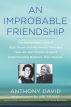
An Improbable Friendship by Anthony David

1443346094_12032187_10153651012127604_2363010507657277030_n

This is a difficult book to write about, probably because I am still trying to digest it all for myself, let alone try to share it with anyone else.  The friendship that is chronicled in this book is that which existed for many years between Ruth Dayan, wife of Moshe Dayan, and Raymonda Tawil, Yasser Arafat’s mother-in-law.  Although they were each related to men who were enemies, they themselves were able to strike a bond of friendship and respect because of their common goals and common ideals.  They each believed in the inherent good in all people and that peace could be achieved between Palestinians and Israelis if they were just brought together and allowed to live side by side.  Each worked relentlessly to try to bring this dream into a reality, Ruth by working directly with Palestinian women (helping them to earn money through their weaving) and Raymonda through the media.

What became difficult about this book is the details, which were, as the history of Israel is, quite bloody and controversial.  While I have always been aware of Israel’s displacement of Arabs from their homes during the formative years of the state, this book provides the gory details and describes it in real, human terms.  It is, to say the least disturbing.  It did truly open my eyes to some of Israel’s darkest moments.  On the other hand, I cannot help feeling as though there are some details that are not included, such as the fact that after the U.N. declaration of a 2-state situation in 1948, the Israelis were willing to abide by this but the Arabs were not.  And terrorism is terrorism, no matter what the root of it, and the only true way to solve a problem is to negotiate it through.  The story, as it is written, portrays Palestinians as the underdogs and I think the bias in the writing is a fault in the book.  It is so clearly slanted to the left that in the writing of the story of these 2 very brave women, the author actually alienates readers – and probably the very readers he wants to sway.

The book does highlight how the female perspective on the situation is often different from the male one.  Ruth and Raymonda were able to disagree about many things, but they always found common ground and started back from this.  Their priority was always to fall back onto humanism and love.  I firmly believe that if women were in charge, we’d be able to reconcile a solution to the Middle East and find a way to make peace.  I think leaving out testosterone and “honor” would do the world a service.

I definitely learned a lot about the history of Israel, the complexity of the political quagmire that remains there, but also how one can spin events in many ways to work to one’s purpose.  I think too much of the latter was done in this book and this may have caused what I understood to be the “mission” of this book to backfire.