
 c
c
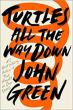
Here we have another intriguing novel by John Green, who seems to really get young adults at their very core. He introduces Aza, a teenage girl with crippling OCD, still mourning the death of her father years prior, who learns that the father of her camp crush from years ago has gone missing. Why is her best friend, Daisy obsessed with this? Because there is a huge $$ reward and they are both trying to save for college. So as they set out together to dig in for clues, they find more than they bargain for in the deal.
There is a lot to unpack about this book. First of all, Green gives us a window into the mind of someone with true OCD and it is scary and debilitating. Poor Aza cannot even kiss her young, hapless boyfriend because she is overwhelmed by fears of what germs she might contract by the exposure. Her “invasive” thoughts bombard her brain and throw her into downward spirals of obsessions that last for hours, and she has no control over this. She questions whether she is even her own self or whether she is just a product of the organisms that are inside of her and of the forces that act upon her rather than her own agency. Aza is also called out by her best friend for her self absorption, for which she hates herself. Again, she feels she cannot control this because she cannot control her thoughts – she feels they control her. Through Aza, Green succeeds in giving the reader insight into how this lack of control actually feels.
It is interesting how Aza’s psychiatrist is depicted, which for most of the story, is fairly useless. Although Aza is not exactly forthcoming with answers to the psychiatrist’s questions, she does answer truthfully for the most part and yet the psychiatrist does not give much in the way of concrete advice. I would imagine that there are distraction techniques (she does use some breathing) that are incorporated into treatment that might have been used. The point is likely that treatment is often difficult and feels futile.
Even the parts involving Aza’s new boyfriend are sweet and endearing, even as painful as many of the scenes are. And the story line about the missing father keeps a mysterious thread running through the story to tie it together, giving it a purpose.
I actually think this is a beautiful, extremely readable, somewhat depressing but realistic novel that would appeal to adults every bit as much as teens. I also think it’s extremely important for all to read as much as possible to increase our awareness and understanding of all types of mental illness, including OCD.

 kindread spirits