

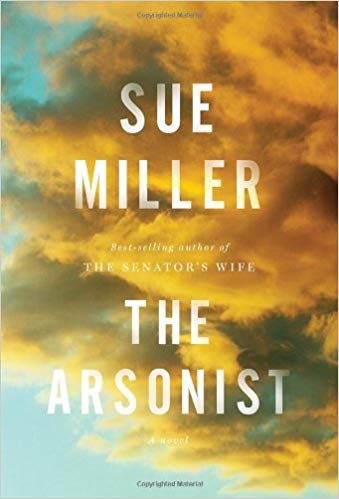
After her first marriage that was over almost before it started, Annie is surprised when she meets Graham, who is so gleeful, so larger than life in every way. She can not help but be taken in by his joy, his thirst for life, friendship and love. At the same time, she fears being swallowed up somehow by this enormous personality, and she clings to her own pursuits, her photography, her tiny bits of independence, even as she struggles to find success. When tragedy hits, she realizes that in spite of her efforts, she’s relinquished more than she’d realized, or perhaps just less than Graham was willing to.
I found that this was one of those books that upon completing I wondered, ‘well, what was the point of that one?’
Yes, it is clearly a contemplation on the worthiness of the institution of marriage, of vowing to be with one person for all of one’s life. It calls into question whether it is for everyone – and it may just not be. It also raises the issue of trust; of the understanding that one has agreed to this arrangement and if there is a break in that bond, that it will be handled with honesty and respect. When this doesn’t happen, when there are different expectations on either side, it can break hearts into pieces. Sometimes irrevocably.
But this is stating the obvious. And the obvious is what we see happen in both Annie and Frieda (Graham’s first wife with whom he stays uncomfortably close). And we see this happen in exquisite (and almost painful) detail. The problem is that beyond this, and of course the one major event, almost nothing else actually happens in the story. Truly. Not much of anything else. (One might consider renaming the title Monotony…)
Quite disappointing. And yes, NOT a must read…
 kindread spirits