
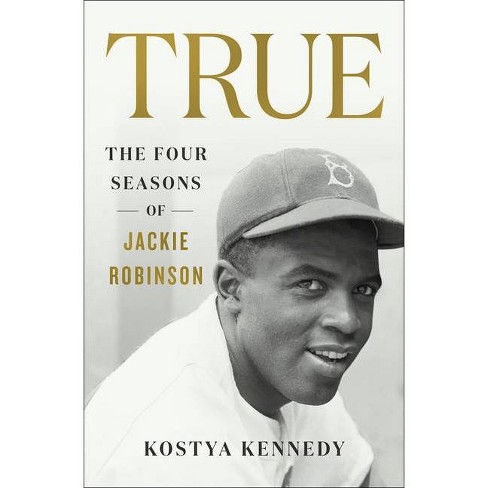
Jackie Robinson broke barriers. He broke through barriers when he joined the Montreal Royals, and then he broke through even more dramatically in the US when he joined the all-White, Major Leagues, as a Brooklyn Dodger. With his unique batting stance, his gutsy base-stealing, and his overall agility and competitive exuberance, he was a shining light for his team and for anyone lucky enough to be in the stands to watch him play. And while he encountered innumerable incidents of racism, he always maintained a calm demeanor even as he spoke his mind plainly. Through his larger-than-life image of poise and strength of character, he and his wife, Rachel, became integral to the advancement of civil rights in our country.
In this colorful depiction of the life of Jackie Robinson, we are given an insider’s view of his life and his struggles, his victories and his pain. Kennedy, through extensive research and a clear understanding of the game, gives us not only detailed descriptions of pivotal games played by Robinson – helping us to feel almost as if we ourselves are sitting in the stands – but also how Robinson must have felt during those games. We are deeply disappointed and hurt alongside Robinson during tours in the South, as he eyes his fellow teammates remaining on their bus destined for their all-White luxurious hotels, when he has to get off the bus to stay at a Blacks-only hotel or private home. We feel the resentment he feels as he continues to see, year after year, no Black managers or team officials in spite of his continued advocacy for this. But we are also thrilled by his wins and inspired by his accomplishments.
What I loved about this biography of Jackie Robinson was the tribute given to his wife, Rachel. It seemed that Robinson himself gave her so much credit for his success – and that was evident here in this book. Theirs was a true love story; they seemed to be a genuine team in love and in life. While she was a homemaker for much of his baseball career, she was trained as a nurse and an educator, and she returned to working once their children were grown. Later, she also helped to forge the advocacy and fundraising he began, long after his death.
You definitely have to have an interest in baseball to get through this book, as there are many detailed descriptions of games, plays, and players. But if you do, you will also learn quite a bit about how baseball lived as a metaphor for many, particularly those in the 1940’s and 1950’s, in Jackie Robinson’s heyday, for some movement toward the advancement of civil rights in this country.
 kindread spirits