
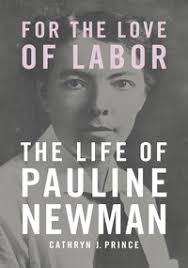
Born in the Jewish section of a small town in Lithuania in the late 1800’s, Pauline Newman spent her early years in a small but tidy house with her mother, father, and brothers and sisters. Although only a child, she already felt the frustration of being a girl in a world built for men. The boys were allowed to go to school while she was not; the boys were allowed more freedoms, while she was tasked with helping her mother with the housework. When her beloved father (who in fact did sneak her into the school while he taught the young boys) passed away, her mother suspected she’d be safer and have more opportunity as a single mother with children in America. Unfortunately, thousands of Jewish immigrants had the same idea, and opportunities were scarce. Because of the urgent need for a way to support themselves, Pauline was sent to find a job so that she could help contribute to the family, despite her very young age. It was there that she was exposed to the unimaginable work conditions in the sweatshops, there where her ideas on organizing and bargaining for improvements took root. These ideas would galvanize her to making improving life for workers – particularly women workers – her life’s work.
This non-fiction book reads like a novel, telling the true story of an American heroine. Before she was even through her middle teens, Pauline Newman established herself as a force to be reckoned with. Never one to shy away from conflict, her ability to speak and write despite her lack of formal education enabled her to organize women around the issues of the day: namely, the unsanitary, unsafe working conditions that she and so many other women and children endured while working in the sweatshops of the Lower East Side, including the notorious Triangle Shirtwaist Factory. Knowing that their only hope was collective bargaining, she organized groups to strike and bargain from the strength of unions. Little by little, she made headway, working with various organizations and writing for various publications.
Too often non-fiction can be laborious, but I found the writing in this book to be incredibly accessible and readable. I particularly enjoyed the more personal sections, those that focused on Newman’s private life. While often lonely and frustrated, Newman did manage to find love, albeit in someone who, because of their differences, broke her heart in some ways.
I cannot imagine the hours of research that went into this book – but the final product is a gift to those of us willing to read it. It is quite an American, real-life drama! (If you’re interested, you can find it at https://www.press.uillinois.edu/books/?id=c049552.)
 kindread spirits