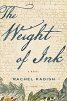
The Weight of Ink by Rachel Kadish

weight of ink

Aaron Levy cannot believe he will have to abide the sullen nature of his new mentor, just to be able to have a peek at the rabbinical documents and letters found under the stairs of an historic home outside London.  Helen Watts, this new professor he’s been asked to assist, seems not to have smiling nor social graces in her repertoire.   In truth, he realizes as time passes, that they both have issues to work out as they work together to uncover the secrets that have been buried under these stairs for centuries…  And centuries ago, in the 16oo’s, after taking 2 orphans to London with him as he fled the Spanish Inquisition, Rabbi HaCoen Mendes, blind, but trying to teach a few students, has compromised and allowed one of these orphans to be his scribe.  Ester, the bookish adolescent who dreams of nothing but to study and learn as much as she can as any boy might, has taken her seat at the writing table and begun to scribe the rabbi’s letters for him.  But as she grows older and reaches the age of marriage, this becomes more and more controversial and Ester devises a plan almost in spite of herself.

This is a magnificently crafted work of historical fiction.  The author weaves the plot by gracefully swinging back and forth between the modern day historians and the original characters, layering each of the characters’ stories on each others’ in order to build the connections — and the suspense as well.  And as the story builds, the characters deepen, and they each become much more sympathetic in their own ways.  As the scribe Ester becomes more and more real to the two historians, both Aaron and Helen become more and more human themselves and discover that each of them has used history as a way to escape their own humanness.

The writing in this book is brilliant.  It is beautiful, rich, and full.  The characters are complicated and imperfect and human and they are hard to leave when you finish the book.

You will also learn a lot of history from this book.  The time is the 1600’s, when there were many who had just fled the Inquisition.  People were terrified to speak their minds, fearing that if they said anything against any church, they’d be tortured and killed.  Women had one role in society and that was to marry and raise a family – and if they did not marry, their lot was to struggle and do housework for someone who was married and it was a hard life if you chose that route.  And then came the plague in London, which devastated much of the population.  It was a gruesome time.

But in spite of the ugliness of the time, the beauty lies in the resilience of the people living through it – and that is what is captured here in this story.

I loved this book – I am confident you will too!
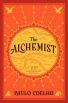
The Alchemist by Paulo Coelho

the alchemist

I finally had the opportunity to read what so many high school juniors have been reading for decades now.  Unfortunately, I did not have the benefit of what must be wonderful philosophical discussions about it with young, curious minds.

This story is about a boy, a shepherd, who meets a king who inspires him to follow omens and signs that will direct him to a treasure.  The king gives him 2 stones that indicate yes or no and are to be used to guide him through his journey.  Almost immediately the boy encounters failure.  Rather than becoming despondent, though, he picks himself up and begins to work to compensate for his initial failure and as he does, he learns that failure can teach lessons and that the journey is part of what enables him to achieve his Personal Legend.  Because he is mindful and attentive during each moment of his journey, crossing rivers and desserts, he inherits wisdom from each person he encounters, no matter how simple or how obtuse they may be.

It is clear why this book has been translated into so many languages and has been read by literally millions of people.  It can be understood on so many levels and its meaning broadened to so much significance.  So much so, that I will not begin to pontificate on that here in this blog.

Suffice it to say, that as I go on my personal journey in life, I will consider the message of the boy for me to be that we must be mindful of each step – good or bad – all the while taking into account and appreciating what we have already.

If you’re inclined to the philosophical, this book is for you!

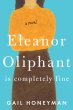
Eleanor Oliphant is Completely Fine by Gail Honeyman

eleanor oliphant

The best perk of writing a book blog is that I’ve gotten some fantastic recommendations from fellow book lovers.  This may be one of my favorites — thank you, Larry and Jim!

Eleanor Oliphant starts out in this story actually believing herself to be completely fine.  She is very much self-sufficient – she has a job, she has keeps herself clean and nourished and has her very practical routine which gets her through each week.  When she suddenly sees the man of her dreams at a party, a rock singer who is very handsome and would likely satisfy her Mummy’s vision of who would be sophisticated enough for her, she decides to go on a mission to spruce herself up a bit so that when she actually meets this man, she’ll convince him that they are meant for each other.  In the course of her doing this, a sudden incident with a co-worker, becomes a distracting adventure that opens up Eleanor’s world and enables her to see how she can truly heal toward becoming completely “fine.”

The writing in this book is magical.  The author writes of pain with humor and raw honesty all at the same time.  There is no over-dramatization, there is no explosiveness.  It’s quiet and understated and because it is subtle, even awkward because it is from Eleanor’s voice, it sneaks straight into your heart.  It made me laugh out loud but it also revealed darkness and sadness that almost choked me.  Few authors can do this with such grace and tenderness.

Eleanor develops her first real friendship with a coworker, Raymond, whom she finds initially almost irritating, with his smoking, his unkempt scruffiness, and his difficulty with being punctual.  But she learns that what really matters is that he is also kind and generous, and loyal – and that he is there for her when she really needs someone to be there for her.  That this is actually what friends do.  She’s just never had this before.

This is a beautiful book from beginning to end – the kind that you don’t want to put down but that you don’t want to end either.  I am reluctant to start the next book because I just want to live with these characters for a bit.

You will too – I promise!

This is truly a MUST READ!


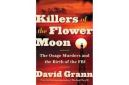
Killers of the Flower Moon by David Grann

killers of the flower moon

In the late 1800’s, the Osage tribe was forced onto what was thought to be a no-man’s land in Oklahoma.  At first, they lived there in poverty, but made the best of things.  When it was discovered that oil lay below their land, however, the Osage people quickly amassed a huge amount of wealth.  This brought with it, as it often does, great tragedy.  By the 1920’s came what has been called the Reign of Terror, during which many Osage tribespeople were killed for their inheritances because of this new wealth.  Worst, however, was the breadth of the corruption and cooperation among the law enforcement and the justice system at the time, mainly because of the overriding racism toward Native Americans.  It took Agent White, of the newly formed Federal Bureau of Investigation, under the helm of a young J. Edgar Hoover, to uncover the underbelly of the evil of what was going on – and still there was mystery around what really happened.

The story written about here is complicated.  It is a fascinating one, highlighting the development of crime investigation, as it was really at its infancy when these killings started.  It is also one of historical details, illuminating the beginnings of the FBI and how it began as an agency under J Edgar Hoover.  Really, though, it is another horribly shameful example in the history of our country, where racism enabled evildoers to perpetrate crimes with impunity against a group of people — similar to what we see today, sadly.

The writing of this story was a bit choppy and at times confusing; however, I imagine that combing through the years worth of documentation that the author had to search through, organizing all of the details into a linear pathway was a monumental feat.  Moreover, while telling this story more like a novel might have been a little more readable, it might have taken away from the credibility of the story.   The true beauty of this story, I feel, is that the author is honoring the poor victims of this ugly era by relaying this story as authentically as possible.  (The photos included really add to this in a huge way as well.)

To all you historians, this is especially for you.


Pachinko by Min Jin Lee

pachinko

At the opening of this novel, we meet Sunja, a young girl who toils away, helping her mother run a small boardinghouse on a small island in Korea.  When a young, handsome minister comes to stay with them and falls ill, he seems to be the answer to their predicament, as he is willing to marry her, even though she is pregnant with another man’s child.  As he carries her off to Japan, her life takes many unexpected twists and turns, and this poignant story follows her through the next generations.

Through the telling of Sunja’s life and the life of her mother and sons, the reader also learns of the experience of Koreans at the hands of the Japanese through much of the twentieth century.  Although many of Korean descent were born in Japan, they were not allowed to be Japanese citizens and were treated as foreigners in their own country, forced to obtain a Korean passport at the age of 14 and having to recertify this every 3 years, with the constant threat of deportation.  They were denied many educational and employment opportunities and often the only way to earn money was in businesses such as the “pachinko” halls, pachinko being a form of pinball or slot machine.  At the same time, anyone involved in these businesses were looked down upon and considered gangsters, whether or not they actually were.

What is apparent throughout the story is that this oppression casts a heavy shadow on each and every member of Sunja’s family and each comes to bear the burden in his or her own way.  There is some success and much heartbreak in the course of Sunja’s life as a consequence of this and it ranges from very outright to more subtle.

The more I think about this story and sit with it, the more I realize how much is here to think about and appreciate.

I think you will too.

Life is Short but Wide by J California Cooper

life is short but wide

When Irene first laid eyes on Val, she wasn’t at all experienced in the ways of men, but she was careful to make it clear that he was to show her respect – and that he did.  As Val courted Irene, and then proposed marriage, he wanted to prove to her that he was worthy of her, so he bought her a large house on an impressive piece of land, which would serve her well over the years.  This is the story of how this house enabled not only her survival, but the survival of the generations after her as well.

I didn’t care for the voice of the storyteller, first and foremost.  I feel that vernacular is great for dialogue in a story, giving characters authenticity and enabling you to almost hear them speaking out loud when you read.  But when the whole story is told in a vernacular, and in as repetitive a way as was used in this particular novel, it diminishes the impact of the story.

I also was waiting for a huge crescendo to the plot, but unfortunately – I’m still waiting.  There are a few blips, for sure, but it is hard to discern what is major and what is minor because of the inconsistent way in which the story is told.  Some parts are brushed over and some are drawn out in unnecessary detail and they do not, at least in my mind, correlate with the magnitude of the events themselves.  Even the characters themselves might have been developed further – it seemed that most were either only good or bad – that is, rather flat.  In my opinion, no one is all good, nor all bad.

So as you can easily surmise, I was disappointed in this book.  I would not recommend this one…


The Woman in the Window by AJ Finn

woman in the window

Anna has been watching the world from her windows for the past ten months.  A little ironic that a psychologist would develop agoraphobia, but this is the situation she finds herself in.  After she witnesses a probable murder through one of her windows, she tries to convince those around her that someone is in danger but somehow things get twisted and people are finding it hard to believe Anna, considering all that Anna has been through herself.  It’s even getting hard for Anna to believe it herself, but she knows what she saw… or does she?

This is a psychological thriller crisply written and immaculately spun.   There are twists and turns in the plot that would have Agatha Christie surprised and that had me exclaiming out loud to the pages of the book (ask my family – it’s true!).  Those pages had to keep turning or I could not sleep!  The characters are not all that fully developed, except for that of Anna’s, but it’s not that kind of a story.  It just works.

Let’s just say that if you start this book, be prepared to not be able to put it down until you finish it.

Got to give it a “Must Read!” Just for the fun of it!

Orange is the New Black by Piper Kerman

orange-is-the-new-black-book-cover

I’m probably the only person on the planet who has not watched the series on Netflix – and, nerd that I am, I have read the book instead.  But actually, I’m really glad I did.

Piper Kerman had just graduated Smith College and was unsure of her next step.  As she drifted toward an older, cooler crowd, she found herself falling for Nora, an older woman who she perceived as quirky but sophisticated and who had set herself apart by making quite a bit of money – by coordinating drug runners.  When Nora invited Piper to join her in Indonesia, Piper jumped at the opportunity and indulged in the opulent lifestyle that Nora’s business afforded them. When Nora asked Piper to transport money back into the States, Piper felt obligated to say yes, never thinking that years later, she’d be served papers that would charge her with a federal crime.  After court appearances and delays, Piper was finally required to serve a 15 month sentence in federal prison.  This book is the true story of her experience of that prison sentence in Danbury, CT.

Kerman writes about her experience with honesty, sadness, humor, and heart.  She describes how she’s finally matured into a life –  a successful job which she loves, an engagement to a man whom she adores and who adores her – and how painful it is to leave this behind.  She writes of the guilt she has about the agony she knows she’s inflicting on her family because of what she’s done. And she writes about how even as horrific as this experience is for her, she is aware of how privileged she is as a well-to-do, educated, white woman with resources and a supportive family, which is vastly different from the experience of most of the women with whom she’s incarcerated.  She describes so eloquently the bond which develops between her and so many of these other women because, at the end of the day, they are all in the same boat.  They need each other to survive and those who understand this develop a mutual respect that underlies the kindnesses they show each other.  It is these small kindnesses and empathy toward each other that help them to survive with their dignity and their sanity intact.

While this story is a few years old, it is still painfully relevant.  Our penal system is woefully broken and unjust.  Because of mandatory sentences on non-violent, drug-related crime, there are way too many people who are incarcerated for way too many years and a disproportionate number of these people are African-American and Latino.  In addition, there is an inordinate emphasis on punishment rather than rehabilitation and education and this only perpetuates the problem.  Piper never feels that she should not have been punished, but she does feel that there are random, myriad abuses of an inadequate system that she was witness to and that that need remediation.

I would highly recommend this book to others – and maybe I’ll watch some of the series now just to compare it to the book!


Someone Knows My Name by Lawrence Hill

someone knows my name

Aminata was born free, in the heart of Africa and learned early how to “catch babies” with her mother, who was a midwife in her village.  On their way back from delivering a baby in a nearby village, Aminata was captured, dragged on a 3-month trek over land and then forced onto a slave ship, which she survived within an inch of her life.  She was to go on to become a slave in the south and, like others of her time, become a pawn caught between the colonists and the British.   All she wished for, her whole life, was to return home to Africa – and it seemed as if the Book of Negroes, the book in which she eventually was inscribed, just might be her ticket back.  During her whole ordeal, she fought for freedom for herself and for all Negroes everywhere.  Would she see it finally come to pass?

There are innumerable books about slaves and slavery during the time of the Civil War, but this takes the reader further back, to the time of the American Revolutionary War.  This was a time when both the colonists and the British were inflicting the indignities of slavery onto the Negroes of the time and these people were essentially pawns caught between the two warring factions.  It was unclear which side would deal more fairly with their race and who to trust, and each individual gambled with their life in choosing sides.  We learn, through this story, about the British offer to those Negroes who had worked for the British for at least a year prior to the end of the war the promise of freedom and a new life in Nova Scotia.  But were they really to be trusted? Would they really achieve the independence they were seeking?

This is a powerful story about the inescapability of slavery for Africans of that era, and how globally it was accepted.  This story gave much historical context of the British practices and laws and the involvement of Canada and Nova Scotia as well.  While it was fictionized, much of it was based in fact.  Telling it from Aminata’s perspective highlighted how truly evil it was and her frustration with how she could truly almost never escape it now matter where she fled.  She could not trust anyone and she could not know for sure she would not be taken away and sold back into slavery if she were freed.  How terrifying.

This is an excellent book that truly grips you from the first page and doesn’t let you go until the last.  Historical fiction at its best.

The Forever Letter by Elana Zaiman

forever letter

Rarely have I had the opportunity to review a book written by someone I know – what an intimidating responsibility this is.  Lucky for me, I found this book by Elana Zaiman – a woman I grew up with and whose path randomly crossed mine so many times over the years – very engaging and helpful.  So much so, that I’m contemplating writing a few Forever Letters of my own.

The “forever letter” is an outgrowth of the ethical will, a will or letter that expresses your thoughts, wishes, stories, or apologies to anyone of significance in your life.  Elana’s rationale is that when you put pen to paper,  you can pour out your heart, but at the same time think through exactly what you want to say to a special person in your life.  Many of us can write things we cannot say – whether they sound too corny or make us cry too much or feel too awkward – and sometimes we feel the other person may not be able to hear what we have to say directly from us without reading it in a letter.   In addition, having something written allows for someone to potentially keep it with them long after you are gone.

Elana has traveled around the country,  giving workshops on this subject and peppers each chapter with anecdotes about individuals grappling with the complex issues these letters raise.  How do I transmit to my children the values I hold dear without leaving too restrictive a “commandment” when I die?  How can I express anger at a parent for their absence but not sever a tie with them?  Is it too late to apologize to my sibling after all these years?  There is a lot of emotional baggage that is dragged out of storage when you are talking about these types of letters and writing them, actually putting these feelings into words that are permanent can have lasting effects.  This must be done very thoughtfully.  And each chapter is therefore written with this in mind, giving examples and prompts and guidelines to encourage the writer to be reflective and mindful, but also loving and honest in the writing of these letters.

Elana includes a lot of personal vignettes, her own forever letter that she received from her father that triggered her understanding of the impact of these letters, and her forever letter to her own son.  These are powerful and allow us into her life in a very intimate way.  She shares her own vulnerabilities – mistakes and successes – and allows us to see her not just as a rabbi, spiritual leader, and speaker, but as a human being with a deep emotional life and normal human frailties.  Likewise, she emphasizes that these are components of the best forever letters.

If you are contemplating such a letter – or if you’ve never heard of one! –  this is a compelling book for you to read!