The Marriage of Opposites by Alice Hoffman

2-the-marriage-of-opposites

Rachel is a headstrong, fiercely independent young, Jewish woman living with her family on the island of St. Thomas in the early 1800’s.  Unfortunately, when her father’s business falters, it appears that the only solution is to marry Rachel off to an older man (with 3 young children), so that the two businesses can merge and hopefully prosper.  Rachel is devastated, as this certainly will delay the realization of her dream, which is to one day sail off to live in Paris.  Her best friend, and housemaid, Jestine, tries to convince her to resist, but she too is powerless in resisting the cultural pressures of her time and status as a woman.  The two of them experience many heartbreaks and successes together as the saga of their lives moves forward.  The one success that Rachel achieves, although this is one that causes her great pain as well, is that she ultimately becomes the mother of Camille Pissarro, the painter.

The writing of the tale is as lyrical as Pissarro’s paintings themselves.  The author paints both St. Thomas and Paris with words, filling in the hues, the aromas, the sensations of each world. There is also a great amount of magic and fantasy, as Rachel’s faith mixes with that of the native culture of St. Thomas, and conjures up many fictional, imaginative stories that Rachel records for herself and for her children.  And although there are a few paragraphs in which the author sort of meanders onto sidetracks, it is a story that keeps one glued because the characters are ones you don’t ever want to leave.

I admire Alice Hoffman for telling the story from Pissarro’s mother’s perspective.  It is not just a fictionized biography, but it is truly a story of a strong woman in a time when women weren’t allowed to be strong.  She shows how difficult the times were and how women’s powerlessness was analogous to that of the slaves at the time.   Neither could own property, could determine who they would marry, or truly had control over decisions that were made for them by the men in their lives.   This further deepened the emotional strength of the story.

Oh, how I’d love to go back to the Musee D’Orsay now!
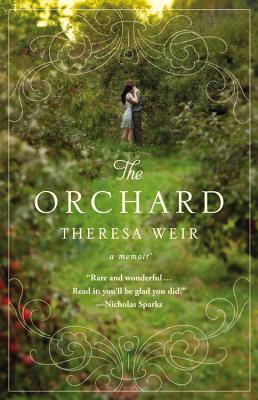
The Orchard by Theresa Weir

orchard

Have you ever started a book and realize that you’ve already read it?  This is what happened with this book – and it’s really the reason why I’m writing this blog!  I lose track of what I’ve read already – and now that I’m blogging, hopefully it won’t happen again…  This book is intriguing, though, and I ended up reading it again anyway.

It is actually a memoir, the story of Theresa Weir, a young woman with a rocky past, who worked and actually lived in her uncle’s bar.  She meets Adrian, a young, handsome apple farmer whose farm was rumored to be cursed.  Theresa, usually guarded, is taken by Adrian’s innocence and they begin a whirlwind romance that no one anticipates will last.  Theresa learns gradually what is at the root of the “curse” of the farm and she fights along with Adrian to try to overcome the history of the farm (guarded severely by Adrian’s hideous mother) to save themselves and their family.

What is important here is the message, which is that pure greed has led to the enlargement of farms and the use of toxic chemicals to achieve the “perfect” specimen of produce.  A key line in the book says something to the effect of man needing to work with nature not against it in order to grow the food he needs.  Adrian’s mother insists on perpetuating the use of pesticides on their farm, even in light of the deaths and miscarriages that have occurred there because of the chemicals.  And nothing convinces her otherwise, even the death of those close to her.

It is a story very close to my heart – as I agree that there is insurmountable evidence that pesticides are toxic.  The more we work with nature and not against it, the better!

Yes Please by Amy Poehler (migrated from bookblogger)

In the tradition of Bossy Pants, by Tina Fey, this book is a compilation of musings by her friend, Amy Poehler.  In fact, I liked this one better.  Amy Poehler speaks about her roots in improv and comedy, her earlier, hungrier days, and her experiences on SNL and on Parks and Rec.  She speaks about her family, her marriage, and her children in sort of random order.  She is funny, smart, honest and a little philosophical and the book definitely held my attention all the way through.

A nice little break from the serious stuff I’ve been reading…   Shout out to my daughter who is her biggest fan and who lent me her pre-ordered book!

This Common Secret: My Journey as an Abortion Doctor by Susan Wicklund and Alex Kesselheim (migrated from bookblogger)

This stirring memoir is the story of Susan Wicklund, MD, who performed abortions in multiple states for over 20 years.  It begins with an account of her personal experiences that lead to her decision to do this work and it takes the reader through the course of her tumultuous and dramatic career.  No other type of doctor is hunted and intimidated the way these brave physicians are.  No other doctor is forced to subject their families and friends to the kind of outright brutality that these doctors are — and ironically in the name of God!  They deserve all the recognition that this book begins to achieve.

It truly brings to light the hypocrisy of the protestors who plagued her.  In their urgency to protect “rights” of the unborn, for example, they completely trample over the rights of ACTUAL LIVING PEOPLE WHO SHOULD BE PROTECTED!  Staggeringly, some of the people who protested actually came in for services and then went  back out and protested again.  And you can be sure that their sisters, mothers, cousins and friends had probably used the services as well.  But go and shoot at the doctor and go and burn down the clinic so that you can make your empty, cowardly statement.

As you can see, I am passionate about this topic.  But I think no matter what your view on this subject, this book is a fascinating real-life story of a heroine.  An important book for us to be reading especially in the current, right-wing, conservative political climate in which we are, sadly, living.

Brain on Fire (migrated from bookblogger)

Brain on Fire: My Month of Madness by Susannah Cahalan

This is an autobiography of a young woman who had a psychotic episode that was caused by an extremely rare disorder of the brain.  Susannah Cahalan was a young, dynamic, outgoing and talkative journalist for the New York Post who suddenly started experiencing hallucinations, seizures and disordered movements.  She deteriorated to the point of catatonia, and was then fortunate enough to have been referred to a neurologist who was essentially her savior.

What is fascinating about this autobiography is that since the author was unable to think in any logical or functional way during the acute period of her illness, she pieced together her experience through interviews with and journals by her family, boyfriend and physicians.  She creates a smooth story from this research and tells the story as if she did remember it herself, always reminding the reader that this is what she was told occurred.  Some of her hallucinations are told first hand, however, because in her mind, these images were what was real.

Of course being a physician, this case is extremely interesting, but I think anyone could appreciate how interesting her course was.  In addition, it gives the reader an insight into how rare medical conditions can masquerade as usual ones and that diagnosis and treatment of medical problems can sometimes be extremely challenging.  While physicians are trained to recognize and treat the more common medical conditions, they are also trained to recognize that when symptoms and signs don’t add up, one has to delve deeper into the medical literature and look for what we refer to as the “zebras” of medicine.  (The saying is that when you hear hooves you should think horses not zebras.  Unfortunately, there are zebras out there as well.)

As Cahalan says, also, she was uniquely fortunate to have both the emotional support of her family and boyfriend (who stayed true to her through the whole ordeal and after) as well as financial support.  This enabled her to not only get through this very difficult time but also to access the medical treatment she required.  It is touching to read about how each of the family members dealt with her illness and stood by her side even while she was unrecognizable, both physically and emotionally.

It’s a tough book to read but very interesting…

Beautiful Boy (migrated from Bookblogger)

Beautiful Boy by David Sheff

I put off reading this book for so long because I knew it would be difficult — and rightfully so.  However, I do believe it is worth reading.  It is the harrowing, true story (probably so much more harrowing because it’s true!) of a father whose son is addicted to methamphetamine.  The account is painstaking and painful, recurrent and repetitive, really because the experience is.  He tells of his son, Nic, who is a bright, talented, truly “beautiful” boy who maybe  and maybe not because of his parents’ difficult divorce and their long-distance custody arrangement, begins to use marijuana.  He quickly moves on to alcohol and other drugs and finally finds his true love in meth.  And the drug, as it tends to do, takes over his life.  When Nic is on the drug, he becomes a different person — cold, impervious, resentful and conniving and completely manipulates his friends and family to enable his drug use.

His is a typical story, evidently, and the author peppers the story with actual research statistics and theories and advice for other parents in the same situation.  Mostly, though, it seems to be a catharsis for this father who writes as his way of coping.  He offers frequently that there is no great advice and there is no single answer to what heals an addict.  It seems there are some addicts who cannot be healed.  Even with treatment and rehab there is relapse and it often seems truly hopeless.

Probably most importantly, the author stresses particularly at the end of the book, the importance of the family members to get treatment themselves.  Being that closely tied to an addict can be just as “addictive” and destructive as being the addict.  It can take over your life just as easily.  This is an important message for those close to anyone with such an overwhelming disease.

As painful as this book was to read, I am so glad I did read it.  I learned so much.

The Glass Castle

The Glass Castle by Jeannette Walls

This book has been recommended to me for years and because I knew it would be disturbing, I sort of avoided it.  But I finally resolved to read it and I’m glad I did.  This is a true, autobiographical story about a girl raised by 2 parents who were, to say the least, unconventional in their philosophy on child-rearing.  It begins with Jeanette, at the age of 3 years, trying to make herself a hot dog (because her mother was busy with her art) and burning herself on the stove to the point of needing to be hospitalized for weeks for burns and skin grafts.  When she returns home, she is back at the stove, making another hot dog and cheered on by her mom who claims she should not be afraid of anything!

So begins a life of chaos.  Jeanette’s mother is an artist and writer who does not believe in rules, structure or discipline and who clearly wrestles with depression.  Her father is a brilliant man but cursed with alcoholism and is unable to maintain a job for any length of time.  Whenever the family begins to get behind on paying the few bills that they actually pay, or gets in trouble with the law, the family picks up in the middle of the night, without packing anything, and moves to a new town to begin anew.   The children frequently are hungry and forced to scavenge for food, in dumpsters, in the cafeteria garbage cans at school.  They are frequently the target of derision and even violence by their peers, because of their abject poverty.  What enables her to survive is the powerful bond between Jeanette and her siblings who protect each other fiercely.

And yet, what makes this story so moving and so engaging is the complex nature of the relationships between Jeanette, her siblings, and her parents.  Like all people who do bad things (or make poor decisions), her parents are complicated.  Her father, for example, who often drinks away the family’s money meant for food, also imparts wisdom to his children.  On a particularly touching and moneyless Christmas Eve, he takes each of his children out to look at the stars and “gives” each of them their favorite star as a special present.  There are these very touching moments that he does share with his children that make him a somewhat sympathetic figure.

So while I found myself yelling out loud at her parents and feeling aghast at some of her experiences, I understand why Jeanette had sympathy and love for her parents.  They were still her parents, no matter how neglectful or irresponsible they were.  She tells her story honestly and simply and vert clearly presents her struggle to love them in spite of her knowing even very early on that her parents were often wrong.  Her story is probably more common than we would like to think as is this struggle.

I am glad that I finally made myself read this.  It’s not easy, but I think it’s an important book to read.