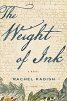
The Weight of Ink by Rachel Kadish

weight of ink

Aaron Levy cannot believe he will have to abide the sullen nature of his new mentor, just to be able to have a peek at the rabbinical documents and letters found under the stairs of an historic home outside London.  Helen Watts, this new professor he’s been asked to assist, seems not to have smiling nor social graces in her repertoire.   In truth, he realizes as time passes, that they both have issues to work out as they work together to uncover the secrets that have been buried under these stairs for centuries…  And centuries ago, in the 16oo’s, after taking 2 orphans to London with him as he fled the Spanish Inquisition, Rabbi HaCoen Mendes, blind, but trying to teach a few students, has compromised and allowed one of these orphans to be his scribe.  Ester, the bookish adolescent who dreams of nothing but to study and learn as much as she can as any boy might, has taken her seat at the writing table and begun to scribe the rabbi’s letters for him.  But as she grows older and reaches the age of marriage, this becomes more and more controversial and Ester devises a plan almost in spite of herself.

This is a magnificently crafted work of historical fiction.  The author weaves the plot by gracefully swinging back and forth between the modern day historians and the original characters, layering each of the characters’ stories on each others’ in order to build the connections — and the suspense as well.  And as the story builds, the characters deepen, and they each become much more sympathetic in their own ways.  As the scribe Ester becomes more and more real to the two historians, both Aaron and Helen become more and more human themselves and discover that each of them has used history as a way to escape their own humanness.

The writing in this book is brilliant.  It is beautiful, rich, and full.  The characters are complicated and imperfect and human and they are hard to leave when you finish the book.

You will also learn a lot of history from this book.  The time is the 1600’s, when there were many who had just fled the Inquisition.  People were terrified to speak their minds, fearing that if they said anything against any church, they’d be tortured and killed.  Women had one role in society and that was to marry and raise a family – and if they did not marry, their lot was to struggle and do housework for someone who was married and it was a hard life if you chose that route.  And then came the plague in London, which devastated much of the population.  It was a gruesome time.

But in spite of the ugliness of the time, the beauty lies in the resilience of the people living through it – and that is what is captured here in this story.

I loved this book – I am confident you will too!

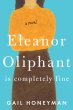
Eleanor Oliphant is Completely Fine by Gail Honeyman

eleanor oliphant

The best perk of writing a book blog is that I’ve gotten some fantastic recommendations from fellow book lovers.  This may be one of my favorites — thank you, Larry and Jim!

Eleanor Oliphant starts out in this story actually believing herself to be completely fine.  She is very much self-sufficient – she has a job, she has keeps herself clean and nourished and has her very practical routine which gets her through each week.  When she suddenly sees the man of her dreams at a party, a rock singer who is very handsome and would likely satisfy her Mummy’s vision of who would be sophisticated enough for her, she decides to go on a mission to spruce herself up a bit so that when she actually meets this man, she’ll convince him that they are meant for each other.  In the course of her doing this, a sudden incident with a co-worker, becomes a distracting adventure that opens up Eleanor’s world and enables her to see how she can truly heal toward becoming completely “fine.”

The writing in this book is magical.  The author writes of pain with humor and raw honesty all at the same time.  There is no over-dramatization, there is no explosiveness.  It’s quiet and understated and because it is subtle, even awkward because it is from Eleanor’s voice, it sneaks straight into your heart.  It made me laugh out loud but it also revealed darkness and sadness that almost choked me.  Few authors can do this with such grace and tenderness.

Eleanor develops her first real friendship with a coworker, Raymond, whom she finds initially almost irritating, with his smoking, his unkempt scruffiness, and his difficulty with being punctual.  But she learns that what really matters is that he is also kind and generous, and loyal – and that he is there for her when she really needs someone to be there for her.  That this is actually what friends do.  She’s just never had this before.

This is a beautiful book from beginning to end – the kind that you don’t want to put down but that you don’t want to end either.  I am reluctant to start the next book because I just want to live with these characters for a bit.

You will too – I promise!

This is truly a MUST READ!


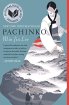
Pachinko by Min Jin Lee

pachinko

At the opening of this novel, we meet Sunja, a young girl who toils away, helping her mother run a small boardinghouse on a small island in Korea.  When a young, handsome minister comes to stay with them and falls ill, he seems to be the answer to their predicament, as he is willing to marry her, even though she is pregnant with another man’s child.  As he carries her off to Japan, her life takes many unexpected twists and turns, and this poignant story follows her through the next generations.

Through the telling of Sunja’s life and the life of her mother and sons, the reader also learns of the experience of Koreans at the hands of the Japanese through much of the twentieth century.  Although many of Korean descent were born in Japan, they were not allowed to be Japanese citizens and were treated as foreigners in their own country, forced to obtain a Korean passport at the age of 14 and having to recertify this every 3 years, with the constant threat of deportation.  They were denied many educational and employment opportunities and often the only way to earn money was in businesses such as the “pachinko” halls, pachinko being a form of pinball or slot machine.  At the same time, anyone involved in these businesses were looked down upon and considered gangsters, whether or not they actually were.

What is apparent throughout the story is that this oppression casts a heavy shadow on each and every member of Sunja’s family and each comes to bear the burden in his or her own way.  There is some success and much heartbreak in the course of Sunja’s life as a consequence of this and it ranges from very outright to more subtle.

The more I think about this story and sit with it, the more I realize how much is here to think about and appreciate.

I think you will too.

The Woman in the Window by AJ Finn

woman in the window

Anna has been watching the world from her windows for the past ten months.  A little ironic that a psychologist would develop agoraphobia, but this is the situation she finds herself in.  After she witnesses a probable murder through one of her windows, she tries to convince those around her that someone is in danger but somehow things get twisted and people are finding it hard to believe Anna, considering all that Anna has been through herself.  It’s even getting hard for Anna to believe it herself, but she knows what she saw… or does she?

This is a psychological thriller crisply written and immaculately spun.   There are twists and turns in the plot that would have Agatha Christie surprised and that had me exclaiming out loud to the pages of the book (ask my family – it’s true!).  Those pages had to keep turning or I could not sleep!  The characters are not all that fully developed, except for that of Anna’s, but it’s not that kind of a story.  It just works.

Let’s just say that if you start this book, be prepared to not be able to put it down until you finish it.

Got to give it a “Must Read!” Just for the fun of it!

Someone Knows My Name by Lawrence Hill

someone knows my name

Aminata was born free, in the heart of Africa and learned early how to “catch babies” with her mother, who was a midwife in her village.  On their way back from delivering a baby in a nearby village, Aminata was captured, dragged on a 3-month trek over land and then forced onto a slave ship, which she survived within an inch of her life.  She was to go on to become a slave in the south and, like others of her time, become a pawn caught between the colonists and the British.   All she wished for, her whole life, was to return home to Africa – and it seemed as if the Book of Negroes, the book in which she eventually was inscribed, just might be her ticket back.  During her whole ordeal, she fought for freedom for herself and for all Negroes everywhere.  Would she see it finally come to pass?

There are innumerable books about slaves and slavery during the time of the Civil War, but this takes the reader further back, to the time of the American Revolutionary War.  This was a time when both the colonists and the British were inflicting the indignities of slavery onto the Negroes of the time and these people were essentially pawns caught between the two warring factions.  It was unclear which side would deal more fairly with their race and who to trust, and each individual gambled with their life in choosing sides.  We learn, through this story, about the British offer to those Negroes who had worked for the British for at least a year prior to the end of the war the promise of freedom and a new life in Nova Scotia.  But were they really to be trusted? Would they really achieve the independence they were seeking?

This is a powerful story about the inescapability of slavery for Africans of that era, and how globally it was accepted.  This story gave much historical context of the British practices and laws and the involvement of Canada and Nova Scotia as well.  While it was fictionized, much of it was based in fact.  Telling it from Aminata’s perspective highlighted how truly evil it was and her frustration with how she could truly almost never escape it now matter where she fled.  She could not trust anyone and she could not know for sure she would not be taken away and sold back into slavery if she were freed.  How terrifying.

This is an excellent book that truly grips you from the first page and doesn’t let you go until the last.  Historical fiction at its best.

An American Marriage by Tayari Jones

an american marriage

Roy Othaniel Hamilton is a well-to-do Black man from the Louisiana, who now lives with his wife, Celestial in Atlanta.  They’ve come home to visit Roy’s parents, but because of a little friction between Celestial and Roy’s mom, they decide to stay in a little motel for the night.  After a benign encounter with a woman down the hall, they are suddenly accosted by police and Roy is eventually convicted of a crime he never committed.  As the story unfolds, we are drawn in to feel the painful ripple effect of how one (erroneous!) incarceration can devastate so many lives around the one, innocent, individual.

Tayari Jones is a masterful storyteller.  She changes voices with each chapter, a la Jodi Picoult, and this helps the reader to see inside the heart of each main character.   In addition, she utilizes letters written by the characters, which help the reader to feel the distance that the characters themselves feel when they are kept at a distance by prison walls.  The characters she creates are deeply human – they are all Black, and they are each beautiful and flawed and real in their own ways.  It is hard not to sympathize with each and every one of them.  And the story itself is extremely powerful, playing out slowly and rising to a dramatic crescendo.

According to the NAACP, African Americans are incarcerated more than 5 times the rate of whites, and although African Americans and Hispanics make up only 32% of the U.S. population, they comprised 56% of all incarcerated people in 2015.  There is clearly a problem here.  And of course this problem is complex; with poverty and educational disparities and opportunities being at least part of this problem.  And I don’t profess to be able to solve things merely by reading a book.

But…  by reading books such as these, we begin to bring to light what the problem is and how deeply this affects so many people.  We begin to bring understanding and compassion to what people experience when this happens and it becomes more than just a statistic.  And hopefully it will help us to stand up for our fellow man and woman and to see it as a problem that affects us all and not just “the other.”

Reading books such as these – is a start.

This is a MUST READ, for sure.


Seven Days in May by Kim Izzo

seven days in may

This is a gorgeous work of historical fiction that is a new addition to my “Must Read” list.  Isabel is a woman hell-bent on reinventing herself as a decoder for the war effort for Britain during the second World War.  Across the ocean, Sydney begins as a headstrong suffragette, much to the chagrin of her sister, Brooke, who just needs Sydney to tone it down so as not to scare away Brooke’s fiancee Edward.  They are all entwined by the voyage of the Lusitania, which is to carry Brooke, Sydney and Edward to England where Brooke and Edward are to marry.  Will the Lusitania make it through war zone waters safely?

This is a beautifully orchestrated novel, with suspenseful subplots and many amusing and colorful characters that draw the reader in and keep the pages turning.  Both Isabel and Sydney are strong protagonists, each with complicated pasts but each also very forward-thinking.  The reader cannot help loving both of them for their idealism and their honesty.  I imagine some of the scenes as being beautiful, by the descriptions of the elegant rooms on the ship, the gowns that the sisters wear, the view from the ship – I can easily picture a filming of this book.

But the real beauty lies in the suspense that builds throughout the story, both in the various sub-plots as well as in the overall big story.  There is a battle between the sisters that must be overcome.  There is someone who might jeopardize all that Isabel has worked so hard to achieve.  And will the Lusitania actually defy the Germans and cross to Liverpool safely?  This is a page-turner that will bring tears to your eyes, that you will read late into the night, and that will stay with you after putting it down.


Why We Sleep by Matthew Walker, PhD

why we sleep

After hearing Dr. Matthew Walker interviewed on NPR, I immediately bought it and read it cover to cover – and enjoyed it every bit as much as the interview itself.  Dr. Walker has devoted his career for the past 20+ years to the science of sleep and has amassed a great deal of knowledge on the structure of sleep, the benefits of sleep, the medical and psychological consequences of a lack of sleep, and societal costs of our communal lack of sleep.

What is most impressive about this book is its readability – it is science-based but not full of jargon.  Dr. Walker describes each study that supports each of his claims about sleep, but he does so in a very clear and concise way so that any lay person reading the book can understand how the study group compares to the control group in each experiment and how the conclusions were made.  He also intersperses stories and anecdotes that engage the reader so that it is not just a preachy lecture but rather a mind-opening presentation of scientific ideas based on fascinating data.

His conclusions are many and of utmost importance.  Sleep is critical to our health and our ability to learn and retain memory.  Even getting less than 7 hours of sleep a night can have a detrimental effect on our health, increasing our risk of diabetes, heart disease, cancer, and infections.  It can have an affect on our memory and ability to learn – particularly in adolescents, whose school start times are early in the mornings (which doesn’t jive with their later circadian rhythms).  It can also increase risk of depression and anxiety – no wonder there is so much more of it now than there ever was before!

What causes us to sleep less?  We have electric lights that keep us awake longer into the evening/night.  We work earlier in the morning and then later into the night and then have activities and entertainment later into the evening/night.  We have electronic devices which have blue light/back lighting that send messages to our brains that inhibit melatonin that tells our brains that it is still daytime, so our brains don’t think it’s time to go to sleep yet.  All these contribute to later bedtimes.

So what to do?

I’ll suggest you read this book to find out.  There are great suggestions about sleep hygiene, treatment for insomnia (against medication, but supporting CBT), important lifestyle suggestions and some major public health recommendations.  The one suggestion emphasized the most?  To maintain a consistent sleep schedule throughout the week (including the weekend)!


Sweeping Up Glass by Carolyn Wall

sweeping up glass

Olivia is determined to figure who is killing and disfiguring the wolves on her property and why.  She has her suspicions about it – the Phelps boys have always been evil, for example- but she cannot understand why.  Meanwhile, she has to go about her life, juggling her responsibilities of raising her grandson, caring for her insane mother whom she has always called Ida, running her grocery store, and maintaining her household, until her life gets completely turned around by her gradual discoveries from her wolf investigations.

The voice of the storyteller is Olivia’s and it is frank and raw and powerful.  Olivia lives in such frequently harsh conditions that her emotions usually must be kept tamed, but the heat of her seething anger sears the page.  She loves her father as fiercely as she hates her mother, and her world is build around this contrast.  She is smart but not educated and while she doesn’t give herself credit for having much, she manages to navigate complicated and even dangerous situations with strength and with heart.  She is a truly beautiful, strong woman character.

I think the way that racism and racial violence is woven into the story is extremely effective as well.  There is a building of very tender relationships between Olivia and some of her black friends, particularly of her best friend, Love Alice, as a preface to any of the tension.  When incidents do happen -or even threats of them-  then, it becomes all that much more personal and so incredibly disturbing.  It feels like my own family members have been affected when they are only fictional characters, because of this beautiful character development.  And the story builds into an incredibly suspenseful and somewhat complicated plot line – I literally could not put this book down!

This was a surprisingly excellent book – I very highly recommend it!  A new “must-read” for the blog!

Turtles All the Way Down by John Green

turtles all the way downc

Here we have another intriguing novel by John Green, who seems to really get young adults at their very core.  He introduces Aza, a teenage girl with crippling OCD, still mourning the death of her father years prior, who learns that the father of her camp crush from years ago has gone missing.  Why is her best friend, Daisy obsessed with this?  Because there is a huge $$ reward and they are both trying to save for college.  So as they set out together to dig in for clues, they find more than they bargain for in the deal.

There is a lot to unpack about this book.  First of all, Green gives us a window into the mind of someone with true OCD and it is scary and debilitating.  Poor Aza cannot even kiss her young, hapless boyfriend because she is overwhelmed by fears of what germs she might contract by the exposure.  Her “invasive” thoughts bombard her brain and throw her into downward spirals of obsessions that last for hours, and she has no control over this.  She questions whether she is even her own self or whether she is just a product of the organisms that are inside of her and of the forces that act upon her rather than her own agency.  Aza is also called out by her best friend for her self absorption, for which she hates herself.  Again, she feels she cannot control this because she cannot control her thoughts – she feels they control her.  Through Aza, Green succeeds in giving the reader insight into how this lack of control actually feels.

It is interesting how Aza’s psychiatrist is depicted, which for most of the story, is fairly useless.  Although Aza is not exactly forthcoming with answers to the psychiatrist’s questions, she does answer truthfully for the most part and yet the psychiatrist does not give much in the way of concrete advice.  I would imagine that there are distraction techniques (she does use some breathing) that are incorporated into treatment that might have been used.  The point is likely that treatment is often difficult and feels futile.

Even the parts involving Aza’s new boyfriend are sweet and endearing, even as painful as many of the scenes are.  And the story line about the missing father keeps a mysterious thread running through the story to tie it together, giving it a purpose.

I actually think this is a beautiful, extremely readable, somewhat depressing but realistic novel that would appeal to adults every bit as much as teens.  I also think it’s extremely important for all to read as much as possible to increase our awareness and understanding of all types of mental illness, including OCD.