
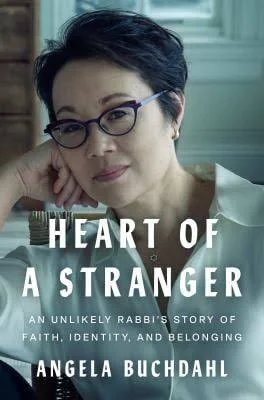
Born to a Korean mother and an Ashkenazi Jewish father, Angela feels caught between their two worlds. Is she truly Jewish, as her Reform synagogue has considered her? Is she not really Jewish as she’s been accused of by Orthodox acquaintances? Having been raised in an open, inclusive congregation in Tacoma, Washington where she was one of very few Jews, she identifies as very Jewish and early on felt her calling as a rabbi. Women had just begun to be ordained the year she was born, at least in the Reform movement, and her experiences as a Jewish song leader in her summer camp and in the religious school at her temple, as well as her close fellowship with her rabbi and first mentor, impacted her feeling of purpose. Along the way, she encountered many obstacles as well as much encouragement, and with all of this has gained much fame as the first Korean, woman rabbi and the spiritual leader of one of the largest congregations in the Jewish world.
In more ways than one, Rabbi Angela Buchdahl is an unlikely rabbi. According to traditional Jewish law, which defines being Jewish without conversion through one’s matrilineal line, Angela would not be considered to be Jewish by Jews outside of the Reform Movement. In fact, many have questioned her identity as a Jew, at least before she did undergo a more official conversion (although still others would not recognize her Reform conversion, which is, in my opinion, unfair). Meanwhile, her most formative experiences were always spiritually Jewish. Even as a teen, she attached the newest, most joyful tunes to familiar prayers and shared them with youth both at her summer camp and in her community. While in Israel on a summer program, she inhaled the religious guidance from the many mentors she found (even while digesting the rejections she also met) and this and other experiences solidified her mission to pursue the rabbinate.
Interspersed within her story, Rabbi Buchdahl also shares words of Torah. Between each chapter, she shares her and others’ interpretations of various. relevant phrases from the Scripture, enhancing their meaning and tying them to what she has experienced/discussed. This not only provides an unusual reading experience, but also highlights her insight, sensitivity, and wisdom.
I am also impressed with how flexible and supportive her mother has been. While her mother treasured her Korean culture and background, staying close with her family and spending her life helping Korean and other immigrants in their settlement to this country in so many ways, she also allowed her daughter to find her own path to a spiritual life. She always encouraged her in spite of being concerned about the many obstacles she foresaw and worried about. She was always proud of her daughter’s accomplishments.
This is an important memoir in many ways. It demonstrates that Jews can have many identities, whether being of color, of mixed race, or coming from unusual backgrounds and experiences. It demonstrates that women can achieve high levels of leadership that don’t necessitate compromising their personal lives. It demonstrates that Jews of all demographic backgrounds and denominations can achieve success in inspiring others to find religious fulfillment.

