Outer Banks by Anne Rivers Siddons

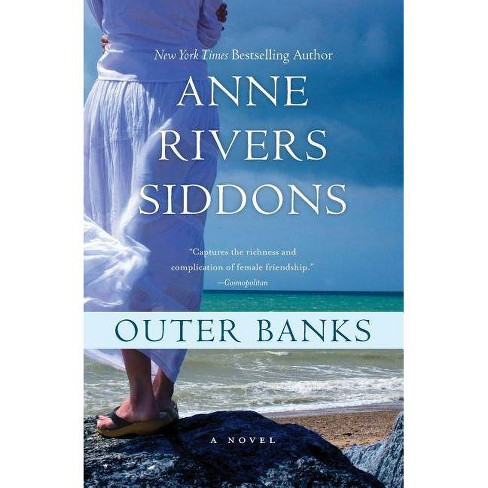
Kate was not rich, but from a young age, she was groomed by her father to appear so, in order to fit in with those who are. Because of this, she had an aura of grace which those around her in her Southern college sorority – particularly the hapless Fig – sought to emulate. Although she treasured the bonds that grew between her closest friends – Cecie, Ginger, even Fig – something came between them that shocked even Kate. Now, after 30 years, she is being drawn back in – to see them all once again, to reminisce, to delve back in to those memories. Can she do it? Can she go back there, in spite of the pain? Only with a plan…

Anne Rivers Siddons had a gift for creating characters so authentic that they seem to jump out of the page and speak to our hearts. The four friends and their adolescent relationships were depicted as naturally as any that exist in any dorm room across the country, with their typical jealousies, the drunken banter, and the timeless dreams and anxieties that have blessed and cursed women in colleges since women have attended colleges. Likewise, the character of the older Kate, with her knowing cynicism and untrusting fears, is similarly relatable and sympathetic.

This is a beautifully written story, a timeless tale of young women who create a complicated past for themselves, and who ultimately come together to remember and to forget. But it is a story that the reader will remember long after the last page has been turned.


The Guernsey Saga by Diana Bachmann

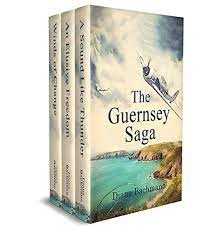
This trilogy begins with the joining together of the Ozanne and Gaudion families, traditional families living on the small island of Guernsey off the coast of England beginning in the early 1930’s. They are joined by the marriage of Sarah to Greg, with Sarah reluctantly giving up living with her boisterous family to join Greg’s elderly parents in his more staid household. Fortunately, her older sister, Ethel, often comes round to cheer her. Sarah and Ethel had shared a room as well as a close bond and a sense of humor, which often got them into uncontrolled giggles during their family meals. The trilogy follows the family through three generations: during the Nazi occupation of the island, during cultural upheaval of the 1960’s, and during the financial fluctuations of the 1970’s.

This is a warm and beautiful family saga, with moments of solemn strife alternating with times of tearful tenderness. While the circumstances of the family are unique, the underlying issues are timeless. Adolescent rebellion, inter-generational miscommunication, internal loyalty battles, spousal mistreatment, dishonesty – all issues that we can all relate to no matter the era, no matter the culture. The characters are relatable as well: the self-doubting, tongue-biting mother; the critical and self-righteous husband; the quiet and studious son – there are so many likable (and unlikable) and colorful characters who we come to know over the three books so well and over their years that we are sad to leave them when the third book ends.

The writing here is also poignant and effective. We really come to know the characters so intimately that we feel their pain, their stress. When they are starving because of the limited food on the island during the Nazi occupation, we feel their hunger. When we learn about Sue’s loneliness during the war, when she’s been sent with her school to Wales for safety, we yearn as she does for the love of family. And when Stephanie rages against her mother, we feel the deep cut of hurt that Sue feels.

Living in a small town where everyone knows everything about you and your family – your history, accomplishments and failures – might be challenging. But I can’t help wondering what a trip to seaside Guernsey would be like -it sounds magical!


The Lager Queen of Minnesota by J Ryan Stradal

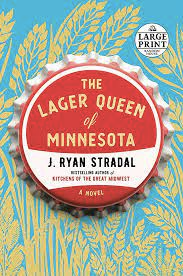
Helen and Edith are about as different as two sisters might be. Although both are hard-working, Edith is content to marry her best friend and take life as it comes, while Helen sees everyone around her as a vehicle to achieving her ambition: to create the best and most successful brewery around. Sadly, it is Helen’s ambition and selfish thinking that drives a wedge between the two sisters, forcing them to lead very separate lives. As we accompany the two sisters on their life journeys, we see how their lives are both ultimately dominated by the pursuit of creating that fine brew.

I believe this is another example of a cute idea only moderately well-executed. The characters are likable but a bit dull, actually, with the exception of Edith’s granddaughter, Diana. Diana we meet after she loses both parents in a tragic accident, and she is struggling to help financially support her grandmother with radical means. She is the most interesting, the deepest, the most colorful. We see her grow, mature and blossom.

I think the issue is the writing in general. There is a story here, but it is relayed with such a flat and almost monotone delivery that it lacks the hills and valleys that fine storytelling will have. Even when there is a major development, it feels glossed over so quickly it is barely noted. While I don’t like drama for the sake of drama itself, there is a reason a story is told. In addition, the author got a bit bogged down in the detail of the brewing of the beer such that it distracted from the storyline itself. While some of it was interesting, too much of it was overly detailed and esoteric – more than what the average reader (ie. me) needed to know or could relate to.

So, maybe rather than being like Diana’s creative craft IPA’s, this book was more like Helen’s tired lite beers?


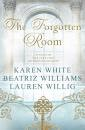
The Forgotten Room by Karen White, Beatriz Williams and Lauren Willig

In the midst of the Gilded Age, when most young women are focused on ballrooms and bridal gowns, Olive is focused on revenge. It is clear to her that her father had been wronged, cheated out of his rightful earnings from his hard work as the architect of the magnificent Pratt mansion and she is determined to expose this travesty.

Lucy is also connected to the Pratt mansion, living there when it becomes a boarding house for “respectable ladies” in the 1920’s. She, too, is on a personal mission – to see where her mother’s heart has always been during her lifetime, because it has been apparent to Lucy that it has not fully been with Lucy and her father. In fact, Lucy wonders if the man she knows to be her father is actually, in fact, her true father.

Finally, there is Kate, a doctor during the second World War, linked also to the Pratt mansion when it is again adapted to function as a hospital for wounded soldiers. When a stunning soldier is brought in on a stormy night with a leg infected so severely it may require amputation, she is startled by the way he seems to recognize her and how he feels familiar to her as well.

As the story unfolds, we learn how these three women are connected, how their lives and their loves have been thwarted, and how the Pratt family fortune and misfortune has impacted so many others.

While I am not familiar with the other two authors, I love anything by Beatriz Williams, and this novel is no exception. Each segment of the narrative is captivating as a stand-alone story, with each of these strong, independent women capturing our hearts with their missions, their wills, and their defiance. But to weave the story together with the three of them is quite the ingenious feat – and it is done both smoothly and powerfully.

I highly recommend this book – it has romance, intrigue, and is just beautifully written. Not only a great summer read, but a just a great read.


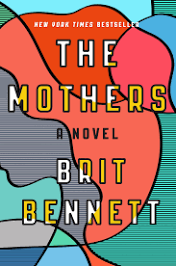
The Mothers by Brit Bennett

As the women (or “mothers”) of the Upper Room, a church at the heart of the Black community in Oceanside, CA look on, Nadia Turner, reeling from the recent death of her mother, drifts from the school where she’s previously been so successful, into the arms of Luke Sheppard, the preacher’s son. They watch as she devolves into a lost soul, wrangling with her grief, unraveling the ties with her friends and even with her father with whom she’d been close. When a crisis arises between Luke and herself, it seems to create a hole in her heart that she spends the next years of her life seeking to fill – and burning bridges and breaking hearts in her wake.

What is most unique about this book is the voice created by “The Women.” We are told this story by the community of women who have been watching Nadia and Luke since they were young, as so often occurs in tightly-knit communities, where everyone knows everyone else’s business – or at least believe they do. The tone is, in this way, kept lighter, and at the same time more familiar. I believe no matter your heritage, we can all relate to that sisterhood of women in some segment of our lives who maintain a running commentary about us: who we’re becoming and what we are thought to be doing – and judging us without trying to appear as though they are doing so. I could not help smiling throughout these sections.

And thank goodness for these sections because the main thread of the story is quite sad. Nadia’s journey is tragic, her life having been pierced by so many losses which she was unable to process with anyone who could be helpful to her. Because her father was so deeply entrenched in his own grief, muddling his way through, he was unavailable to her, leaving her to cope in the only way she could – looking for love and affection from whomever she could find it. She continued to be a lonely figure, unable to fully give of herself because her “self” had become so deeply wounded.

This is an important story, told in a uniquely creative way – an absolutely worthy read!

The Cherry Bombers by Sarai Walker

Sylvia Wren is quite content to hide away from the world in the Santa Fe haven she’s created with her partner, Lola. While the world knows her art, they do not know her, as she has striven to keep herself as private as she possibly can, knowing only the few she’s had to interact with by necessity – her lovely neighbors (who check in on her, especially when Lola is away), her lawyer, and her agent. All her correspondence is taken care of by someone she’s hired to do just that – so she isn’t sure how this one journalist has managed to penetrate this wall she’s build around her. How did she manage to find out anything about her past? How did she manage to connect those very ancient dots, to dig into who Sylvia really is? Might it be time for this to happen?

While using a highly unusual means of doing so, this story quite dramatically illustrates the outrageously imbalanced and distorted view that society has taken throughout the years when it comes to the mental health of women vs men. When women have presented in any way different, unusual or ever-so-slightly out of whatever the box society has chosen to place them at that time or place, they are deemed “crazy” or “insane” and are either locked away, tortured or murdered for who they are. (Look no further than the Salem witch trials to see a perfect example of this.) In this story, when a mother who predicts the danger her daughters are about to encounter, no one listens and worse, even when she’s right, they attempt to explain away her validated predictions and deem HER as the one who is insane. Again and again and again.

There are certainly many unconventional moments that one has to stretch the imagination to abide. And I also know that there are many things that occur in this world that we cannot explain with our current understanding of the world. But there is also kindness, and patience, and learning from our past. And there is also the knowledge that our past is littered with a patriarchy that has dominated society too often to our detriment. (See all the wars that have occurred throughout history…)

This is a wildly inventive story, full of imagery that will spark your creative inclination. It also carries quite a bit of mystery and suspense. Read it with an open mind and you will receive a worthwhile message here.


No Angel by Penny Vincenzi

When Celia focuses her attractive, intelligent gaze on a target, she essentially uses whatever means necessary to achieve it. So when she falls heavily in love for Oliver Lytton, even though he does not meet her parents’ ideal of whom she is to marry, she manages an underhanded way to force their approval. And when Oliver does not envision his wife as a working woman, she likewise convinces him that she is in fact essential to his publishing family business. As we follow Celia and Oliver through the first World War and see how it impacts their family and their business, we learn about life, about class, and about how compromise and understanding can heal a multitude of ills.

Once again, Penny Vincenzi has created a family, even a world, in which we are engrossed and enamored. Every one of the characters – and there are many with whom we become intimately familiar -is deeply rich, utterly imperfect, and so lovable that we care what happens to each and every one of them. These characters are taken through important moments in history during which they struggle and experience lasting impact. And there are moments of great tension, near-misses, and disappointments, when you cannot help but catch your breath or utter out loud.

There is also an important discussion of class here, that is raised sometimes subtly, sometimes overtly. When little Berty, the daughter of a poor, working class family is taken into Celia and Oliver’s family to be raised alongside their children, we are brought into her experience of feeling at home in neither family. Feeling over-privileged among her actual siblings, but treated like a foundling among her adoptive siblings, she is caught between these two worlds and is forced to navigate this tension starting at a very early age. She learns to use her intelligence and her kindness, and to find her allies early – and this serves her well, but she does suffer plenty along the way.

As each of the characters and each of the story lines come together, they wind around to enthrall and engage the reader just as in a perfectly choreographed dance. You want to know what happens but you never want it to end…

The perfect summer read!

Small Pleasures by Clare Chambers

Jean has been stuck in her dreary routine for longer than she cares to remember: caring for her mother, who complains at any deviation from their rigid schedule, and working as a reporter where she is treated like “one of the guys” because of her plain, middle-aged, single status. When a letter comes across her desk from a woman, Gretchen Tilbury, who is convinced that her daughter was born a virgin birth, it incites a curiosity in her that she must investigate. When Jean meets this family, she opens herself up to a whole new experience that changes her life forever.

Despite the attempts to integrate science into the discussion of the “virgin birth,” it was obvious to this cynical reader where the narrative would lead. In fact, while there were many attempts at realism, too much of the story was so unrealistic that it made the whole picture a bit hard to swallow. For example, Jean is tied to her mother and can’t get away during weekends, but why is her mother ok during weekdays? Why is her sister abroad and NEVER visits, ever – for years? Do folks really believe that this woman conceived by parthenogenesis (the development of an egg without fertilization)? 

Sadly, too, the dreariness of Jean’s life seeps into the narrative of the story and contaminates the story itself. There is a pall over the whole experience, and even the happier times feel a bit dulled because of her innate, reclusive, even negative countenance. While we certainly wish her well, we also can’t help being a bit resentful of her as well. Why has she not stood up for herself earlier? Why should it have taken this long for her to have come up with a plan to engineer time for herself? To carve out a life for herself, independent from her mother? 

With all this, I feel that with all the books in the world and with so little time that we all have to read, this should not be one to prioritize…  Spend time on my MUST READ’s instead! 🙂


One to Watch by Kate Stayman-London

Bea has made a very full life for herself, with her plus-size fashion blog and the travel and networking that is required – or at least that is what she tells herself. That is, until she meets up with her long-term crush who utterly breaks her heart. After a public wise crack about a dating reality TV show where all the women have been impossibly thin, she attracts the attention of the producer, who invites Bea to be the newest “Main Squeeze.” Bea sees this as an opportunity to represent larger-bodied women, even as a business opportunity. But it may also be a chance for Bea herself to be convinced that she deserves love just as any other woman does…

If you’re looking for an easy, entertaining, but not entirely vacuous summer read – here it is! Written with great insight, warmth and sarcasm, the story carries us through Bea’s struggle and her growth. We learn about her difficulty with her size, how it has impacted her social interactions since her youth, and how a pivotal moment on her college study abroad has changed her course. The author occasionally intersperses comical internet conversations/texts/blog posts that comment on the plot, which add the social media dimension to the plot line and magnify the experience for us, just as it has been magnified for Bea herself. We live through Bea’s romantic ups and downs and feel deeply for her because we also love her – for her vulnerability, for her kindness, and for her gumption.

I was not expecting to like this book as much as I did – I highly recommend it – it’s great fun (especially for all you reality TV fans out there!) and carries an impactful message.

Hello Beautiful by Ann Napolitano

From early on, William has done everything he can do to make himself small. After tragedy befell his family shortly after his birth, his parents could barely hold on and he did what he could to make himself disappear. The only outlet he found to appease his loneliness was basketball, at which he found himself excelling. Meanwhile, Julia, nicknamed aptly by her father as the “rocket,” was a force to be reckoned with. She was the problem-solver, the arranger, the one in charge. She always had a plan, for herself and for anyone else in her tightly-knit family. Once her world collided with William’s, their lives would be changed forever – and in ways even Julia could never have predicted.

This is a powerful story about family – about how family can crush us, surround us, desert us and engulf us. Napolitano’s portrait of these two families (William’s and Julia’s) highlight family relationships at extremes. William’s parents emotionally abandon him at infancy, whereas Julia’s family is pathologically enmeshed such they have few relationships outside their nuclear family. While at first this seems to connect the two of them, perhaps fill a need for each of them, it may also create a blindness to what the other may be feeling, how it may impact each of them psychologically. They are both naive to the fact that our families are inside us, no matter how mightily we may try to rebel against it.

The writing in Hello Beautiful is interesting. While many authors will direct the readers in how to feel, in so many words, Napolitano seems to elicit our emotions by just telling the story outright, giving us a chance to form our own opinions, to have our own reactions. We are privy to the inner thoughts of each of the main characters- their frustrations, their demons – but we are also given the facts of their lives, the skeleton of their days in order to see the whole picture. It is not devoid of emotion – on the contrary – but what we feel in reaction to it is very much our own. What we feel is because we have formed genuine attachment to the characters and their fortunes and misfortunes. It is a unique and effective style of narrative.

I am still living with these characters – I feel that I will be living with them for quite awhile. I love when that happens.