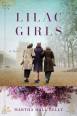
Lilac Girls by Martha Hall Kelly

lilac-book-jacket

Wow.  I just finished this book and I’m still breathless…

Caroline is a young debutante who has given up her acting career to volunteer to help French families who have just come to resettle in NYC in the late 1930’s. Herta is an ambitious physician, one of the few women doctors, in fact, in Germany in 1939.  And Kasia is a teenager who, in 1939 decides she will join her crush, Pietrik, and deliver packages for the Polish underground, after the invasion of the Germans.  As you might expect, these very different women’s lives eventually intersect as the tragedies of the second World War drive them together.

What is most staggering is that this story is based on the lives of real people and real events.  Both Caroline and Herta were real women, individuals who exemplified the best and the worst that women could be.  And Ravensbruck, the Nazi concentration camp for women, was frighteningly real as well.  What fills in the connections between the two women is historical fiction based on years of research by the author to create a story that also illustrates the best and the worst that people can be.

The writing is excellent.  The way the plot is drawn, circling among the 3 major characters, is great not only in terms of fortifying the opposing narratives, but also in building up and then releasing tension as well.  When parts become almost too painful to read, the story switches back to a lighter mood to give the reader a much deserved break.  (What I always feel guilty about is that what I find too hard to read about – millions of people – literally, millions! – actually lived.)

What was most horrifying – and I hate to bring this up, but I feel compelled – is that sentences in this book that described Hitler were frighteningly identical to those describing our new president of the United Staes.  The ego, the destruction of anyone who disagreed with him, and the paranoia with which he reigned – it was all too familiar.  That is terrifying. But all the more reason to read books like this one:  ones that remind us how far people can really go.  It reminds us not to be complacent, because people in Germany thought that it could never happen there either.

This is a MUST READ, by any measure!

Along the Infinite Sea by Beatriz Williams

download

Another absolute winner by this gifted writer!

Pepper Schuyler certainly has her reasons for selling the 1936 Special Roadster Mercedes Benz she’s been working on restoring, but she can’t imagine why the mysterious Annabelle Dommerich was so intent on buying it, and for such a small fortune.  To learn why, the author takes us back and forth between the relative “present” (1966) and the past (1935-) in the telling of the story.  We learn that Annabelle has had to navigate a passionate love for a Jewish German man at the start of the Nazi uprising.  Her complicated history has lead her inextricably back to this car and to Pepper, with whom she will share more in common than Pepper would have ever predicted.


Beatriz Williams has a way of creating characters whom you just want to invite over for a drink and conversation.  Her female characters are smart and sharp-witted and yet hopeful and strong.  In addition, she crafts her plots with twists and turns and actually keeps the suspense maintained throughout the pages.  This is a book that you can’t stop but yet don’t want to finish reading, because you just want to stay in the world of these real-life, endearing characters.

Highly recommend this and can’t wait to read other books by her!  (This is my 3rd by her,  I believe.)

The Nightingale by Kristin Hannah (migrated from bookblogger)

This is a MUST-read!

Vianne and Isabelle, sisters living in France during the late 1930’s, could not be more different from each other.  Vianne is calm, very settled and contented;  while Isabelle is impulsive, daring and always desperately seeking attention and love.  Both, however, had their lives completely disrupted by the German invasion into France during the advent of the second world war.  And both resisted the Germans each in her own very brave way.  Through their miserable experiences during the war, they each came to understand each other and respect each other for who they really were and who they each became.

This book, while extremely emotionally difficult to read, was outstanding.  The writing was clear and fluid and just explicit enough to get the sordid details across.  The characters are beautifully drawn; both sisters became real people for whom I felt a powerful empathy.  It also was descriptive but still kept the action moving so that there was never a lull, never a single sentence I wanted to skim over.  It is a story that keeps your heart beating at high speed until the very last page.

Once again – a MUST-READ!

Everything is Illuminated by Jonathan Safran Foer

I read this book cover to cover and I still have little idea what the book was about.  I will tell you what I do know…

I know that Alex, the Ukrainian son of a travel agent, is telling the story of his “hero,” the author Jonathan Safran Foer, in his very broken/misworded English.

I know that Jonathan, the “hero” is in the Ukraine, from America, to find the woman who saved his grandfather from the Nazis.

And I know that Jonathan and Alex are accompanied on this journey by Alex’s grandfather, who is somehow involved in the story, and their dog (named Sammy Davis Junior Junior).

There are also many flashbacks to a very fantastical story of who I think are the ancestors of Jonathan’s grandfather, but the story is so choppy, that it’s hard to tell who is who.  And so much of it is so absurd that it’s hard to take any of it seriously.

And some scenes are extremely serious.

I think this book had some very interesting ideas and I actually find the telling with the broken English quite amusing.  There were even some very colorful characters who might have been more powerful had they been more real.  Unfortunately, at least for me, the execution of the good ideas was so far out there that it missed the target by a long shot.

Actually, for me, very little was illuminated…

An Officer and a Spy by Robert Harris (migrated from bookblogger)

Wow.  I am a little speechless from this book.  It’s funny, too, because I started this book awhile ago and put it aside.  It felt very dense and I wasn’t sure it was worth the “work” of reading it.  Needless to say, I am glad I returned to it as it very quickly became not work but almost a driving force and kept me up to all hours of the night (luckily it’s vacation time!), needing to find out what happened next.

This is the story of the Dreyfus Affair, which if you are not acquainted with it, is the frightening, true story of a Jew, Alfred Dreyfus, who served in the French army in the late 1800’s who was accused and convicted of treason and punished in an absurdly inhuman way.  This historical fictional version of this dark episode in French history, is told from the perspective of a Colonel, Georges Picquart, in the army who was assigned to be the head of intelligence for France and who uncovers the true traitor.  The story is a brutal, gradual revelation of a top-level cover-up of a shabby investigation with the unsurprising victim a Jew.  Because of the persistence of this lonely officer, the case is reopened in spite of all the efforts of his superiors to suppress his work.

Here is another story of French anti-semitism, something that is echoed today.  Reading this leads one to wonder if anything has actually changed since the turn of the last century…

China Dolls by Lisa See (migrated from bookblogger)

Three Asian girls — Helen, Grace and Ruby — seeking to reinvent themselves, meet as they each are auditioning for a dance club in San Francisco’s Chinatown in 1938.  They instantly develop a friendship, a new experience for each of them.  The story follows them through the second world war, during which the paranoia over the Japanese, as well as each of their own secrets/ghosts, almost tear them apart.

Lisa See creates a heart-wrenching experience for the reader – each character is so lovingly portrayed and it is easy for the reader to be drawn in.  She also creates a real experience of the time in our history, the impact of a cruel war and its resultant prejudices on each of its individual citizens.

I heartily recommend this book – a definite “must read,” especially for those of us obsessed with historical fiction!

The Girl You Left Behind by Jojo Moyes

This is the story of a painting with a past.  The Girl You Left Behind is this painting, a portrait of Sophie by her husband, who has been sent to fight for France during the first World War.  While he is away, Sophie is living with her sister, Helene, helping her run a small hotel in a tiny town outside Paris.  This town is now occupied by the Germans who are using the hotel for their nightly fare.

Fast forward to the current day and this same painting is owned by Liv, who lost her husband only four years ago and is still immobilized by this loss.  The only thing keeping her going is the hope and strength in the eyes of the woman in the portrait.  Circumstances call into question the origin of the painting and if Liv can be the rightful owner of this precious portrait. The only thing that can help Liv is to solve the mystery of the history of this painting and the actual events in the lives of the people surrounding it.

While this story is hard to read because of all the sadness – a story about war cannot be otherwise — but it is also hard to put down because the main characters are so inspiring in their sense of hope and strength.  It is also so well-written that you cannot help getting personally invested in both stories, especially as they are sewn together.

I highly recommend this book, especially for those who love historical fiction as I do!


All the Light We Cannot See by Anthony Doerr

This story very insidiously burrows its way under your skin and you cannot shake it off until you reach the end.  There is an eeriness about each character and a tension that is so taught that it grips your heart as you read through.  At the same time, you cannot help but feel a tenderness for each of the characters and it paints each in a human light, that is neither good nor bad, but very, very human.

It is the story of two main characters who are unconnected and wind their way toward each other in a most circuitous way.  One is Marie-Laure, the young, blind daughter of the locksmith for the natural history museum of Paris, just before the German occupation of WWII.  The second is a young German orphan named Werner, who is mesmerized by radios and sees his curiosity and natural ability in engineering as his ticket out of his small, mining village.  The story bounces back and forth between the two, and keeps the reader absolutely on the edge of her seat.  It is almost impossible to put down, actually.

While this is yet another book about WWII, it is a very different perspective on it.  There is very little about the treatment of Jews; rather, the focus is mainly on the effect of the German occupation of France.  In addition, there is also the struggle between the ideas of bad and good, and the idea that  “bad” can be defined as not doing good.  Werner, in particular, struggles with this in a vivid way.

This is a heart-wrenching story but a beautifully written one that I would heartily recommend!


The Woman Who Heard Color by Kelly Jones (migrated from bookblogger)

Lauren has finally gotten Isabella Fletcher to agree to an interview.  She has been trying to track down this daughter of Hanna Fleischmann for some time now in order to verify her suspicions:  that Hanna Fleischmann collaborated with the Nazis during WWII and profited from the public rejection and destruction of what Hitler, in his infinitely narcissistic manner, deemed “Degenerate”art (any art of which he did not approve).  What is told, by details revealed in the interview and by going back in time to the life of Hanna Fleischmann, is a bold and fascinating history of the art world during Hitler’s reign as well as a dramatic personal saga of a woman trying to survive.

This was a painful reminder of the additional crime against humanity, the destruction of thousands of treasured paintings and sculptures, perpetrated by Adolph Hitler.  This historical fiction account of the Degenerate Art show and the profiting by the Nazis of the selling and then the destruction of the art enables the reader to truly appreciate the impact of the harm caused by this monstrous lunatic.

I especially loved the passages about the character of Hanna.  She was extremely adventurous, brave and had a love for art that was contagious. The passages of the interview between Lauren and Isabel were more stilted and not as smooth, in my opinion.  The 2 current day characters were not as endearing and I found myself hurrying through these parts to get back to Hanna’s saga.

But on the whole, this was a book worth reading — for the beauty of the story as well as for the historical importance.


The Street Sweeper by Elliot Perlman

This book is absolutely intriguing.  It begins as a story about a few vastly different characters in different situations in even different time periods who, over time, come together in a cleverly knitted plot.  One beloved character is an African-American man who because of poor luck and lack of resources ends up in jail in spite of truly being innocent, and after he comes out, all he wants to do is make good so that he can find the daughter he hasn’t seen since she was 2.  Another character is a the son of a Jewish lawyer who was very involved in the civil rights movement who is himself trying to revive his failing career as a history professor at Columbia.  A third main character is an elderly Jewish man who is a Holocaust survivor who is a patient at Sloan Kettering.  Each story gradually winds its way around the other to come together in a beautiful denouement.

The writing is interesting as well.  There is a lot of repetition of an almost musical style.  In going back and forth between the characters and the story line, this is not only helpful but it also feels also like a refrain in a song or a poem.  It is almost as if each character cannot believe s/he is who or where s/he is and needs reminding of what is happening.  Occasionally the repetition is more than is necessary, bit it is certainly unique.

I will say that as many books as I’ve read about the Holocaust, this has some of the most graphic descriptions of the death camps that I’ve encountered.  There are vivid details of the gas chambers and the crematoria such that this book is not for the feint of heart.  That said, it is also inspiring and uplifting in its own way as well.

I highly recommend this book both for its literary and historical beauty!