This tiny book, one of a series, each of which strives to analyze a chosen music album, provides the author’s insight into Joni Mitchell’s Court and Spark. One of my favorite Joni Mitchell albums, this one is apparently the author’s favorite of hers as well. Nelson begins with some context of how this album might have been conceived, how it logically grows and expands from her former works. He then delves into each of the songs themselves, primarily focusing on the lyrics and how they reflect a message of confusion and frustration over relationships, loneliness. And then he ends with his perspective on her works that follow.
The initial chapters are frustrating. The author is meant to be speaking about Court and Spark, yet his analysis wanders from album to album, giving the feeling that he is circling around the album but doesn’t know quite where to land. He writes in detail about “related” songs from other albums, which might have been acceptable had they been quick references rather than the diatribes they amounted to. It was challenging to follow, to be honest.
Nevertheless, once he settled in to the actual album, focusing on each individual song on this album, his thoughts were interesting and his ideas were expressed more coherently. He provides evidence for his opinion that there is a unifying theme throughout the album, and while I disagree with him on which songs are best/worst, I can appreciate his analysis of the poetry found here. I would have liked, however, to hear more about how the music supports the lyrics so aptly, which he touches upon sometimes, but avoids often.
And while I am to this day a huge Joni Mitchell fan, I do agree with the author that after Court and Spark and Miles of Aisles, her music spiraled into a jazz/fusion/dissonance that while musically more sophisticated is just less appealing, less fun to listen to (at least to both the author and myself). And isn’t that what music should be about? Joy?
On the whole, I am grateful to have read this book. I suggest investigating these easy, short, monographs if you’re interested in learning more about the vinyl you may still own – or wish you did.
Johnson & Johnson is probably the most venerated pharmaceutical company in the US. They may not even be thought of as a pharmaceutical company (which we normally associate with prescription drugs), because most know them best for their baby products, bandages, and skin care lines. Their story, as they love to tell it, is more about how they are the most honest, most trustworthy, family-run company, having recalled their tainted Tylenol decades ago, at great cost to them. Well, this revelatory, painstakingly-researched book will call into question everything we have believed about this company, reducing their golden reputation to a mythology. Time and again, this company has chosen to spend billions of dollars on litigation defending their repetitive deceptions rather than admit that a product is harmful. They have released products before being tested, not tested enough subjects, hidden data that has not been favorable, and have falsified data on tests they have submitted for review. Their executives have lied under oath about their products. Even after seeing horrific harm result from their products, they have continued to conceal evidence in order to continue to make money. No matter the human toll (including deaths in the millions). Because, of course, it is always about the money.
This book is, of course, a MUST READ. It is relevant not only to anyone in the medical or pharmaceutical field. lt is relevant because it is a perfect example of how money and power are so inextricably linked. As J & J grew, so too did its influence and lobbying power. We see how the independence and integrity of the FDA, for example, has been compromised to the detriment of all of us – because those who make decisions on what drugs and devices are approved for use are also the ones who benefit financially from them being approved. How can anyone possibly be objective when these decisions affect whether or not they may keep their job? Or perhaps their future one? In addition, the company uses FDA approval (for what it’s worth) to shield them from litigation. And those medications and/or devices that are approved by this compromised agency will be used by you, or by your family member, or by your best friend. Are you comfortable with that?
I would encourage everyone to read this book. It’s distressing, yes, but so important to be informed. This “trustworthy” company may no longer be so. And there is much to be done to fix the system that has allowed it to become this way.
This non-fiction memoir by Robert Reich is an accounting of how America failed to maintain the middle class, from the boom of the post-WWII era to current times. Having grown up being taunted and abused by bullies because of his short stature, Reich was particularly sensitive to protecting the underdog, and since he could not do so physically, he did so with his economic wisdom and understanding. He taught at Harvard and he also served in the Department of Labor in the Clinton administration, advocating for policies that in his view would protect the middle class and thereby narrow the gap between the very rich and the very poor. Much to his dismay, he was undermined at each turn, and over the course of the ensuing years, regulations over high finance and banking only relaxed, the highest earners became taxed at a lower rate, and the gap only widened. We are now left with a country that has an enormous wealth gap in spite of his efforts and it is a dismal outlook ahead.
I have to confess that I did not complete this entire book. I usually do not blog when I’ve done that, but I felt that I’d read enough to 1) learn quite a bit from it already and 2)get the gist of what he is trying to say from what I did read. While it is definitely readable, and he makes the economic parts very accessible (even to someone like me who never studied economics for very good reason…!), it was also quite repetitive. Perhaps that is a function of his frustration with everyone who did not listen to his advice -as he tried over and over to push for more decency in the policies and laws that were being passed. It was also quite hard to see how so many leaders, including Clinton and Obama, both of whom I had admired, came under the spell of Wall Street and its powerful lobbyists, who led them to pass such irresponsible and dangerous legislation. Worse, this deregulation of Wall Street and the disaster of 2008 did not teach us anything at all. Deregulation has only continued – to the point where folks are now predicting another similar bubble from AI. Will we never learn?
In any case, I believe this book carries much insight, much wisdom and even a bit of humor as it guides us through the past couple of decades of economic downfall. It gives us a window into how we’ve narrowed the middle class and why billionaires exist when the rest of society has seen little to no increase in wealth.
I would have liked to see answers to what we can do about it – perhaps how we can make changes for a brighter future.
Maybe that will be his next book? Or that is the book for the next generation to write…
In this nonfiction work, Rabbi Wolpe shares his journey from non-believer in God to believer, explaining his view of this belief and countering the common challenges to faith. Using personal experiences, parables, and quotations from innumerable biblical, scientific, philosophical and historical sources, he asserts that religion can coexist with science, that it is NOT responsible for violence, and that it is the backbone of morality. Rabbi Wolpe provides evidence that faith in God can improve our lives, our health, and our societies.
For those of us who question, who seek to learn, this is an accessible, readable work that provides, if not definitive answers, certainly strong support for why belief in God and participation in a religious community is a healthy, logical, and meaningful way of life. When Rabbi Wolpe’s experience with confronting illness might have challenged his faith, for example, it actually appeared to have strengthened it, inspiring him to dig deeper, helping him cope. And it is not “blind faith” that he turns to, but rather questions he relishes in. Religion is nothing if not all about our questioning. But the tone of our questions matter: if we ask with a cynical bent, we close ourselves off to the benefits of faith. If we question with an open heart, we will understand that there are things we cannot possibly ever know, and hopefully we will have the humility to be able to live with that. We live with other concepts that are not tangible – thought, ideas, even love. So why not God?
If you are, yourself, questioning, this may help you parse things out. You will find here a thoughtful, well-researched, well-articulated argument for faith in God, no matter what religion you are.
Most people likely assume, as I have, that Paul Revere merely rode one night, alone, shouting, “The British are coming, the British are coming!” to alert the American militia to ready themselves against the beginning of the War of Independence – and that was that. Most people do not know that Paul Revere actually had a long history of trusted connections with the founding fathers based in the Boston area, namely John Hancock, Samuel Adams, John Adams, and the Reverend Jonas Clarke, and that he rode on many occasions to deliver vital information in secret to the various players involved in coordinating efforts to liberate America from the ever-encroaching British. In fact, if he had shouted that the British were coming as loudly as we imagine from the common lore, he would have been found out and captured, thwarting his effort to get the word out, ensuring failure of his mission altogether. Here in this deeply researched and warmly shared tale of the life and accomplishments of Paul Revere and his compatriots, we learn what actually happened that night, long ago, at the birth of this nation.
Usually a sports writer, Kostya, Kennedy has chosen a topic that is still well within his arena, as he gives life to the ride itself, to Revere’s background, to his connections, and to his industriousness. He answers the question of why Paul Revere? Why was he chosen to deliver this message? Why was he, above all others, trusted? And although there were others who helped him on that fateful night in April of 1775, he was the primary source of intel because of who he was, how reliable he’d proven himself, how sociable and believable he could be, and what a skilled rider he had become. Kennedy sets the stage for us, gives us the background, the complex historical details leading up to that fateful night, and builds the suspense for us so that we truly understand the weight and the danger of Revere’s mission, of the Ride.
This is definitely a part of history on which I am weak – but it is so important for us to understand. In this moment when our democracy is being challenged on so many fronts, I feel it is crucial for us to appreciate how hard-won it was. Thousands of lives were lost to win this delicate, precious freedom we take so for granted. Paul Revere was just one of our heroes, but there were so many. We must learn about them, celebrate them, revere them as it were – and not take them or democracy itself for granted. Because it is fragile. It can be lost. And then we will all be lost.
In this memoir, Ina Garten, of Barefoot Contessa fame, shares her story, her breakthrough into the world of epicurean cuisine. And while she shares some vignettes of the challenges she faced along the way as well as the hard work and long hours she put in – especially in the beginning of her career -it is clear that she was fortunate enough to frequently happen to be in the right place at the right time, both in her personal life and her professional life.
I had heard much ado about this book, and so had very much been anticipating reading it… which made it doubly disappointing when I found myself giving up on it around page 100. I so rarely abandon books, but I decided it was not worth my continuing to plow through the pages of Garten’s self adulation. I found it repetitive and dull and kept waiting for the bigger stories that would make the book worthwhile. Perhaps I should have stuck with it, as there may have been more glamorous parts, but honestly, glamour doesn’t impress me as much as genuine reflection. Even when Garten discloses difficulties with her father’s temperament, which of course must have been painful, she keeps it, I felt, at the very surface. We don’t really get to the heart of it, what it really meant to her and to her family more than it meant much time for her in her room, avoiding him. It feels like she tried to paint a picture for us, but it was in a vague black and white. I was seeking color.
Again, perhaps I gave up too early, but I will live with that. I’d love to hear your reactions, particularly if you’ve read it and loved it!
I believe it’s important to know that the full title of this book by the former, conservative Republican senator from Nebraska, Ben Sasse, is actually: Them; Why We Hate Each Other and How To Heal. I am not conservative, nor have I ever voted Republican – but this is exactly why I was curious about reading this book.
What Sasse observes in this book, and what we can all see quite clearly, is that our country is so painfully divided, so diametrically polarized. We are distrustful of the news outlets that are available to us either because 1) they are run by an intellectual elite or 2) they have become faithful only to the almighty dollar, dependent on the outrageous and extremism that is clickbait. Those who turn to social media for their news are even more vulnerable, because they are most likely getting their information from Russian bots or from some creative teenager in the basement of their midwestern parents’ home. Furthermore, the idea of community, from which we derive identity, security, – happiness even – has all but dissolved as we become more mobile in search of the perfect job, the ideal opportunity to earn more money, the next best thing.
Not to worry, though. There are answers. Of course, they don’t come easily and they don’t come quickly. The answers take time, effort, energy and lots of commitment. We have to want to heal. We have to want to come back together. We have to want to have those difficult conversations that will enable us to find what we have in common that will bring us together. We have to be able to say, “OK, I disagree with you on X and Y, but I agree with you on Z, so let’s start there.” We have to be able to come together with folks we have differences with and be in community with those people, because we are stronger together than we are apart.
The bottom line is that if we continue along this fractured, divided path – we become vulnerable to our real enemies. Putin is just sitting and watching with glee, noting all of our polarization and waiting for just the right moment to pounce. United we stand, remember?
So, I figured that reading literature such as this, written by someone who comes from a world so different from mine, with a political philosophy so opposite from mine, was a first step. And it was a good one. There was much more that I agreed with than I disagreed with, to my surprise. While I completely disagree with his opinions on abortion or the ACA, I agree with his overarching premises and I hope that others will read what he has to say here.
I think this is a MUST READ. I think work like this will do much to save our country. We are in deep need of more like this.
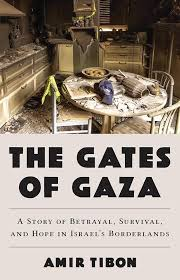
On the eve of October 6th, 2023, Amir Tibon and his wife Miri thought that all they had to worry about was how their 3-year old daughter, Galia, would perform in her dance for their kibbutz celebration the next day. She’d rehearsed with her kindergarten that evening but no one knew how these little ones would do in front of an audience, even among the familiar faces of their close-knit community. They had no idea that the next morning would begin the most harrowing ordeal of their lives: the invasion of the lush, peaceful green of their kibbutz by hundreds of armed Hamas terrorists who had the mission of killing, maiming, burning, and capturing as many Israelis as they possibly could. Amir and Miri rushed immediately into Galia’s and Carmel’s(1 year old) bedroom, also their “safe room,” a room built to protect them against rocket shelling but certainly not machine gun blasts or fire explosions (many safe rooms did not have locks on the doors). This is where they waited, in the dark, with a few water bottles, no bathroom, food or electricity for 9 hours while they heard screaming and gunshots just outside their door. All they knew was that Amir’s father was coming to rescue them. But when? And how?
This is not only a MUST READ, but should be compulsory for everyone who believes they have formed an opinion about the conflict between Israel and Hamas/Iran/Hezbollah. For while Tibon, a journalist for Haaretz for many years tells his and his family’s heroic story, he also tells the backstory of Hamas, of Israel, of Netanyahu, and how it came to be that we are here in this hideous quagmire in which we find ourselves. He of course tells his own story from his own perspective. He cannot do otherwise. But he tells the historical perspective with journalistic integrity, having done extensive research, interviewed many on all sides, and does so with an honesty that is almost uncomfortably brutal.
What comes to light, is that there have been clear and present signs, over the past many years, that have been ignored, most shamefully by Netanayu and his enablers, that this attack by Hamas was inevitable and imminent. Qatar had been funding Hamas for years, with the tacit agreement -even encouragement – by Netanyahu. While this funding was supposed to go to the civilians of Gaza to improve their lives, to build schools, parks, businesses, hospitals, community centers, etc., it instead went to the construction of the notorious, massive, high-tech tunnel system. Hamas used these tunnels not only to import ammunition and money, but also to hide its planning, readying for this military attack on Israel. And while it did not accomplish all it set out to do, it accomplished the capturing of hundreds of hostages, many of whom are still, a year later, being held down in cages in these dark, dank, airless, food-less tunnels to this day.
And it is clear that while both sides have a claim to the land, and there are some on both sides who seek peace, the years of wars and militancy have pushed more to the extreme on both sides. Even while hundreds of thousands of Israelis have been protesting in the streets against the extreme right-wing government in Israel, there are still thousands of Israelis who are extremists in their own right. Many of the settlers in the West Bank have carried out horrific terrorist attacks on their Palestinian neighbors – a disgrace in the name of religion. But just as evil, if not more so because of scale and scope, is the terrorism that has been ongoing by Palestinian extremists, Hamas included, who have been holding their own citizens hostage, in a sense, using them as human shields, as well as carrying out horrific terrorist acts on Israelis in the name of their religion as well.
Bottom line, this is a fraught, complicated, nuanced issue where many have sought to establish compromise and too many have interfered. Extremists on both sides have refused to accede the middle ground, to see any path to compromise. On the few monumental occasions when we’ve bravely come close, extremists have thwarted these attempts. It feels hopeless.
But all we have is hope, so we have to continue to hope.
There is a solution: there could be 2 states, side by side, if extremists on both sides would lay down their arms and compromise. It would take a replacement of both current governments – Hamas and Netanyahu’s government – to proceed to that ideal. It would take Iran’s government changing and staying out of the current mix.
It might take a miracle to open those Gates of Gaza.
When Jonathan Rosen moved to Mereland Rd. in New Rochelle at the age of 10 and met Michael Laudor who lived down the block, their friendship was immediately kindled. Jonathan was taken by the brilliant, athletic, and charming personality that Michael exuded, and he felt constantly challenged, entertained, even a bit intimidated by him. While they remained close friends through elementary, middle and high school, their friendship took on a bit of a competitive edge, and when they both were accepted to Yale University, they remained friendly but found divergent paths. Jonathan now writes about his friend not because of this friendship, but because of the perspective that this friendship lends him. Because eventually, Michael, while truly brilliant and charming, was also diagnosed with schizophrenia, and this became Michael’s ultimate challenge.
This is a topic of epic importance, particularly in this moment when so many are suffering from mental health disorders. It is vital that we acknowledge that these conditions are prevalent, need appropriate high-quality treatment, and should not be treated as if they do not exist. And it is urgent that it is brought to the attention of the masses, so that there can be discourse on how best to address the needs of the most ill among us, particularly those with the possible propensity to lack control over their actions, even to the point of violence toward others or themselves.
This book, was disappointing in its efforts to accomplish this, however. I found it utterly frustrating in the overwhelming number of detailed tangents, distractions, and offshoots, while the gist of the story kept getting lost. Whether it was the writing or the editing – likely a combination of the two – I am not sure, but I had a very difficult time getting through. (If I were not reading this for a book club, I would have given up much less than halfway through.) I did not need to know the background of everyone who weighed in on every detail of Michael’s life. I did not need to know every painstaking detail of every historical backstory of everything that was going on at the time each event occurred. I did not need to know every comment from everyone Michael ever met. It was painful.
I had approached this book with much anticipation. Since I have lived in New Rochelle, have children who went to the middle school and high school here, was familiar with the barbershop and the local toy store Jonathan refers to, I was excited to read about them all in a now-famous book. Moreover, knowing the urgency of this topic, I was thrilled that someone was championing this cause in an accessible story. Sadly, I found this to be neither accessible nor a “story” in the true sense of the word. It was more a textbook with a theme, riddled with too many facts, muddled by an attempt to achieve too much.
I am glad that Michael’s story is told. I am disappointed that his story is so hidden underneath so much data.
Within these pages, Christine Blasey Ford reclaims her narrative – without distortion by the media, by politicians, or by any outsiders – of the facts of her experience of sexual assault by the man who is now sitting on the highest court of our land, Brett Kavanaugh. It is here, with a clear mind, a clear conscience, and clear focus, that she is able to communicate her backstory, her patriotic motivation, and the attempts she made to tell her story earlier in order to prevent Kavanaugh from coming to the point of being nominated in the first place (and in so doing, having to be exposed as he was). She tells about her experience of presenting her testimony and the abhorrent dereliction of duty of the FBI in their non-investigation of the case against Kavanaugh. She also bears her soul about the way in which she endured death threats, shaming, and other hateful acts against her that so many other survivors of sexual assault share – the backlash and the victim-blaming that comes with coming forward. She also shares the moments of support, from those whose names we recognize and those we may not. It is an inspiring, albeit painful, recounting of her journey.
It was our hope, at least that of those in my circle, that we in our country had learned our lesson after Anita Hill. That after our horrific treatment of that courageous woman who stood in front of a panel of old White men who battered her with ignorant questions and brazenly shamed her and disregarded her – we hoped we’d do better when another woman so bravely came forward to challenge the character of a man we were choosing for the highest court in the land. But no, we did not. One might argue that we did worse. We instead chose to discredit, shame, and mock Blasey Ford, who so boldly came forward to do her civic duty, who gave up her own quiet, private, comfortable existence to reveal such personal, intimate details of her life in order to bring a man’s questionable background to light. And it was worse because of social media, the 24-hour news cycle, and the internet access to personal information that enabled thousands to send her hate mail and death threats via so many different routes.
In a country of how many millions, we couldn’t find anyone better than Kavanaugh? There was really no one we could find who HADN’T sexually molested anyone??? Seriously? Oh, but of course we had to choose him. Because we have to only choose those farmed and nurtured by the Federalist Society in order to ensure the most conservative justices to make the most civil rights-limiting decisions on the bench. Because heaven forbid that anyone except White men have any power.
And yes, I am using this platform to rant because Blasey Ford needs to have others support her, to hear her, and to acknowledge that she did the right thing by coming forward and speaking up for herself, for women, and for this country. Because she is right. If little by little, woman by woman, each brave soul comes forward (in spite of the vicious backlash and victim-blaming that so often occurs), perhaps our daughters might have a spitting chance of having a better world. Perhaps our daughters will live in a world in which there are men who are more aware of consent and what defines assault. Perhaps when a woman comes forward, the folks in the room – however large that room may be – will actually hear her.






 kindread spirits