City of Girls by Elizabeth Gilbert

Vivian was never exactly interested in following in the path her nuclear family had laid out for her: school, perhaps a temporary job before she settled down to a marriage, and of course motherhood, thereby maintaining the social status comparable to that which she was born into, in her upstate NY, 1940’s, upscale community. So, when, at the age of 19, she failed out of Vassar after essentially never having attended any classes — clearly flouting this path — she was shipped down to Manhattan to live with her equally unconventional Aunt Peg. Here in the heart of the theater district (well, almost), Vivian found her freedom – the ability to explore the city, the ability to express herself in ways she could never have imagined, and also the ability to make mistakes she would gradually learn and grow from.

This novel is just as entertaining as the theater world itself, opening the curtain to both the comedy and tragedy of NYC in wartime 1940’s, the challenges of managing a theater production with all its moving parts, and underneath, the struggle of a young girl finding out who she really is in the midst of all this frenetic drama. As Vivian falls in love with the city and with her newfound theater family, we find ourselves falling in love with each of the characters. Vivian’s Aunt Peg, with all her vulnerabilities, is as generous and forgiving as anyone might be and teaches us the beauty of living in this way. Her “secretary,” Olive, a no-nonsense, teetotaler, who never hesitates to remind everyone how little money they all have, demonstrates loyalty in the most understated and compassionate ways. Peg and Olive become both the liberators and the anchors for Vivian.

The voice of the narration is also quite clever. The story is told by Vivian to Angela, and we only discover late in the game who Angela actually is. We hear her name periodically as the story unfolds, and this reminds us that we are being told a story from Vivian’s perspective to someone in particular with a particular goal. It is a confession of sorts, but without the remorse or regret a confession has because there is no sin, no misdeed. It is just an honest telling. And we love Vivian for her living her life without apology and without regret, as she has lived, for most of her life, an honest life.

This is a beautiful book of historical fiction – highly recommend this!

The Wife by Alafair Burke

Angela is caught off-guard when she learns her husband is accused of inappropriate sexual behavior by a student intern in his office. She has feared being in the spotlight because of a traumatic past that she’s worked hard to keep private, but as his profile has become more public, with the publishing of a bestseller and a popular podcast, he is, as she’d predicted, now vulnerable to this kind of negative attention as well. When a second woman steps forward with a new accusation, their world turns completely upside-down and Angela is not sure whom she can trust. How well does she really know her own husband?

This is a twisty whodunnit that is engaging right from the very first page. Even when I was feeling a bit cocky for having guessed some of the plot, there were continued turns and surprises that continued to catch me off my own guard and kept my amusement until the very last page. There are definitely many dark moments, so it’s not a “fun” book per se, but it is a story told with both wit and intelligence. We feel for the characters, although we may not exactly love them, and we see the story from various angles.

I believe my favorite character is the detective investigating the case, Corrine. She is kind, but she is also not to be deterred, ever. She remembers everything and she is no fool. She works overtime, pursues this case because she has a gut feeling and she just wants to see that justice is served.

This was a great book to read right now. While keeping up on the news is crucial right now, it is also important to practice self-care and distraction can be part of that. Reading is a vital part of my self-care… I highly recommend it!


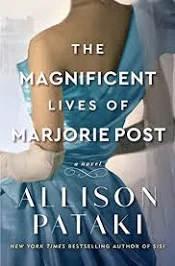
The Magnificent Lives of Marjorie Post by Allison Pataki

Marjorie Post, daughter of the famous CW Post ,had a modest beginning. We meet her as she begins her trip to Battle Creek, MI, in the family’s quest to heal her ailing father. He’d been wasting from a severe depression and sought out the famed Dr. Kellog, to see if he might benefit from the diet, exercise, and fresh air treatment he was known to prescribe. Little did they know that the one who would heal him and be the most inspiring for him was their family’s hostess, who rented the rooms to Marjorie and her mother while CW received his tasteless treatments. She cooked him healthful meals and nursed him with her spiritual inspirations, enabling his soul to be revived. What lay ahead, both for CW and for Marjorie, was a growth of spirit and of creativity that would open their worlds to both unimaginable successes and tragic failures.

This historical fiction is based on the truly impressive and accomplished life of Marjorie Post, daughter of the famed CW Post, inventor of the breakfast cereal – Grape Nuts being the first! – and the founder of the General Foods Empire. Marjorie grew the business, creatively adding their many other types of foods and related products, finding ways in which to make a mother’s life more convenient, and hoping to provide nutritious foods to more families at a reasonable cost. She had an acute business acumen and would not give up on an idea once it worked its way into her brain, and she risked her reputation, her business, even her personal relationships when she knew she was onto something that might help others.

For this she paid a price, most often in her personal life, as many took advantage of her generous nature. Whether it was in her relationships- and she collected a few – or the press, who delighted in using her personal scandals as fodder for their gossip columns. But her true joy was her daughters, her work, and her volunteerism, which she threw herself into with gusto.

A little tidbit I learned from this also: she is the one who built the 126-roomed Mar-a-Lago. I have to confess, I had a hard time being excited to hear about the planning of its layout and the decoration of its rooms knowing who would be its future occupant, but I swallowed it in the name of history and fiction. I went with the spirit of the book. Marjorie was generous with her money, gave to many causes and was all in when times were rough for her country (unlike its current occupant) She was inspiring, actually (again, unlike the current occupant!).

If you are interested in historical fiction and want to know more about this very impressive woman, take a few days to peruse this novel. You’ll meet a lot of famous people, suffer a few heartbreaks along with her, and bask in her successes along with her as well.


A Single Rose by Muriel Barbery

Rose has just arrived in Kyoto to hear the reading of her father’s will. Odd thing is, while she has known of his existence, she has never known him. Why has he asked her to come now, now that he is gone? What can she gain from visiting the sites he’s prescribed for her now? As she travels from temple to garden, she learns about the father she has never known but has now lost.

I had high hopes for this novel, by the author of The Elegance of the Hedgehog, because I’d really loved that first book of hers that I’d read. Sadly, I was bitterly disappointed. While there were scattered sentences that were quite beautiful – ones that could be pondered, discussed, teased out in a philosophy class, perhaps – the book as a whole was, in truth, boring. I found myself about 40% into the novel without much of anything having happened as yet, and really, not much changed as I made my way further. Each day, Rose was taken by her father’s assistant Paul to temple after temple – creating essentially a Japanese version of Groundhog Day – the same thing over and over again, with a bit of romance thrown in just to keep the reader awake (sort of). Yes, we felt Rose’s rage, her awkward statements to the wrong people, her continuous rumination about everything sad in her life. But that served more to alienate us from this main character rather than to endear us to her.

If you like prolonged, repetitive descriptions, minimal dialogue, and vague action – or if your favorite movie is, in fact, Groundhog Day – I’d recommend this book. But otherwise, do yourself a favor and skip this one…


Someone Else’s Shoes by Jojo Moyes

What are the chances of two very different women changing in the same gym locker room at the same time, and accidentally switching bags? And even if it might happen, it sounds harmless enough, right? Well, perhaps it isn’t quite as harmless as it appears. It might just occur when their respective lives are each in crisis and this unfortunate exchange might occur at the most inopportune moment. Or perhaps, is this exactly the bit of upset that each women might need?

If you’re looking for an entertaining story with strong female characters, this is your next read! While we meet both Sam and Nisha when they are each at their lowest, with Sam at her least confident and Nisha at her most snobbish, we definitely grow to like each of them as they each grow to like themselves. We see that each, in her own way, is resourceful, resilient, even kind. Both are battling patriarchal structure and oppressors in their lives and not feeling the love from their female counterparts. As the plot progresses, it is the female bonds that form and strengthen and from which they derive their own strength – and this is what gives them both hope.

I believe my favorite character in this novel is Jasmine. She has so little and is willing to give so very much. She opens her home, her very heart to Nisha, to whom she owes nothing, and she does this asking for nothing in return. She is a great example to her daughter, a great example to us all.

This is definitely an uplifting, empowering novel – fun to read and probably fun to discuss among friends!

The Glass Ocean by Beatriz Williams, Lauren Willig, and Karen White

Sarah has hit rock bottom. After her first success with Small Potatoes, she has hit a wall and has not found the next big idea for a similar blockbuster book. And the pressure is on, as she has her mother’s care to consider. What will she do?

Meanwhile, dialing back to 1915, we meet both Caroline and Tess. Caroline, graceful and talented, is married to a self-made man whom she loves but is finding to be unwilling to let her into his private and distracting business life. While they host a pre-departure soiree in their mansion in midtown Manhattan for all those leaving the next day on the luxurious Lusitania, she reunites with an old crush and wonders what will happen when they are all together on this journey. And Tess, from a different background altogether, cannot seem to stay in the shadows where she is seeking to acquire what she needs to deliver on her final undertaking for her sister and their “business.”. She just needs to do this one last job before she also boards the Lusitania and starts off in her new identity, her new life. The tensions are high for all of them as rumors of German U-boats abound… but surely the British naval ships will protect them, won’t they?

As you can easily see from my repeated Beatriz Williams book reviews, I love her writing. Full stop. She creates powerful female characters with depth, strong will, and acerbic wit – and this collaboration is no exception. All three main characters are like magnets, drawing us near, holding us to their stories, and keeping us wanting more.

The plot is written by these three characters’ stories as well. Each presents a different perspective which carries the story to the next level, taking it through its twists and turns, helping to build the suspense. And even though we all know the Lusitania is attacked by a German U-boat and sunk, the suspense is not jeopardized but rather enhanced by this; that is, we do not know exactly when or how it will happen, who will survive it, and how it will impact our characters in the end.

This is yet another wonderful historical fiction novel by one of my very favorite authors and her colleagues – I absolutely recommend it!

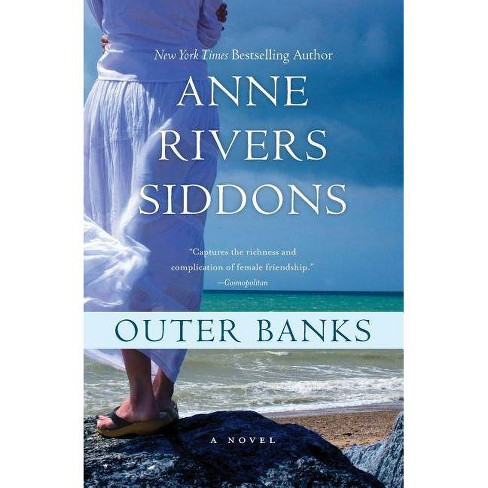
Outer Banks by Anne Rivers Siddons

Kate was not rich, but from a young age, she was groomed by her father to appear so, in order to fit in with those who are. Because of this, she had an aura of grace which those around her in her Southern college sorority – particularly the hapless Fig – sought to emulate. Although she treasured the bonds that grew between her closest friends – Cecie, Ginger, even Fig – something came between them that shocked even Kate. Now, after 30 years, she is being drawn back in – to see them all once again, to reminisce, to delve back in to those memories. Can she do it? Can she go back there, in spite of the pain? Only with a plan…

Anne Rivers Siddons had a gift for creating characters so authentic that they seem to jump out of the page and speak to our hearts. The four friends and their adolescent relationships were depicted as naturally as any that exist in any dorm room across the country, with their typical jealousies, the drunken banter, and the timeless dreams and anxieties that have blessed and cursed women in colleges since women have attended colleges. Likewise, the character of the older Kate, with her knowing cynicism and untrusting fears, is similarly relatable and sympathetic.

This is a beautifully written story, a timeless tale of young women who create a complicated past for themselves, and who ultimately come together to remember and to forget. But it is a story that the reader will remember long after the last page has been turned.


The Guernsey Saga by Diana Bachmann

This trilogy begins with the joining together of the Ozanne and Gaudion families, traditional families living on the small island of Guernsey off the coast of England beginning in the early 1930’s. They are joined by the marriage of Sarah to Greg, with Sarah reluctantly giving up living with her boisterous family to join Greg’s elderly parents in his more staid household. Fortunately, her older sister, Ethel, often comes round to cheer her. Sarah and Ethel had shared a room as well as a close bond and a sense of humor, which often got them into uncontrolled giggles during their family meals. The trilogy follows the family through three generations: during the Nazi occupation of the island, during cultural upheaval of the 1960’s, and during the financial fluctuations of the 1970’s.

This is a warm and beautiful family saga, with moments of solemn strife alternating with times of tearful tenderness. While the circumstances of the family are unique, the underlying issues are timeless. Adolescent rebellion, inter-generational miscommunication, internal loyalty battles, spousal mistreatment, dishonesty – all issues that we can all relate to no matter the era, no matter the culture. The characters are relatable as well: the self-doubting, tongue-biting mother; the critical and self-righteous husband; the quiet and studious son – there are so many likable (and unlikable) and colorful characters who we come to know over the three books so well and over their years that we are sad to leave them when the third book ends.

The writing here is also poignant and effective. We really come to know the characters so intimately that we feel their pain, their stress. When they are starving because of the limited food on the island during the Nazi occupation, we feel their hunger. When we learn about Sue’s loneliness during the war, when she’s been sent with her school to Wales for safety, we yearn as she does for the love of family. And when Stephanie rages against her mother, we feel the deep cut of hurt that Sue feels.

Living in a small town where everyone knows everything about you and your family – your history, accomplishments and failures – might be challenging. But I can’t help wondering what a trip to seaside Guernsey would be like -it sounds magical!


Circling the Sun by Paula McLain

Even at a young age, Beryl is willful and daring, which is probably the thing that keeps her steady, even as her mother deserts both her and her father, taking only her fine clothing and Beryl’s younger brother back to England. But Beryl was built for Kenya, for the open sky and the wild fauna, and her heart seems to heal as she is cared for by the local tribespeople and her father, such as he can. As she grows and becomes a natural horse trainer, she holds on to her innate independence, which casts her as both unique and odd, admired and scorned, loved and hated, invited to the party and gossiped about afterwards. Nevertheless, in her own way, she succeeded in making a name for herself, breaking barriers and changing norms.

In fact, this is a novel based on the true life of Beryl Markham, a woman who was a pioneer both in horse training and in aviation during the 1920’s and 1930’s, mostly in Kenya. She fought against sexism on many fronts, merely yearning for independence, to make her own way. At the same time, she succumbed to love for a man who had the same yearning for freedom, one who could not be tied to anyone. While she understood this at her core, it also brought her as much heartache as it did joy.

What is also unique about the novel is the gorgeous depictions of Kenya. There are only sparse references to the colonization of the country and its impact on the tribes – it might have benefitted the story to have more. But there are rich descriptions of the wildlife, the terrain, and the flora. I have never been but I would love to, particularly after reading about it here.

It’s a beautiful story and an impactful one. Once again, we see how a woman is rendered nearly powerless but manages to overcome the obstacles thrown her way. It is inspiring and hopeful in so many ways.

Honor by Thrity Umrigar

Much to Smita’s dismay, she has been brought back prematurely from her vacation in the Maldives to India, where she’s sworn to herself not to return. And worse, she has been brought back not to tend to her friend, as she’d believed, but rather to take over her friend’s news story that is quite controversial. The story is that of Meena, a Hindu woman who dared to marry a Muslim man. Seeing this as a slight against their honor, Meena’s brothers sought vengeance and torched her husband to death and left Meena maimed by the fire. She is now awaiting the verdict of their revived murder trial and Smita must cover the story. But at what emotional cost to herself?

This is an extraordinarily trying narrative to take in – not only as a woman, but as a human. The repugnant misogyny and collusion chronicled here is not unique to India, but exists around the globe, and is promoted, even exalted throughout. So often, whether in the name of God, religious extremism,  or just “family honor”, women are treated as if they are either property of men or as if they do not exist at all. Even here in our first world country it exists, where women’s rights are being chipped away daily, leaving us with less pay, less agency over our bodies, our choices, our rights to be our truest selves in this world.

The writing here is crisp, the imagery vivid, and the characters capture our hearts immediately. We are curious about Smita’s struggle with her homeland and her story is also extremely powerful, also rooted in hateful extremism. It is clear why she is a journalist and why she seeks to document the world’s troubles. She has been borne of them and has lived them.

This novel is well-written and while it is a painful book to ingest, it carries a message that must be heard. I very highly recommend it – but definitely not a “beach read!”