The Bell Jar by Sylvia Plath

belljar

It is fascinating how two books can be about a similar topic – suicide, actually – and be so very different in tone and quality.  This book, as compared with my last book (The Story of Ove), was quite the disappointment.  While the last one told the story with such tenderness and subtlety, this one was was harsh and heartless.  And even when the main character in the first was so gruff and quiet, he demonstrated such sweetness and caring for others that I felt I loved him nonetheless.  On the other hand, because this main character, Esther, was so disconnected and mean to anyone around her,  I felt as if I didn’t care at all what happened to her.

It may be that Esther’s experience of depression and suicidality was more realistic.  She describes feeling as if caught in a “bell jar” and not able to interact with the world in a normal way.  She does not seem to like anyone or really form any real bond with anyone.  Her relationship with even her own mother is threadbare and superficial.  She seems to feel no love.

Unfortunately, even if it is more realistic, it is not at all engaging for the reader.  Perhaps if I’d learned why she felt no love for her mother, I might have felt sympathy toward her.  Perhaps if there were some humor, some warmth, or some show of kindness in her at all, I might have liked her enough to care.  But she keeps the reader at arm’s length and does not let you in at all – and so the story falls quite flat.

I am hoping her poetry was better than her prose…

The Marriage Plot by Jeffrey Eugenides

51Jmpor4I+L._SY344_BO1,204,203,200_

Madeleine, Leonard and Mitchell are on the cusp of graduation from Brown University.  They seem to have it all, graduating from an elite university, each with their own talents and accomplishments, with their whole lives ahead of them.  But dig a little deeper, and you learn that Mitchell has been in (probably unrequited) love with Madeleine since freshman year, Madeleine is despondent after a breakup with Leonard, and Leonard is having a breakdown.  The story follows each of the characters just prior to and after their graduation, as Mitchell searches for his faith as he travels the world and Madeleine and Mitchell confront the pain and the swing of Leonard’s mental illness.

The author does an extraordinary job of painting Leonard’s bipolar disorder with tenderness, sensitivity and honesty, showing the various shades of the illness, with its extreme highs and devastating lows.  Leonard truly loves Madeleine but sometimes cannot make room for her in his world that is crowded with thoughts and emotions that overtake him.  And Madeleine tries to support him but there are many times when he is not “supportable.”  Leonard is particularly winsome, with a charm and intellect that endear the reader to him and his plight, and when he falls, the reader is right there with him.  But the reader is also privy to the effects of Leonard’s illness on many of those around him, and this is a sad portrayal of how this disease can affect so many.

Mitchell provides the lighter side of the story, with his almost comical travels and experiences.  As he searches for meaning through good works and volunteering, he learns about his own limitations.  He is not, as it happens, Mother Teresa.  His journey also helps him to come to terms with his love for Madeleine and gives him the courage to figure it all out.

I also have to confess…  I loved the locations of the scenes in this book.  The mention of places particularly in Providence in the early 80’s brought me back to my teen years and was so pleasantly nostalgic for me.  An extra bonus!


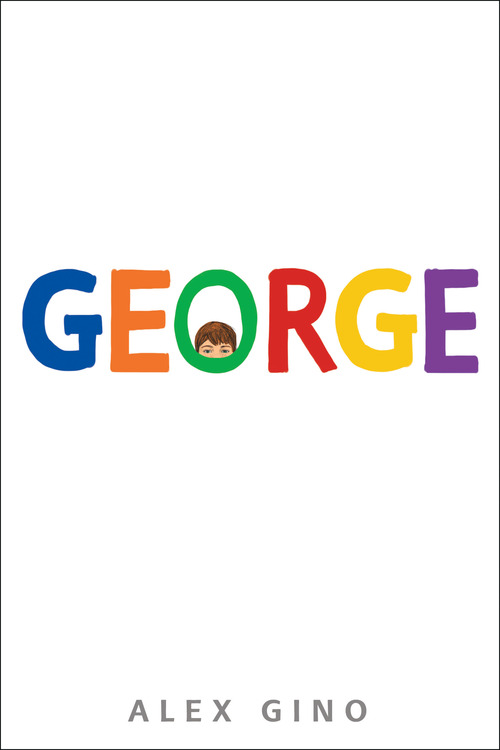
George by Alex Gino

george-small

I diverged a bit by reading this latest book, as it is a children’s book – but it is on a subject that is utterly important and I was very curious.

George feels she’s been fighting the feeling for so long — that she is truly a girl, in spite of what she has between her legs.  Everyone has so many expectations of her – she’ll grow into a man, she’ll be comfortable in the boys’ bathroom, she’ll play the role of Wilbur when her class performs the story of Charlotte’s Web.  Well, what if she really wants to play Charlotte?  Her best friend, Kelly, becomes her ally as she slowly finds a voice for her feelings and gradually comes to terms with who she really is and what will make her happy.

I believe that this book is important, even while it may not be utterly realistic.  While George is definitely teased by the class bully for being “girlie,” there is also general acceptance of who she is on the whole.  George’s brother (who’d assumed George was gay, which is a common mistake), was almost instantly accepting, as was her mother (once she “got it”), and her best friend.  I appreciate that this is a positive light in which to introduce the concept, hopefully promoting the idea that revealing one’s true gender identity is safe.  Sadly, this is not always true.

And while the writing is a bit drab and the humor attempts fairly lame, the book is so important that I pray it is used in classrooms to promote discussions among children.  Hopefully, this will normalize transitioning and create safe places for children and adolescents to do so.

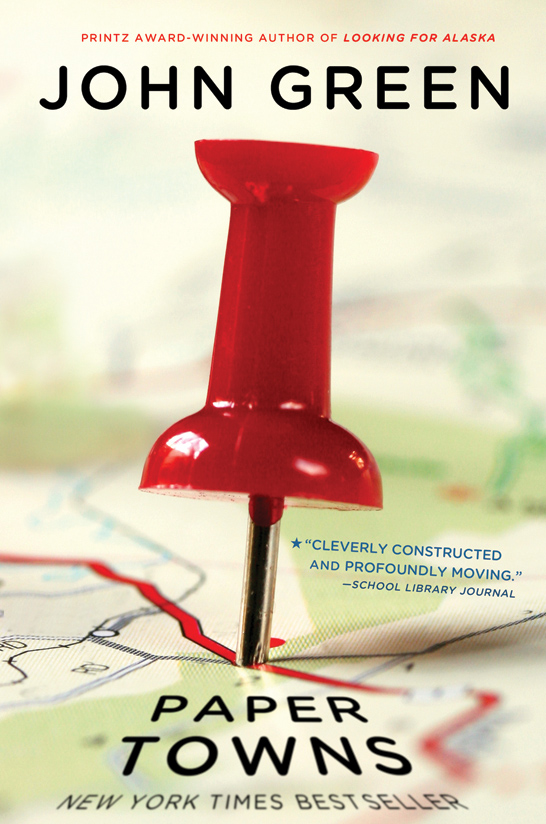
Paper Towns by John Green

PaperTowns2009_6A

Unsure if I was actually going to see the movie, I decided I’d like to read the book first, nonetheless.  I really like John Green and I also love reading books my kids have read.  And lo and behold, this was a really enjoyable one!

Quentin has lived next door to Margo since he was two, and has been in love with her for most of that time.  Unfortunately, it has been years since they’ve spent time together, as Quentin is in his group of mainly extremely funny, slightly nerdy guy friends, and Margo has been in hers (of course, the “cool” crowd).  But suddenly, Margo asks him to come on an all-night adventure and then she mysteriously disappears.  Quentin finds a number of clues she has apparently left behind just for him and he is determined to find her, whether she’s alive or not.

The writing is great – full of youthful fun and angst and sarcasm and philosophical commentary, some of which is truly profound and some had me laughing out loud.  The characters become your friends and you feel a great deal of sympathy and affection for Quentin and his friends.  There is quite a bit of discussion about friendship, knowing someone and liking someone for who they really are vs for who you want them to be.   A ot of these big ideas are innocently couched in some very ordinary, adolescent goofiness, and that is what makes this young adult novel both accessible and worthwhile.

I really liked this book – now the question is:  should I see the movie?

About a Boy by Nick Hornby (migrated from bookblogger)

Since my children are huge Nick Hornby fans, I’ve been roped into reading a few of his books.  I have to confess, though, they’re actually really good…

Will has been insulating himself successfully against any real job or real purpose in life or real feelings, until he has the brilliant idea of finding women through a support group for single parents.  The fact that he has neither a spouse nor a real son does not stop him.  Through this group, he meets Marcus, an extremely awkward 12 year old boy, newly come to London, who worms his way into Will’s life and ultimately into Will’s heart.

Hornby has a unique writing style.  These characters begin fairly flatly, and throughout the book broaden and become more likable and colorful over time.  Both Will and Marcus have severe limitations at the outset of the book but they evolve into characters who can feel much more and who can express themselves much more as they both grow from the events in the story.

The story is told with warmth and humor and a rough honesty that is what makes Hornby’s writing so unique.  I have a feeling that these characters so simply written about will actually stay with me for a long time.

Tell the Wolves I’m Home by Carol Rifka Brunt (migrated from bookblogger)

This is a surprisingly moving story about a young girl, June, whose uncle Finn is dying of AIDS in the mid-1980s.  June and Finn have an unusually close relationship for an uncle and niece and so it hits hard that Finn is so fatally ill.  During his last weeks, he spends each Sunday afternoon painting a portrait of June and her sister Greta, who does everything in her power to avoid posing for these sessions.  June’s relationship with Finn seems to have cut a wedge between her and her sister, Greta, and so the story develops around Finn’s death and its complicated aftermath.

From the first page, the book had me loving Finn just as June did, feeling everything June felt in the fantasy world of the adolescent girl.  The relationships that develop and the love and the hate that stems from them are all so extreme and so normal that it pulls at your heart.  While some of it is a little far-fetched (a teenager’s absence from school does not go so unnoticed in schools in Westchester, for example, even with parents working as long hours as hers did), it is romantic and emotional and sweet nonetheless.

I can see this appealing to a wide range of ages, from teens to older adults.  The teens can relate to the teens in the story while the older adults (I guess I have to include myself in this less-than-desirable category!) can appreciate the historical perspective on the beginning of the AIDS epidemic.  But it is a far-reaching story that also appeals to anyone with a family and a heart.

High Fidelity by Nick Hornby (migrated from bookblogger)

You may have seen the movie years ago, as I did, but my son recently read this and loved it and I love reading what my kids have read.  I can see why my son loved it — it is basically the musings of a 35 year old man-child.  It’s a coming-of-age story of a typical commitment-fearing, self-absorbed, regular guy, Rob, who realizes that his life is falling apart, after his girlfriend leaves him and his record store is failing.   As he seeks to sort himself out, by running through his various older failed relationships, he works his way back to finding himself and actually growing into the adult he’s supposed to have been all this time.

What is engaging about this book is the humor.  The sarcasm is great and there are some extraordinarily memorable lines.  (A particular favorite:  “I’ve been thinking with my guts since I was fourteen years old, and frankly speaking, between you and me, I have come to the conclusion that my guts have shit for brains.” page 315)   And a recurring theme is the top 5 lists that Rob shares throughout the story, which are fun.  Many relate to music, as he is the owner of a record store (during the days of transition from LP’s to CD’s) and this is fun.

It’s less of a story (as not all that much actually happens), and more of a continuous stream of thoughts, but they are fun thoughts and very relatable (if that is even a word).  Enjoy!


Looking for Alaska (migrated from Bookblogger)

Looking for Alaska by John Green

Since my kids are so enamored of this author, I felt obligated to read yet another of his books.  This one, a story about Miles, a previously nerdy boy who has come to a prep school to seek the “Great Perhaps,” is actually quite good.  Miles’s roommate, “the Colonel” takes him under his wing and introduces him to Alaska, a beautiful, smart, extremely distraught student who lives down the hall.  Together, they create mischief (staging pranks) and share experiences until the “Before” becomes the “After.”  There is a turning point at which the story turns upside-down and it is a matter of finding their “way out of the labyrinth.”  Very philosophical and interesting analysis of exactly what that labyrinth really represents.

This is very well-written and in my opinion, appeals to a wider audience than just the young adult.  Anyone who’s ever been a teenager can relate to the types of problems that these characters encounter, although hopefully they have not had the sort of “before” and “after” that took place here.

Good book!

The Temple of Gold (migrated from bookblogger)

The Temple of Gold by William Goldman

This book, written by the author of The Princess Bride, was recommended to me by my daughter, who read it in her English class.  This story is about the coming of age of a young man named Ray Euripides Trevitt in a Chicago suburb in the 1950’s.  We first meet him as he forges a close friendship with his new next door neighbor, Zock.  The 2 of them begin their teens together innocently enough until tragedy befalls them.  The story tells of Ray’s struggle to cope in a family who does not discuss how to do this.

The voice of Ray is extremely effective.  He is blunt, sometimes crude, but always honest to the core.  He is very much a product of his time and circumstance and gives the reader a very interesting glimpse of life in the 1950’s.  Many refer to it as a simpler time, but as we see here, life has never been simple really.  Not for most, anyway.

This book is very engaging, the characters very real and 3-dimensional, and I wish I could’ve read it in a class, because I’m sure the discussions would be great!

Super Sad True Love Story (migrated from bookblogger)

Super Sad True Love Story by Gary Shteyngart

I just finished this book and I’m still unsure as to whether I liked it or not.  It almost felt like work to read.  The love story between Lenny Abromov and Eunice Park begins with a fling in Italy during time abroad for both of them and continues as they return to a futuristic New York.  This new New York exists in a United States which has been demoted as a world power and is essentially a police state, which Lenny is learning the hard way.  In a very clever way, Shteyngart has taken familiar tidbits of our media-laden culture and driven them forward.  People wear “apparati” around their necks, essentially a cellphone-like device that not only streams broadcasts of individuals ranting and newscasts (much like our Facebook), but also is capable of projecting everything from your current net worth to your cholesterol levels.  There is some sarcasm in this but there is also a very dismal look toward our future, as this story unfolds.

I think the reason this book felt like work to read was that not only was the overall outlook so daunting, but the characters, mainly Lenny and Eunice, were not even very likable.  I was curious to hear what would come of New York City more than what would come of Lenny and Eunice.  I think the so-called love that existed between Lenny and Eunice was the kind of stupid love that existed between Romeo and Juliette (another unexplainable love story) — it just doesn’t make any sense.  Lenny sees her and is infatuated with her and she treats him like dirt and he continues to love her .  And then she begins to love him!

The book is extremely imaginative and interesting for its foresight and criticisms of our current culture.  It makes a strong statement about our current lack of value for education and reading and our constant need for media of any type.  However, it would have been more engaging if the characters had more charm and if their super sad love story was just a little more true.