The Perfect Comeback of Caroline Jacobs by Matthew Dicks

25331993

Caroline Jacobs was generally a quiet, reserved, almost meek person in her community.  So when she suddenly uttered a fairly obscene outburst at the PTA meeting, insulting the queen bee of the moms, it was unclear what was going on.  When her daughter Polly was brought to the principal’s office the next day, it just seemed to be the right thing to steal Polly away and take her on a journey – a journey to correct the mistake she’d made years ago in high school that had overshadowed her entire life from then on.

While at first this story is somewhat entertaining and a little suspenseful (you are curious what this incident was that she needs to correct) and how she “killed” her younger sister, which is foreshadowed early in the book, but it sort of melts down into a quagmire of ridiculous details and unlikely and unrealistic scenes.

I think this is a possibly good idea, but not very well executed.  Quite forgetable…

The Marriage Plot by Jeffrey Eugenides

51Jmpor4I+L._SY344_BO1,204,203,200_

Madeleine, Leonard and Mitchell are on the cusp of graduation from Brown University.  They seem to have it all, graduating from an elite university, each with their own talents and accomplishments, with their whole lives ahead of them.  But dig a little deeper, and you learn that Mitchell has been in (probably unrequited) love with Madeleine since freshman year, Madeleine is despondent after a breakup with Leonard, and Leonard is having a breakdown.  The story follows each of the characters just prior to and after their graduation, as Mitchell searches for his faith as he travels the world and Madeleine and Mitchell confront the pain and the swing of Leonard’s mental illness.

The author does an extraordinary job of painting Leonard’s bipolar disorder with tenderness, sensitivity and honesty, showing the various shades of the illness, with its extreme highs and devastating lows.  Leonard truly loves Madeleine but sometimes cannot make room for her in his world that is crowded with thoughts and emotions that overtake him.  And Madeleine tries to support him but there are many times when he is not “supportable.”  Leonard is particularly winsome, with a charm and intellect that endear the reader to him and his plight, and when he falls, the reader is right there with him.  But the reader is also privy to the effects of Leonard’s illness on many of those around him, and this is a sad portrayal of how this disease can affect so many.

Mitchell provides the lighter side of the story, with his almost comical travels and experiences.  As he searches for meaning through good works and volunteering, he learns about his own limitations.  He is not, as it happens, Mother Teresa.  His journey also helps him to come to terms with his love for Madeleine and gives him the courage to figure it all out.

I also have to confess…  I loved the locations of the scenes in this book.  The mention of places particularly in Providence in the early 80’s brought me back to my teen years and was so pleasantly nostalgic for me.  An extra bonus!


The Opposite of Me by Sarah Pekkanen

6604176

Lindsay is a smart, driven, slightly compulsive and successful ad executive on her way to the top – until she finds herself in a very compromised situation that puts her career on the line.  She is totally thrown, because after all, she is the smart one.  Her twin sister, Alex, is the beautiful one.  This is how it’s always been, ever since she can remember.  How can she tell her parents that she’s no longer successful?  This would throw off her entire identity.  The journey into which Lindsay is propelled brings all of her preconceived notions into question and forces her to really examine her priorities — and her relationship with Alex.

What begins as light-hearted and somewhat comical actually builds gradually into a heavier and more substantial novel.  Lindsay exemplifies the pressure so many young people feel today to be perfect and successful, even at the expense of their personal lives.  It is hard for her when she takes a step back and examines what she has actually accomplished and what is really important to her.  It also examines stereotypes and the roles we are socialized to play, whether they reflect our true talents or not.

Throughout, however, the author writes with a voice that is full of both tenderness and sarcasm.   It is a fun, generally light read that is great for the beach or just for those late nights with the reading lamp on!


Only Time Will Tell by Jeffrey Archer

10872085

Harry Clifton begins his life as the son of a poor widow, having to lick the bowl of his uncle’s oatmeal just to have a taste of breakfast.  Thought to be destined to work on the docks, as his uncle does, he avoids school as much as he can.  Fortunately, he discovers a mentor in Old Jack, who is thought to be crazy but who is actually very wise and kind.  It is Old Jack who actually instructs Harry and prepares him for the entrance exams to the prep school he ultimately becomes eligible for and this opens doors that Harry never knew could exist.  As Harry enters this world, he also eventually learns more about his own beginnings, including how his own father actually died and how complicated his beginnings actually were.

While this book was a fun read, it was not at all realistic.  Characters were too good or too bad.  They had connections that were beyond what might be coincidence.  And the plot twists and turns, while suspenseful and amusing, were not ones that were likely to ever have occurred.  I guess, though, that’s why they call it fiction?

The most frustrating part of this book, though, is the crazy, cliffhanger ending that is not an ending.  I hadn’t expected that I HAD to read the next book – and because of that, I’m not sure I will!  So beware -this is more of a commitment than you might think!


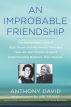
An Improbable Friendship by Anthony David

1443346094_12032187_10153651012127604_2363010507657277030_n

This is a difficult book to write about, probably because I am still trying to digest it all for myself, let alone try to share it with anyone else.  The friendship that is chronicled in this book is that which existed for many years between Ruth Dayan, wife of Moshe Dayan, and Raymonda Tawil, Yasser Arafat’s mother-in-law.  Although they were each related to men who were enemies, they themselves were able to strike a bond of friendship and respect because of their common goals and common ideals.  They each believed in the inherent good in all people and that peace could be achieved between Palestinians and Israelis if they were just brought together and allowed to live side by side.  Each worked relentlessly to try to bring this dream into a reality, Ruth by working directly with Palestinian women (helping them to earn money through their weaving) and Raymonda through the media.

What became difficult about this book is the details, which were, as the history of Israel is, quite bloody and controversial.  While I have always been aware of Israel’s displacement of Arabs from their homes during the formative years of the state, this book provides the gory details and describes it in real, human terms.  It is, to say the least disturbing.  It did truly open my eyes to some of Israel’s darkest moments.  On the other hand, I cannot help feeling as though there are some details that are not included, such as the fact that after the U.N. declaration of a 2-state situation in 1948, the Israelis were willing to abide by this but the Arabs were not.  And terrorism is terrorism, no matter what the root of it, and the only true way to solve a problem is to negotiate it through.  The story, as it is written, portrays Palestinians as the underdogs and I think the bias in the writing is a fault in the book.  It is so clearly slanted to the left that in the writing of the story of these 2 very brave women, the author actually alienates readers – and probably the very readers he wants to sway.

The book does highlight how the female perspective on the situation is often different from the male one.  Ruth and Raymonda were able to disagree about many things, but they always found common ground and started back from this.  Their priority was always to fall back onto humanism and love.  I firmly believe that if women were in charge, we’d be able to reconcile a solution to the Middle East and find a way to make peace.  I think leaving out testosterone and “honor” would do the world a service.

I definitely learned a lot about the history of Israel, the complexity of the political quagmire that remains there, but also how one can spin events in many ways to work to one’s purpose.  I think too much of the latter was done in this book and this may have caused what I understood to be the “mission” of this book to backfire.


Maisie Dobbs by Jacqueline Winspear

462033

Maisie Dobbs is a detective who is just beginning her own practice in post-WW I London. Her first case, a seemingly simple case of a jealous husband who is trying to figure out where his wife is going everyday while he’s at work, leads her to an investigation of much higher import.  As she becomes more and more entrenched in her investigation, she also comes to terms with her own very traumatic past, her having overcome a humble beginning and her very difficult personal experience of the war.

What begins as an entertaining, almost innocent, story broadens very gradually into a very stark commentary on war and its horrible effects on those who survive it.  With a subtle pen, Winspear writes a narrative of war that leaves the reader to draw the gorier details in the imagination.  What does come through with stark clarity, however, is that whether or not survivors of war return with outer scars, there are almost always inner scars that some can work through and some cannot.

This book is engaging, romantic, suspenseful and beautifully written – I very highly recommend it!

The Marriage of Opposites by Alice Hoffman

2-the-marriage-of-opposites

Rachel is a headstrong, fiercely independent young, Jewish woman living with her family on the island of St. Thomas in the early 1800’s.  Unfortunately, when her father’s business falters, it appears that the only solution is to marry Rachel off to an older man (with 3 young children), so that the two businesses can merge and hopefully prosper.  Rachel is devastated, as this certainly will delay the realization of her dream, which is to one day sail off to live in Paris.  Her best friend, and housemaid, Jestine, tries to convince her to resist, but she too is powerless in resisting the cultural pressures of her time and status as a woman.  The two of them experience many heartbreaks and successes together as the saga of their lives moves forward.  The one success that Rachel achieves, although this is one that causes her great pain as well, is that she ultimately becomes the mother of Camille Pissarro, the painter.

The writing of the tale is as lyrical as Pissarro’s paintings themselves.  The author paints both St. Thomas and Paris with words, filling in the hues, the aromas, the sensations of each world. There is also a great amount of magic and fantasy, as Rachel’s faith mixes with that of the native culture of St. Thomas, and conjures up many fictional, imaginative stories that Rachel records for herself and for her children.  And although there are a few paragraphs in which the author sort of meanders onto sidetracks, it is a story that keeps one glued because the characters are ones you don’t ever want to leave.

I admire Alice Hoffman for telling the story from Pissarro’s mother’s perspective.  It is not just a fictionized biography, but it is truly a story of a strong woman in a time when women weren’t allowed to be strong.  She shows how difficult the times were and how women’s powerlessness was analogous to that of the slaves at the time.   Neither could own property, could determine who they would marry, or truly had control over decisions that were made for them by the men in their lives.   This further deepened the emotional strength of the story.

Oh, how I’d love to go back to the Musee D’Orsay now!

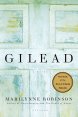
Giliad by Marilynne Robinson

91k3cIBsWSL

This very beautiful novel is written as a letter from an elderly, dying Reverend, John Ames, to his very young son.  The Reverend is the third generation leader in his small congregation in his smaller town on the American Plains.  As he reflects on his own life, and those of his father and grandfather, he also is visited by his friend’s son, who is in trouble and seeking help of some sort.  There is clearly a very unusual relationship between this man and John Ames, and this creates the little story line that carries the novel.

This is not the kind of book that grabs you  with action and holds you to the end.  This is more the type of book that you have to read slowly, to let the words wash over you so that you can absorb the wisdom within these pages.  It is reflective and pensive and peaceful, and I found myself re-reading many passages in order to appreciate them fully.  And while it is religious, in a sense, it is also universal and I feel that anyone from any background can appreciate the beauty in the words written here.

Read this, take your time, and re-read the lines so that you, too, can love this book as I do.


A Hundred Summers by Beatriz Williams

16158535

Lily has always felt as if she were in the shadow of Budgie, the worldly one in the center of all the attention.  Having spent summers together on the small peninsula of Seaview, RI, although she’s grown and at Smith College, she still feels inferior to Budgie who is able to navigate the world of men so smoothly – or at least, that is what is feels like.  As Lily begins her romance with a football star from Dartmouth, Nick, she learns gradually, as we do, that things are not exactly as they appear to be.

The author utilizes a back and forth, between time periods 7 years apart, which tells the story from 2 sides and maintains a great aura of suspense. The characters are beautiful, the writing is elegant and the story whips into a twisted plot and a stormy ending.

Another beautiful story by Beatriz Williams!

All Who Go Do Not Return by Shulem Deen

all who go

In the tiny, ultra-Hassidic (Skverer) community of New Square, author Shulem Deen dared to question his religious practices and belief in God. Born in Brooklyn to a different sect of Hassidism, he chose this community because of his impression that it was welcoming and that it espoused the spiritual essence he was searching for.  He studied in the yeshivah there and in time was married off to a girl he’d met only once before his wedding.  He tried to make a life for himself, studying, working (or trying to, in spite of the minimal secular education he was provided), and even fathering children.  But his doubts began to niggle at him as did his curiosity about the outside world (of which he knew almost nothing).

This is not the best-written or the most gripping story, but it is very human and very heartfelt.  More importantly, it also gives the reader an insider’s view into this terribly insular ghetto.  More than almost any other sect of Judaism, this group of people consider any exposure to the outside/modern world (television, newspapers, etc.) a doorway to sin.  There is no such thing as discussion or debate, unless it is related to the study of Torah.  Anyone who questions the Rebbe — the ultimate leader believed, in a sense, to hold a direct line to God — is one who must be punished and abolished from their midst.  And this is the ultimate fate of Shulem.

Sadly, this is another example of how religious extremism promotes hatred, intolerance, and cruelty toward anyone who is perceived as different.  Poor Shulem was just another victim of this.