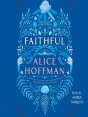
Faithful by Alice Hoffman

faithful

After a devastating accident leaves Shelby with an onerous survivor’s guilt, she wilts into a depression and essentially withdraws from her life.  People around her — particularly her mother — try very hard to pull her out, but it is only when she begins to discover her drive to save mistreated animals that she finds a purpose in her life and a reason for her to actually connect with other people as well.

This story actually starts off so simply and slowly that it seems almost too simplistic.  But it builds insidiously and the characters develop a charm and sweetness that work their way into your heart even before you know it.  Even while Shelby is being rude and harsh, you can only feel sadness for her because of her tragic brokenness.

The writing here is remarkable as well.  It is written in the present tense, which I usually find annoying.  (I can’t even say why that is so.)  However, in this case, I actually think it works.  But Shelby can only live in the moment, in the here and now and has trouble thinking about a future; therefore a present tense is a logical way to express her story.  There is also an intentional stiffness to the writing in general – to the description as well as the dialogue.  It is very effective in relaying how awkwardly Shelby relates to others.  There is only a comfort or warmth that shines through with very few people, and that becomes obvious as time goes on.

This is a heart-wrenching story but very moving and well-written.  Another winner by Alice Hoffman!


A Little Life by Hanya Yanagihara

little life

This is one of those books that becomes insinuated into your DNA as you read it.  You find yourself thinking about the characters even when you’ve put the book down.  You find yourself worrying about what has been or what will be with them even at the oddest moments.

It is the story of 4 roommates and best friends at Yale who have stayed extremely close throughout the years after.  And while the author gives backstory to each of them, there is greatest focus on the most mysterious of them, Jude.  Even the others, JB, Malcolm and Willem do not know what Jude’s story is.  They know he does not have parents, and they know he does not wear short sleeves, and they know he does not want to speak about himself – but they respect his privacy and he loves them for not pushing him about this.  As the characters grow together, the reader cannot help but cry with them, laugh with them and really love each of them as if they are real.

As you can tell, I did love this book.  It should, however, come with a disclaimer – it is extremely disturbing in many parts.  Jude’s history is extraordinarily dark, and what he’s endured is horrific – and while details have been spared, the imaginings are quite vivid.  What you see, tragically, is the devastation that child abuse has on self esteem and self worth – and Jude’s whole life exemplifies this.

This is a very sad (and very long!) book, but, at least in my opinion, one worth reading.  The characters are beautiful and engaging, and when it ended I felt I almost had to say goodbye to new friends.

The Bright Hour by Nina Riggs

bright hour

Wow, this is a book you definitely have to prepare yourself for.   Written by an actual descendent of Ralph Waldo Emerson, this memoir is a beautiful, almost poetic reflection on dying.   Not only does the author contend with the death of her mother from multiple myeloma (a form of cancer), but then she has to face her own impending mortality, as she battles her own aggressive form of metastatic breast cancer.  As we follow her through her musings and her fears, we glimpse into her very heart — sometimes full of self-deprecating humor, sometimes of abject sadness, and sometimes of sheer tranquility.

There is, of course, a lot of sadness here.  You cannot escape that when you’re talking about cancer.  But there is a lot of sweetness and humor as well.  Nina did not have a polyannish view of life at all – on the contrary, she was fairly sarcastic – but she did keep a faith and a hope for her future that was positive while still being realistic.  Her discussions with her 2 boys are honest and yet often comical, maintaining the innocence that young boys deserve.  She includes some details of her pain and suffering without dwelling on these.  She chooses to appreciate the days she has rather than lament those she has not.  This is something I think we can all learn from!

So while your heart will inevitably break from this book, it will also be touched in important ways, if you choose to read this one.

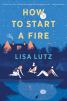
How to Start a Fire by Lisa Lutz

how to start a fire

Anna, Kate and George (short for Georgianna) could not be more different from each other – and yet, they inexplicably become fast friends in their college dorm.  Unfortunately, life moves them beyond their usual frolicking to a shared traumatic experience that alters the trajectory of their respective life journeys.

I should have loved this book.  It had all the right elements.  I loved the characters.  They were colorful, complicated, and clever.  I liked the overall story and the intertwining of events.  There were multiple layers of stories, which kept things interconnected and engaging.  And the dialogue was witty and occasionally made me giggle out loud.

The problem was that it was extremely choppy.  I love when the voice changes or the time changes – but the transitions must be smooth so as not to lose the reader.  It was not done smoothly here.  Every time a new chapter started, I felt like I was starting a new book over again – just with the same characters.  There were such different scenes in such different locations with the characters in such different times of their lives, that it took a long time to figure out where we were in the story and how this part connected to the whole.  I feel as the reader, I should definitely not have to work that hard.

Ultimately, though, I am glad I read this book – I did like it overall.   I’d love to know what others think!

Among the Living by Jonathan Rabb

Rabb_AmongtheLiving_final-540x826-229x350

“Ike” Goldah seems to be finding his way to adjusting to life after the concentration camps of World War II.  He has come straight from the DP camp to live with his cousins in Savannah, Georgia.  His cousin has set him up with a room in their house, a job in his shoe store, and he is even looking into doing some writing on the side, which was his previous career before the war.  That is, until he has a surprise visitor who is like a ghost from his past – and seems to turn his world upside down.

I really like this book for its many plot threads and themes.  You can look at the Jewish Holocaust themes, but there are also comparisons between the Jew/non-Jew and Black/White race relations that are laid out so starkly here.  In addition, Goldah’s cousin is involved in illegal dealings with his shoe business that are a bit murky but that give the story another dimension.   Goldah’s love interests also create another side story, giving his “visitor” addition a real shock value.

I actually think the book could have been expanded upon.  It felt like it ended much too soon.  The characters were great and there was so much happening in it that it could have been broadened further.  I was left wanting much more.

I think this book was a good read, but probably edited down a bit too much.

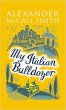
My Italian Bulldozer by Alexander McCall Smith

italian bulldozer

This is an example of a great idea poorly executed.

Paul is a successful writer of food and wine books who has just been jilted by his girlfriend of 4 years.  In a bit of depression and in a rut, his agent (who of course, happens to be single, intelligent, and attracted to him) sends him to Italy to work on his next book.  In a bizarre set of circumstances, he ends up with a rented bulldozer as his means of rented transportation during his stay.  On his first foray to explore his new town, he happens upon a beautiful, intelligent woman who has run her car into a ditch and lo and behold (!) a bulldozer just might do the trick!

There are a few tiny plot strands that are started in this book that could make the book so interesting that unfortunately are never pursued.  There is the evil-looking man that Paul is jailed with on entering the country (yes, jailed!), there is the boyfriend of the beautiful woman who has a port wine stain, and there are other towns folk who might be more involved in a more interesting plot than they are.  But no, the author chooses to make his former girlfriend as truly shallow and predictable as she is (then why would he have spent the past 4 years with her??), and the ending as neat and predictable as it becomes.

There is so much potential here.  I did finish it, but I spent most of the book waiting for something of substance to happen.  I think I’m still waiting…


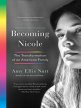
Becoming Nicole by Amy Ellis Nutt

becoming nicole

This is a beautiful, heart-wrenching story that is told with a clinical detachment that is utterly unfortunate.

Nicole, who begins her life as Wyatt, an identical twin to brother Jonas, feels from day one that she is a girl.  Already identifying with female characters in movies they’d watch, she, before even turning 3 years old, told her father that she “hated her penis.”  She consistently yearned to wear girls’ clothing and to play with girls’ toys and fortunately for her, her mother, Kelly, was sensitive to her yearnings and did what she could to support her.  Wayne, her father, had a much harder time accepting this side of her and while he loved her, he took many years to mourn the loss of the second son he thought he had.  Finally, though, he did come around and rallied to her support and both parents fought for her legal right to use the girls’ bathroom in her school (although it did not save her from being horribly bullied by a boy in her school throughout middle school, egged on by his nasty grandfather).   Nicole and her family bravely fought to set legal precedents to protect future trans children from prejudicial and ridiculous harassment because of gender identity, at least in certain states.  Hopefully, they will lead others to continue the fight for equality for these people who only want the freedom to be who they are inside.

The only benefit of the “clinical” aspect of the writing is that there are segments of the book devoted to the scientific evidence for brain differences in transgender individuals.  I think that in addition to being extremely interesting from a clinical point of view, it also fuels the argument that these people are not going through “phases,” nor are they “seeking attention” as they are often erroneously accused of doing.  It gives more objective data for those who cannot just support people for who they believe they are – rather it gives medical justification for those who require this.

On the other hand, it is a shame that the writing could not be as beautiful and as engaging as the story itself was.  There was certainly the material there to work with.  The characters were certainly heroic and beautiful, the setting was pure Americana, and the story was definitely dramatic, culminating with a huge and wonderful courtroom win.  The only tragedy was that the telling of this young woman’s triumph was so terribly dry.

I hope that Nicole and her family know how much we all admire their bravery and hope that she and they do not have to fight any further for her to be accepted for who she is.

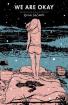
We Are Okay by Nina LaCour

we are okay

This is a sad but sweet, young adult novel that was recommended to me by my daughter.  It is the tale of Marin, named after the county in California from which she came, who is stranded, alone, in a dorm room in NY, during Christmas break.  As she anxiously awaits a visit from her friend, Mabel, the memories of her recent, tragic life events come back to her in waves, and she is forced to reconcile what she thought were the circumstances of her life with what was real.

This is a story in which sensuality is very striking.  The cold, stark setting really creates a mood for the whole book.  Descriptions of the freezing snow create a palpably silent backdrop for the awkwardness between the two old friends.  The cold blowing onto their faces as they trek through the snow freezes any attempt at conversation between them.  And when they finally break through, they start to feel the heat come back on – and warmth starts to emanate from one character to the other.  They are in a shop in which Mabel picks up bells, and the reader can almost hear the tinkling of those bells as if we are in that store with them.  Light is used also, contrasted with darkness, such as the stark darkness on a beach on a moonless night, when one’s eyes cannot adjust to the darkness and one has to give up trying to see.  It’s a beautiful way to pull the reader in to each scene.

What initially appears as a simply melancholic book ultimately reveals itself to be a complicated and intimate tale that leaves one thinking about it for days after closing its covers.


The Hate U Give by Angie Thomas

the hate u give

Knowing she’d rather have stayed home watching reruns of Fresh Prince on her laptop, Starr isn’t even sure why she’s agreed to accompany Kenya to the party at which she’s found herself.  But while she is wandering around (Kenya of course has dumped her), she finds Khalil, her old best friend, whom she has not seen in months.  They slip into old comfortable conversation when suddenly gunshots ring out.  She and Khalil run for what she believes will be safety – not knowing that this moment will affect the rest of her life.

This story is a young adult novel, inspired by the Black Lives Matter movement, about the murder of a black boy by a white police officer.  The story invites the reader to step into the life of this friend of the victim, Starr, whose life is already complicated as she is grappling with having to straddle two different communities – the poor neighborhood in which she lives and the affluent school she attends.  Her two worlds require two different personae and this is a lot to juggle for a young woman of 16 years.

As the events unfold, it becomes clearer that Starr is the only witness to the murder that has occurred and it is up to her to come forward and testify.  And here is the difficulty: history has taught us that this is hard – and we’ve seen this again and again particularly in the past few years.  While police have incredibly difficult jobs to do and we owe them a debt of gratitude for what they do every day, there are always a few that take their power too far or have too low a threshold for fear of “other” and assume that the “other” is going to do something harmful to them first.  This is the case in this story, and this is often the narrative in these cases where there is a wrongful death.  There is a presumption of guilt based on race and circumstances when that is an unfair presumption.

There is a lot of humanity to this story.   There is circumstance and perspective on the drug dealing issue and how and why some people get involved – which some might feel is obvious but others might not appreciate.  There is also the recurrent theme of a person’s right to presumption of innocence, and right to life and liberty and so on even if he might be a drug dealer.  This is a serious point.  On the other hand, I do think that dehumanizing the cop that shot the victim by referring to him by only his badge number almost throughout does not serve a purpose.  I think that creates its own bias and one sided perspective and I think presenting the other side would have only made the story stronger.

In any case, I do think this is an important book for most people to read, but especially young readers.  Definitely a must read!


The Unbearable Lightness of Being by Milan Kundera


unbearable lightness

This is the whimsical, weird, and sometimes wieldy love story of Tomas and Tereza, set mostly in Prague during the Russian invasion.  They meet while Tomas is visiting the small town where Tereza is working at a small inn, when she serves him his dinner.  After a bit of flirting, and circumstances that Tereza interprets as prescient, Tereza appears with her large suitcase at Tomas’s door and so they begin their lives together.

What is sometimes the charm of this story and sometimes the bane of the story is the perpetual tangent.  Most authors will backtrack to fill in context and background about the characters, and we see that here as well.  Occasionally, Kundera manages to create a lyrical lightness when he does this in this story.  Alternatively, while many authors will thread in an occasional plot line that seems disconnected but then ties in later unexpectedly, this book is plagued with so many tangents that do not tie in anywhere.  I feel as though this makes the book unnecessarily harder to read.

I will say that each of the characters is unique and colorfully drawn.  In choosing a third person narrator, Kundera provides almost a side door entrance into the minds of each of the characters and lets us know what each is thinking in his own, idiosyncratic way.  One fascinating character is Sabina, who is Tomas’s mistress.  She is an artist, very independent, and has her own lovers.  Through her, Kundera waxes very philosophical on what is light and what is heavy in life.   Through her we also see some of the consequences of the Communist regime changes, and she is the one character who manages to be free in her life choices and be free of the Communists ultimately.

I think this is another of those books I would have liked to read in an English class, during which I might’ve digested more of the symbolism with others who were smarter than I and who were more familiar with the historical context than I.  I might’ve benefitted from that and appreciated the book more.  As it was, I did enjoy some of the writing, the creativity, and philosophical musings of the author, even while I found it occasionally onerous and hard to get through.