
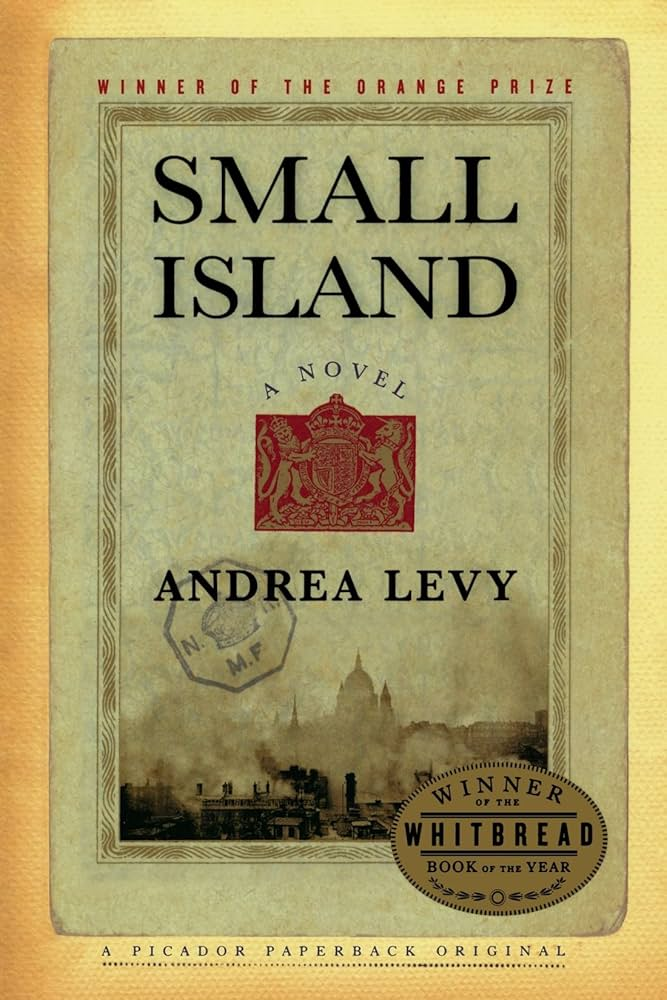
Hortense and Gilbert, essentially strangers, have made an unusual deal: Hortense has offered to pay Gilbert’s passage from Jamaica to England so that he can pave the way for her to follow him there. She would love to fulfill her dream of becoming a teacher in that faraway, fairytale land, as she perceives it. And for his part, Gilbert, feeling claustrophobic himself on that tiny, Carribean island, he agrees to it, even at the price of marrying this haughty and serious, albeit beautiful, young woman.
On the other side of the world, in London, Queenie and Arthur have had their share of challenges. Queenie has had no choice but to run a boarding house while caring for her father-in-law. Her husband, Arthur, has been MIA since the end of the second WW, after being stationed in India. She is ready to declare him dead and try to move on with her life, but she is quite distracted with all the goings on in her own home, such as it is. Getting flak from her neighbors because of whom she is renting to is frustrating enough, but managing all of their comings and goings isn’t what she’s signed up for either. And now with the advent of Gilbert’s wife to add to the mix. Where will it all lead?
This is a fascinating dive into London’s WWII and post-WWII world, where there remained as much hostility toward anyone who was considered “foreign” as there is today. Anyone of color who moved into a neighborhood was considered to be “taking over,” and White folks complained, moved out, and sought out their own. While Gilbert thought this was purely an American issue, a “Jim Crow” problem, he learned the hard way that it was just as alive and well in England, even if it didn’t have an official name. When Queenie defends sitting with Gilbert in a movie theater, rather than having him seated in the rear, it ends in terrifying violence. Sadly, things haven’t changed much, right???
What is interesting is how the story is told. We learn each of the stories from the perspective of each of these characters: Queenie, Arthur, Hortense and Gilbert. They each have a history, a story to tell. They are each complicated, with their own fears, anxieties, and challenges. Through them we also learn about the tension between the British and its island of Jamaica; that is, how hardly anyone in Britain knew where Jamaica even was, while those in Jamaica were taught to worship the crown as if Buckingham Palace were situated right there on its shores.
While the overall message is clearly heavy, it is told with warmth, wit, and with a Jamaican lilt that gives it just enough lightness to make it enjoyable, surprising, and a worthwhile read.
 kindread spirits