The Female Persuasion by Meg Wolitzer

female persuasion

This new, very popular novel centers around Greer Kadetsky, who begins as a young freshman at what she considers a mediocre college in western Massachusetts.  If her disappointing parents had filled out the financial aid forms appropriately, she would have been at Yale, where she was really meant to be.  But then she wouldn’t have met her best friend, Zee, who then wouldn’t have dragged her along to hear Faith Frank, the feminist, speak.  And then she wouldn’t have had that moment with Faith Frank that sparked, really, the trajectory for the rest of her life.

This novel encompasses two stories in one.  On one level, it tells the story of Greer, a smart, ambitious young woman who is seeking love and approval from others because she doesn’t feel  it from her nebulous parents.  She has it from her boyfriend, Cory, who is steadfast, but has his own life and stressors, and she has it from her friend, Zee, but she seeks it from an adult, in the form of Faith Frank.  And as she goes through her journey, she learns that no one is perfect, even those who appear to be.

On the second level, it is also a story of the women’s movement.  In the telling of the story of Faith Frank, the author essentially recounts the story of the fractions of women and the various perspectives, both forward and backward (at least in my opinion) as it is going these days, particularly with regard to availability of women’s choice and control over our bodies.  Faith Frank, in her early days, helps a friend through a life-threatening, almost-botched illegal abortion and it drives her friend in a totally opposite direction from Faith (which is very hard to believe, but I imagine is true of some women).  Faith is empowered by this experience to push hard for women’s access to safe, legal abortion.  In this, I think the author opens up the debate where we stand very precariously now – where women are arguing over the rights over our bodies.  (As an aside, I have to say that I believe that no woman likes the idea of abortion.  On the other hand, I believe that the majority of women in our country do believe that this should be a matter decided by the woman herself and perhaps her doctor, as it is a physical and medical and emotional decision for a woman – NOT a decision to be made by mostly MEN in a back room somewhere having nothing to do with the woman herself.  THIS is what “choice” means.)  And this depressing backlash that we are experiencing here in our country is discussed in the book and lamented.  It’s hard to see it in a book and not just in the news – it gives it so much more permanence, in a way.

What is somewhat disappointing about this book is how it sort of fizzles at the end.  Most of the book is engaging and there are a few twists and major events that turn the plot around on its head.  Most of it grabbed me.  But as it wound down, it really wound down and sort of fell.  Maybe even fell flat.

Otherwise, I think this is an interesting story of a woman’s struggle with finding her place and meaning in the world through the lens of the women’s movement.  An interesting read…
The Weight of Ink by Rachel Kadish

weight of ink

Aaron Levy cannot believe he will have to abide the sullen nature of his new mentor, just to be able to have a peek at the rabbinical documents and letters found under the stairs of an historic home outside London.  Helen Watts, this new professor he’s been asked to assist, seems not to have smiling nor social graces in her repertoire.   In truth, he realizes as time passes, that they both have issues to work out as they work together to uncover the secrets that have been buried under these stairs for centuries…  And centuries ago, in the 16oo’s, after taking 2 orphans to London with him as he fled the Spanish Inquisition, Rabbi HaCoen Mendes, blind, but trying to teach a few students, has compromised and allowed one of these orphans to be his scribe.  Ester, the bookish adolescent who dreams of nothing but to study and learn as much as she can as any boy might, has taken her seat at the writing table and begun to scribe the rabbi’s letters for him.  But as she grows older and reaches the age of marriage, this becomes more and more controversial and Ester devises a plan almost in spite of herself.

This is a magnificently crafted work of historical fiction.  The author weaves the plot by gracefully swinging back and forth between the modern day historians and the original characters, layering each of the characters’ stories on each others’ in order to build the connections — and the suspense as well.  And as the story builds, the characters deepen, and they each become much more sympathetic in their own ways.  As the scribe Ester becomes more and more real to the two historians, both Aaron and Helen become more and more human themselves and discover that each of them has used history as a way to escape their own humanness.

The writing in this book is brilliant.  It is beautiful, rich, and full.  The characters are complicated and imperfect and human and they are hard to leave when you finish the book.

You will also learn a lot of history from this book.  The time is the 1600’s, when there were many who had just fled the Inquisition.  People were terrified to speak their minds, fearing that if they said anything against any church, they’d be tortured and killed.  Women had one role in society and that was to marry and raise a family – and if they did not marry, their lot was to struggle and do housework for someone who was married and it was a hard life if you chose that route.  And then came the plague in London, which devastated much of the population.  It was a gruesome time.

But in spite of the ugliness of the time, the beauty lies in the resilience of the people living through it – and that is what is captured here in this story.

I loved this book – I am confident you will too!

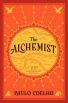
The Alchemist by Paulo Coelho

the alchemist

I finally had the opportunity to read what so many high school juniors have been reading for decades now.  Unfortunately, I did not have the benefit of what must be wonderful philosophical discussions about it with young, curious minds.

This story is about a boy, a shepherd, who meets a king who inspires him to follow omens and signs that will direct him to a treasure.  The king gives him 2 stones that indicate yes or no and are to be used to guide him through his journey.  Almost immediately the boy encounters failure.  Rather than becoming despondent, though, he picks himself up and begins to work to compensate for his initial failure and as he does, he learns that failure can teach lessons and that the journey is part of what enables him to achieve his Personal Legend.  Because he is mindful and attentive during each moment of his journey, crossing rivers and desserts, he inherits wisdom from each person he encounters, no matter how simple or how obtuse they may be.

It is clear why this book has been translated into so many languages and has been read by literally millions of people.  It can be understood on so many levels and its meaning broadened to so much significance.  So much so, that I will not begin to pontificate on that here in this blog.

Suffice it to say, that as I go on my personal journey in life, I will consider the message of the boy for me to be that we must be mindful of each step – good or bad – all the while taking into account and appreciating what we have already.

If you’re inclined to the philosophical, this book is for you!

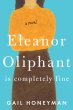
Eleanor Oliphant is Completely Fine by Gail Honeyman

eleanor oliphant

The best perk of writing a book blog is that I’ve gotten some fantastic recommendations from fellow book lovers.  This may be one of my favorites — thank you, Larry and Jim!

Eleanor Oliphant starts out in this story actually believing herself to be completely fine.  She is very much self-sufficient – she has a job, she has keeps herself clean and nourished and has her very practical routine which gets her through each week.  When she suddenly sees the man of her dreams at a party, a rock singer who is very handsome and would likely satisfy her Mummy’s vision of who would be sophisticated enough for her, she decides to go on a mission to spruce herself up a bit so that when she actually meets this man, she’ll convince him that they are meant for each other.  In the course of her doing this, a sudden incident with a co-worker, becomes a distracting adventure that opens up Eleanor’s world and enables her to see how she can truly heal toward becoming completely “fine.”

The writing in this book is magical.  The author writes of pain with humor and raw honesty all at the same time.  There is no over-dramatization, there is no explosiveness.  It’s quiet and understated and because it is subtle, even awkward because it is from Eleanor’s voice, it sneaks straight into your heart.  It made me laugh out loud but it also revealed darkness and sadness that almost choked me.  Few authors can do this with such grace and tenderness.

Eleanor develops her first real friendship with a coworker, Raymond, whom she finds initially almost irritating, with his smoking, his unkempt scruffiness, and his difficulty with being punctual.  But she learns that what really matters is that he is also kind and generous, and loyal – and that he is there for her when she really needs someone to be there for her.  That this is actually what friends do.  She’s just never had this before.

This is a beautiful book from beginning to end – the kind that you don’t want to put down but that you don’t want to end either.  I am reluctant to start the next book because I just want to live with these characters for a bit.

You will too – I promise!

This is truly a MUST READ!


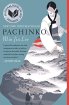
Pachinko by Min Jin Lee

pachinko

At the opening of this novel, we meet Sunja, a young girl who toils away, helping her mother run a small boardinghouse on a small island in Korea.  When a young, handsome minister comes to stay with them and falls ill, he seems to be the answer to their predicament, as he is willing to marry her, even though she is pregnant with another man’s child.  As he carries her off to Japan, her life takes many unexpected twists and turns, and this poignant story follows her through the next generations.

Through the telling of Sunja’s life and the life of her mother and sons, the reader also learns of the experience of Koreans at the hands of the Japanese through much of the twentieth century.  Although many of Korean descent were born in Japan, they were not allowed to be Japanese citizens and were treated as foreigners in their own country, forced to obtain a Korean passport at the age of 14 and having to recertify this every 3 years, with the constant threat of deportation.  They were denied many educational and employment opportunities and often the only way to earn money was in businesses such as the “pachinko” halls, pachinko being a form of pinball or slot machine.  At the same time, anyone involved in these businesses were looked down upon and considered gangsters, whether or not they actually were.

What is apparent throughout the story is that this oppression casts a heavy shadow on each and every member of Sunja’s family and each comes to bear the burden in his or her own way.  There is some success and much heartbreak in the course of Sunja’s life as a consequence of this and it ranges from very outright to more subtle.

The more I think about this story and sit with it, the more I realize how much is here to think about and appreciate.

I think you will too.

The Myth of You & Me by Leah Stewart

myth of you and me

After having moved so many times, Cameron is finally feeling fairly at home in her routine with Oliver, caring for him as she would an elderly grandfather.  But when she suddenly receives a letter from her ex-best-friend, Sonia, it cuts into her world and forces her to remember their friendship, and it chisels at the wall she’s build around herself.  Oliver furthers that by sending Cameron on a mission to find Sonia in his own underhanded way, and it takes Cameron on an odyssey through her past as a way to pave her future.

It took a bit of time for this novel to capture my full attention and I believe it was because it took me awhile to like the main character, Cameron.  She is introduced as a bit aloof, unattached.  But as I read on, I came to understand why that was so.  She’s had to move many times, as a military child, and so she’s had to adjust so many times to new situations and social norms.  And then there were the disappointments and the pain, one after the other.  She has hardened herself, now, and she’s afraid to be vulnerable.  However, as she succumbs to the pressure of having to search for Sonia, her heart is gradually pried open by the memories that come rushing back to her and she finds her humanity – and softness – again.

One of the most striking characters is Sonia’s mother.  She is severely mentally ill and abusive of Sonia both psychologically and physically.  What I think is so well portrayed in this novel is not only the abuse itself, but how the abuse instills a sense of helplessness in not only the direct victims, but in those around the victims, so that they, in turn, become casualties of the abuse themselves.  There is a clear ripple effect that causes very tragic collateral damage.  It almost seems to have affected those around Sonia even more, perhaps, than Sonia herself.  I wonder if this might actually be more realistic than we know.

This is a tender story of friendship and trust, forgiveness and humanity that I ultimately enjoyed more than I thought I would.  I think you will too…

Alone in Berlin by Hans Fallada

alone in berlin

This unusual story of the quiet insurgency of Otto and Anna Quangel against Hitler’s war begins with the various characters in their apartment building.  At the beginning of the story, each family has little to do with each other, but because the Gestapo has fostered a culture of paranoia and turning others against each other, each has an eye out for/against the other and their lives become unwittingly embroiled together.  Ironically, the most self-contained and private of all of them, reveal themselves to be the most truly dignified, even as they are ineffectual in their attempts at postcard propaganda.

Let’s just start with the statement that this is not the usual WWII novel, at all.  The quirky writing and the shift in focus from minor character to character keep it floating just a little bit above the usual depth of despair that one usually carries, although it is certainly not without its violence or death.   The focus, though, is really on what is going on in Germany proper and particularly in the ” criminal justice” system.  There are more than a few interlocking stories of how corrupt Nazi Party officials use their positions to gain from the losses of the masses and everyone tries to profit from informing on each other.   The overarching irony becomes who are the “criminals” and who are those who deliver “justice.”  The highlight of this is the actual trial scene, during which a judge essentially does the work of the prosecutor.  After this, when Otto’s “defense attorney” accuses Otto of being mad for what he’s done, Otto rightly asks him, “Do you think it’s mad to be willing to pay any price for remaining decent?”

The most dignified characters here are also the most common, ordinary ones.  Otto and Anna are not wealthy, and not well-educated.  They are hard-working, awkward, regimented people.  Otto is pretty OCD and shuns social interactions.  He is not the typical novel hero.  Which I think is what makes him all the more striking as a hero here.  He’s saying here that anyone can, in his own, small and dignified way, stand up for what he believes in – for what is right.

There is an obvious message here and relevance to what is going on today.  I apologize for my frequent references to political issues in this supposed literary blog, but I can’t help myself.  As I read this book, particular lines and issues jumped out from the pages as if coming fresh out of the newspaper headlines of 2018 as well.  Injustices done to people because of their race or religion, leaders getting away with abuse of power because people worshipped them valuing party over constituents, having a leader of a country who believes himself a deity deserving of unlimited power as if he is not in a democracy at all.  It’s all too familiar and if we do not stop this, it will be just as it was in 1933 at the beginning of all of that.

We have to circulate our own little postcards here and now.  This is mine…


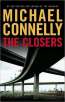
The Closers by Michael Connelly

the closers

Sometimes you just need to read a good murder mystery – and this one fits the bill.

Harry Bosch is just back on the job with the LAPD after being retired for a few years.  He’s assigned to the group of “closers,” who solve the unsolved cases, left open for years.  His first case is the murder of a 16 year old girl who had been murdered 17 years prior and new DNA evidence has just resurfaced that has given a new lead on the case.  Bosch is back with his old partner, Rider, and they are immediately set into motion.  But obstacles present themselves from both outside and inside the department – will he be able to see the case through?

I can’t say that this is a fun read, because the subject matter is quite tragic, but it is intriguing and challenging and engaging.  The writing is direct and crisp and the dialogue is brusque and realistic.  What is novel here to me is the use by the police of the press in their investigation, which is interesting (and as it happens, grossly unfortunate) – and I wonder how often that actually happens in “real life.”

I am also fascinated by the relationship that builds between police partners.  It becomes somewhat like a marriage of sorts.  There are signals, facial expressions, silent pauses that can be read by the partner that evolve into signals only the partner can pick up like tiny bits of morse code.  It is really like a spouse, because really and truly, survival is dependent on being able to read those glances and eyebrow raises in a split second.  This is referenced frequently in this story.

So while this is not an epic, “must read,” it is still a worthwhile novel if you’re looking for a murder mystery that will successfully capture your attention for a few days.

Tears of the Giraffe by Alexander McAll Smith

tears of the giraffe

Like the first in this series, this book is lovely.  It is the story of Mma Ramotse, who has established her No 1 Ladies Detective Agency in Botswana, who now happens to be engaged to be married.  Here in Book 2, her life undergoes some vast changes, but she greets them with a calm acceptance as she pursues the cases that continue to be the focus of her life.  These cases continue to be ones that are sometimes complex and sometimes straightforward, but always with a very human and ethical twist.  There is a hint of danger and a hint of suspense, but always a great deal of heart.

What I love about the main character is that she is a beautiful feminist of the quietest and most subtle kind.  She supports other women in their pursuit of their careers (as she does in promoting her own secretary) and she sticks it to men in a discrete but very direct way to get her message across.  There are many times when feminists must beat the drums and rally the marches – I am not against that at all – but it is in these quiet moments, behind closed doors when one can really change the minds and hearts of the men who might be most resistant.  There are moments in this book that demonstrate that quite poignantly.

I think I have to move on from this series, but I will definitely return to it at some point.  It definitely gives me peace.


Faithful by Alice Hoffman

faithful

After a devastating accident leaves Shelby with an onerous survivor’s guilt, she wilts into a depression and essentially withdraws from her life.  People around her — particularly her mother — try very hard to pull her out, but it is only when she begins to discover her drive to save mistreated animals that she finds a purpose in her life and a reason for her to actually connect with other people as well.

This story actually starts off so simply and slowly that it seems almost too simplistic.  But it builds insidiously and the characters develop a charm and sweetness that work their way into your heart even before you know it.  Even while Shelby is being rude and harsh, you can only feel sadness for her because of her tragic brokenness.

The writing here is remarkable as well.  It is written in the present tense, which I usually find annoying.  (I can’t even say why that is so.)  However, in this case, I actually think it works.  But Shelby can only live in the moment, in the here and now and has trouble thinking about a future; therefore a present tense is a logical way to express her story.  There is also an intentional stiffness to the writing in general – to the description as well as the dialogue.  It is very effective in relaying how awkwardly Shelby relates to others.  There is only a comfort or warmth that shines through with very few people, and that becomes obvious as time goes on.

This is a heart-wrenching story but very moving and well-written.  Another winner by Alice Hoffman!