
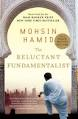
In this novel, we meet Changez, as he relates the story of his youth to an American stranger he meets in a public square in Pakistan. We hear about his journey to Princeton and then to New York, his successes and struggles as he moves forward academically, socially and romantically. We also learn about how his experience as a brown man following the attacks on the Twin Towers become pivotal to his relationship with America as a whole.
What is most unique about this book is the voice used to tell the tale. Changez is sitting with the American, whose name we never learn, and we hear his side of the conversation throughout the narrative. It is a wonderful way to convey the story, in that we can envision the two men, dining at a table in the market square, as the light dims with the passage of time.
While this conversation scene is fairly tranquil, the subject matter is not. Changez is subjected to constant “othering” during his stay in the US. Even prior to the World Trade attacks, he is never quite included in social circles, never quite one of the crowd. Even in his romantic relationship, which is more imaginary than real, he is never loved or appreciated for who he is, but rather tokenized and used. One can certainly understand the rage that gradually builds and builds until he finally, much to his own surprise, implodes.
This is an iconic work. It is a quick read, but has so much to teach us packed into its pages.
 kindread spirits