The Unraveling of Cassidy Holmes by Elissa R Sloan

The Unraveling of Cassidy Holmes by Elissa R. Sloan

“There’s nothing the public loves more than to tear down someone who was once their idol.”

It had been years since Gloss had exploded onto the music scene and then dissolved into disaster when Cassidy deserted the pop girl band, seemingly out of nowhere. Even so, the other surviving band members were still taken aback upon learning of Cassidy’s untimely death. While she was never solidly “one of them,” she did spend a lot of time with them – on tour, in rehearsals – so why did they all feel clueless about what happened to her? Or were they?

This novel is reminiscent of Daisy Jones and the Six, in that it testifies to the drama and strain of sudden fame and exhaustion of the traveling pop star. The image promoted by the media is often completely disparate from what is behind the curtain, so to speak. Moreover, there are so many who rely on, and prey on the maintenance of this image. We see this sort of thing happening on social media often enough with the ordinary person – imagine how magnified it is for the extraordinary.

The narrative here is very effective. The voice swivels around from Cassidy before and during her time in Gloss to the various members of Gloss in current day, post-Gloss. The story is built, layer by careful layer, from this rotation of storytelling and from it we get a gradual, global perspective. The few “aha” moments are quite satisfying and make for an overall, really fun read.

I highly recommend this – as entertaining as a Gloss concert might have been in its heyday!
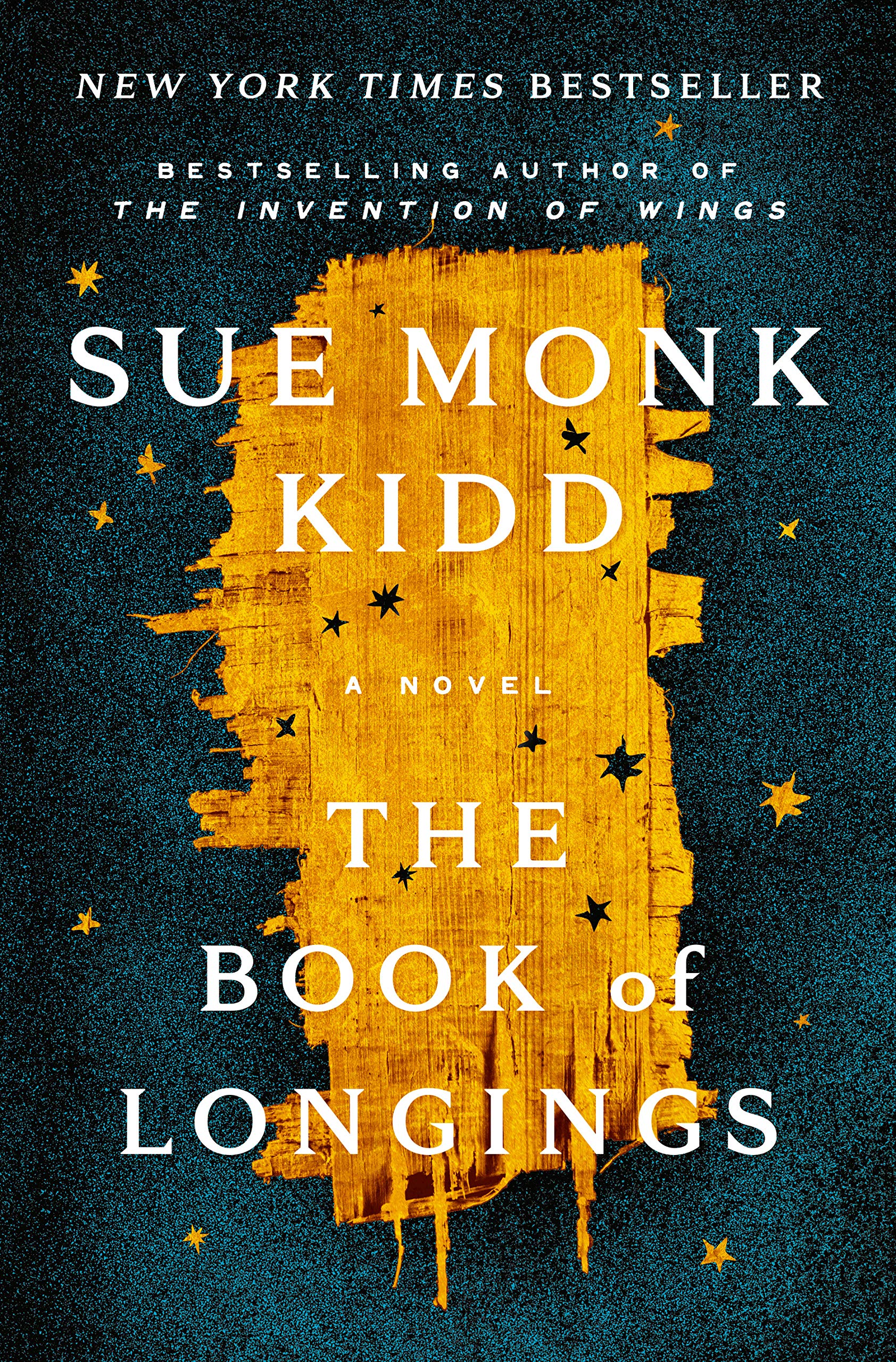
The Book of Longings by Sue Monk Kidd


Amazon.com: The Book of Longings: A Novel: 9780525429760: Kidd, Sue Monk:  Books

Ana is not the typical Jewish girl of her era, the first century, just outside ancient Jerusalem, under Roman rule. She is acutely aware of her powerlessness, even while she is better off than many, with her father being first scribe to the Tetrarch. No, she is still female and still feels the sting of having little agency over her future. While others her age appear to anticipate with wonder their upcoming matches and engagements, she is filled with dread. This is not the life she seeks. Ana is a writer of stories, hungrily stealing away with any papyrus and ink she might snatch from her father’s cache. She documents the pain and the courage that she witnesses in the women around her. She cannot imagine herself with any man – that is, until she stumbles upon the man called Jesus…

This fascinating novel of historical fiction imagines Jesus not as a celibate ascetic, but rather more as a man. He is pious and righteous and utterly generous and he promotes kindness, forgiveness, love and all of the doctrines for which he is known and beloved. But he is also human, with human instincts and human desires.

More importantly, the focus of the novel is not directed toward Jesus, but rather on Ana. The message here, I believe, is that we are ALWAYS hearing about the men. We always hear about how righteous they are and how they opine. Very few women are highlighted in the Bible, for example, and if they are, it is often to let us know whom they have “begotten,” or worse, if they have not been able to “beget.” There is quite a lot of violence toward these women, and there is quite a lot of hushing and rejection of them as well. Ana makes it her business to tell their stories, the stories of her women, not only of the Bible, but also of her peers and her family. She sees it as her mission to ensure that they are not forgotten, as women often are.

The characters depicted here are lifelike and enduring in our minds. We are drawn to Yaltha, Ana’s aunt, for example, because of her untiring loyalty and rebellious spirit. We also have deep sympathy for her because, bit by bit, her dark and tragic history is revealed to us. She has been so mistreated but yet she remains steadfast in her devotion to Ana. We cannot help loving her for this.

This is a beautiful work of imagination and imagery that I believe will stay at least with me for a long time. I’d very much love to hear what others think of it as well!

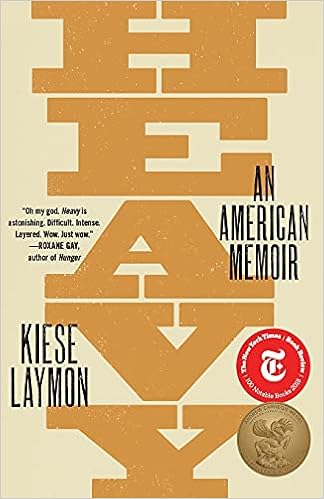
Heavy by Kiese Laymon

Through this deeply moving memoir, Kiese Laymon shares his experience having grown up as a black male in a larger body in the deep South.  He shares his earlier traumas, his fonder memories, and how he has learned to cope with both the times his mother was absent and the times she was present.  

This is a such a gritty, revealing memoir that reading it feels almost voyeuristic.  Writing it as a letter to his mother, Laymon is so deeply introspective and revelatory that we peer into his private window, we peek inside his heart.  We experience his profound sense of pain and powerlessness as he watches the women in his life become victimized by other men.  His anger is, sadly, directed inward – as it so often is.  It manifests first as binge eating and later as restriction and overexercising.  This coping strategy works for him, however, until it doesn’t.  Meanwhile, he is able to be as resilient as possible, forging relationships,  excelling academically and achieving goals on his terms.  

As a side note, I so appreciate that Laymon has come forward with this memoir, because it defiles so many stereotypes of who struggles with eating disorders.  As he acknowledges himself, eating disorders are thought to exist only in upper class, white women – and this is just not true. Folks of all genders, races, and socioeconomic strata utilize these behaviors to cope with their lives and one can never assume anyone is free or “protected” because of who they are or appear to be.  These are secretive behaviors and cannot be diagnosed by someone’s appearance.  And they can be very painful, distracting, and most importantly, life-threatening – never to be taken lightly.

This is also an important memoir from the perspective of understanding racial issues and racism.   Laymon shares his encounters with racism and digests them with us, his readers.  Both he and his mother, in spite of their obvious intelligence and academic accomplishments, are underpaid and frequently disrespected.   But, again, he also places his experiences into context.  He understands that even when he’s been treated as less than, he is still not at the bottom of the totem pole, being a male as opposed to a female person of color.  His compassionate view of the women in his life enables him to see their utter vulnerability to the forces of bias and power imbalance. 

I deeply appreciate this memoir, for all its raw and painful honesty. This is a hard read but well worth the work of it.