
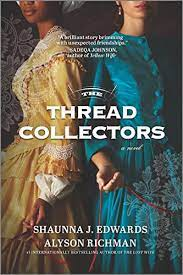
When Stella and William say a passionate farewell at the beginning of this story, they have no idea if they will ever reunite. William is an enslaved Black man in the South, escaping his master at the outset of the Civil War, and Stella is an equally indentured Black woman who technically is free but is “kept” by a White man for his “pleasure.” All William has is his flute and his magically musical ear, but this wins him a place by the side of his newfound friend, Jacob. Likewise, Jacob, a Jewish New Yorker, who has signed up on the side of the Union, with the dream of fighting to end slavery, has also bid goodbye to his true love, Lily. He also has no idea if he’ll be able to return to her, fearing the worst as he moves closer and closer to the front. All he can hope for is that her continued correspondence and her love for him will help him through his arduous fight.
This narrative was apparently based on true characters in the history of the two authors’ families. Each of them is writing about the marginalization and, particularly in the case of the Black men who fought for the Union, dehumanization, experienced by these soldiers. And how relevant is this story now? With the rise of antisemitism and racism that is rampant in this country – and worldwide – it is both tragically and unsurprisingly, unchanged. Both Jacob and William experience the feeling of being treated as less-than, socially, financially (William is paid less than his White counterparts in spite of doing their scut work), and in terms of supplies, food and healthcare. Moreover, I feel that many of us can, sadly, relate to the schism in Jacob’s family, as he finds that his brother sides with the South and defends the vile institution of slavery, while Jacob and Lily fight for abolition.
As a novel in itself, however, I feel it is just ok. While it tells an important story, and there are some gritty and heart-rending scenes, it is mostly on the predictable side and just a bit corny. A few coincidences are just too perfect and a few situations turn out just too well to believe.
On the whole, however, it is a worthy read and one can learn quite a bit about this slice of history, from a more insider, less glamorized perspective.
 kindread spirits