Small Pleasures by Clare Chambers

Jean has been stuck in her dreary routine for longer than she cares to remember: caring for her mother, who complains at any deviation from their rigid schedule, and working as a reporter where she is treated like “one of the guys” because of her plain, middle-aged, single status. When a letter comes across her desk from a woman, Gretchen Tilbury, who is convinced that her daughter was born a virgin birth, it incites a curiosity in her that she must investigate. When Jean meets this family, she opens herself up to a whole new experience that changes her life forever.

Despite the attempts to integrate science into the discussion of the “virgin birth,” it was obvious to this cynical reader where the narrative would lead. In fact, while there were many attempts at realism, too much of the story was so unrealistic that it made the whole picture a bit hard to swallow. For example, Jean is tied to her mother and can’t get away during weekends, but why is her mother ok during weekdays? Why is her sister abroad and NEVER visits, ever – for years? Do folks really believe that this woman conceived by parthenogenesis (the development of an egg without fertilization)? 

Sadly, too, the dreariness of Jean’s life seeps into the narrative of the story and contaminates the story itself. There is a pall over the whole experience, and even the happier times feel a bit dulled because of her innate, reclusive, even negative countenance. While we certainly wish her well, we also can’t help being a bit resentful of her as well. Why has she not stood up for herself earlier? Why should it have taken this long for her to have come up with a plan to engineer time for herself? To carve out a life for herself, independent from her mother? 

With all this, I feel that with all the books in the world and with so little time that we all have to read, this should not be one to prioritize…  Spend time on my MUST READ’s instead! 🙂


One to Watch by Kate Stayman-London

Bea has made a very full life for herself, with her plus-size fashion blog and the travel and networking that is required – or at least that is what she tells herself. That is, until she meets up with her long-term crush who utterly breaks her heart. After a public wise crack about a dating reality TV show where all the women have been impossibly thin, she attracts the attention of the producer, who invites Bea to be the newest “Main Squeeze.” Bea sees this as an opportunity to represent larger-bodied women, even as a business opportunity. But it may also be a chance for Bea herself to be convinced that she deserves love just as any other woman does…

If you’re looking for an easy, entertaining, but not entirely vacuous summer read – here it is! Written with great insight, warmth and sarcasm, the story carries us through Bea’s struggle and her growth. We learn about her difficulty with her size, how it has impacted her social interactions since her youth, and how a pivotal moment on her college study abroad has changed her course. The author occasionally intersperses comical internet conversations/texts/blog posts that comment on the plot, which add the social media dimension to the plot line and magnify the experience for us, just as it has been magnified for Bea herself. We live through Bea’s romantic ups and downs and feel deeply for her because we also love her – for her vulnerability, for her kindness, and for her gumption.

I was not expecting to like this book as much as I did – I highly recommend it – it’s great fun (especially for all you reality TV fans out there!) and carries an impactful message.

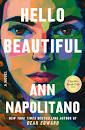
Hello Beautiful by Ann Napolitano

From early on, William has done everything he can do to make himself small. After tragedy befell his family shortly after his birth, his parents could barely hold on and he did what he could to make himself disappear. The only outlet he found to appease his loneliness was basketball, at which he found himself excelling. Meanwhile, Julia, nicknamed aptly by her father as the “rocket,” was a force to be reckoned with. She was the problem-solver, the arranger, the one in charge. She always had a plan, for herself and for anyone else in her tightly-knit family. Once her world collided with William’s, their lives would be changed forever – and in ways even Julia could never have predicted.

This is a powerful story about family – about how family can crush us, surround us, desert us and engulf us. Napolitano’s portrait of these two families (William’s and Julia’s) highlight family relationships at extremes. William’s parents emotionally abandon him at infancy, whereas Julia’s family is pathologically enmeshed such they have few relationships outside their nuclear family. While at first this seems to connect the two of them, perhaps fill a need for each of them, it may also create a blindness to what the other may be feeling, how it may impact each of them psychologically. They are both naive to the fact that our families are inside us, no matter how mightily we may try to rebel against it.

The writing in Hello Beautiful is interesting. While many authors will direct the readers in how to feel, in so many words, Napolitano seems to elicit our emotions by just telling the story outright, giving us a chance to form our own opinions, to have our own reactions. We are privy to the inner thoughts of each of the main characters- their frustrations, their demons – but we are also given the facts of their lives, the skeleton of their days in order to see the whole picture. It is not devoid of emotion – on the contrary – but what we feel in reaction to it is very much our own. What we feel is because we have formed genuine attachment to the characters and their fortunes and misfortunes. It is a unique and effective style of narrative.

I am still living with these characters – I feel that I will be living with them for quite awhile. I love when that happens.

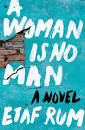
A Woman is No Man by Etaf Rum

Isra has the dreams typical of a young teenager, but hers, she finds, are thwarted time and again, by her mother’s insistence on her adhering to the strict rules of her people. Traditional Palestinian women do not have choices – they are born into the world as disappointments – disappointments first that they are not boys, and disappointments second that they must be groomed forever to be married off as soon as they can be readied. She has been told this ever since she can remember and even though she has dreams of romance, fostered by the books she sneaks into her home, she knows, deep down, that her fate is as her mother’s – she will be a wife, a mother, and no more.

Fast forward, we also follow her daughter, Deya, who is struggling with the same challenges. She is an avid reader, wants desperately to attend college rather than just to get married, but the grandmother who is raising her is insistent that she must marry. This is what traditional Palestinian women do and if she does not, the whole family is shamed. It would affect not only her but her younger sisters as well. And then where would they be? Is Deya trapped? Is Isra trapped? How is one woman’s fate tied to the other?

While I found this story a bit repetitive and almost as predictable, it was, at that same time, a powerful dive into the lives of women of this insular world. Just as with women in extreme Orthodox Jewish communities, women in these isolated Muslim communities are treated as if they have only one purpose – to serve the men in their lives and to procreate to produce, ideally, more men. They are not valued as individuals but rather for their ability to cook, clean, and to service the men. Worse, because they are not valued, they are also not treated with respect and the physical, verbal and psychological abuse they endure can be overwhelming, if not fatal. Of course, this does not represent all Palestinians – just as it does not represent all Jews – but there are communities of insular, extremely religious sects for which this does apply and it is important for these issues to be brought to light. Not just for the young women whose lives are at risk, but for society as a whole.

What I found so fascinating was how very similar the cultures are – Palestinians and Jews in their extreme, religious forms. While politically there are so many tensions between Palestinians and Israelis, religiously there are so many parallels. To those who hold on to the strictest interpretation of their religious texts, whether the Torah or the Quran, life remains as it was centuries ago. There is no value to educating women because they have a specific and limited role in the home and the community and must be guarded at all times. The purity of the woman is the ultimate value and if she stains that in any way (and any stain is her fault, even when it’s not)- even if it is by the pursuit of education alone – that brings a shame upon the family that is a black mark and taints her (and any further siblings’, of course) ability to marry, her ultimate purpose. Any adverse event is covered up in secrecy, denied, and buried so as to avoid any shame to the family – again, to maximize the marriageability of the children.

And escape is hard – because they are not given any opportunity to develop skills that they can use in the outside world.

I think this is an important read to expose this underbelly of a culture that can be colorful and beautiful and otherwise rich with historic value.


Early Autumn by Louis Bromfield

Olivia Pentland has been caught up in her old-world, New England, Puritanical family since marrying into it many years ago. While she has had financial security, she has given up all else – independence, originality, and most of all: love. She has been able to cope mainly with the support of her father-in-law, whom she perceives as a wise ally. But with the advent of her cousin by marriage, Sabine, who has been away in Europe for the past twenty years, her world is shaken to its core. Sabine, in her malevolent, selfish, and direct manner, bursts upon the family’s tautly held secrets and slices them wide open at their core. Can Olivia save at least her daughter, if not herself, from the chaos that will ensue?

This is another Pulitzer-prize-winning disappointment, I have to say. It begins with the creation of an atmospheric setting and mysterious characters that are colorful and captivating. We come to appreciate Olivia for her patience and her balance, even as she tolerates the weakness of her single-minded husband, the impudence of her husband’s intrusive aunt, and frustration of her own feelings of being trapped in a life of stagnation. But this also creates the expectation that something monumental is about to happen. And while there are things that do happen, the monumental thing we expect really doesn’t ever occur. I found that a let-down.

Maybe that was the point? Maybe Olivia’s expectation was that in her life she’d have opportunities, given her wealth and the prestige of her husband’s background. Maybe she thought she’d have the chance for romance, for excitement, for fulfillment. She was on the brink – but she had to pull back for her family’s sake and for her own. And maybe that is how life can just be sometimes and we have to accept that. Maybe that is the lesson we are to learn.

Lesson or not, though, to me it fell short and I felt, as the reader, short-changed.

I’d be curious to know if others had a similar reaction to this novel. Any opinions out there?

Windfall by Penny Vincenzi

Although she’d given up quite a bit for her family, Cassia had felt fairly content with her life. She has a lovely family, a husband who is a respected, community doctor, and she is even allowed to assist him once in awhile in his practice. What she doesn’t often acknowledge, even to herself, is how much she’s missed practicing medicine herself, after having trained at the same medical school as her husband. But now that she’s inherited quite a large sum of money from her beloved godmother, perhaps now she can make something of her education. Perhaps now she can realize some of the dreams she has had for herself. How this plays out seems to have a ripple effect, for her family and for the many people she cares about and who care about her.

In my opinion, this author, Penny Vincenzi, is a master craftswoman. She has a gift of being able to create an entire community of fully developed characters with whom we become intimately connected, interweave their stories so that they tie together but also function as engaging subplots, and all while keeping each character and story solidly lucid and memorable in and of themselves. It is not heavy descriptives or overwhelming detail that keep the characters clear and identifiable, but our own emotional commitment to each of them because of their deeply human feel. We are compelled to know what comes next because they feel as tactile as we do, we need to know because they become our family, our friends. We feel almost a part of the intricately woven plot, that we are almost a part of the fabric of their lives. We are vulnerable to the suspense, the sharp dialogue, the exotic scenes, and most poignantly, the human emotions the novel elicits.

There is also a theme of fighting convention by the many strong women herein. Women were just starting to battle against the norm of having to stay home and care for children as their only option – and at the same time they were also starting to rebel against the presumption that they, in fact, had to have children at all. Contraception was just then becoming a possibility, which liberated women from the burden of just being baby factories. At one point, Harry, a very complex character with whom Cassia has a very complicated relationship, laments that he is forever destined to be attracted to very strong women. As it happens, most of the women in this novel are strong, each in their own ways.

If you’re looking for a fun, substantive read – a truly healthy addiction because you will not be able to put this one down! – this is the novel for you!


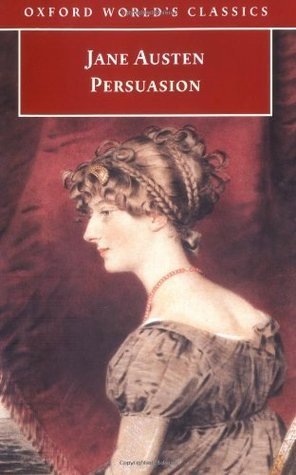
Persuasion by Jane Austen

Anne has led a quiet life, since the breakup of her engagement 8 years ago. She has not questioned the wisdom of the advice her dear friend, Lady Russell had given her, knowing that it was only out of the best of intentions that her friend advised her so. But she has wondered just how her Captain Wentworth had been faring since that time. As it happens, she may now find out – because he is returning to them! Now that her father has outspent his fortune and has to rent out his estate to Captain Wentworth’s sister and brother-in-law, she may be seeing him once again. But it won’t be that simple to learn what his thoughts are – and to whom his heart belongs.

Every so often I love going back to the classics – especially ones I’ve never had the opportunity to read. While I found this one a bit confusing in that it was challenging to keep track of the characters and their connections – every male character was named either Charles or William and everyone was a cousin! – I did find it amusing and entertaining. So many of the classics are heart-wrenching and tragic and it is refreshing to know that at the time of Jane Austen – the later 1700’s/early 1800’s – it was permitted, even appreciated, to have a sense of humor!

So while this was not a deeply profound or moving novel, it was certainly a fun change of pace.

I wouldn’t call this a MUST READ but it is definitely on the list of classics to get to at some point…


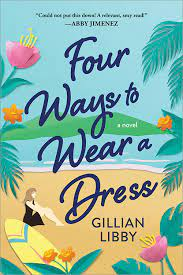
Four Ways to Wear a Dress by Gillian Libby

Millie has just lost her PR job in NYC. She really thought this would be her big beginning, when she would show her parents that she’d really become an adult. But alas, once again, in spite of her warnings to the company that their product was impractical and overpriced, they were forced to make cuts – and that included her. So, at least for now, she is going to take her shared, “good-luck” little black dress that her friends are foisting upon her and move out to California, where the final member of their posse, Quincy, is living, helping to run their family-owned hotel. What Millie finds is that Quincy and her friends, social media influencers hoping to bolster the businesses of their tiny coastal town, are living a dual reality: one that is on social media and one that is real life. As Millie tries to find her own way, she has to navigate this duality for herself and figure out where – and if!- she fits into this picture.

My initial reaction to this book for this blog’s purpose is to tell you not to waste your time.

The bulk of this story, which is predictable in almost every way, revolves around the superficial world of social media influencers, which is distracting, disingenuous, and really all about the money. Even the children here are trained to stop suddenly – right on cue, even mid-sibling-rivalry-argument – long enough to plaster lovely smiles on their faces for uploadable photos in a very contrived-but-meant-to-look-natural setting. Any admission of an imperfection is shameful, any hint of real-world troubles is deemed unacceptable. When Millie arrives and begins to be publicly genuine, posting her mishaps and actually getting attention for it, she gets admonished by the local “queen bee.”

That is, of course, the message, though. It is a comment on social media and its influencers. It is a critique of the idea that we must only put our best selves – or a version of ourselves that is “perfect” out there for others to see, and never admit that we are imperfect, or actually human.

But I would suggest that that isn’t good enough. I would suggest that maybe we might not publicize so much of ourselves at all. Maybe we could just be actually living more of our lives; being mindful of, rather than posting, every meal we consume, every outfit we wear, every experience we enjoy. Maybe also, we could be watching less of what others are doing. Certainly research supports this: that is, the more time we spend on social media, the more anxious and depressed we are.

So while the book is not necessarily a worthwhile read, it does get one thinking… which always has value. Lucky for you, I saved you the trouble! You’re welcome! 🙂


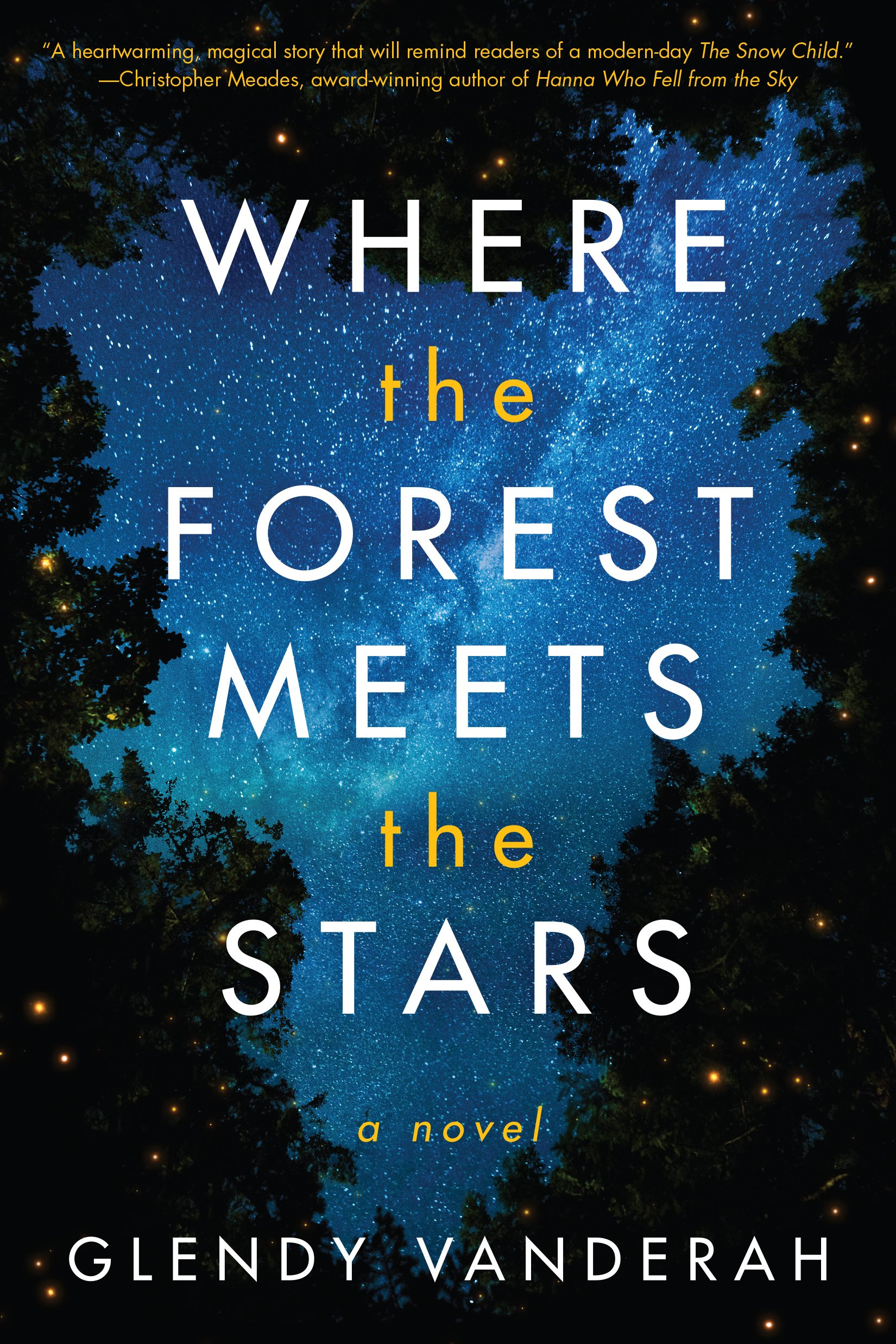
Where the Forest Meets the Stars by Glendy Vanderah

Jo is exhausted from her day of moving from nest to nest, from observing the details of nature that will add to her data for her dissertation research. All she wants to do is get some dinner prepared on the grill so that she can eat quickly and get some sleep before the cycle starts again tomorrow. Suddenly she sees a small, thin, unwashed, shoeless girl in pajamas step out from amidst the trees, claiming to be an alien who has newly inhabited the body of a human girl named Ursa Major. As reluctant as Jo is to feed her in, she also cannot abandon her, especially because she appears to have already been. And so begins the magical and starlit journey the two begin together, each bringing hope and light into each other’s lives, albeit in somewhat unpredictable ways.

This is a sweet and engaging novel that you’ll need to, in your mind, suspend reality somewhat first in order to go along for the pleasant ride. I guess what I mean is that it is just a bit too saccharine sweet for my taste. For example, while each character has a complicated past giving them some depth, they seem to overcome their personality flaws almost miraculously just by having been brought together by their circumstance. Gabe, the neighbor who has, for all his life, never been able to overcome his social anxiety to make any friends, suddenly becomes a graceful and articulate partner to Jo in her caring for Ursa. Likewise, later when more of Gabe’s story is revealed, and we learn the root of the tension between Gabe and his sister, we learn that just one conversation between them resolves years of built-up conflict and resentment. Many things are just too smooth, just too perfect. And don’t get me started about the ending…

Nevertheless, it is a decent story with likable characters, even with some suspense at points.  And if you like endings that are wrapped up and tidied, this one will be delivered to you absolutely perfectly – even with a bow on top! 


The Personal Librarian by Marie Benedict and Victoria Christopher Murray

Belle da Costa Greene is never happier than when she’s holed up among Princeton’s trove of ancient texts, soaking in the artistry of the lettering inside these relics and conjuring up the historical context in which they were printed. Since childhood, she’s been passionate about the art and literary relics of the Medieval and Renaissance eras, and so when her old friend, Junius is about to show her a unique specimen in the Princeton library, she almost shudders to think how fortunate she is to be able to see this ancient text up close. She is not prepared, however, for his offer of a recommendation for the position that will, ultimately change the course of her entire life: to be the personal librarian to his uncle, the one and only JP Morgan. For any woman, this would be an intimidating position, for this was not a position women were offered. But for Belle, there is a complicating factor that would make her uniquely unsuited – so she is bound to keep her true identity hidden from the world. But can she do this when it is so dangerous for both her and her family?

This is the fictionalized story of an actual woman, born Belle Marion Greener, who made her way into New York society by virtue of her ardent passion for the preservation of art, her intellectual prowess, and her social guile. Her earliest memories were of leafing through art history textbooks with her father, and her curiosity for learning that sprouted from this never waned. Though a woman, she was granted access to the library at Princeton, working with the trove of sacred texts that were housed there, and from there she was referred to interview with the larger-than-life collector of art and ancient texts and artifacts, JP Morgan. Impressed with both her fund of knowledge and her pure moxie, he not only hired her but gave her license to maintain and expand his collection as she saw appropriate. Together, they amassed one of the world’s largest and most impressive collection of ancient texts, bibles, and artwork.

What I will not spoil here is the secret that Belle must keep – I will keep that secret along with her. But suffice it to say, that this secret stays with her and directs the course of her life. She is not free to do as she wishes nor is she free to be who she really is in order to secure her career and maintain the security of her family. Because of the era she lives in, she is tied to the social mores and prejudices of the moment and cannot risk revealing her true identity. She is caught between two worlds and she must make her choice, which she does for the sake of herself and for others who depend on her. Even while she struggles, she finds that it is the way it must be and she ultimately makes a sort of peace with it. But at many junctures, it impacts heavily upon her in very deep and cutting ways.

On the lighter side, this story does give an insider peek into the life of the Gilded Age of art and high society and how social status was brokered at this time. It was a sort of precarious time, whether you were in or out, depending on what people were saying about you, whether you bought the appropriate art, had the “right” taste, or your money came from the right source. There was also the beginning of hope for women, suffrage and equality, with women like Belle who broke into what had been a man’s world. She was certainly a pioneer in her field, showing that she did not have to relinquish her femininity to be successful in her dealing in the art world.  She just had to be so much smarter – which she apparently was!

This is an entertaining and educational read, both. Great fodder for all you historical fiction fans!!