Sadie is full of resentment, even though she can’t admit it. She’s given up her summer to be with her sister – and that’s ok, I mean, her sister is battling cancer, for god’s sake. She’s doing her best to be out of everyone’s way, when she comes upon a quiet boy named Sam, who, it appears, likes to game as much as she does. In fact, as his nurse has observed, Sadie is the first person Sam has actually spoken to since his horrible accident and his multiple foot surgeries. When the nurse requests that Sadie come back and game with him some more, trying to pry him further out of his shell, she encourages the development of a friendship that will go through many lives – almost like those of the characters they become in their games.
I am not a gamer, in any way, shape or form. But I loved this book and found it relatable on all of its levels. While gaming is the language the characters use to communicate, we sense their vastly deeper connection to each other, the love they feel. We also experience their pain and understand how they rely on gaming to escape this pain – to dive into worlds that are dreamlike, fantastical and utterly distracting in order to just get through. As they create games for others, they use this knowledge to create alternate realities for others to escape as well.
I also love how the plot unfolds. It surprises, interrupts, detours, and restarts – almost as if in a game itself. Because of this, it captures our imagination but also feels as real as one’s own heartbeat. It is simultaneously lyrical and tactile. The characters are both idyllic and deeply flawed.
I believe this is a MUST READ – a creative, imaginative, and very modern love story!
In Whereabouts, we are introduced to the narrator, a single woman in her mid-forties who is a writer and professor, an astute observer of life around her. With each brief chapter, she shares with us a glimpse of this life, a series of sometimes ordinary, sometimes unsettling experiences that range from a visit to the shore for a friend’s baby’s christening to a trip to the local stationary store that has, to her acute disappointment, suddenly been repurposed as a luggage store. Woven through these stories is an undertone of a guilty resentment toward her aging mother, for feeling criticized all her life for being who she is and for being who she is not.
There are many fascinating aspects of the way Lahiri has chosen to approach the writing of this novel. Leaving her narrator without a name, for example, universalizes her character – potentially makes her the everywoman of her age and circumstance. She may speak for the middle-aged woman, mulling on her past while contemplating her future.
She is admired by the young and by her peers for her uncluttered independence, but yet she simmers with inner rage. Her mother who is now small and frail looms large and loud in her memory, the ancient critical and jarring comments from her past playing on repeat in her mind, as if they are being uttered today still. It is impossible to forgive but so hard to live with this resentment too.
She participates in groups of friend gatherings, but reports on them as if from afar. She is with them but not of them. It feels as if her rage prevents her from truly connecting to anyone beyond the surface and she cannot overcome this. There is contemplation without real insight, or so it feels. Does this come from the narrator herself or from the fact that she speaks to us through vignettes as opposed to telling us a linear story? Is this disconnect intentional?
And so the telling is as unique as the character herself, which makes for an original, contemplative, and, apparently, Pulitzer-Prize-winning read.
I’m so curious to hear what others think about this one!
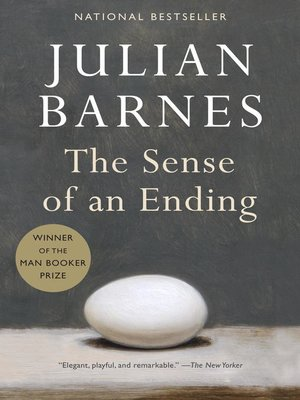
As Tony Webster reflects back on his life, he begins his account with his early days in high school, describing his friendship with a small group of lads who considered themselves cynically intellectual. When a newcomer, Adrian, joins their group, they realize that he is truly the superior of them all, and they subtly vie for his approval, though each would deny it fully. What distracts them from their everyday rhythm, however, is the news of a suicide by a fellow classmate. This, they feel at the time, is a truly brave philosophical comment on life itself. What Tony doesn’t realize is how he will come to understand this very differently as he ages, as he gains understanding and experience. But will he ever gain true wisdom?
This is one book that I may actually go back and reread at some point, in order to fully appreciate what it has to teach me. There is so much to unpack here in this short yet deceivingly rambling novel. Tony mulls and overthinks and constantly questions his past, sharing and reexamining details, pondering the reliability of memory itself. We’re not clear why it all bothers him so, as it seems all to be benign enough, so much the typical male adolescent bravado. Even his relationship during college with Veronica, while hard to understand given her cold and disparaging manner, we attribute to his naivety and we applaud him for moving on from her when he finally does. We come to know his overly sensitive and analytic nature, his coming to terms with his own mediocrity, and what he sees as his inability to effect change in others.
What we – and Tony – don’t see until it’s very late is what we should all know: our words impact others always. Our relationships and how we conduct them have consequences always and our actions have a ripple effect much in the “butterfly effect’ analogy. We may not know what they are now, we may never know what they are. But they are there. I believe this is the message of this novel, delivered in its final twisty pages.
The writing here is a bit ponderous but it’s as if you’re walking along the beach and if you’re looking, you find the shells and pearls of wisdom if your eyes are open to them. It feels as if each word is intentional, each fact placed where we are meant to find it. In this way it builds so that we are as flummoxed as Tony, then, by the ending.
Perhaps not a MUST READ, but I highly recommend this to those of you who are more philosophically inclined. Also to those of you who enjoy a surprise!
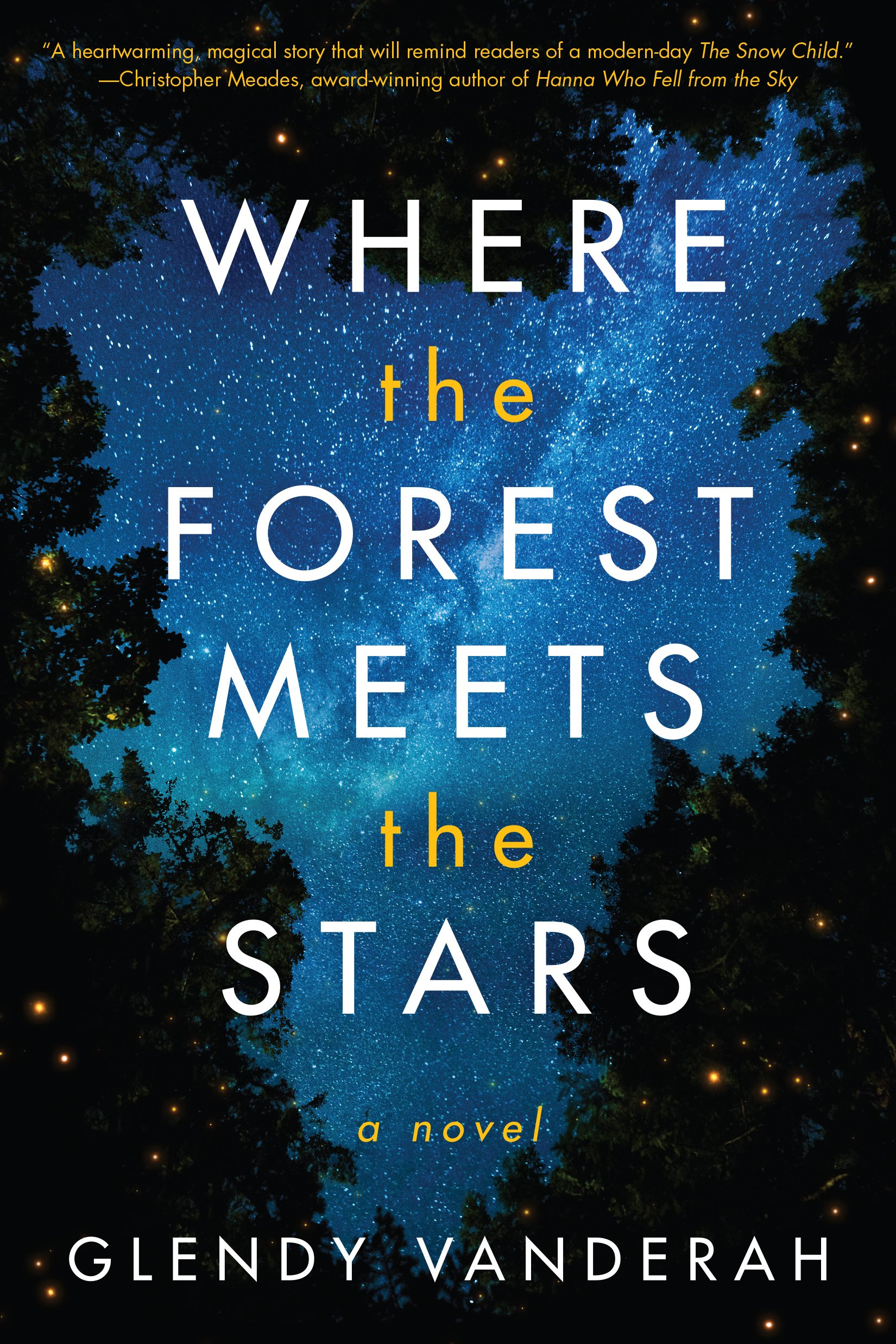
Jo is exhausted from her day of moving from nest to nest, from observing the details of nature that will add to her data for her dissertation research. All she wants to do is get some dinner prepared on the grill so that she can eat quickly and get some sleep before the cycle starts again tomorrow. Suddenly she sees a small, thin, unwashed, shoeless girl in pajamas step out from amidst the trees, claiming to be an alien who has newly inhabited the body of a human girl named Ursa Major. As reluctant as Jo is to feed her in, she also cannot abandon her, especially because she appears to have already been. And so begins the magical and starlit journey the two begin together, each bringing hope and light into each other’s lives, albeit in somewhat unpredictable ways.
This is a sweet and engaging novel that you’ll need to, in your mind, suspend reality somewhat first in order to go along for the pleasant ride. I guess what I mean is that it is just a bit too saccharine sweet for my taste. For example, while each character has a complicated past giving them some depth, they seem to overcome their personality flaws almost miraculously just by having been brought together by their circumstance. Gabe, the neighbor who has, for all his life, never been able to overcome his social anxiety to make any friends, suddenly becomes a graceful and articulate partner to Jo in her caring for Ursa. Likewise, later when more of Gabe’s story is revealed, and we learn the root of the tension between Gabe and his sister, we learn that just one conversation between them resolves years of built-up conflict and resentment. Many things are just too smooth, just too perfect. And don’t get me started about the ending…
Nevertheless, it is a decent story with likable characters, even with some suspense at points. And if you like endings that are wrapped up and tidied, this one will be delivered to you absolutely perfectly – even with a bow on top!
While still a boy, Patroclus is brought by his father, a king, to compete for the marriage of Helen, considered the most beautiful woman in all of Greece. They bring gifts, and the bashful boy is expected to demonstrate his wit and intelligence measured against the famous princes and demigods around him. While his father speaks up for him, his unabashed disdain for the boy is apparent. It is no surprise when Helen chooses another. Upon their return home, when disaster strikes, Patroclus is not surprised when he is sent away from his home, forced to live in exile, with a king known to take in other exiles like himself. While he does what he can to avoid attention, he inadvertently catches the eye of the son of the king, none other than Achilles, a demigod himself. Their friendship grows and leads to adventures that Patroclus can not even imagine.
Not being so well-versed in Greek mythology myself (having read the Odyssey in high school and little beyond that- not generally a huge fan) I can’t comment with much authority on how this compares to the original . What I can say is that while some of the themes of vanity and hubris are well-preserved, this was certainly a modernized version of the events told in those ancient texts.
What is done so subtly and beautifully, I believe, is while Patroclus tries to uplift the Achilles heroic narrative, he (or the author), in fact, reveals himself as the true hero: the one who maintains humility, kindness, and true loyalty even in the midst of what becomes chaos. While he always folds himself into the background, always shining the light toward Achilles – who accepts this with no hesitation, as his position and stature would dictate – Patroclus meanwhile bolsters, soothes, even guides Achilles toward the proper direction. Few see him for who he really is. Some even hate him – and none more than Achilles’ mother. (Could it be that she hates him because she sees him for who he really is?)
So while I did read The Odyssey quite a long time ago, I did enjoy this adventure much more than that one! I’m curious if you out there in cyberspace did as well! I’d love to hear your opinions!
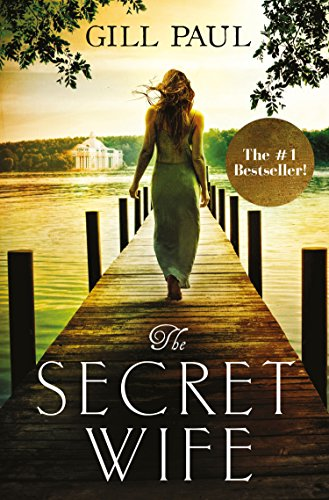
After stumbling upon her husband’s phone, left in full view with evidence of an affair, Kitty finds herself boarding a plane for the States without telling either her husband or her best friend – or anyone, for that matter – where she is headed. She just has to get away to sort out her thoughts and her next steps and fortunately, for her, she’s got a perfect place to do just that. Coincidentally, a few weeks prior, the papers came through confirming her inheritance of a cottage on a lake near Albany, NY, from a great grandfather she has known almost nothing about. As it turns out, while she sorts out her own situation, she also becomes curious to learn about her great grandfather, Dmitri, the prior owner of this cottage. Why has she never heard about him? Why did she not know there was another writer in the family? And from whom is this very expensive Faberge pendant she’s found in the cottage? As she pieces together the mystery of her great grandfather’s past, she finds she also learns quite a bit more about herself.
By pivoting between Kitty’s story and that of Dmitri’s, we learn about what did happen and what could have been. Dmitri’s story begins in 1914 at the start of the Russian revolution when he is first injured and is tended to by one of the Tsar’s daughters, Tatiana. The original historical legend is a horror. This one has its horrific moments as well, for sure, but the author also intermixes it with love, hope and much imagination.
There are a few themes that resonated throughout the narrative and over which I struggled. One was that of loyalty and the other was forgiveness. Kitty is crushed by her husband’s failure of loyalty, and evades and then contemplates a path to forgiveness. Likewise, Dmitri is fiercely loyal to Tatiana, but when he finds another love who lifts his spirits when he believes he is lost, his loyalty to his new family is questioned by others. Some forgive and others cannot – and this impact lasts for generations. What this story highlights to a dramatic degree is that things may not be as they appear to be. While we think we know someone, their circumstances, their history – we may know nothing at all about what is going on inside their heads or their hearts, their truth.The only genuine path to forgiveness is to hear someone out, to give an opportunity for them to voice their truth. To get there, that requires having an open heart to what they have to say – and that may or may not be achievable.
This is why I believe reading is crucial. If we read and take in what we read, we, in turn, open our hearts and minds to other ideas. This is what makes us more human, more compassionate. We understand others’ perspectives, others’ voices. I have a long way to go yet, but this is one of the ways in which I strive to grow and move forward.
From the very moment of his birth in the narrow, rented trailer home where his teen mom went into an early labor, Damon already felt the stacking of the cards against him. His father already six feet under only six months prior, Damon learned early to try to hide his mom’s alcohol even as he hid from her poor choices in men. He also knew when to escape to the Peggots’, their kindly neighbors and grandparents of his ally, Maggot. But he lost his battle to protect his mom when “Stoner” moved in. While his mom believed this newest partner might provide stability, Damon saw that what he actually provided was constant tension and outright physical warfare. This was the beginning of a journey for Damon that led him through the nightmare of the foster care system, which would test him to the limits of both his weaknesses and his strengths.
Barbara Kingsolver has always been one of my favorite authors and, again, she has proved this justified. As she recreates the narrative of David Copperfield through the voice of a young, poor, Appalachian boy at the brink of the opioid crisis, she does so with authenticity, respect, a love of this part of the land and its people, and, yes, even humor. It is a hard story. Damon, or “Demon” as he is nicknamed, is abandoned into the foster care system and left to his own creative devices and survival instincts at an excruciatingly young age. We follow him through his minimal ups and prolonged downs and we see that he has, in spite of his circumstances, a kind heart and an artistic soul. We come to love him and see his failings as the failings of the system that has tried to eat him alive, rather than his own personal ones. We see how these failings have been built on generations of systemic exploitation and vulnerability.
Kingsolver, through this narrative, brings to light a few important messages. One is how the large mining magnates exploited so much of Appalachia without regard to the land or the people who lived there. They created dependence on the corporations for everything. The people were owned by these corporations, but not protected by them, as their health, education, and welfare were not at all the company’s concern. And once the land was stripped of its use, it was abandoned, as were the people who lived there, leaving only poverty in its wake.
So it is not shocking that Purdue Pharma sought to prey also on this vulnerable population, sending out its sales reps like missionaries to these communities who were middle and lower-middle class without great access to adequate health care. Few on the receiving end were insured, so much of their health care was in the form of emergency room or in-hospital care only. The providers there were sold the BS that Purdue Pharma was dishing out on pain management: that they had invented the miracle panacea for pain relief through Oxycontin and that it was, miraculously, non-addictive. Well, we know how that fable goes…
What I believe I loved most about this story, and what Kingsolver does so tenderly, is highlight the beauty of both this region and the folks who live there. She describes the landscapes: the steep waterfalls, the green mountains, the valleys and rocky streams -and the fauna and flora that thrive there. How even if poverty exists there, folks are able to farm a patch of land to grow vegetables, hunt for food, or knit themselves a few sweaters for the cold weather – and that they do so for each other in their close-knit communities – because there are still close-knit communities where everyone knows everyone else, and have known their parents and grandparents as well.
This is a uniquely gorgeous novel – one that should not be passed up. This is, without a doubt, a MUST READ!
(And I think it’s also time for me to revisit the original David Copperfield as well!)
Orly is feeling a bit resentful. His older brother gets to go to camp and his best friend gets to travel to Europe, while Orly finds himself being driven to his godmother’s home in her small town of Brownsville, TX for 3 long weeks. Not that he has anything against his godmother, Nina, but it isn’t exactly his first choice for a summer vacation plan. And for her part, Nina feels badly for the boy, having to spend his time with her, especially given her current situation. She would love to take him to places he’d enjoy, but on top of caring for her mother, which already is a burden, she has the added weight of the current secret hiding in the little house in her backyard, which she cannot share with him, nor with anyone else, for that matter. It’s just too dangerous. But how long can she really keep this secret from a curious, intelligent, and adolescent-brained boy?
This novel tackles the very complex and tragic issue of immigration over our shared border with Mexico, where on one side there are drug cartels openly wreaking havoc on their streets and on the other are either coyotes who prey on desperate refugees or border patrol agents hunting them down just to send them back all over again. Nina suddenly finds herself trapped in the middle, embroiled inadvertently in this dangerous, messy business. While trying to be compassionate and humane, she also must consider the safety and security of her own family as well – and it is complicated. Added to the mix a young boy whose life is on the line – it becomes that much more complex.
This is such an incredibly important book to bring to the attention of the world – and to bring down to a human level. These refugees are human beings, not numbers or statistics. No one leaves their home, their family, their communities, or those who share their native customs and celebrations unless they are utterly desperate and feel that their lives are truly threatened. We are morally obligated to show these individuals compassion and understanding – especially since most of us here in the US are descendants of those who were in similar circumstances at one time or another.
On the other hand, where I felt this book fell short was in bringing sufficient warmth, humor, and fire to these characters. We care but we are not dependent on what happens to them. While we understand that Orly is lonely, it does not become our loneliness. While we understand that he is grieving for his mother, it does not become our grief. The characters all remain one step outside, even as we want to know them more intimately. We are granted glimpses of Nina and her more glamorous past, but we still are not let inside, not really. And this keeping us at arm’s length keeps the story just that side of attachment to it.
This is a story I wanted to love, to be awakened by, to be energized by. It is important, timely, and relevant. But I did not, was not – not as I could have been.
Lyudmila Pavlichenko only wanted to protect her son when she went to retrieve him from the shooting gallery, where his usually absent father had brought him. He was only 5 years old, and the foolish boor was trying to impress him with the use of a gun, no less. Well, if that is what made a “good” father, then she would be both a good mother and a good father to her son. In addition to attending her graduate studies, working to earn money, and caring for her son, she also got herself certified as a sharpshooter. Little did she know how useful that would become, how it would equip her for the battles that were to ensue on her home turf during the second World War, and how it would change the course of her life forever.
Though this novel is fictionalized, it is based very closely on the memoir and historical accounts of the life of this true heroine, Lyudmila Pavlichenko (or “Mila”, to her closer friends). While women in Europe and America were only utilized in medical or administrative capacities until very recently in the military, they were occasionally utilized as front line fighters by the Russian military much earlier on. And although these women still faced harassment and were not generally treated as equals, there were a few, such as Mila, who were actually acknowledged for their contributions, which were extraordinary. In her case, she earned her moniker of “Lady Death” as a sniper, with an official head count of 309 Germans killed during the war (and probably more, in reality).
Quinn has become another of my favorite authors, uplifting strong women in history and bringing them into our consciousness. We can now appreciate, for example, how Lyudmila Pavlichenko not only contributed so bravely toward the fight against fascism with her rifle, but she also did so with her honesty and charm. Brought to America in a student delegation to help convince the US to open a second front in Europe to support the war against the Germans, she formed a personal friendship with both Eleanor and President Roosevelt. And though she shied away from the spotlight, she did not shirk her duties when it came to speaking up for gaining support for her fellow military fighters who were out in the field trying to protect what she felt were forces against evil.
I will say, while Quinn’s other novels truly grabbed me from the first page, this one took a bit of time for me to become fully absorbed. There was perhaps a bit more detail about the ammunition, war strategies, and the layout of the stakeouts than I might’ve needed personally (my eyes may have glazed over just a bit). But the suspense definitely built quickly enough, and there were a twists and surprises that caught me off guard, for sure. By the middle I was hooked and by the last few chapters, I was 100% riveted and could not put the book down until I finished it – including the author’s notes!
Quinn’s deeply researched novels consistently highlight how hard it has been for women to be acknowledged for even the most stunning achievements. She does this while keeping us engaged, entertained, and always wanting more.
I say it again – this is the very best way to learn history! And why I loved this book.
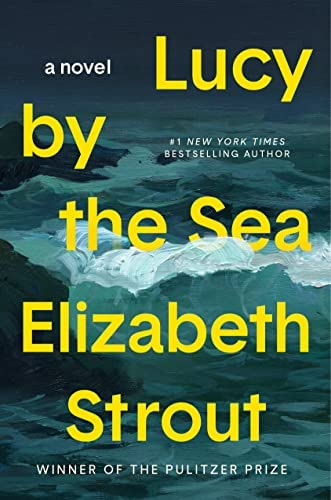
It is March of 2020 and Lucy has plans to leave for her promotional book tour. She is a bit taken aback when her ex-husband, William, a parasitologist, calls, insisting on her canceling her trip, packing a bag of clothing and work essentials, and joining him to stay in the house of a friend of his in Maine. He is concerned about this new deadly virus and feels they must leave the congestion of NYC in order to stay safe. She feels he is over-reacting – really, how long can this new virus really be a problem? – but he is also more knowledgeable than she is about this sort of thing, so she goes along with it, for the time being. Little does she know what is to come and how this decision would affect the course of the rest of her life.
Wow, I often don’t like to know what I’m going to be reading about in a book, but I wish I’d been warned about this one! This is definitely a “too soon” situation – since we are still living it. There are 42,000 reported cases per day today according to the New York Times (so presumably so many more, with home testing, states and individual localities not reporting their stats, etc.), thousands hospitalized with it, and hundreds dying of it per day in the US alone. And this is before we all go back indoors because of the approaching colder weather.
And then there’s the story itself, which has a contemplative, diary sort of feel. While Lucy adjusts to life in Maine, she also reflects back to her childhood of poverty and neglect, her strained relationships with her family, and her difficulties managing her success as an author. While it feels like there is not really a story here, the story does evolve gradually and organically and it does, perhaps a bit too slowly, pull you in.
What I appreciate here is that while there is acknowledgement of the political divide in the US at this time, it is done so with extraordinary delicacy. There is a clear understanding that Lucy and William appreciate science, wear masks, isolate, and observe the January 6th attack on the Capitol as a threat to democracy. However, Lucy does express a sensitivity to the anger expressed on January 6th. She relates to how poverty and its indignities can foster deep resentment, which incites violence such as that which erupted on that day. On the other hand, she concludes that this anger cannot justify the support of such radical extremism, Nazism, open racism, and overt hatred that was seen on that day either.
So while this was an interesting read, I cannot, in good conscience, recommend it for now. Maybe in a few years, when we’ve all recovered from our PTSD, it might serve as a warning, as a reminder of some sort. But it’s definitely too soon to be reading about what we’re all still being hit with on a daily basis.