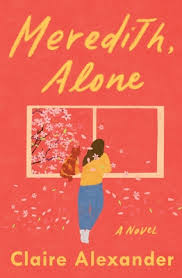
Meddie feels a bit like she’s lost herself. She knows when she was in college, she was her truest self, at her most independent. There, free of her “Ma” and her aunties, she was able to speak up for herself, to pursue love, and explore her passions. But somehow, on moving home, her drive and ambition became swallowed up in the dynamic of her mother and her aunties. So much so that when her mother poses as Meddie on a dating app, she actually goes along with it and goes to meet the guy. Big mistake, as it turns out… and one that leads to another, and another and another…
This is an outrageous, madcap romcom that is just pure fun. Once you are able to suspend disbelief and just go with the absurdity, you will not be able to resist the humor, warmth and the joy here. The characters are kind, the plot is dizzying, and there is a chuckle on every page.
I love that Meddie is repeatedly torn between being annoyed by her interfering aunties and being just bowled over by their loyalty and love. We cannot miss how they, for all their hilarious quirks, misguided actions, and internal feuding, are also eternally devoted to each other. I suspect many of you will be able to relate to this, no matter your background, your culture. I think parental/family guilt is often an expression of love, part of what makes the world go round in so many cultures. If we don’t laugh at it, we are doomed to over-pathologize it. And then we miss out on that love that is likely underlying it.
If you’re looking for an escape – and who isn’t right now??? – this is your answer! Enjoy!
Ellie, aged 7, has just lost her father and feels as if her whole world has changed. She and her mother can no longer stay in their enormous home in the center of Tehran and must move to the “down” side of town. Nevertheless, while her mother is distraught over this and worries about their place in society, Ellie is actually excited to see children playing in the street, thrilled at the possibility of learning to play hopscotch, and dreams of meeting her ideal, best friend. When she walks in on the first day of her new school and is greeted by a spunky girl with dark, curly hair who shocks her with her outgoing nature, she thinks that this is not who she imagines will be her best friend. Ellie learns quickly that Homa, this warm, bright, honest, and fiercely loyal girl might just be that very friend.
This is a beautiful story of friendship, hardship, and loyalty. The two unlikely friends, Ellie and Homa, are as different as two girls might be – but perhaps it is because of this that they are amused by each other and get along. Ellie, self-aware in her materialism and superficiality, is nevertheless caught up in their friendship and feels a bond with Homa in spite of her absence of passion for the politics of the day. Nevertheless, she admires Homa – and is worried for her – for her passion and strength in seeking to promote human rights, particularly women’s rights. This is at the heart of both their friendship and their schism.
I actually love the way Ellie portrays herself as superficial, wanting what many want, and being self-aware about it. She is terrified of having to go back to being dependent on someone to pay her bills, to live in squalor, to have to need/want. She fears poverty, lack of power. And she admits to being afraid of being imprisoned, as we all are, at heart. So many novels are written with the main character as the brave one, the fighter, the hero. I love that in this one, the main character is the one who is the worrier, the caregiver, the friend. She is the one who has faults, is honorable, honest, and self aware, but who is supportive and can be helpful when the time is right. While many are brave and undertake righteous causes, fighting for freedom against oppressive and suppressive governments (such as that of the Shah’s and later that of the Ayatollah’s), not everyone is meant for that. I think that by creating an admirable, honorable, human and faulty main character for this tale, we can perhaps see ourselves identifying with that fear and relate to those that can help, those who support the heroes, the fighters.
This also gives a background to the story of the women of Iran. It is not only a historical context but a warning to all of us. It happened in Iran with extremists who toppled a democratically elected government, violently forcing themselves into power and overturning years of fighting for women’s rights in just moments. We in the US think we are so safe from this, but here we are, already fighting for power to make medical decisions over our own bodies. It starts there. Where will it end? If it happened in Iran, it can happen here as well.
I think this is an important read for not only women but men everywhere, and particularly here in the US and particularly now in this uncertain moment. We are experiencing no less than an undoing of our democracy in small (and not-so-small) steps. We need to pay attention and learn from other countries and other individuals’ experiences. Or there may be no where else to go…
Ginny is entirely caught by surprise when her powerful, workaholic father suddenly springs upon her and her sister, Rose, the idea that he is right now giving his entire farmland to just them, leaving out their younger sister, Caroline. While she understands in her heart that Caroline has never been interested in farming all the while both Rose and Ginny’s husbands have been farming alongside Ginny’s father for years now – Ginny still knows that this is a moment of fracture for the family. Where is this coming from? And how will it play out? She cannot even begin to guess…
I believe this is another example of a good idea not ideally executed. The author has attempted to paint a picture of a tyrant – Ginny’s father – who has wielded his power and influence in their insular, misogynistic, community to his supreme benefit. He has abused his children, tormented everyone around him, and then, when he may actually have to pay for his sins, he presents with dementia, so he evades culpability. But in telling this sordid tale, there is so much detail, so many tiny moments that the thrust of the message becomes fogged over, gets somewhat lost.
Even as the author portrays Ginny’s journey to find her own voice, to grow out of her own fog of misguided content, the message is blurred. After being initially blinded by her own will to stay the course, to not see what has been, she begins to awaken to the reality of her past and her actual present. She begins to stand up to her domineering sister, Rose. We begin to see strength. But, again, there are so many details. There is her relationship with Rose, her relationship with her sister, Caroline – such as it is. There is her flirtation with a neighbor who has come back after being away many years, which serves to distract her from her present situation – and distracts us as well. There are also the details of her life, her cleaning of her home, her cooking, her ironing, the everyday living that perhaps imbue reality but also bog us down in minutiae. It becomes too much.
A Thousand Acres becomes a thousand words that could have, perhaps, been a mere hundred.
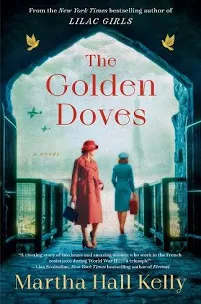
Josie is not happy about her assignment in 1950’s Texas – enabling ex-Nazi scientists to be coddled within the secretive, US government research program – but what is she to do? Allow the Soviets to access their expertise first? She knows she must go along with it, given that her mentor, Karl, has been pressuring her to not let her past at Ravensbruck cloud her judgement as an agent. She finds she is truly missing her days working with her unlikely best friend, Arlette.
We then meet Arlette as she works alongside other Ravensbruck survivors in a tiny cafe in Paris, outwardly appearing content with her lot, just about making ends meet. But inside, she is still struggling day in and day out, not knowing if her son, Willie, lost to her in the camp, is dead or alive. When a handsome stranger walks into the cafe, promising information on her son, she is given a new hope that feels both unreal and terrifying.
This is a brilliantly written historical fiction novel about a time when those who committed some of the most heinous crimes of the twentieth century literally got away with (worse than) murder. Nazi war criminals responsible for the maiming and murders of thousands were given a pass by sympathizers across Europe who funneled them by way of Austria or Italy (sometimes even the Vatican) through the Alps, into hotels where they waited, often for months in plain sight, until receiving false papers to get to South America (often Argentina), to live out their days in peace. Even some of the most notorious, such as Mengele, known for his unconscionable experiments on humans, escaped justice in this way. There were many agents who did seek justice, however, to try to bring these gutless criminals to justice.
But even if the story were not about such a monumental topic, it would still be a standalone epic novel. The crafting of the plot, the gradual reveals in the “before” and “current” (with current being 1952) telling, the way we can’t help falling in love with both Josie and Arlette, and the way we are continuously surprised by the plot up to the very final page – all make for an outstanding, suspenseful page-turner of a book.
And yes, you’ve guessed it: this one is absolutely a MUST READ! Because although it is a painful subject, and some of it is truly hard to read, I feel you absolutely must read it. If not for the historical value, for the literary value alone!
This compendium of short stories, including a short novella, Paris for One, is a delightful collection of stories about love: discarded and reborn, withered and blossoming. In the story Paris for One, we find Nell as she is poised for her romantic weekend with Pete, her boyfriend whom she’s convinced to join her for her first impulsive move ever: a weekend away in Paris. Not surprising to anyone who cares about Nell, Pete doesn’t show up to the airport and Nell finds herself alone in a city where she knows no one and doesn’t speak the language. Nell surprises especially herself when she, in fact, makes the very best of it! And in each story, there are similar, fun twists that will keep you guessing and turning every page.
My favorite story is the one called Between the Tweets. It is short, hilarious, and fully unexpected. It is, in my opinion, an example of the perfect short story!
While it is certainly a mix, and some stories are better than others, this is a wholly entertaining, satisfying book of short stories. [Of note, there is one that is the seed for a novel that I’ve actually written about here in this blog… but I’m not going to give away which one!]
If you’re into love stories, and/or short stories, this is for you!
After her first marriage that was over almost before it started, Annie is surprised when she meets Graham, who is so gleeful, so larger than life in every way. She can not help but be taken in by his joy, his thirst for life, friendship and love. At the same time, she fears being swallowed up somehow by this enormous personality, and she clings to her own pursuits, her photography, her tiny bits of independence, even as she struggles to find success. When tragedy hits, she realizes that in spite of her efforts, she’s relinquished more than she’d realized, or perhaps just less than Graham was willing to.
I found that this was one of those books that upon completing I wondered, ‘well, what was the point of that one?’
Yes, it is clearly a contemplation on the worthiness of the institution of marriage, of vowing to be with one person for all of one’s life. It calls into question whether it is for everyone – and it may just not be. It also raises the issue of trust; of the understanding that one has agreed to this arrangement and if there is a break in that bond, that it will be handled with honesty and respect. When this doesn’t happen, when there are different expectations on either side, it can break hearts into pieces. Sometimes irrevocably.
But this is stating the obvious. And the obvious is what we see happen in both Annie and Frieda (Graham’s first wife with whom he stays uncomfortably close). And we see this happen in exquisite (and almost painful) detail. The problem is that beyond this, and of course the one major event, almost nothing else actually happens in the story. Truly. Not much of anything else. (One might consider renaming the title Monotony…)
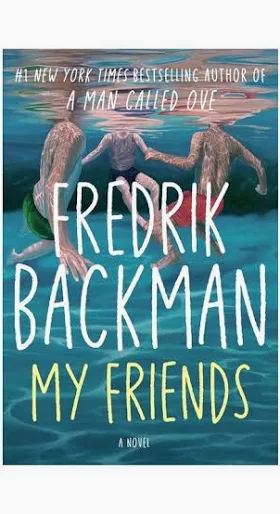
Nina, Etienne, and Adrien can barely remember a time when they were not inseparable, when Nina was not in the middle, Etienne was to her right, Adrien to her left. While they each have their respective family challenges – Nina being raised by her grandfather, Adrien being raised by his single mom, and Adrienne never feeling approval from his father – they promise to always be there for each other. As they grow into their teen years, when those around them expect they’ll drift apart, they remain steadfast, tolerating Etienne’s many girlfriends, Nina’s eccentricities, and Adrien’s quiet. When two tragedies strike on the same day, quite suddenly, life takes a dramatic turn, and their friendship is tested, bringing misunderstanding and miscommunication to a whole new level.
I loved this novel. The construction of the plot is ingenious, as if the author has created a puzzle, or rather, a maze that she is guiding us through. But as the plot unfolds, we are also getting to know the characters as well, and we bond with each of these quirky but lovable, heartbreaking characters as they are bonding with each other. And as we go back and forth in time, between the mid-1990’s and 2017, the plot builds in a way that is not only engaging but also utterly surprising. The story we think we know becomes a completely different tale that we learn anew.
I am refraining from describing it in too much detail because I do not want to give too much away, so I’m leaving it at this. I encourage you to read it, in spite of its length. (Don’t let the over 600 pages scare you – it flies by!) Read this MUST READ and allow yourself to love these characters, worry for them, perhaps even cry a bit. Isn’t that what fiction should do?
Claire cannot believe her fortune – although she is merely a cleaner in this small but packed museum, she has the opportunity to be surrounded, for the first time in her young life, by all this beautiful art. With the exception of Linda, her supervisor, she is virtually alone with these stunning paintings every night. And while she knows she needs to focus on the cleaning, as Linda keeps insisting, she cannot take her eyes off some of the paintings, particularly the one of Matisse’s family, the one with his handsome son. And then when something magical happens, her life changes in ways she could never have imagined.
This book is imaginative, creative, one might even call it playful – but honestly, in my opinion, incredibly boring. Once the magical idea is revealed, it feels like the author isn’t quite sure what to do with it and the story meanders, repeats, and flounders. The characters are as flat as the paintings they are caught up in and have woefully less color. Jean, Claire’s love interest, is annoyingly perfect, and none of the other characters are developed beyond what is absolutely necessary for the miserly plot line.
Once again, I feel we have a clever idea tragically executed. A magical disappointment!
Maisie Dobbs is back at it, having been requested by her old school chums to investigate the untimely death of one of their own, a young man who was crushed by a gigantic paper roller in a paper factory. Of course Maisie set out immediately to help, pouring her resources, her staff, and her intelligent mind to untangling the knot of deceit and coverup that she gradually finds. But is it all for evil intent? And does the ends justify the means? As Maisie sorts out the mystery, she finds she learns more about the world at large in 1933 as well as more about herself.
I really enjoy these mysteries, as they are a combination of mystery and thriller-lite and historical fiction. Maisie is an endearing character, coming from a humble background, she has inherited a great fortune, but she remains modest and struggles with her newfound identity among the elite. She also struggles to maintain her independence even as she is courted by an American with means who loves her for who she is but also wants more from her, which she is unsure she is willing/able to give.
The other small thing that I appreciated from this narrative was how traumatized Europeans were from WWI when they entered into WWII. So many were still reeling from their initial trauma, whether they’d fought themselves, were wounded, were related to someone who’d been on the front lines and had experienced secondary trauma, or had just lived through the incredibly difficult period that defined the era. And the thought of having to fight another war for the exact same values was utterly daunting. But as Maisie’s dear friend put it, he would, again, fight to protect the right for his boys to have the freedom to play, to run wild, and to get into trouble as boys do.
At the same time, I believe this is not the strongest in this series, with some of the others being more suspenseful, less contemplative. This one was a bit more meandering, somewhat fragmented in the way things came together.
That said, I will keep reading these, as they are enjoyable, relatively light, and well-written. I do keep saying that I will read these in order one day – but I haven’t done so. One day I will listen to my own advice…!
Elizabeth and Jack have been having marital disconnect for some time now, but it’s been easier for Elizabeth to just go along and ignore it rather than have to confront what facing it might look like. She knows she loves him – or at least she loves what they’ve had, but things are different now that their girls are out of the house. She’s feeling unappreciated, unseen. When Jack suddenly has an opportunity that turns around his 15-year career slump, Elizabeth sees this as an opportunity for her to begin to explore her own options as well. And while this may bring them apart, it may give them time to begin to really see who they’ve both grown to become.
This is a tender, often sad, novel that many women may relate to. It is so often that smart, talented women have been expected to relinquish their own dreams and goals in order to empower their husbands to achieve theirs. Often women have stayed home to raise children, or even if they do work, it is often on a lesser track so that they can still be around to take care of the running of the household AND earn a salary. While some women may choose this and feel fully fulfilled by this balance, others may not. It may be tainted by a husband who does not value his wife’s hard work, and/or who treats her as the housekeeper/ babysitter/chef, and when he does not find titillating conversation beyond what the children have accomplished that day, the husband may selfishly look elsewhere for stimulation. I believe what this novel suggests is that in a healthy relationship, both individuals have to be given space to be their full selves, supported in their pursuits, and given the time and respect, if financially possible, to explore their possibilities.
But communication is also key. Whereas one might blame Jack in this scenario, as he has wandered and been untrue and has been forgiven, and still takes advantage of his trusting wife, Elizabeth has also not been completely honest. Elizabeth has been stifled by her fear of change, her lack of confidence in her talent, and her general inability to face her emotions. She has not stood up for herself and expressed her anger, her resentment, or even her actual goals for herself. So in truth, blame is to be found on both sides, as is usually the case.
Of all the Kristin Hannah novels I’ve read – and discussed here – I believe this is not her best, but it is still an interesting, engaging one that is relatable, accessible, and ultimately sweet.