Where We Came From by Oscar Cesares

Orly is feeling a bit resentful. His older brother gets to go to camp and his best friend gets to travel to Europe, while Orly finds himself being driven to his godmother’s home in her small town of Brownsville, TX for 3 long weeks. Not that he has anything against his godmother, Nina, but it isn’t exactly his first choice for a summer vacation plan. And for her part, Nina feels badly for the boy, having to spend his time with her, especially given her current situation. She would love to take him to places he’d enjoy, but on top of caring for her mother, which already is a burden, she has the added weight of the current secret hiding in the little house in her backyard, which she cannot share with him, nor with anyone else, for that matter. It’s just too dangerous. But how long can she really keep this secret from a curious, intelligent, and adolescent-brained boy?

This novel tackles the very complex and tragic issue of immigration over our shared border with Mexico, where on one side there are drug cartels openly wreaking havoc on their streets and on the other are either coyotes who prey on desperate refugees or border patrol agents hunting them down just to send them back all over again. Nina suddenly finds herself trapped in the middle, embroiled inadvertently in this dangerous, messy business. While trying to be compassionate and humane, she also must consider the safety and security of her own family as well – and it is complicated. Added to the mix a young boy whose life is on the line – it becomes that much more complex.

This is such an incredibly important book to bring to the attention of the world – and to bring down to a human level. These refugees are human beings, not numbers or statistics. No one leaves their home, their family, their communities, or those who share their native customs and celebrations unless they are utterly desperate and feel that their lives are truly threatened. We are morally obligated to show these individuals compassion and understanding – especially since most of us here in the US are descendants of those who were in similar circumstances at one time or another.

On the other hand, where I felt this book fell short was in bringing sufficient warmth, humor, and fire to these characters. We care but we are not dependent on what happens to them. While we understand that Orly is lonely, it does not become our loneliness. While we understand that he is grieving for his mother, it does not become our grief. The characters all remain one step outside, even as we want to know them more intimately. We are granted glimpses of Nina and her more glamorous past, but we still are not let inside, not really. And this keeping us at arm’s length keeps the story just that side of attachment to it.

This is a story I wanted to love, to be awakened by, to be energized by.  It is important, timely, and relevant. But I did not, was not –  not as I could have been.


The Diamond Eye by Kate Quinn

Lyudmila Pavlichenko only wanted to protect her son when she went to retrieve him from the shooting gallery, where his usually absent father had brought him. He was only 5 years old, and the foolish boor was trying to impress him with the use of a gun, no less. Well, if that is what made a “good” father, then she would be both a good mother and a good father to her son. In addition to attending her graduate studies, working to earn money, and caring for her son, she also got herself certified as a sharpshooter. Little did she know how useful that would become, how it would equip her for the battles that were to ensue on her home turf during the second World War, and how it would change the course of her life forever.

Though this novel is fictionalized, it is based very closely on the memoir and historical accounts of the life of this true heroine, Lyudmila Pavlichenko (or “Mila”, to her closer friends). While women in Europe and America were only utilized in medical or administrative capacities until very recently in the military, they were occasionally utilized as front line fighters by the Russian military much earlier on. And although these women still faced harassment and were not generally treated as equals, there were a few, such as Mila, who were actually acknowledged for their contributions, which were extraordinary. In her case, she earned her moniker of “Lady Death” as a sniper, with an official head count of 309 Germans killed during the war (and probably more, in reality).

Quinn has become another of my favorite authors, uplifting strong women in history and bringing them into our consciousness. We can now appreciate, for example, how Lyudmila Pavlichenko not only contributed so bravely toward the fight against fascism with her rifle, but she also did so with her honesty and charm. Brought to America in a student delegation to help convince the US to open a second front in Europe to support the war against the Germans, she formed a personal friendship with both Eleanor and President Roosevelt. And though she shied away from the spotlight, she did not shirk her duties when it came to speaking up for gaining support for her fellow military fighters who were out in the field trying to protect what she felt were forces against evil.

I will say, while Quinn’s other novels truly grabbed me from the first page, this one took a bit of time for me to become fully absorbed. There was perhaps a bit more detail about the ammunition, war strategies, and the layout of the stakeouts than I might’ve needed personally (my eyes may have glazed over just a bit). But the suspense definitely built quickly enough, and there were a twists and surprises that caught me off guard, for sure. By the middle I was hooked and by the last few chapters, I was 100% riveted and could not put the book down until I finished it – including the author’s notes!

Quinn’s deeply researched novels consistently highlight how hard it has been for women to be acknowledged for even the most stunning achievements. She does this while keeping us engaged, entertained, and always wanting more.

I say it again – this is the very best way to learn history! And why I loved this book.

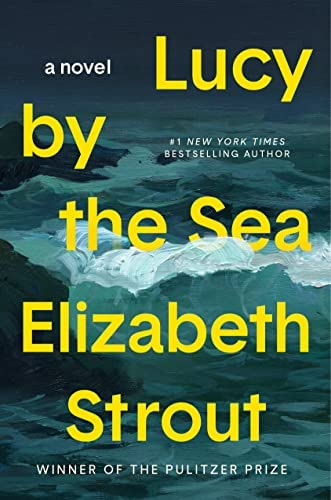
Lucy by the Sea by Elizabeth Strout

It is March of 2020 and Lucy has plans to leave for her promotional book tour. She is a bit taken aback when her ex-husband, William, a parasitologist, calls, insisting on her canceling her trip, packing a bag of clothing and work essentials, and joining him to stay in the house of a friend of his in Maine. He is concerned about this new deadly virus and feels they must leave the congestion of NYC in order to stay safe. She feels he is over-reacting – really, how long can this new virus really be a problem? – but he is also more knowledgeable than she is about this sort of thing, so she goes along with it, for the time being. Little does she know what is to come and how this decision would affect the course of the rest of her life.

Wow, I often don’t like to know what I’m going to be reading about in a book, but I wish I’d been warned about this one! This is definitely a “too soon” situation – since we are still living it. There are 42,000 reported cases per day today according to the New York Times (so presumably so many more, with home testing, states and individual localities not reporting their stats, etc.), thousands hospitalized with it, and hundreds dying of it per day in the US alone. And this is before we all go back indoors because of the approaching colder weather.

And then there’s the story itself, which has a contemplative, diary sort of feel. While Lucy adjusts to life in Maine, she also reflects back to her childhood of poverty and neglect, her strained relationships with her family, and her difficulties managing her success as an author. While it feels like there is not really a story here, the story does evolve gradually and organically and it does, perhaps a bit too slowly, pull you in.

What I appreciate here is that while there is acknowledgement of the political divide in the US at this time, it is done so with extraordinary delicacy. There is a clear understanding that Lucy and William appreciate science, wear masks, isolate, and observe the January 6th attack on the Capitol as a threat to democracy. However, Lucy does express a sensitivity to the anger expressed on January 6th. She relates to how poverty and its indignities can foster deep resentment, which incites violence such as that which erupted on that day. On the other hand, she concludes that this anger cannot justify the support of such radical extremism, Nazism, open racism, and overt hatred that was seen on that day either.

So while this was an interesting read, I cannot, in good conscience, recommend it for now. Maybe in a few years, when we’ve all recovered from our PTSD, it might serve as a warning, as a reminder of some sort. But it’s definitely too soon to be reading about what we’re all still being hit with on a daily basis.

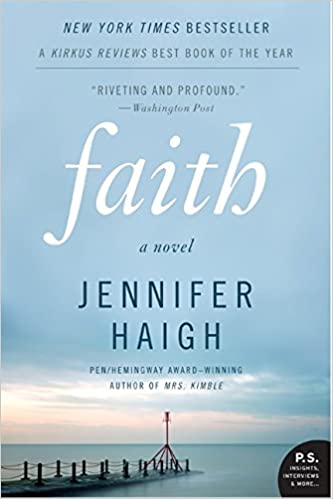
Faith by Jennifer Haigh

Sheila has always harbored a soft spot for her brother Art, a tender-hearted guy always destined, it seemed, for the priesthood. His gentle manner, his lack of pursuit of earthly possessions beyond books, and his deep faith made him perfectly suited, even as she herself was filled with doubt. Sadly, though, when he was caught up in the maelstrom of accusations of child molestations by priests in Boston in the early 2000’s, even Sheila was forced to examine her own faith in her brother. Did she think he was capable of doing what he was accused of? What was the truth?

This novel was told with such authenticity that throughout the reading of it, I honestly believed that it was a true story written in novel format. Sheila’s character, her mom, her dad, Art – were all so real, so 3-dimentional, I felt this could have been a very plausible story of any of the priests accused of abuse at the time that so many were. 

The story has many layers that beg to be unpacked. One is the issue of celibacy in the priesthood, as is highlighted here, so radically conflicts with man’s natural, physical urge. Does this contribute to the abuse of women and/or children by priests? Who knows? It certainly would be interesting to see if things were to change if the celibacy rules were lifted. Wouldn’t it be worth that very experiment, given the lives it would impact? Who really benefits from a priest’s celibacy anyway? Certainly not the priests themselves, I would imagine, although I am the last person to actually know that for sure.

And what about the cover-up of all the priestly misdeeds by the church? Surely it occurs in other religions as well — it is not only the Catholic church —  but it has notoriously been present there for centuries. Because of the hierarchical structure of the church and the stringent code of silence among those involved, not to mention the power the church has had over so many over so long, it is not surprising that those who witness any wrongdoing are terrified to come forward in any sort of public way.  And even in that rare instance when one is found to be guilty of sin, there has merely been a notorious shifting around of the wrongdoer rather than actual punishment, so that the wrongdoer is not ever really held accountable or condemned. 

That said, as this story illuminates, not every priest who is accused is, in fact, guilty. Or at least not guilty of what they are accused of doing. Because of all of the revelations in the Boston diocese in the early 2000’s, we are likely to make assumptions about priests that are likely unfair, even cruel. In our country, thank heaven, we are still innocent until proven guilty. This is what this story is trying to highlight – and does so in a beautiful, profound way. Art has his own struggles, but they may be different from what we surmise.  We can never be inside another’s heart, but we must try to see what is their truth.

I think this is an important read in our time. Important to understand how we can be surprised by getting to know another’s actual circumstance, how we can be surprised by our own assumptions and prejudices. 


The Keepers of the House by Shirley Ann Grau

William Howland was one of many William Howlands, the name being passed down over generations of owners of his large plantation in his southern town. And knowing he had a family name to uphold, he navigated his position with care, guiding those in his life using his money and influence quietly and sparingly. But politics in the south were never easy, especially when they were mixed with racial tensions, and William Howland and his family were not immune to this conundrum, no matter what his influence might bear. Just one small slip, just one small move and your whole life can be blown up before you.

This is a Pulitzer Prize-winning novel that blew me away – not in how amazing it was but in the fact that it won a Pulitzer. Yes, it ultimately was moving and yes, it ultimately was powerful. But my goodness it took getting through about 80% of the story to get to anything that was at all moving or powerful. One should not have to work that hard to get to the “good part!” I can understand that an author has to set the story up and build the foundation. But it should not take 80-85% of the story for anything of any significance to happen.

Moreover, the characters felt distant, not anyone we were able to get to know. William Howland seemed to float through life in a fog – so much so that we were kept from knowing him as well. As for his love and partner, Margaret, another main character, we know great detail about her origins but once she enters his life, she suddenly becomes a figure, a shadow – we lose her, sadly. She loses herself, her identity. This is a wasted opportunity, in my opinion, because she is probably the most interesting character in this story. On the other hand, the author opts rather to focus on William’s granddaughter, Abigail, who is shallow, dull and only seems to wake up at the very end of the story.

I will note that ultimately we do get there. It does build into a climax that is powerful and interesting. It just takes WAY too long to get there.

I apparently differ greatly from the Pulitzer judges of 1965. I’d be curious to hear what others think.


The Alice Network by Kate Quinn

The dust has barely settled and wounds have certainly not yet healed from the second world war when Charlotte finds herself dragged by her mother across the Atlantic on the way to take care of her “Little Problem” in a clinic in Switzerland. While her mother is determined to erase this “stain” on Charlotte’s reputation, Charlotte has a very different mission in mind. While here in Europe, she sees an opportunity to uncover the whereabouts of her beloved cousin Rose, who has been missing and presumed dead since returning to France just before the German occupation. With the name and address of Eve Gardiner which she has scribbled on a small piece of paper, she unlocks an adventure that leads her to discovering much more than just what happened to Rose. She discovers a network of brave women who risked their lives for their countries and she uncovers her own inner strength as well.

The Alice Network is another suspenseful novel by the author of the Rose Code (see my prior entry), which will similarly have you on the edge of your seat as you turn each page. There is a great deal of historical fact woven into the fiction here, as Quinn celebrates the unsung female heroes of the first and second world wars.  We learn of the undercover spies that wore skirts and makeup instead of slacks and blazers. They were often ignored because they were “just women,” which sometimes enabled them to sneak through borders undetected, but sometimes led to them being ignored even when they carried valuable information that might have saved hundreds of lives. 

The writing here is crisp, acerbic and intricately plotted. We float back and forth between Charlotte’s pursuit in 1947 and Eve’s back story (WW I). The characters are, each of them, hardened and broken, wounded in one way or another by war. When we meet Eve, for example, she is in a drunken rage, threatening Charlotte with a Luger in her face and trying to send her away.  She is emotionally and physically crippled by her experience in her war.  We see so starkly how women were affected by our wars – whether working under cover, nursing, or being on the front lines in other ways – and their wounds are obviously just as deep. 

I highly recommend this novel – it is historical fiction at its best. 

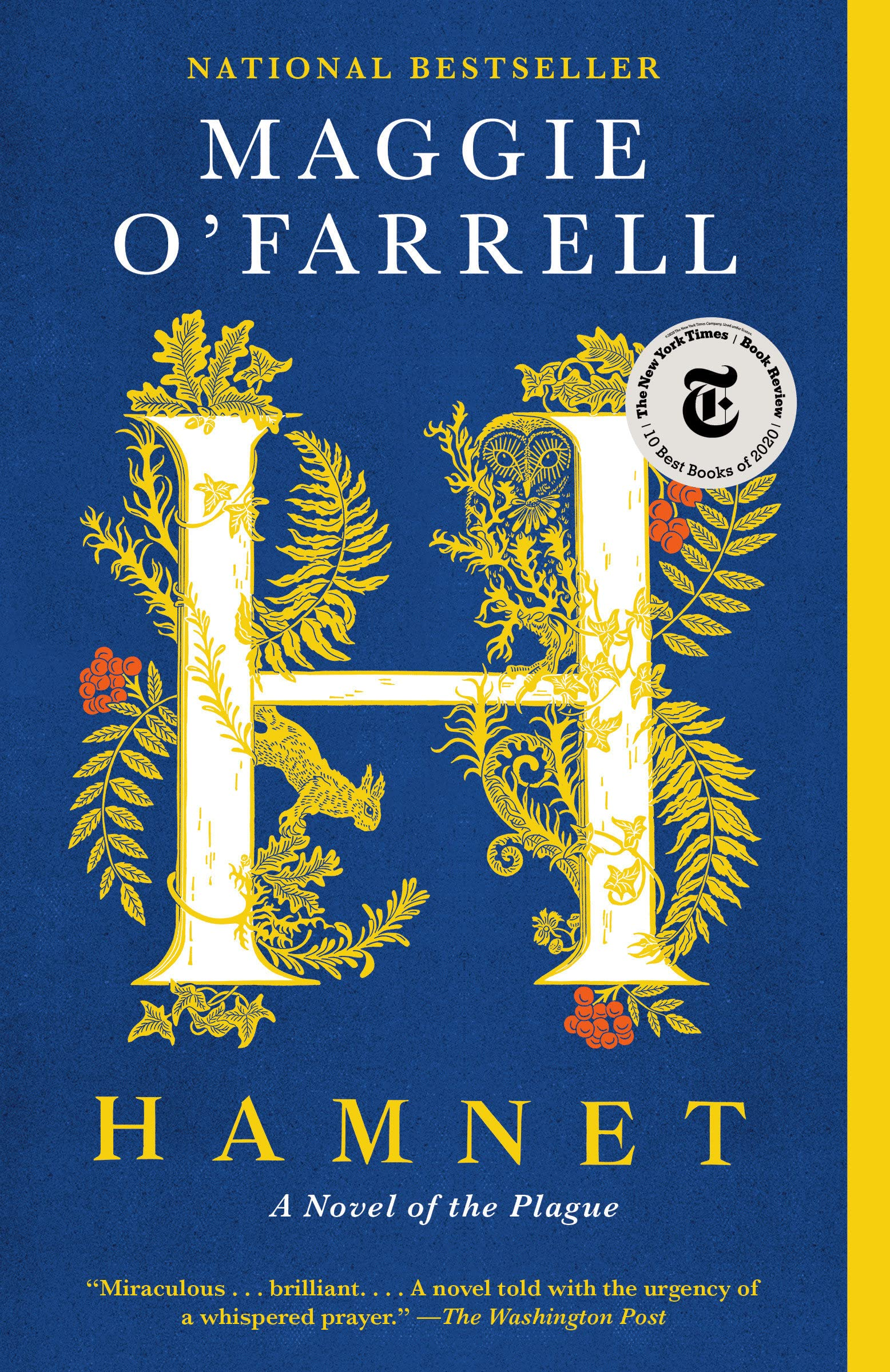
Hamnet by Maggie O’Farrell

When a Latin tutor gazes out a window, barely listening to his charges recite their verb conjugations, his eye catches sight of a bewitching woman with a falcon on her arm. Suddenly taken with her, he extricates himself from his classroom duties and goes to find her,  feels he needs to know who she is.  He soon comes to learn that this woman, Agnes, has a sense not only of birds, but of so much of nature,  human nature, and natural remedies – more than most. It is only when tragedy upends their lives when they both learn that one can only control so much of what happens in nature and that man will always have limitations.  

Underneath this love story is also a fictional version of how the play, Hamlet, came to be written by William Shakespeare. The tutor, of course, is Shakespeare, and Hamnet is his son, a twin, who died at a young age of the Black Plague. The plot is vividly imagined and lovingly told, but it is no wonder that a tragedy was borne from it. It is a heart-wrenching story.  And not to worry – even knowing this, there are still a few twists that keep the reader guessing until the very end. 

For me, there was quite a bit of hype surrounding this book, which was maybe/maybe not deserved, so I don’t want to build it up for anyone else. But it is a worthwhile read, particularly if you like historical fiction.

I’d be very curious to hear what others felt about this one!

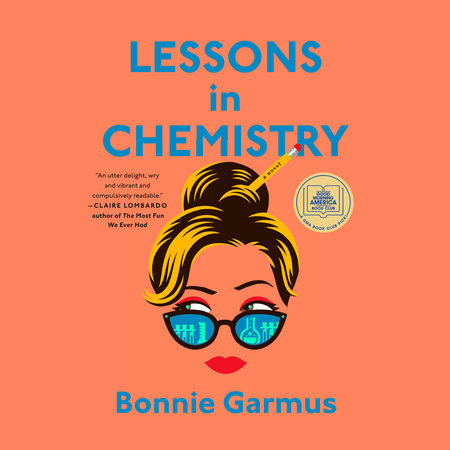
Lessons in Chemistry by Bonnie Garmus

All Elizabeth has ever wanted is to be given the freedom and the respect to pursue her theories and experiments in chemistry. Unfortunately, given that it is the 1950’s and America is just not ready for a woman to be anything but a wife or a mother, she is thwarted at every turn. That is, until she meets her match in Calvin Evans, a fellow scientist who recognizes, appreciates and encourages her endeavors. When Calvin has an unexpected accident and their lives are turned upside down, Elizabeth finds a way to meet her new challenges in the most unexpected way imaginable.

This is a sort of Eleanor Oliphant meets Julia Child story, if you can imagine that! It is a bit of an outrageous plot that actually, somehow works. While much of it relies on just going with it, if you do you are rewarded with a delightful and imaginative ride that is at once pensive, philosophical and, occasionally, true laugh-out-loud moments.

Elizabeth feels like a hard character to get to know. She’s been used poorly, taken advantage of, and not respected in spite of her vast intellectual capacity. Because of the time she lives in, she has a hard time trusting and has a very closed circle of those she can open up to. We feel her vulnerability and root for her throughout the story, feeling protective of her, in spite of her awkwardness and abruptness. Most importantly, we love what she inspires in others – the confidence to be smart and one’s authentic self, which was not an easy task in 1950’s America for women. It’s really an ideal scenario that would have been a wonderful reality for so many had it been true.

There are a number of interesting commentaries on religion here as well. When she admits that she does not believe in God, there are severe repercussions to her reputation.

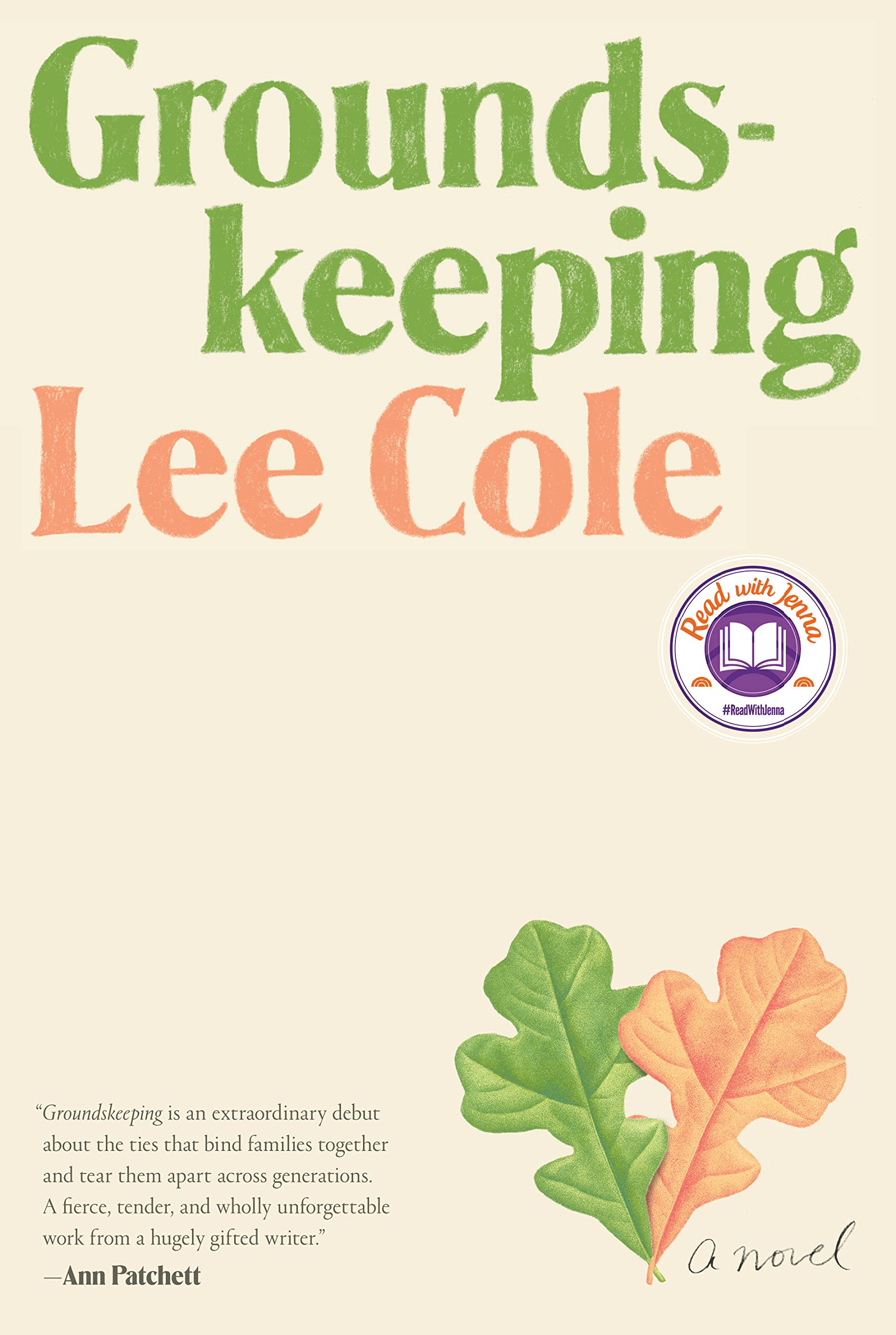
Groundskeeping by Lee Cole

Owen is fairly certain that had he known that Alma was the new hot shot literary scholar when he first met her, he would never have flirted with her in the first place. He would never have had the courage. But now that they’ve established a rapport, well, he’s now somewhat smitten. The question is, what does she, with her Ivy League degree, her fellowship, and her liberal, wealthy family, see in him? As he struggles to regain his footing after years of poor decisions and strained family relationships, Owen has to determine if Alma is helping him get himself together – or hindering him.

This is a contemplative and brooding novel that I felt came close to being excellent but just missed the mark, at least for me.  I felt that Owen’s rage that simmered throughout was a palpable and writhing presence. Sometimes it was expressed so eloquently, his resentment toward his Southern, Trump-supporting, Evangelical Christian parents and their blind following of the Republican, racist, party line. Similarly, the all-too-common, awkward, polarized, political conversation that folks are having around this country was expressed beautifully between Owen and one of his coworkers.  But there were missed opportunities too. While he did have an argument with his uncle over his uncle’s MAGA sticker in his window, it was brief and superficial. We never really learn more about his uncle’s online life where he spends all of his time gaming, and we never learn what happens to him at the end of the story, when he is likely to be left alone. The uncle seems to just vanish.

I will say that I loved the character of Owen’s grandfather. While he did maintain his own beliefs, which were based in his religion and his culture, he did not allow this to taint his relationship with Owen. He was open to letting his grandson live with him, he was tolerant of Owen’s relationship with someone who was quite different from them, and he overlooked Owen’s faults, even when they trespassed over the rules of his own home. He was exceedingly forgiving and loving in his own way. He demonstrated that while one may not agree with someone’s politics, one may still be able to have a beautiful relationship with that individual. And in this moment, that is a huge concept to acknowledge. 

I believe there is a lot here, about the art and strain of writing, about class structure, about political tension, and about the ramifications of the 2016 election on the South. But I wish it had been developed just a bit further, with a bit more action, and a bit more completion. Still, a worthwhile read.


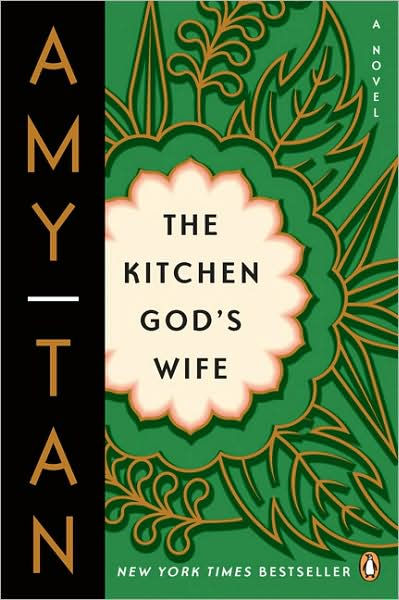
The Kitchen God’s Wife by Amy Tan

Pearl loves her mother, Winnie – of course she does – but she cannot help feeling so often misunderstood by her as well. It is likely this reason that underlies her reluctance to share with her mother that she’s been diagnosed with multiple sclerosis, even though she’s terrified of what it might mean for her future. Likewise, Winnie has secrets of her own – in fact, most of her early life in China before she immigrated to the US has been kept from Pearl. An intervention by Pearl’s “aunt” Helen may change all of this.

Here is yet another epic saga of hardship and tragedy, teaching us so much about Chinese culture and history, but making us work so hard for it. There is rich, colorful detail about the years of the second world war, the angry relationship between the Chinese and the Japanese, the terror of living with the threat of destruction by the Japanese and the shifting internal forces in China. Moreover, being a woman in China has never been easy, and we are bestowed with stark reminders of this in many vivid, brutal scenes in this novel.

What is hard to endure, however, is the overbearing, martyred tone of the narration of Winnie’s story. Yes, she suffers and yes we feel her pain, but it is so utterly relentless that it becomes hard to sustain belief that so much evil can befall one person. There are few if any breaks from the constant tension, little respite from her search for hope or love- only at the very end is there any spark of light, but by that time, we’re just exhausted. While I saw the beauty and nobility of her character, I was also very close to giving up on her many times, I have to admit.

There is certainly much to be learned from this novel, but it comes at a cost. If you’re willing to put in the work, it may be worth it – but I feel like it is work. Is that what reading is? Up for discussion…!