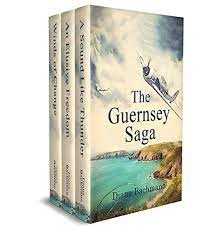
The Guernsey Saga by Diana Bachmann

This trilogy begins with the joining together of the Ozanne and Gaudion families, traditional families living on the small island of Guernsey off the coast of England beginning in the early 1930’s. They are joined by the marriage of Sarah to Greg, with Sarah reluctantly giving up living with her boisterous family to join Greg’s elderly parents in his more staid household. Fortunately, her older sister, Ethel, often comes round to cheer her. Sarah and Ethel had shared a room as well as a close bond and a sense of humor, which often got them into uncontrolled giggles during their family meals. The trilogy follows the family through three generations: during the Nazi occupation of the island, during cultural upheaval of the 1960’s, and during the financial fluctuations of the 1970’s.

This is a warm and beautiful family saga, with moments of solemn strife alternating with times of tearful tenderness. While the circumstances of the family are unique, the underlying issues are timeless. Adolescent rebellion, inter-generational miscommunication, internal loyalty battles, spousal mistreatment, dishonesty – all issues that we can all relate to no matter the era, no matter the culture. The characters are relatable as well: the self-doubting, tongue-biting mother; the critical and self-righteous husband; the quiet and studious son – there are so many likable (and unlikable) and colorful characters who we come to know over the three books so well and over their years that we are sad to leave them when the third book ends.

The writing here is also poignant and effective. We really come to know the characters so intimately that we feel their pain, their stress. When they are starving because of the limited food on the island during the Nazi occupation, we feel their hunger. When we learn about Sue’s loneliness during the war, when she’s been sent with her school to Wales for safety, we yearn as she does for the love of family. And when Stephanie rages against her mother, we feel the deep cut of hurt that Sue feels.

Living in a small town where everyone knows everything about you and your family – your history, accomplishments and failures – might be challenging. But I can’t help wondering what a trip to seaside Guernsey would be like -it sounds magical!
 

The Forgotten Room by Karen White, Beatriz Williams and Lauren Willig

In the midst of the Gilded Age, when most young women are focused on ballrooms and bridal gowns, Olive is focused on revenge. It is clear to her that her father had been wronged, cheated out of his rightful earnings from his hard work as the architect of the magnificent Pratt mansion and she is determined to expose this travesty.

Lucy is also connected to the Pratt mansion, living there when it becomes a boarding house for “respectable ladies” in the 1920’s. She, too, is on a personal mission – to see where her mother’s heart has always been during her lifetime, because it has been apparent to Lucy that it has not fully been with Lucy and her father. In fact, Lucy wonders if the man she knows to be her father is actually, in fact, her true father.

Finally, there is Kate, a doctor during the second World War, linked also to the Pratt mansion when it is again adapted to function as a hospital for wounded soldiers. When a stunning soldier is brought in on a stormy night with a leg infected so severely it may require amputation, she is startled by the way he seems to recognize her and how he feels familiar to her as well.

As the story unfolds, we learn how these three women are connected, how their lives and their loves have been thwarted, and how the Pratt family fortune and misfortune has impacted so many others.

While I am not familiar with the other two authors, I love anything by Beatriz Williams, and this novel is no exception. Each segment of the narrative is captivating as a stand-alone story, with each of these strong, independent women capturing our hearts with their missions, their wills, and their defiance. But to weave the story together with the three of them is quite the ingenious feat – and it is done both smoothly and powerfully.

I highly recommend this book – it has romance, intrigue, and is just beautifully written. Not only a great summer read, but a just a great read.


The Mitford Affair by Marie Benedict

Nancy Mitford is at a loss. She cannot fathom how her 2 younger sisters, Diana and Unity, have been so sucked into the not-so-underground fascist movement that is brewing among a segment of the British elite in their 1930’s lives in London. It is shocking, that Diana, in particular, once the literal belle of every ball can now be hanging on every word of her precious leader, M. Where will this lead? How far will they take these outlandish and extreme ideas? And will it drive a divide between the once very close sisters? As their story unfolds, so too does the dark history of this movement among the British just prior to the outbreak of World War II.

Based on the lives of a real family of sisters (and a brother) who were among the withering elite of Britain just prior to the outset of the second World War – and who were also, significantly, cousins of Winston Churchill – this fascinating historical fiction novel teaches us much about the existence of fascism in England at this time. The leader of the movement, M, is portrayed as an ego-ridden, single-minded, albeit charismatic speaker who is willing to use any means available to accomplish his goal -allying himself with the despicable likes of Mussolini and Hitler. Because he is so desperate for financial backing, he is manipulated into acceding even to denounce the Jews, whom he had not been against initially.

Parts of this novel were physically painful to read. Depictions of Hitler as charming and cultured went against every fiber of my being, having very personal connections to the destruction that he and his Nazi regime have wrought. But at the same time, I feel it is incumbent upon us to appreciate how history might have swung so easily in a different direction had strong and ethical individuals not stood up to him and his regime and done the right thing, fighting against tyranny and preventing further cruelty and harm that might have occurred.

And it is so relevant today. Do we not see folks voting for those who stand for tyranny just because they also threaten their wallets? Do we not see folks defending fascists who disguise themselves as ordinary Americans just because they might agree with them on issues that make them a bit uncomfortable? We are threatened just as deeply today as the Brits were during those dark hours before the war. We have to be alert for the signs – and reading books like this help us to stay on our toes.

Marie Benedict chooses fascinating people to write about- she has done so once again here. As difficult a read as this is, I would highly recommend it.


The Diamond Eye by Kate Quinn

Lyudmila Pavlichenko only wanted to protect her son when she went to retrieve him from the shooting gallery, where his usually absent father had brought him. He was only 5 years old, and the foolish boor was trying to impress him with the use of a gun, no less. Well, if that is what made a “good” father, then she would be both a good mother and a good father to her son. In addition to attending her graduate studies, working to earn money, and caring for her son, she also got herself certified as a sharpshooter. Little did she know how useful that would become, how it would equip her for the battles that were to ensue on her home turf during the second World War, and how it would change the course of her life forever.

Though this novel is fictionalized, it is based very closely on the memoir and historical accounts of the life of this true heroine, Lyudmila Pavlichenko (or “Mila”, to her closer friends). While women in Europe and America were only utilized in medical or administrative capacities until very recently in the military, they were occasionally utilized as front line fighters by the Russian military much earlier on. And although these women still faced harassment and were not generally treated as equals, there were a few, such as Mila, who were actually acknowledged for their contributions, which were extraordinary. In her case, she earned her moniker of “Lady Death” as a sniper, with an official head count of 309 Germans killed during the war (and probably more, in reality).

Quinn has become another of my favorite authors, uplifting strong women in history and bringing them into our consciousness. We can now appreciate, for example, how Lyudmila Pavlichenko not only contributed so bravely toward the fight against fascism with her rifle, but she also did so with her honesty and charm. Brought to America in a student delegation to help convince the US to open a second front in Europe to support the war against the Germans, she formed a personal friendship with both Eleanor and President Roosevelt. And though she shied away from the spotlight, she did not shirk her duties when it came to speaking up for gaining support for her fellow military fighters who were out in the field trying to protect what she felt were forces against evil.

I will say, while Quinn’s other novels truly grabbed me from the first page, this one took a bit of time for me to become fully absorbed. There was perhaps a bit more detail about the ammunition, war strategies, and the layout of the stakeouts than I might’ve needed personally (my eyes may have glazed over just a bit). But the suspense definitely built quickly enough, and there were a twists and surprises that caught me off guard, for sure. By the middle I was hooked and by the last few chapters, I was 100% riveted and could not put the book down until I finished it – including the author’s notes!

Quinn’s deeply researched novels consistently highlight how hard it has been for women to be acknowledged for even the most stunning achievements. She does this while keeping us engaged, entertained, and always wanting more.

I say it again – this is the very best way to learn history! And why I loved this book.

The Alice Network by Kate Quinn

The dust has barely settled and wounds have certainly not yet healed from the second world war when Charlotte finds herself dragged by her mother across the Atlantic on the way to take care of her “Little Problem” in a clinic in Switzerland. While her mother is determined to erase this “stain” on Charlotte’s reputation, Charlotte has a very different mission in mind. While here in Europe, she sees an opportunity to uncover the whereabouts of her beloved cousin Rose, who has been missing and presumed dead since returning to France just before the German occupation. With the name and address of Eve Gardiner which she has scribbled on a small piece of paper, she unlocks an adventure that leads her to discovering much more than just what happened to Rose. She discovers a network of brave women who risked their lives for their countries and she uncovers her own inner strength as well.

The Alice Network is another suspenseful novel by the author of the Rose Code (see my prior entry), which will similarly have you on the edge of your seat as you turn each page. There is a great deal of historical fact woven into the fiction here, as Quinn celebrates the unsung female heroes of the first and second world wars.  We learn of the undercover spies that wore skirts and makeup instead of slacks and blazers. They were often ignored because they were “just women,” which sometimes enabled them to sneak through borders undetected, but sometimes led to them being ignored even when they carried valuable information that might have saved hundreds of lives. 

The writing here is crisp, acerbic and intricately plotted. We float back and forth between Charlotte’s pursuit in 1947 and Eve’s back story (WW I). The characters are, each of them, hardened and broken, wounded in one way or another by war. When we meet Eve, for example, she is in a drunken rage, threatening Charlotte with a Luger in her face and trying to send her away.  She is emotionally and physically crippled by her experience in her war.  We see so starkly how women were affected by our wars – whether working under cover, nursing, or being on the front lines in other ways – and their wounds are obviously just as deep. 

I highly recommend this novel – it is historical fiction at its best. 

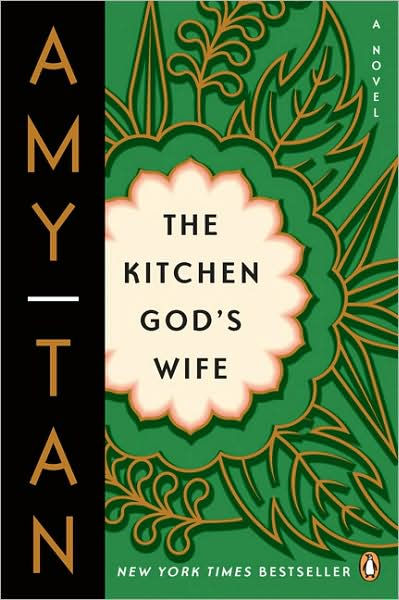
The Kitchen God’s Wife by Amy Tan

Pearl loves her mother, Winnie – of course she does – but she cannot help feeling so often misunderstood by her as well. It is likely this reason that underlies her reluctance to share with her mother that she’s been diagnosed with multiple sclerosis, even though she’s terrified of what it might mean for her future. Likewise, Winnie has secrets of her own – in fact, most of her early life in China before she immigrated to the US has been kept from Pearl. An intervention by Pearl’s “aunt” Helen may change all of this.

Here is yet another epic saga of hardship and tragedy, teaching us so much about Chinese culture and history, but making us work so hard for it. There is rich, colorful detail about the years of the second world war, the angry relationship between the Chinese and the Japanese, the terror of living with the threat of destruction by the Japanese and the shifting internal forces in China. Moreover, being a woman in China has never been easy, and we are bestowed with stark reminders of this in many vivid, brutal scenes in this novel.

What is hard to endure, however, is the overbearing, martyred tone of the narration of Winnie’s story. Yes, she suffers and yes we feel her pain, but it is so utterly relentless that it becomes hard to sustain belief that so much evil can befall one person. There are few if any breaks from the constant tension, little respite from her search for hope or love- only at the very end is there any spark of light, but by that time, we’re just exhausted. While I saw the beauty and nobility of her character, I was also very close to giving up on her many times, I have to admit.

There is certainly much to be learned from this novel, but it comes at a cost. If you’re willing to put in the work, it may be worth it – but I feel like it is work. Is that what reading is? Up for discussion…!

The Rose Code by Kate Quinn

Osla and Mab come from very different backgrounds, but suddenly find themselves on a train headed toward the same, mysterious destination. What with the war on, who knew what they’d be brought in to do to fight the Nazis, who seem to be speedily and frighteningly making their way toward London.  What awaits them is a challenge beyond their imaginations, and an opportunity to prove that they can do more than be “witless debs.”  What also awaits them is a profound friendship that brings its own challenges and heartbreaks as well.

This is an amazing yarn of historical fiction that will keep you on the edge of your seat from the very first page to the last. Do not be daunted by its length, because it will glide by in a heartbeat and you’ll only wish it had lasted even longer (although you will be happy that it didn’t because you’ll finally get some sleep!). The writing is brilliant, with the story structured by flipping back and forth from during the war to just after the war, creating a knot of suspense that keeps getting tighter and tighter throughout. The characters are strong and vulnerable and we come to love them, even when they are imperfect and rash. And even if some of the final scenes are a bit implausible, we believe them anyway, because the drama is right there where we want it – no, need it – to be.

And we learn quite a bit about how the war was actually won against Hitler and his army. It wasn’t necessarily just about sheer force, but rather intelligence, breaking code. Somewhere in a small town outside London, on a compound where secrecy was maintained above all else, codebreakers – often women – were employed around the clock to break the codes the Germans were using to communicate their war plans to each other.  In addition, this base was utilized to enable false messages to be sent back, to mislead the enemy.  Apparently, this was done by those sworn to secrecy on threat of treason to the crown. 

This is another MUST READ – you won’t regret it, I promise!


The Things We Cannot Say by Kelly Rimmer

Alina, the youngest of her siblings, is perfectly aware that she is spoiled, but she relishes the doting she receives from both her family and. her beloved crush, Tomasz.  As her world begins to collapse around her, and the Germans invade her poor, industrial Polish town, she learns that she must grow up fast and that being careless of what is happening around her could cost her or someone close to her their life.  

Fast forward to present day, we also meet Alice, struggling to keep up the balance of the life she never quite expected.  The mother of a son with autistic spectrum disorder, Alice finds herself constantly advocating for him, sometimes even with her own husband.  When her grandmother, Babcia, becomes acutely ill and asks of her the one thing she’s ever asked of her, it may push her fully over the edge – or possibly bring her back from it.  

This heart-wrenching story, a work of fiction but laced with details from the author’s Polish, Catholic background, is a beautiful tribute to the utter bravery of Righteous Gentiles who resisted and rebelled against Nazi hatred and violence during WWII in order to save their fellow Polish, Jewish citizens.  The Poles living through the Nazi occupation suffered also and some escaped to other countries.  And the immigrant experience during war carries with it trauma, no matter where one comes from and no matter when it has occurred.

The writing is truly beautiful.  We feel the characters deeply and their emotions become our own.  We experience the pent-up rage that Alice feels as a mother and wife, and while reading, I had to remind myself to breathe, almost as if for her.  We feel Alina’s profound terror, worrying constantly about the safety of her true love, Tomasz, and that of her entire family.  And we almost can’t read quickly enough as the suspense mounts and we learn of the plot twist that is truly unexpected.  It is a clever and warmly woven yarn – just be sure to have the tissues on hand!

This is a hard read, but well worth the journey!  I believe this is a MUST READ! 

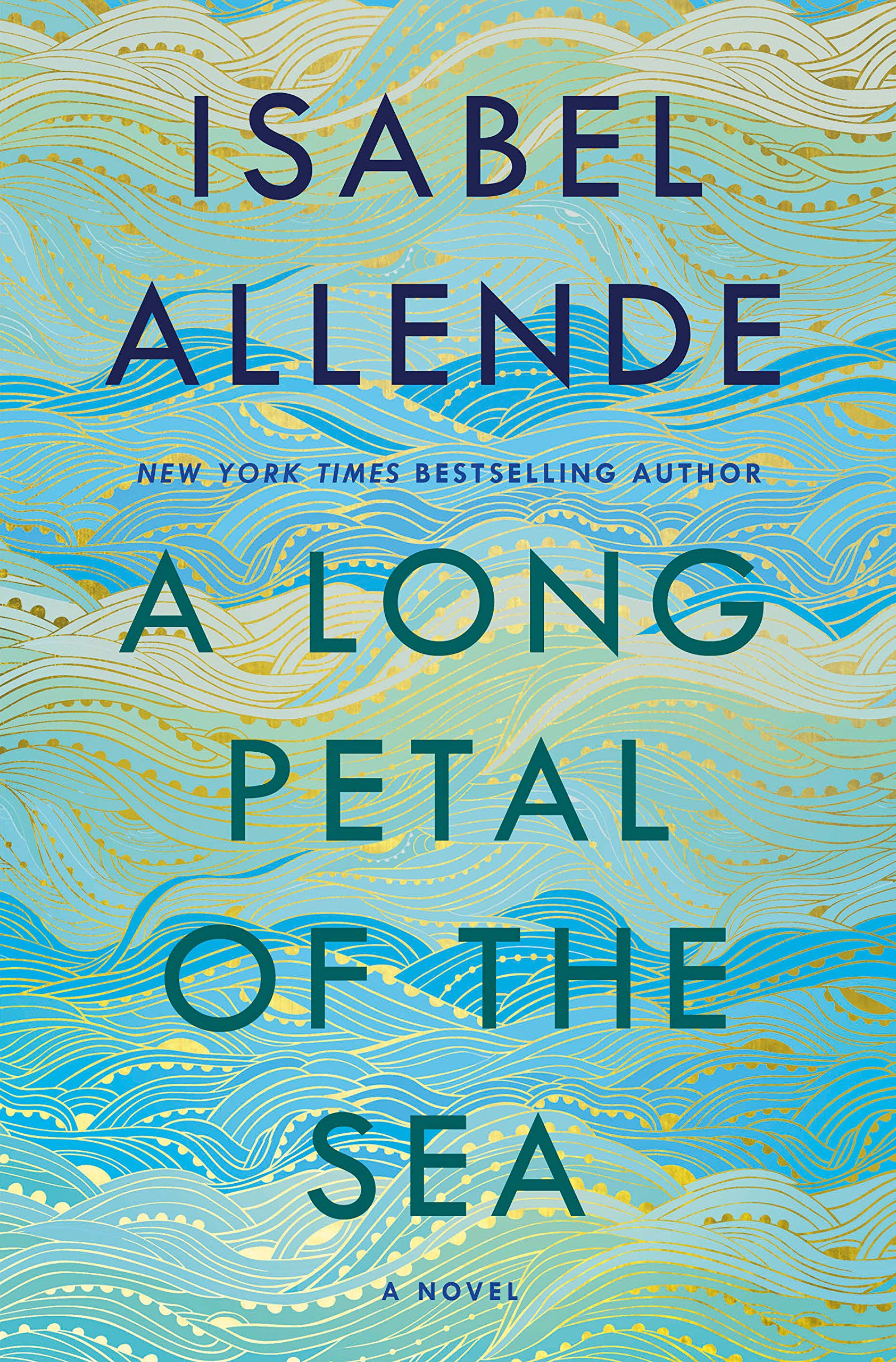
A Long Petal of the Sea by Isabel Allende

A Long Petal of the Sea: A Novel: Allende, Isabel, Caistor, Nick,  Hopkinson, Amanda: 9781984820150: Amazon.com: Books

Victor Dalmau has found himself rooted, with only a few years of medical training, in the trenches of the Spanish Civil War, repairing the wounds of the Republicans fighting the Fascists who are seeking to rule Spain.  While he is useless with a gun —  quite unlike his brother Guillem, the consummate warrior — he finds purpose in healing those who are, and he supports them in their calling.  Little does he know how deeply he would continue to feel the pain of injustice and persecution and how this early mission would direct the trajectory of his life and that of his family. 

This is a beautifully written novel, based on the true story of one survivor of the Spanish Civil War.  After this war,  thousands fled first to France, were placed in dreadful concentration camps, and two thousand fortunate souls were rescued by the poet Neruda on a ship to Chile called the Winnipeg.  In Chile, they were welcomed and given refuge and opportunity and allowed to flourish until there was political unrest there as well.  Our hero, Victor, embodies the strong, immigrant character: hardworking, valuing family above all else, and devoted to the preservation of humanity and justice.    

I am so thankful to have read this novel.  In my ignorance of history, I have never known much about this tragic era in our world’s history.   Learning it through the eyes of these gorgeous characters was, in my view, the best way to attempt to correct this, because the facts are interwoven with deep emotion, and this is how they are best etched into our memories.  And while this is not necessarily an absolute/comprehensive and final look, it is certainly a great start to learning about this dark moment in Spain, France and South America.  

And even while enlightening us about the historical period, the author does not neglect to interweave a complex plot, with suspense, subplots, and even romance that bear surprise twists.  She keeps us intrigued with each step of Victor’s harrowing journey.  

This is an important read for those who are are unaware of this period of history – and even for those who aren’t.  And while I don’t like to overload the “MUST READ’s,” this has to be placed there – sorry!


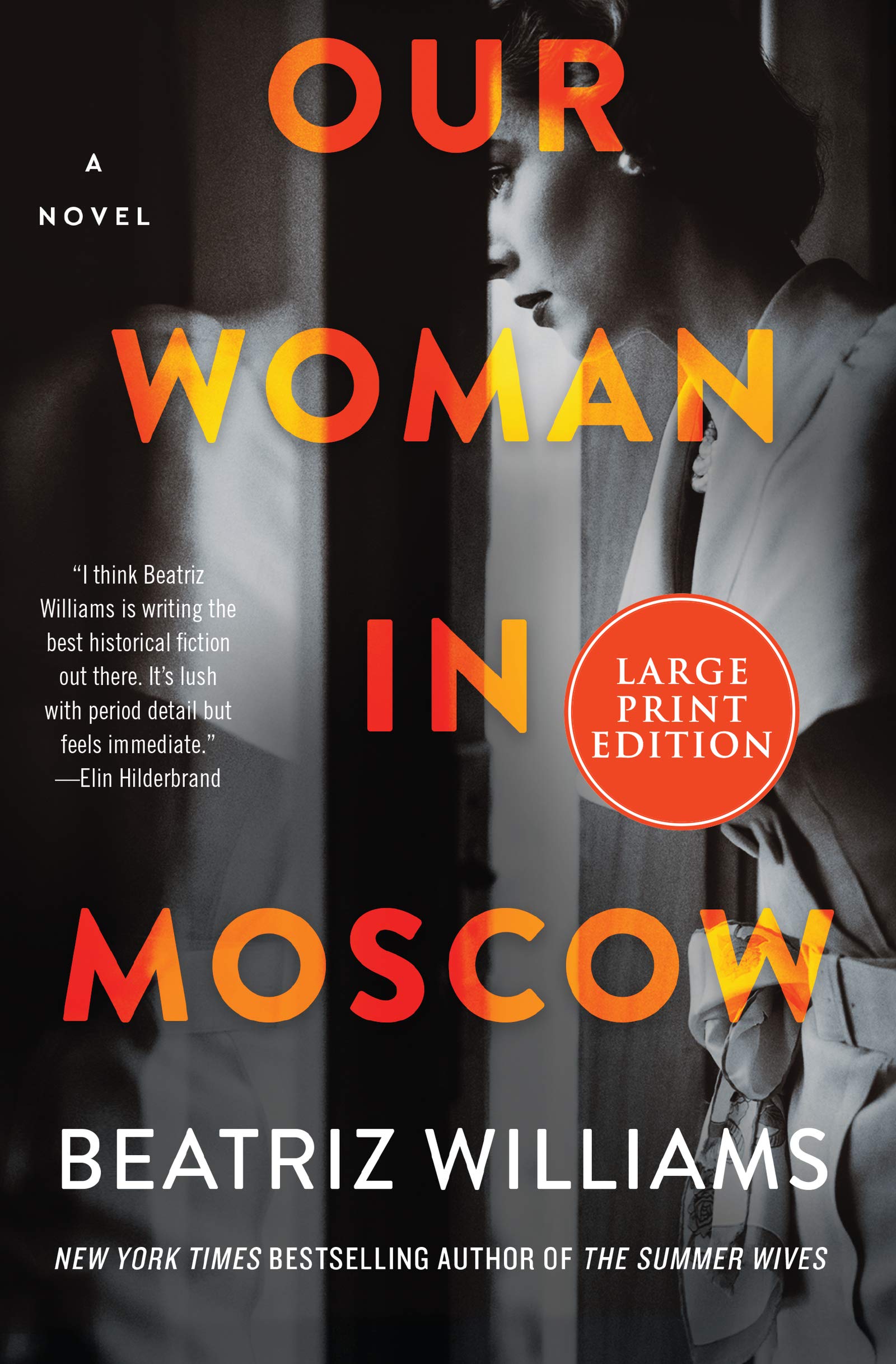
Our Woman in Moscow by Beatriz Williams

Amazon.com: Our Woman in Moscow: A Novel (9780063090231): Williams,  Beatriz: Books

Ruth has always been more like an older sister than a twin to Iris, guarding her and shielding her to the extent that she could, especially after losing both their parents. When in Rome at the start of WWII, Ruth is fully aware that Iris is falling for this seemingly noble Sasha Digby, but she still believes it safest for Iris to leave when the Americans are evacuated. When Iris defies Ruth, she incises a rift between the sisters that cuts deep and festers for years. So why is it Ruth whom Iris calls upon when she is suddenly lost in the abyss of Communist post-WWII Russia? Will Ruth be able to save her sister this time?

Beatriz Williams never, ever disappoints. Using her chatty, familiar, and utterly engaging storytelling style she has created a truly suspenseful historical fiction masterpiece in Our Woman of Moscow. The secrecy and counterintelligence of the post-WWII era is a centerpiece of the novel and sadly, feels eerily relevant today, as we are still at war, albeit virtually, with suppressive, paranoid Communist regimes.

What I love so much about Williams’ books is that her female characters are strong women of substance and dominate the plots. And while there are a few good men, so to speak, there are many who are weak and vulnerable. Most importantly, here in particular, the men– and even some women– are duped primarily because of their preconceived notions about women. This is the sweetest part.

Another MUST READ by Beatriz Williams!