An Invisible Thread by Laura Schroff and Alex Tresniowski

An Invisible Thread Sews Together An Unusual Friendship – CW50 Detroit


Laura was no stranger to the streets of Manhattan in the mid-1980’s, but something made her stop and turn around after passing a small, skinny, Black boy asking for money on one fateful Monday afternoon.  His name was Maurice, and he was half-starved, and when she invited him for lunch at McDonald’s, he accepted.  Laura was careful not to pry too far, but could see that Maurice was fending largely for himself, and she was unsure if she’d ever even see him again or how that would happen.  To her amazement, though, she did, every Monday from then on.  From this bloomed an unlikely friendship that became a blessing for both Laura and Maurice.  

This is a true story that is told from Laura’s perspective, but gives a great deal of background from Maurice’s family experience as well.  Both of them have experienced a great deal of family trauma, although Maurice’s is quite dire, with most of his family falling victim to the devastating crack epidemic of the 1980’s.  While Maurice is clearly loved by his family, particularly his mother and grandmother, they are both usually too ill to properly care for him and he is often left to his own,  skillful, but youthful devices.  When Laura meets him, he is living in a crowded single room with many drug-addicted relatives where there is no routine, no structure, and never any food in the fridge.  Laura is the first person to ask him what he might consider being when he grows up, giving him a first glimpse of the possibility of a real future for himself, besides what he sees in his family.  

On one hand, this story is inspiring.  Laura speaks freely about how she has gained as much from the relationship as she has given.  While she truly has given, whether in lunches made in brown paper bags – signifying to Maurice a show of love and care for him – or clothing, or just a periodic respite from his tumultuous family life, she has also received.  She has not had relationships where she was able to have children, and I believe Maurice was sort of like a son to her.  She was able to lavish attention, occasional gifts and intermittently share her wisdom with him, the way she might with a son, and she felt gratification in this.  And certainly, Maurice was given something of a lifeline, in that he was shown a different possibility for how his life might be – that he did not have to follow the path of his family and that he could choose a steadier, healthier, and safer path for himself.  And he did.

On the other hand, the story being written as it was also feels a bit self-congratulatory and almost cringe-worthy.  We’re here again, with another white woman “saving'” a Black boy – and it just feels a bit uncomfortable to read about this.  Laura is truly generous and giving – but why does she have to write about it?  While “a portion” of the proceeds from the book are destined for the No Kid Hungry non-profit group, it still feels a bit strange. 

I’d be very curious to hear what others feel about this book and this issue.  I invite your comments!  I am truly torn over this one! 
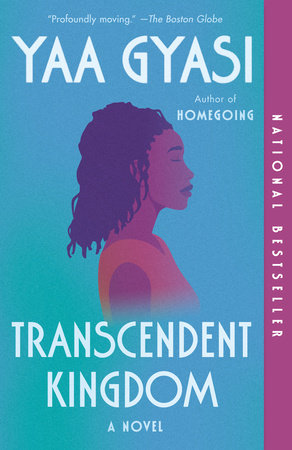


Transcendent Kingdom by Yaa Gyasi

Transcendent Kingdom by Yaa Gyasi: 9781984899767 | PenguinRandomHouse.com:  Books

Gifty is striving to complete her final doctoral thesis in neuroscience on addictive behaviors. She knows she’s obsessing over her data, and that she needs to move on to the writing of the final paper, but her past has come back to haunt her and she is stuck.  It may be that the visit from her mother, drowning in her own pain, will nudge her forward.  Or will it be her sifting through her old journals from her youth?  Somehow, Gifty works through a resolution and confronts the deeply painful religious, emotional and philosophical issues that are holding her back. 

This memoir is a recounting of a second generation immigrant from Ghana who suffers multiple layers of trauma during her childhood,  while seeking and finding little community support in her small town, Southern evangelical church.  Needless to say, her struggle is complicated.

One recurrent theme is the conflict she feels between religion and science.  Having memorized large swaths of scripture for her mother’s approval and having limited experience outside her small, Bible belt town in Alabama until college, she has a deeply ingrained emotional connection to her religion and to a traditional belief in God.  On the other hand, her more cerebral side has rejected much of the dogma the church espouses; whether the narrow views on sexuality, the scorning of evolutionary theory, or the criticism of science in general.  So when a fellow student criticizes those who are religious, she is not quite sure what to feel, but she is simultaneously insulted and embarrassed.  She identifies with those being criticized but also sees why they are being so.   

The other inescapable message here is the devastation that occurs when a family member has an addiction. Not only does the addict suffer, but everyone around him suffers as well.  When Nana, Gifty’s brother disappears, she and her mother spend hours searching for him to try to bring him home to safety.  When he is not functioning, the whole family is not able to function.  And the cycling and unpredictability has devastating effects on everyone for years to come. 

This very real story hits hard and is a hard read.  We are very fortunate that the author has chosen to share her experience with us.  

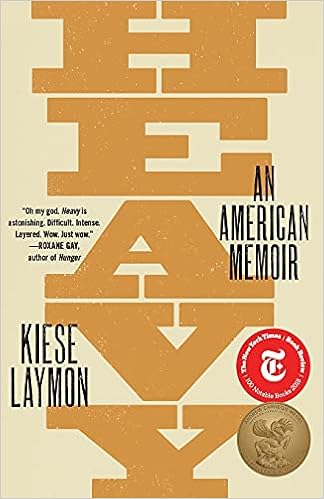
Heavy by Kiese Laymon

Through this deeply moving memoir, Kiese Laymon shares his experience having grown up as a black male in a larger body in the deep South.  He shares his earlier traumas, his fonder memories, and how he has learned to cope with both the times his mother was absent and the times she was present.  

This is a such a gritty, revealing memoir that reading it feels almost voyeuristic.  Writing it as a letter to his mother, Laymon is so deeply introspective and revelatory that we peer into his private window, we peek inside his heart.  We experience his profound sense of pain and powerlessness as he watches the women in his life become victimized by other men.  His anger is, sadly, directed inward – as it so often is.  It manifests first as binge eating and later as restriction and overexercising.  This coping strategy works for him, however, until it doesn’t.  Meanwhile, he is able to be as resilient as possible, forging relationships,  excelling academically and achieving goals on his terms.  

As a side note, I so appreciate that Laymon has come forward with this memoir, because it defiles so many stereotypes of who struggles with eating disorders.  As he acknowledges himself, eating disorders are thought to exist only in upper class, white women – and this is just not true. Folks of all genders, races, and socioeconomic strata utilize these behaviors to cope with their lives and one can never assume anyone is free or “protected” because of who they are or appear to be.  These are secretive behaviors and cannot be diagnosed by someone’s appearance.  And they can be very painful, distracting, and most importantly, life-threatening – never to be taken lightly.

This is also an important memoir from the perspective of understanding racial issues and racism.   Laymon shares his encounters with racism and digests them with us, his readers.  Both he and his mother, in spite of their obvious intelligence and academic accomplishments, are underpaid and frequently disrespected.   But, again, he also places his experiences into context.  He understands that even when he’s been treated as less than, he is still not at the bottom of the totem pole, being a male as opposed to a female person of color.  His compassionate view of the women in his life enables him to see their utter vulnerability to the forces of bias and power imbalance. 

I deeply appreciate this memoir, for all its raw and painful honesty. This is a hard read but well worth the work of it.  


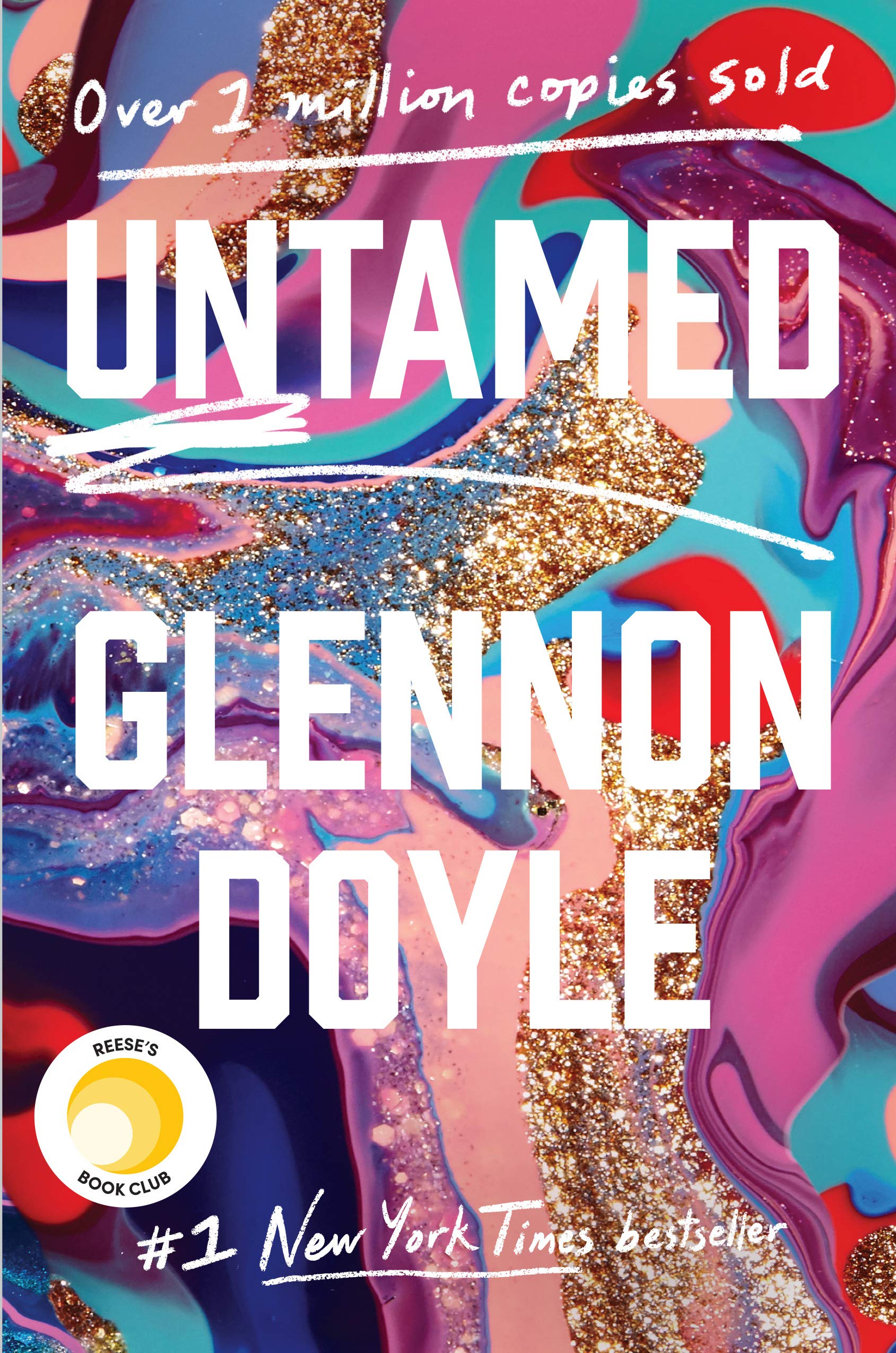
Untamed by Glennon Doyle

Untamed: Glennon Doyle, Glennon Doyle Melton: 9781984801258: Amazon.com:  Books

Just as a cheetah in a zoo is caged and trained to repeatedly chase after what she perceives as prey, so too are women caged in by society’s expectations and rules. We live and breathe in the norms around us — the standard of the thin, beautiful, smart, soft, modest, quiet, unassuming, and all-giving idea of the perfect woman — and cannot avoid striving for this, even when we are not even aware that we are doing so. This is what Glennon Doyle becomes aware of as she watches this caged cheetah pace back and forth and sees that she is not much different from this animal. It’s just a bit more complicated for her to work her way out of her cage, as it involves more than just her own life – it involves the lives of her husband and children as well.

In this memoir, Doyle reflects, through tiny moments and vignettes, about her metamorphosis as she moves from inside the cage to outside. She reflects back through her journey through recovery from bulimia and substance use, disentangling from a dishonest marriage, and tiptoeing through tightrope-like moments of parenting. Unlike many of us who struggle with similar issues, she also had to do this while living as a public figure, so had to also contend with answering to the public about this deeply personal process. What she learns, however, is to use her anger and her pain for good. She learns that rather than trying to escape these feelings, sinking into them actually can make her stronger.and push her into constructive action.

This is a powerful book that has many lines of wisdom contained within. Here are 2 of my favorite lines:

“If you are uncomfortable – in deep pain, angry, yearning, confused — you don’t have a problem, you have a life… You will never change the fact that being human is hard, so you must change your idea that it was ever supposed to be easy.”

and

“Maybe Eve [from the bible] was never meant to be our warning. Maybe she was meant to be our model. Own your wanting. Eat the apple. Let it burn.”

This is an enriching read for both women and men. It will open your mind and your heart and force you to look both inward and outward.

Another MUST READ! (This list is growing so long!)

Waiting to Be Heard: A Memoir by Amanda Knox

Waiting to Be Heard: A Memoir by Amanda Knox

In the fall of 2007, Amanda Knox joined the many college juniors who left their campuses to study abroad, Amanda choosing a small town, Perugia, in Italy for her experience. Because her chosen university did not have a dorm for her to live in, she felt fortunate when she stumbled upon an apartment she would ultimately share with 3 other women. Life with the others began quite peacefully, and she formed a comfortable relationship with each of them. What she never imagined was that one of them would be brutally murdered by a stranger, and that she, Amanda, would be wrongfully accused of being the twisted ringleader of this murder.

I felt compelled to read this story, as I’d felt compelled, years before, to listen to this story every time it came on the news, in each of its permutations. When it first was announced in the media, the story was quite bizarre, filled with seedy details of sex and drugs that sounded questionable even back then. And the more it was discussed, the more bizarre and unlikely it sounded.

Reading the actual story was much more painful, however. It was no longer someone far away – it was now someone I was getting to know and empathize with. I hadn’t remembered so many of the actual details of the story – or probably never was given the true ones — nor learned about her personal life before the murder or during the trials. I also didn’t know how much time she served in prison, before she was finally found to be fully innocent. And I also didn’t how the prosecution obtained their evidence and how willfully they pursued a feeble motive/explanation for the events against the weight of the evidence for the defense. It was truly like watching a car wreck – you can’t look at it and at the same time, you can’t look away.

And honestly, even though I knew the ending, there was still a great degree of suspense. The ups and downs were wildly intense and I felt the ride right along with her. When she was trapped inside those walls of the prison, I felt almost as if I was inside there with her.  It was almost hard to breathe. At the same time, she showed a courage and hopefulness I’m not sure I would have had.

This was a very quick read that I’d definitely recommend!


Between the World and Me by Ta-Nahisi Coates

This work by Ta-Nehisi Coates, written in the form of a letter to his adolescent son, Samori, is a treatise on his experience as a Black man in America.  What Coates is doing here is what so many Black parents in America have needed to do:  encourage their children to be cautious in order to preserve the sanctity and safety of their Black bodies.   As he states on page 129-130, “When I was eleven my highest priority was the simple security of my body.  … already you have expectations,…  survival and safety are not enough.”  And “What I am saying is that it does not all belong to you, that the beauty in you is not strictly yours and is largely the result of enjoying an abnormal amount of security in your black body.”  He is sharing his own past struggles as well as those around him, in order to communicate his concern for his son’s safety, while also communicating generally the plight of living in a body of color in this country.

Unless you have been living under a proverbial rock over the last few months, you have to be aware of the uncovering of the ongoing racism that we have been seeing in our country.  I say uncovering because the racism is not new – no, it has been going on since White men arrived on these lands–  but it’s once again being exposed for what it is on a national level.  While I rarely quote in this blog, I find that Coates’ words are far more poetic and useful than my own here.  He says, on page 17,  for example, “To be black… was to be naked before the elements of the world…  the nakedness is the correct and intended result of the policy, the predictable upshot of people forced for centuries to live under fear.”  This, I believe, says it all.  This is the institutionalized, ratified, codified racist structure upon which our country was built.  It began with the enslavement of a people, evolved into a Jim Crow structure and now exists in the form of a criminal “justice” system that is an entirely purposeful perpetration of a racist segregation of people based on the color of their skin.  It’s all the same thing.

And it is our obligation to blow this apart.

I’m still struggling with how we, as individuals can make a difference, but the very first step is understanding how deeply entrenched the problem is.  This takes looking both inward at our own implicit biases, which we all have, and examining the structural racism upon which our country has been erected.  Understanding the deeply rooted fear of a child for his own bodily security, and then as he grows, for the safety of his peers and then for the safety of his children, as Coates relays here, gives an up-close-and-personal view of what it is like to live in his skin.  We feel his terror and we feel his rage over having to feel that terror.  This is where we start.

The more I read, the more I understand how little I know.


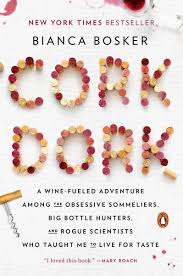
Cork Dork by Bianca Bosker

What would it be like to quit your job and spend a year studying wine?  No, I mean, really studying it – not just drinking it.  Learning how to appreciate the various aromas, textures, degrees of alcohol, tannins, and acidity and be able to blind taste them and name the grape, the label and the year it was made without peeking at the label!  What might it be like to hang with the sommeliers of New York’s finest restaurants to learn what is considered important in the service of these wines?  Or to research where all these crazy, lofty ways of describing wines came from.  Well, Bianca Bosker has done this and she’s been kind enough to share her journey with us in the pages of Cork Dork.

In her quest to become a sommelier, Bosker smells everything in her kitchen in her home and in her city.  She insinuates herself in the world of the sommelier by befriending a top somm who brings her to blind tastings and allows her to witness the training that each somm puts themself through.  Trailing other waiters, working in a wine cellar in a restaurant, getting to taste a vast quantity of fancy and less than fancy wines, Bosker widens her scope of experience very quickly.  She travels around the country and around the world in this quest, visiting restaurants, vineyards, and scientists who help her understand how she can best go about understanding and perfecting her art.

What makes a good wine good?  What makes a good sommelier good?  What makes a good wine description good?  These are questions she seeks to answer during the course of the book and she seeks out answers from many different sources.  Throughout the whole time, she is studying and practicing and honing her tasting and olfactory skills, trying to prep for the certification exam.  And while she learns, so do we, as she sketches out for us her findings.

I do have to confess, that I do think some of the descriptions are bullshit, as she even cops to; however, I do respect the devotion and the obsession that the sommelier does have to go through to become certified in this field.  And now I have a newfound appreciation of exactly what that entails!

Becoming Eve by Abby Stein

Born to what was considered a royal Hasidic family —  a descendant of the Baal Shem Tov — Abby Stein was raised as a boy in one of the most gender-segregated societies on earth.  From an early age, she knew she was a girl and when she, at the age of 4 years, expressed this to her mother, she was given the very clear message that this was never to be spoken about again.  Throughout her childhood, she rebelled, against god, against her restrictive society, and against a world that did not allow her to be herself.

This memoir was so detailed and heartfelt – until it wasn’t.  We hear about every moment in Abby’s early life.  Her journey from one yeshiva to the next, from one rebellion to the next.  There are very intimate passages, revealing her first love for a young man who is obviously struggling with his own sexuality.  This episode is quite tenderly written and the reader feels such empathy for these two who cannot pursue their love in the restrictive society in which the two “boys” live.   We hear about the details of the study in which Abby immerses herself, how she advocated to learn about law and ultimately about mysticism.  And some of the details about Hasidic life are quite interesting.  And we hear about her marriage to Fraidy, which is actually quite sweet and hopeful, to some degree.

But suddenly, when she describes Fraidy giving birth to their son, and all of a sudden, it is as if she drops off a cliff and, POOF! she is a woman.  There is little to no mention of how she disengages from her prior life, with the exception of an epilogue, which tells only of how she tells her father she is a woman. We do not hear about her connection with her child, we do not hear about she experiences the transition from her insular world of Hasidism to the outer world, we do not hear about much of anything else.  This I find unbelievably disappointing and a sorely missed opportunity.  After hearing so much detail, the absence of detail is astounding.

I did learn from this book, but I was disappointed by the ending.  On the other hand, I do hope that Abby finds peace with her family and can connect with them.  She obviously loves them dearly and they do her.  I hope they can find a way to see that she is exactly who she always was.


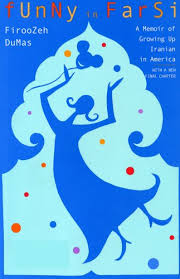
Funny in Farsi by Firoozeh Dumas

funnyinfarsi

It is hard enough to be a seven year old girl, navigating family, friends, and school.  But in 1972, a little girl named Firoozeh had to navigate a move from Iran to a suburb of LA, where she did not know the language, was not familiar with the food, did not have the extended family around for support, and had to function as her mother’s interpreter as well as find her own way.  Fortunately for her, her intelligence, her family’s support (mostly!), and probably most importantly, her humor, enabled her to adapt and do so very successfully.  This book is essentially a collection of her memories of growing up in this colorful family challenged by the immigrant experience of balancing their own culture and tradition with integrating into the society into which they’ve landed.

First, I have to say that this was a good, light distraction from the other reading I’ve had to do these past 2 weeks!  If you’ve been like me, you’ve done more reading about viruses and epidemiology and how pandemics can be mitigated in the past 2 weeks than you’ve ever had in your life – even if you’re in Public Health.  So I am thankful that I’ve had something like this to alleviate the anxiety that all of that other reading has caused.  I implore you to use this time for more solitary reading — it will be therapeutic for you and it will socially distance you from others, helping to mitigate the spread of this awful coronavirus.

As a memoir, this book was amusing and entertaining to a point, but, I believe, a missed opportunity.  Dumas did enrich her stories with the rich flavors and aromas of Iranian cuisines, ceremonial customs, and, in particular, her father’s often comical and endearing personality quirks.  And we did get a sense of the warm acceptance into the community her family experienced in 1972, which contrasted drastically with the reception she received when they returned just after Iranian Revolution and the American hostage situation. But other vignettes, such as those about her father’s fascination with Denny’s Restaurant or her uncle’s dieting fads were much less engaging.  While an opening into her culture was an opportunity, peeking through a curtain into their family secrets felt almost voyeuristic.

This was less a memoir than a collection of short stories.  As such, it was entertaining enough, but did get a bit old after a bit.

Not a “Must Read” but good for a few chuckles.


Inheritance by Dani Shapiro

Dani Shapiro, an author of both fiction and memoirs, has agreed to her husband’s request to both send off their saliva specimens to Ancestry.com – quite on a lark.  Just a curiosity – something she could have just as easily decided not to do.  The results, however, turned her world upside down.  This is her true story of the fallout from that single decision.

Spoiler alert:  If you don’t want to know anything more and you might read this book, please don’t read on.

What Shapiro learns is that her father is actually not her biological father.  The person she felt closest to, proudest of, particularly with regard to her heritage – as he’d come from a line of well-respected, learned, Orthodox rabbis – was actually not related to her biologically.  On the other hand, the mother with whom she had a strained, even fearful relationship, was.  And this rocked her world.

While I cannot fully relate to the situation, I have to admit that I had a hard time completely sympathizing with the author. Yes, this must have been a shock and yes, it must have thrown her.  But when she repeatedly referred to this as a “trauma,” I could not help feeling as if this was melodramatic.  The word, trauma, I believe, has become so over-used that its potency has become diluted.  Her year of worrying about her son with a near-fatal disease – THAT was traumatic, I’m sure.  This discovery about her father, I do not think rises to the level of trauma.  And while I agree, to live in a family with secrets was not ideal, it was certainly not uncommon at that time.  The 1950’s and 1960’s were fraught with a different philosophy about what was appropriate to discuss with children.  To apply today’s standards to what was standard then is unfair.

I also thought that this story might have been told in a much shorter format – such as an article in the New Yorker, for example.  As a full-length memoir, it was somewhat drawn out and sometimes actually dull. I was waiting for something truly extraordinary to happen and it did not.  What did begin to capture my interest was her discussion about the Farris clinic, the infertility clinic in Philadelphia where her mother was inseminated.  The doctor went rogue, was practicing without a license, and inventing new techniques in infertility treatments.  Some were actual advancements and some were truly unethical and this would have been fascinating to explore further.  Unfortunately, there was only limited exploration of this clinic and details were doled out sparingly.  This is where I was hoping the story would lead.

All in all, I was left somewhat disappointed.  I’m curious to hear what others think…!