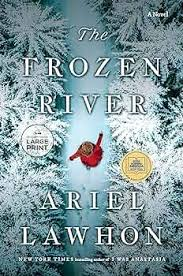
The Frozen River by Ariel Lawhon

It is 1789 and in Hallowell, ME, it is cold. After the night of the dance, a few young men have been caught in the Kennebec River during a quick freeze of its waters, but not before they discover a body just beneath its surface, which they bring to the town tavern (the heart of the town) to be examined. As the midwife and medical professional of the small town, Martha Ballard is called to determine the cause of death, which she pronounces to be murder. The victim is not exactly a popular man in town, as he has recently been accused, along with the judge of the town, to have raped the wife of their minister. And so begin the proceedings, which are clearly biased and contrived. Will justice be rendered at all? And by whom?

This fictional novel is based on the true life of Martha Ballard, a midwife who really did live in this town in the district of Maine (before it was a state), and who delivered hundreds of babies without a single maternal death. Like the Martha of our novel, she too kept a journal – extremely rare for women to do in her time – and this helped to keep her story alive. It was not surprising, therefore, that her progeny also were likeminded caregivers: her great-niece was Clara Barton, the founder of the Red Cross, and her great, great granddaughter, one of the first female physicians in the US, Dr. Mary Hobart.

The narrative itself is embellished with fictional details, however, and it is as captivating as its characters. There are twists and surprises, multiple simultaneous threads, backstories and love stories. Likewise, we come to love not only Martha, but her whole family, and particularly her devoted husband, who supports her in all of her personal and professional pursuits. He supports her, too, in her frustrations and her anguish, as she is unable to prevent the Puritan attitudes (and laws) toward women from playing out in so many unjust ways.

It is a beautiful novel on many levels – historical and literary, legal and ethical. It would make an excellent book for a book club, as there are so many topics/messages/questions to raise for discussion. And it is also just a wonderful read, great for right now, sitting in a warm home, perhaps by a fire, on a weekend afternoon. A book to get lost in.

Another MUST READ for the collection!

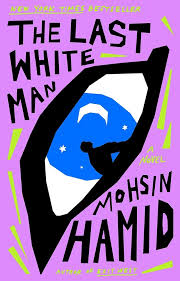
The Last White Man by Mohsin Hamid

Anders, a white man, one morning awakes to find himself having turned “a deep and undeniably brown.” He notes this first on his arms, then on his body, and in the mirror, sees he is now, completely, dark-skinned. He is, at first, just shocked. Not knowing what else to do, he calls in “sick” to his employment at a nearby gym and just stays home, thinking it might be something temporary, but knowing, deep down, it is not. What will his new lover say? What will his father say? As he begins to move through the world with this new appearance, he learns that he is not alone in his experience.

This is a most unusual book, both in the concept and in its execution – and I’m still undecided if I believe it’s in a good way or not. While the idea is unique, imaginative, and clearly meant to be an allegory, it felt almost too obvious, too blunt to be so. Some may find it even comical, in a perverse way. Moreover, the writing is also bizarre. Hamid is the master of the flip-flopping, run-on sentence, some of which continue for the length of his paragraphs.  Too many of his lines are similar, writing contrary phrases within the same sentence, which sometimes is effective and sometimes is just confusing. While I might have found it an understated and useful technique if used occasionally, it is so overused that it becomes almost tiresome.

Underlying the writing, though, there is a message that is, in fact, powerful. Hamid is making a statement here about the unnecessary social construct of race; that is, how we in America have assigned all sorts of attributes with various ones, and how absurd it all is. He is making race irrelevant here, evening out the playing field, as it were. In this way, I do have a deep appreciation for what he is trying to accomplish. 

I am curious to hear from you all if you feel he has achieved it – or not? I’m still digesting it, I think…


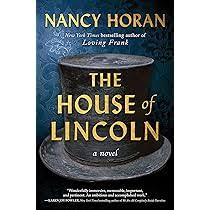
The House of Lincoln by Nancy Horan

1851 in Springfield, IL could be a terrifying time, depending on the color of your skin, your heritage, and your politics. While Illinois was a northern state, there was the constant threat of slave hunters prowling around, searching for the bounty they would earn for themselves if they tracked down runaways. In fact, having arrived into this country as a Portuguese refugee herself, Ana finds herself with her friend Cal, witnessing a frightening scene that she must keep to herself in order to protect those she has come to love and respect. This comes to help form her views as she moves forward through her life, becomes a nanny and cleaner for the Lincoln family and follows the rise and tragic fall of the most impactful presidents our nation has ever seen.

Told through the eyes of this young woman, we glimpse into the home of the Lincolns, seeing their experience of both personal and national tragedies. We view the life of Mary Todd Lincoln, who experienced loss after loss, and, understandably, struggled with her mental health because of it. Yet she still fought so hard to encourage her absent-minded but brilliant and kind husband to fight for what he felt was the best for the Black slave – emancipation. Through Ana, we see how he agonized, how he sought the argument, the magical words that would not only convince his enemies to join him, but how to bring the fractured country back together. Through Ana, we also view the backlash, so quick to happen, so easily sprung back. Even in the hometown of Abraham Lincoln, where he was beloved, or so one would think, there was an evil backlash of hatred.

Not only is this an important part of our history, providing details that one might not know, but it is frighteningly relevant to what is happening today. While we might have made some progress toward freedoms, there is much in the way of backsliding and backlash happening now as well. Not only from people in the streets, but it is being supported and legitimized by our Conservative legislators and the courts. The civil rights of marginalized people are being chipped away and the highest court in our land is jubilantly cementing this in. I fear it will take years to undo the damage they are doing now.

We are growing less and less the “land of the free and the home of the brave” our founders sought for us. Shame on those who are perpetrating this backlash (and the current conservative members of the Supreme Court). This is why it is so important to know what has happened in our past. So that we can do our best to prevent the extreme backsliding to this segregation, this hatred, this fear of the “other” for our future.


By Any Other Name by Jodi Picoult

Melina has just been trying to find her voice, mainly through telling stories, composing plays. She has viewed Professor Buford only as a supportive mentor, encouraging her and recommending her to submit her plays to contests, even at the cost of snide looks and remarks from most of her peers. That is, until now, when she suddenly and heartbreakingly sees through his gestures, his attention. But why is it that she must rely on these men around her – mentors, critics, producers – to herald her into the world of theater? When she learns from her father about an ancestor, many generations prior, who was the first female poet to publish in England, she becomes a bit obsessed to research more about her, and finds, to her shock, that she was more than just a minor poet. She finds evidence that her predecessor, Emilia Bassano, may have struggled, just as she is, to be given a platform. It may be that she actually did succeed, however – and it may be that she did so through the name of the most famous poet/playwright of her time.

This is a thoroughly researched, courageous argument that suggests that William Shakespeare had ghostwriters – and that it is quite likely that at least one of them, if not the primary one, was Emilia Bassano. As the plot unfolds through both Emilia’s and Melina’s stories, we hear cogent explanations of how Emilia had more insight, exposure, and concrete, detailed knowledge of the history, characters, and locations of the plays that Shakespeare himself would not have had privy to. (And there was, of course, no internet then for him to access this information…) I will not go into these details, as this is part of the joy of reading this novel, but suffice it to say, I was convinced of the need to question everything I’ve ever understood to be the “works of William Shakespeare.”

Even if you’re not convinced to at least question the origin of the works – and I would find it hard to believe you could not – there is still a beautiful, tragic, and thoughtful story embedded here in this novel. Both Emilia’a and Melina’s characters are passionate and strong and yet vulnerable. We love them, cheer for them, even cry for them. Each story is powerful in its own right; but the idea to cast them as parallels is, in my opinion, pure genius. It highlights the problematic issue that, my god, even when we think things have changed so much after all these decades – centuries! – things have really not changed all that much after all.

I think that, for many reasons, this is a MUST READ. I think as a stand-alone novel, it is outstanding. But for its historical and literary significance, its brave questioning of what we know to be the suppression of women’s voices throughout the ages, it is enlightening and essential.


How the Light Gets In by Joyce Maynard

Even though her ex-husband has now passed away, and there is much water under the bridge, she still has difficulty moving past that fateful moment when it felt like her entire life changed: when her youngest child, Toby, suffered a brain injury after being found face-down in their pond for who-knows-how-long. She cannot help but think what would have been had her husband not fallen asleep that day when he was supposed to be ensuring his safety? But as her life unfolds, she begins to learn to appreciate the beautiful person Toby becomes, rather than mourn who he might have been.

This is ultimately a beautiful story, but I feel that it takes unnecessary work to get there. There is quite a bit of repetition, such an unfortunate belaboring of points that the story could have been told in a much more succinct and effective way. Whether it was the writing or the editing – likely a combination of the two – I believe it is a drawback of this book.

Nevertheless, there is a lovely story underneath all this tautology. The unfolding of Toby’s story as told through Eleanor’s perspective is truly meaningful. Many overlook or dismiss Toby because he does not speak or walk or dress the way his peers might; but those who see him for who he is have the honor of getting to know someone who is warm, honest, loyal, and who is the kindest person they will ever know. He pays attention to details that few notice. He sees the potential in folks that others don’t see, appreciating what it is like to not be seen. And he accumulates family, friends, and fans along the way who deeply appreciate who he is. 

I believe this book is worthwhile, but you have to be willing to accompany Eleanor, Toby and their extended family on this long journey, even with all its detours and corollaries.


Looking for Jane by Heather Marshall

It is 1960 and Evelyn is terrified. She has no choice but to accommodate her parents’ wishes and move to the home for unwed mothers where she’ll work and live until she gives birth to the child that she is now carrying. It would have been completely different had her boyfriend not died of a heart attack just before she found out she was carrying his baby. But now, she is trapped. Literally.

Fast forward to 2017 and Angela, working in her aunt’s antique store, stumbles upon a letter received years prior, meant for the tenant in the upstairs apartment. She opens the letter, just to see how she might be helpful to the sender, and she sees a heartbreaking plea. How can she be helpful in this situation? Should she try to help in this situation?

Meanwhile, in the 1970’s, we meet Nancy, who is struggling to assert her independence from her overbearing mother. They frequently clash, given her mother’s overpowering personality and ability to ignore most of what Nancy actually says. So Nancy learns to hide her self in a way that is detrimental. She learns to keep secrets. When a cousin asks Nancy her for help in a crisis, she keeps that secret as well, in spite of the trauma that it leaves her with. But she also learns a tidbit of information at that time that will have an impact on her future in a way that she cannot possibly imagine.

This is a particularly relevant read for this moment. In a time during which access to safe, legal abortions is threatened in too many areas of our country, this book should be read by everyone. This book touches upon the issue of women forced to carry pregnancies against their will (and then forced to give up the babies when they do deliver), women compelled to undergo dangerous procedures that endanger their lives, and women and medical providers who are threatened with arrest for having life-saving procedures such as D&C’s for natural miscarriages. And ironically, as it is pointed out in this story repeatedly, it is generally men making these decisions about women’s bodies!! What an absurd world we live in! [Of note, this story takes place in Canada, but the situations can and do happen here all the time in the US as well. Fortunately for Canadians, their country has not reneged on their commitment to women’s health the way we have here.]

This is an intricately constructed story and the way in which these very realistic, very human characters are portrayed and come together will captivate and engage and surprise you until the very final page. I could not put this book down. I loved it not only for its relevance but for how personally connected I felt to these beautiful characters. They are each products of their times, their circumstances, and yet connected by the fact that they are women who love.

Enjoy this book! I know I did!

James by Percival Everett

In this retelling of the story of Mark Twain’s Huck Finn, Jim, or James, as he prefers to call himself, is a literate, enslaved man who has been sneaking into the library of his owner to educate himself and to find material to use to educate other enslaved folks around him. Upon learning he will likely be sold and separated from his family, he decides to run away, and Huck, fearing his own demons, follows him. Their journey takes them through crazy and dangerous escapades. Nevertheless, through it all, James believes there is nothing that can frighten him or debase him more than what he’s already experienced: being owned by another human being.

This is an odyssey, a whirlwind of an adventure – absurd and terrifying in equal parts. We learn about both James’ and Huck’s pasts as the story unfolds, and how their pasts have intertwined. More importantly, we learn so much about James’s character, which is deeply complex. He has an abiding love for his family, even as he develops a growing awareness of his fury toward his oppressors. We both love him and fear him, as his compassion for others in need can be compelling even while his rage can be blinding.

It is also a uniquely powerful story from the perspective of this educated, enslaved man. It is striking how everyone in the story, whether Black or White, reacts to James when he speaks in his normal manner vs his affected, “slave” manner. Everyone, including his peers, expects him to use incorrect wording, grammar, etc. Even when a White man is being threatened by James, with a gun pointed directly at him, all he can focus on is how James is speaking – it is such a shock to him. It is symbolic of how a command of words can signify education, influence, even power.

It’s a wild, frightening, and enlightening journey that we take with James. I daresay, a bit different from the “Jim” Twain had in mind…


Dreams of Joy by Lisa See

Already reeling from the death of the man she’s known to be her father,  Joy has also just learned some shocking news about her mother, Pearl. These two events challenge Joy’s identity to her core. At the same time, as the 1950’s American government is targeting those suspected of being Communists, some, particularly those on college campuses, feel that Socialism can be the ideal of equality and fairness. Following this ideal,  Joy makes the impulsive decision to leave the comforts of what she’s known as home to embark on a journey to find her true birth father, to seek her Chinese roots, to relinquish her capitalist excesses, and to enter Mao’s People’s Republic of China. What she finds there shocks her even more.

With her usual skillful style, Lisa See has managed to compose yet another beautiful family saga, depicting family relationships at both their worst and their best, while incorporating a significant historical moment that is not frequently highlighted. Her mother, Pearl, on learning that Joy has left for China, follows her daughter there, even if it may put her own safety in jeopardy. She knows that Joy is young, that does not understand the consequences of her actions to the fullest, that she has never experienced the heavy hand of Communist rule. And if she is being honest, finding Joy’s father is of interest to her to, as they have a complicated history as well. The relationships depicted here are tender, beautiful, and authentic.

History plays a large role in this saga as well. China’s “Great Leap Forward” is anything but — but this is the era in which Joy finds herself. Initially, she tries to find the grace in it: the idealism of the communal life, the simplicity of the farm, the romance in the hard work. She also finds meaning in the art she’s able to produce there through which she can express herself, at least within the confines of the dictated rules. As time progresses, however, she sees the rampant deception. She begins to see that even when the rules are failing the people miserably, they are forced to abide the whims of their dictator, even at the cost of their very lives. When Joy becomes responsible for the life of another, this is where she can no longer abide this lie.

There is much darkness depicted here, but it is a frighteningly timely and realistic story. We are now in a moment when so many are following another wannabe fascist – a worshipper of Putin, of Kim Jong Un, of Hitler – and these followers are ignoring the harm he has done and has the potential to continue to do. He has already threatened to imprison his enemies – a classic fascist move. People make excuses for him – but we’ve seen him do this already in his first presidency. It’s an authentic threat. We need to learn both from other countries’ pasts such as that depicted here and our own past. This can happen again and this can happen here. We have the power to stop it with our votes. But this may not be the case for long if he is elected…

I hope you will read this novel. It is a beautiful family saga as well as a harsh warning for the world and for our country in particular.  A MUST READ for this moment!


Small Island by Andrea Levy

Hortense and Gilbert, essentially strangers, have made an unusual deal: Hortense has offered to pay Gilbert’s passage from Jamaica to England so that he can pave the way for her to follow him there. She would love to fulfill her dream of becoming a teacher in that faraway, fairytale land, as she perceives it. And for his part, Gilbert, feeling claustrophobic himself on that tiny, Carribean island, he agrees to it, even at the price of marrying this haughty and serious, albeit beautiful, young woman.

On the other side of the world, in London, Queenie and Arthur have had their share of challenges. Queenie has had no choice but to run a boarding house while caring for her father-in-law. Her husband, Arthur, has been MIA since the end of the second WW, after being stationed in India. She is ready to declare him dead and try to move on with her life, but she is quite distracted with all the goings on in her own home, such as it is. Getting flak from her neighbors because of whom she is renting to is frustrating enough, but managing all of their comings and goings isn’t what she’s signed up for either. And now with the advent of Gilbert’s wife to add to the mix. Where will it all lead?

This is a fascinating dive into London’s WWII and post-WWII world, where there remained as much hostility toward anyone who was considered “foreign” as there is today. Anyone of color who moved into a neighborhood was considered to be “taking over,” and White folks complained, moved out, and sought out their own. While Gilbert thought this was purely an American issue, a “Jim Crow” problem, he learned the hard way that it was just as alive and well in England, even if it didn’t have an official name. When Queenie defends sitting with Gilbert in a movie theater, rather than having him seated in the rear, it ends in terrifying violence. Sadly, things haven’t changed much, right???

What is interesting is how the story is told. We learn each of the stories from the perspective of each of these characters: Queenie, Arthur, Hortense and Gilbert. They each have a history, a story to tell. They are each complicated, with their own fears, anxieties, and challenges. Through them we also learn about the tension between the British and its island of Jamaica; that is, how hardly anyone in Britain knew where Jamaica even was, while those in Jamaica were taught to worship the crown as if Buckingham Palace were situated right there on its shores.

While the overall message is clearly heavy, it is told with warmth, wit, and with a Jamaican lilt that gives it just enough lightness to make it enjoyable, surprising, and a worthwhile read.

The Gates of Gaza by Amir Tibon

On the eve of October 6th, 2023, Amir Tibon and his wife Miri thought that all they had to worry about was how their 3-year old daughter, Galia, would perform in her dance for their kibbutz celebration the next day. She’d rehearsed with her kindergarten that evening but no one knew how these little ones would do in front of an audience, even among the familiar faces of their close-knit community. They had no idea that the next morning would begin the most harrowing ordeal of their lives: the invasion of the lush, peaceful green of their kibbutz by hundreds of armed Hamas terrorists who had the mission of killing, maiming, burning, and capturing as many Israelis as they possibly could. Amir and Miri rushed immediately into Galia’s and Carmel’s(1 year old) bedroom, also their “safe room,” a room built to protect them against rocket shelling but certainly not machine gun blasts or fire explosions (many safe rooms did not have locks on the doors). This is where they waited, in the dark, with a few water bottles, no bathroom, food or electricity for 9 hours while they heard screaming and gunshots just outside their door. All they knew was that Amir’s father was coming to rescue them. But when? And how?

This is not only a MUST READ, but should be compulsory for everyone who believes they have formed an opinion about the conflict between Israel and Hamas/Iran/Hezbollah. For while Tibon, a journalist for Haaretz for many years tells his and his family’s heroic story, he also tells the backstory of Hamas, of Israel, of Netanyahu, and how it came to be that we are here in this hideous quagmire in which we find ourselves. He of course tells his own story from his own perspective. He cannot do otherwise. But he tells the historical perspective with journalistic integrity, having done extensive research, interviewed many on all sides, and does so with an honesty that is almost uncomfortably brutal.

What comes to light, is that there have been clear and present signs, over the past many years, that have been ignored, most shamefully by Netanayu and his enablers, that this attack by Hamas was inevitable and imminent. Qatar had been funding Hamas for years, with the tacit agreement -even encouragement – by Netanyahu. While this funding was supposed to go to the civilians of Gaza to improve their lives, to build schools, parks, businesses, hospitals, community centers, etc., it instead went to the construction of the notorious, massive, high-tech tunnel system. Hamas used these tunnels not only to import ammunition and money, but also to hide its planning, readying for this military attack on Israel. And while it did not accomplish all it set out to do, it accomplished the capturing of hundreds of hostages, many of whom are still, a year later, being held down in cages in these dark, dank, airless, food-less tunnels to this day.

And it is clear that while both sides have a claim to the land, and there are some on both sides who seek peace, the years of wars and militancy have pushed more to the extreme on both sides. Even while hundreds of thousands of Israelis have been protesting in the streets against the extreme right-wing government in Israel, there are still thousands of Israelis who are extremists in their own right. Many of the settlers in the West Bank have carried out horrific terrorist attacks on their Palestinian neighbors – a disgrace in the name of religion. But just as evil, if not more so because of scale and scope, is the terrorism that has been ongoing by Palestinian extremists, Hamas included, who have been holding their own citizens hostage, in a sense, using them as human shields, as well as carrying out horrific terrorist acts on Israelis in the name of their religion as well.

Bottom line, this is a fraught, complicated, nuanced issue where many have sought to establish compromise and too many have interfered. Extremists on both sides have refused to accede the middle ground, to see any path to compromise. On the few monumental occasions when we’ve bravely come close, extremists have thwarted these attempts. It feels hopeless.

But all we have is hope, so we have to continue to hope.

There is a solution: there could be 2 states, side by side, if extremists on both sides would lay down their arms and compromise. It would take a replacement of both current governments – Hamas and Netanyahu’s government – to proceed to that ideal. It would take Iran’s government changing and staying out of the current mix.

It might take a miracle to open those Gates of Gaza.