A Woman is No Man by Etaf Rum

Isra has the dreams typical of a young teenager, but hers, she finds, are thwarted time and again, by her mother’s insistence on her adhering to the strict rules of her people. Traditional Palestinian women do not have choices – they are born into the world as disappointments – disappointments first that they are not boys, and disappointments second that they must be groomed forever to be married off as soon as they can be readied. She has been told this ever since she can remember and even though she has dreams of romance, fostered by the books she sneaks into her home, she knows, deep down, that her fate is as her mother’s – she will be a wife, a mother, and no more.

Fast forward, we also follow her daughter, Deya, who is struggling with the same challenges. She is an avid reader, wants desperately to attend college rather than just to get married, but the grandmother who is raising her is insistent that she must marry. This is what traditional Palestinian women do and if she does not, the whole family is shamed. It would affect not only her but her younger sisters as well. And then where would they be? Is Deya trapped? Is Isra trapped? How is one woman’s fate tied to the other?

While I found this story a bit repetitive and almost as predictable, it was, at that same time, a powerful dive into the lives of women of this insular world. Just as with women in extreme Orthodox Jewish communities, women in these isolated Muslim communities are treated as if they have only one purpose – to serve the men in their lives and to procreate to produce, ideally, more men. They are not valued as individuals but rather for their ability to cook, clean, and to service the men. Worse, because they are not valued, they are also not treated with respect and the physical, verbal and psychological abuse they endure can be overwhelming, if not fatal. Of course, this does not represent all Palestinians – just as it does not represent all Jews – but there are communities of insular, extremely religious sects for which this does apply and it is important for these issues to be brought to light. Not just for the young women whose lives are at risk, but for society as a whole.

What I found so fascinating was how very similar the cultures are – Palestinians and Jews in their extreme, religious forms. While politically there are so many tensions between Palestinians and Israelis, religiously there are so many parallels. To those who hold on to the strictest interpretation of their religious texts, whether the Torah or the Quran, life remains as it was centuries ago. There is no value to educating women because they have a specific and limited role in the home and the community and must be guarded at all times. The purity of the woman is the ultimate value and if she stains that in any way (and any stain is her fault, even when it’s not)- even if it is by the pursuit of education alone – that brings a shame upon the family that is a black mark and taints her (and any further siblings’, of course) ability to marry, her ultimate purpose. Any adverse event is covered up in secrecy, denied, and buried so as to avoid any shame to the family – again, to maximize the marriageability of the children.

And escape is hard – because they are not given any opportunity to develop skills that they can use in the outside world.

I think this is an important read to expose this underbelly of a culture that can be colorful and beautiful and otherwise rich with historic value.


Early Autumn by Louis Bromfield

Olivia Pentland has been caught up in her old-world, New England, Puritanical family since marrying into it many years ago. While she has had financial security, she has given up all else – independence, originality, and most of all: love. She has been able to cope mainly with the support of her father-in-law, whom she perceives as a wise ally. But with the advent of her cousin by marriage, Sabine, who has been away in Europe for the past twenty years, her world is shaken to its core. Sabine, in her malevolent, selfish, and direct manner, bursts upon the family’s tautly held secrets and slices them wide open at their core. Can Olivia save at least her daughter, if not herself, from the chaos that will ensue?

This is another Pulitzer-prize-winning disappointment, I have to say. It begins with the creation of an atmospheric setting and mysterious characters that are colorful and captivating. We come to appreciate Olivia for her patience and her balance, even as she tolerates the weakness of her single-minded husband, the impudence of her husband’s intrusive aunt, and frustration of her own feelings of being trapped in a life of stagnation. But this also creates the expectation that something monumental is about to happen. And while there are things that do happen, the monumental thing we expect really doesn’t ever occur. I found that a let-down.

Maybe that was the point? Maybe Olivia’s expectation was that in her life she’d have opportunities, given her wealth and the prestige of her husband’s background. Maybe she thought she’d have the chance for romance, for excitement, for fulfillment. She was on the brink – but she had to pull back for her family’s sake and for her own. And maybe that is how life can just be sometimes and we have to accept that. Maybe that is the lesson we are to learn.

Lesson or not, though, to me it fell short and I felt, as the reader, short-changed.

I’d be curious to know if others had a similar reaction to this novel. Any opinions out there?

Windfall by Penny Vincenzi

Although she’d given up quite a bit for her family, Cassia had felt fairly content with her life. She has a lovely family, a husband who is a respected, community doctor, and she is even allowed to assist him once in awhile in his practice. What she doesn’t often acknowledge, even to herself, is how much she’s missed practicing medicine herself, after having trained at the same medical school as her husband. But now that she’s inherited quite a large sum of money from her beloved godmother, perhaps now she can make something of her education. Perhaps now she can realize some of the dreams she has had for herself. How this plays out seems to have a ripple effect, for her family and for the many people she cares about and who care about her.

In my opinion, this author, Penny Vincenzi, is a master craftswoman. She has a gift of being able to create an entire community of fully developed characters with whom we become intimately connected, interweave their stories so that they tie together but also function as engaging subplots, and all while keeping each character and story solidly lucid and memorable in and of themselves. It is not heavy descriptives or overwhelming detail that keep the characters clear and identifiable, but our own emotional commitment to each of them because of their deeply human feel. We are compelled to know what comes next because they feel as tactile as we do, we need to know because they become our family, our friends. We feel almost a part of the intricately woven plot, that we are almost a part of the fabric of their lives. We are vulnerable to the suspense, the sharp dialogue, the exotic scenes, and most poignantly, the human emotions the novel elicits.

There is also a theme of fighting convention by the many strong women herein. Women were just starting to battle against the norm of having to stay home and care for children as their only option – and at the same time they were also starting to rebel against the presumption that they, in fact, had to have children at all. Contraception was just then becoming a possibility, which liberated women from the burden of just being baby factories. At one point, Harry, a very complex character with whom Cassia has a very complicated relationship, laments that he is forever destined to be attracted to very strong women. As it happens, most of the women in this novel are strong, each in their own ways.

If you’re looking for a fun, substantive read – a truly healthy addiction because you will not be able to put this one down! – this is the novel for you!


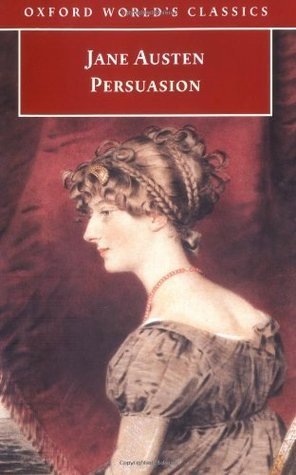
Persuasion by Jane Austen

Anne has led a quiet life, since the breakup of her engagement 8 years ago. She has not questioned the wisdom of the advice her dear friend, Lady Russell had given her, knowing that it was only out of the best of intentions that her friend advised her so. But she has wondered just how her Captain Wentworth had been faring since that time. As it happens, she may now find out – because he is returning to them! Now that her father has outspent his fortune and has to rent out his estate to Captain Wentworth’s sister and brother-in-law, she may be seeing him once again. But it won’t be that simple to learn what his thoughts are – and to whom his heart belongs.

Every so often I love going back to the classics – especially ones I’ve never had the opportunity to read. While I found this one a bit confusing in that it was challenging to keep track of the characters and their connections – every male character was named either Charles or William and everyone was a cousin! – I did find it amusing and entertaining. So many of the classics are heart-wrenching and tragic and it is refreshing to know that at the time of Jane Austen – the later 1700’s/early 1800’s – it was permitted, even appreciated, to have a sense of humor!

So while this was not a deeply profound or moving novel, it was certainly a fun change of pace.

I wouldn’t call this a MUST READ but it is definitely on the list of classics to get to at some point…


Whereabouts by Jhumpa Lahiri

In Whereabouts, we are introduced to the narrator, a single woman in her mid-forties who is a writer and professor, an astute observer of life around her. With each brief chapter, she shares with us a glimpse of this life, a series of sometimes ordinary, sometimes unsettling experiences that range from a visit to the shore for a friend’s baby’s christening to a trip to the local stationary store that has, to her acute disappointment, suddenly been repurposed as a luggage store. Woven through these stories is an undertone of a guilty resentment toward her aging mother, for feeling criticized all her life for being who she is and for being who she is not.

There are many fascinating aspects of the way Lahiri has chosen to approach the writing of this novel. Leaving her narrator without a name, for example,  universalizes her character – potentially makes her the everywoman of her age and circumstance. She may speak for the middle-aged woman, mulling on her past while contemplating her future.

She is admired by the young and by her peers for her uncluttered independence, but yet she simmers with inner rage. Her mother who is now small and frail looms large and loud in her memory, the ancient critical and jarring comments from her past playing on repeat in her mind, as if they are being uttered today still. It is impossible to forgive but so hard to live with this resentment too.

She participates in groups of friend gatherings, but reports on them as if from afar. She is with them but not of them. It feels as if her rage prevents her from truly connecting to anyone beyond the surface and she cannot overcome this. There is contemplation without real insight, or so it feels. Does this come from the narrator herself or from the fact that she speaks to us through vignettes as opposed to telling us a linear story? Is this disconnect intentional?

And so the telling is as unique as the character herself, which makes for an original, contemplative, and, apparently, Pulitzer-Prize-winning read.

I’m so curious to hear what others think about this one!

The Personal Librarian by Marie Benedict and Victoria Christopher Murray

Belle da Costa Greene is never happier than when she’s holed up among Princeton’s trove of ancient texts, soaking in the artistry of the lettering inside these relics and conjuring up the historical context in which they were printed. Since childhood, she’s been passionate about the art and literary relics of the Medieval and Renaissance eras, and so when her old friend, Junius is about to show her a unique specimen in the Princeton library, she almost shudders to think how fortunate she is to be able to see this ancient text up close. She is not prepared, however, for his offer of a recommendation for the position that will, ultimately change the course of her entire life: to be the personal librarian to his uncle, the one and only JP Morgan. For any woman, this would be an intimidating position, for this was not a position women were offered. But for Belle, there is a complicating factor that would make her uniquely unsuited – so she is bound to keep her true identity hidden from the world. But can she do this when it is so dangerous for both her and her family?

This is the fictionalized story of an actual woman, born Belle Marion Greener, who made her way into New York society by virtue of her ardent passion for the preservation of art, her intellectual prowess, and her social guile. Her earliest memories were of leafing through art history textbooks with her father, and her curiosity for learning that sprouted from this never waned. Though a woman, she was granted access to the library at Princeton, working with the trove of sacred texts that were housed there, and from there she was referred to interview with the larger-than-life collector of art and ancient texts and artifacts, JP Morgan. Impressed with both her fund of knowledge and her pure moxie, he not only hired her but gave her license to maintain and expand his collection as she saw appropriate. Together, they amassed one of the world’s largest and most impressive collection of ancient texts, bibles, and artwork.

What I will not spoil here is the secret that Belle must keep – I will keep that secret along with her. But suffice it to say, that this secret stays with her and directs the course of her life. She is not free to do as she wishes nor is she free to be who she really is in order to secure her career and maintain the security of her family. Because of the era she lives in, she is tied to the social mores and prejudices of the moment and cannot risk revealing her true identity. She is caught between two worlds and she must make her choice, which she does for the sake of herself and for others who depend on her. Even while she struggles, she finds that it is the way it must be and she ultimately makes a sort of peace with it. But at many junctures, it impacts heavily upon her in very deep and cutting ways.

On the lighter side, this story does give an insider peek into the life of the Gilded Age of art and high society and how social status was brokered at this time. It was a sort of precarious time, whether you were in or out, depending on what people were saying about you, whether you bought the appropriate art, had the “right” taste, or your money came from the right source. There was also the beginning of hope for women, suffrage and equality, with women like Belle who broke into what had been a man’s world. She was certainly a pioneer in her field, showing that she did not have to relinquish her femininity to be successful in her dealing in the art world.  She just had to be so much smarter – which she apparently was!

This is an entertaining and educational read, both. Great fodder for all you historical fiction fans!!

The Diamond Eye by Kate Quinn

Lyudmila Pavlichenko only wanted to protect her son when she went to retrieve him from the shooting gallery, where his usually absent father had brought him. He was only 5 years old, and the foolish boor was trying to impress him with the use of a gun, no less. Well, if that is what made a “good” father, then she would be both a good mother and a good father to her son. In addition to attending her graduate studies, working to earn money, and caring for her son, she also got herself certified as a sharpshooter. Little did she know how useful that would become, how it would equip her for the battles that were to ensue on her home turf during the second World War, and how it would change the course of her life forever.

Though this novel is fictionalized, it is based very closely on the memoir and historical accounts of the life of this true heroine, Lyudmila Pavlichenko (or “Mila”, to her closer friends). While women in Europe and America were only utilized in medical or administrative capacities until very recently in the military, they were occasionally utilized as front line fighters by the Russian military much earlier on. And although these women still faced harassment and were not generally treated as equals, there were a few, such as Mila, who were actually acknowledged for their contributions, which were extraordinary. In her case, she earned her moniker of “Lady Death” as a sniper, with an official head count of 309 Germans killed during the war (and probably more, in reality).

Quinn has become another of my favorite authors, uplifting strong women in history and bringing them into our consciousness. We can now appreciate, for example, how Lyudmila Pavlichenko not only contributed so bravely toward the fight against fascism with her rifle, but she also did so with her honesty and charm. Brought to America in a student delegation to help convince the US to open a second front in Europe to support the war against the Germans, she formed a personal friendship with both Eleanor and President Roosevelt. And though she shied away from the spotlight, she did not shirk her duties when it came to speaking up for gaining support for her fellow military fighters who were out in the field trying to protect what she felt were forces against evil.

I will say, while Quinn’s other novels truly grabbed me from the first page, this one took a bit of time for me to become fully absorbed. There was perhaps a bit more detail about the ammunition, war strategies, and the layout of the stakeouts than I might’ve needed personally (my eyes may have glazed over just a bit). But the suspense definitely built quickly enough, and there were a twists and surprises that caught me off guard, for sure. By the middle I was hooked and by the last few chapters, I was 100% riveted and could not put the book down until I finished it – including the author’s notes!

Quinn’s deeply researched novels consistently highlight how hard it has been for women to be acknowledged for even the most stunning achievements. She does this while keeping us engaged, entertained, and always wanting more.

I say it again – this is the very best way to learn history! And why I loved this book.

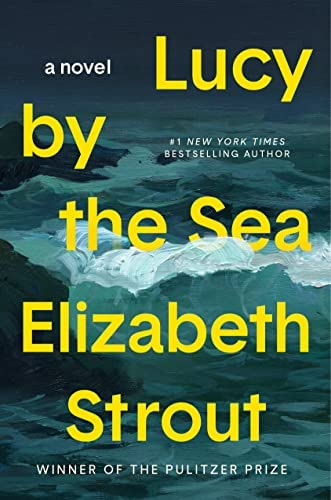
Lucy by the Sea by Elizabeth Strout

It is March of 2020 and Lucy has plans to leave for her promotional book tour. She is a bit taken aback when her ex-husband, William, a parasitologist, calls, insisting on her canceling her trip, packing a bag of clothing and work essentials, and joining him to stay in the house of a friend of his in Maine. He is concerned about this new deadly virus and feels they must leave the congestion of NYC in order to stay safe. She feels he is over-reacting – really, how long can this new virus really be a problem? – but he is also more knowledgeable than she is about this sort of thing, so she goes along with it, for the time being. Little does she know what is to come and how this decision would affect the course of the rest of her life.

Wow, I often don’t like to know what I’m going to be reading about in a book, but I wish I’d been warned about this one! This is definitely a “too soon” situation – since we are still living it. There are 42,000 reported cases per day today according to the New York Times (so presumably so many more, with home testing, states and individual localities not reporting their stats, etc.), thousands hospitalized with it, and hundreds dying of it per day in the US alone. And this is before we all go back indoors because of the approaching colder weather.

And then there’s the story itself, which has a contemplative, diary sort of feel. While Lucy adjusts to life in Maine, she also reflects back to her childhood of poverty and neglect, her strained relationships with her family, and her difficulties managing her success as an author. While it feels like there is not really a story here, the story does evolve gradually and organically and it does, perhaps a bit too slowly, pull you in.

What I appreciate here is that while there is acknowledgement of the political divide in the US at this time, it is done so with extraordinary delicacy. There is a clear understanding that Lucy and William appreciate science, wear masks, isolate, and observe the January 6th attack on the Capitol as a threat to democracy. However, Lucy does express a sensitivity to the anger expressed on January 6th. She relates to how poverty and its indignities can foster deep resentment, which incites violence such as that which erupted on that day. On the other hand, she concludes that this anger cannot justify the support of such radical extremism, Nazism, open racism, and overt hatred that was seen on that day either.

So while this was an interesting read, I cannot, in good conscience, recommend it for now. Maybe in a few years, when we’ve all recovered from our PTSD, it might serve as a warning, as a reminder of some sort. But it’s definitely too soon to be reading about what we’re all still being hit with on a daily basis.

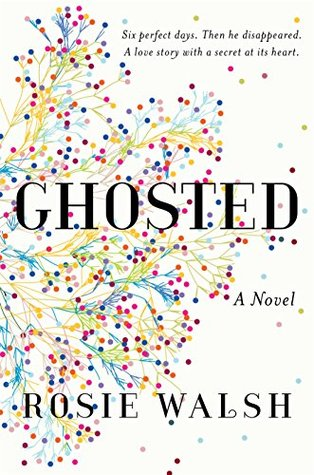
Ghosted by Rosie Walsh

Sarah has only just met Eddie, but she feels an instant connection – and she knows he feels it too. She is fully aware that it is bordering on ridiculous that they could have fallen in love after only having spent a week together but he is professing the same feelings toward her. well, So why, has he not responded to her when she has asked for his flight information when she’s supposed to get him at the airport on his return from his vacation? And why has he not responded to her Facebook messages to him on his supposed return? Where is he??? What did she miss? How could she have gotten this so wrong? As we learn more about her complicated past, we learn that there may be more to both of them than we realize at first glance. Could this explain his disappearance?

So there were 2 obstacles to overcome with this novel, but it was ultimately a fun read. The first was that it started out a bit slow and I really believed I knew where it was going (I was wrong!). The second was that because of my own cynicism I had to suspend disbelief in the “love at first sight” stuff of storybook drama (fell in love after a week? Really?). Once I got past both of these, however, I found myself drawn in and actually caught off-guard by the unexpected plot turns. It became quite entertaining and hard to put down.

I don’t think there is too much to say about this novel – there is no philosophical note, no deep ethical conclusion I can draw out. It’s just a fun read that I can say I’m glad I enjoyed. You probably will too!

The Alice Network by Kate Quinn

The dust has barely settled and wounds have certainly not yet healed from the second world war when Charlotte finds herself dragged by her mother across the Atlantic on the way to take care of her “Little Problem” in a clinic in Switzerland. While her mother is determined to erase this “stain” on Charlotte’s reputation, Charlotte has a very different mission in mind. While here in Europe, she sees an opportunity to uncover the whereabouts of her beloved cousin Rose, who has been missing and presumed dead since returning to France just before the German occupation. With the name and address of Eve Gardiner which she has scribbled on a small piece of paper, she unlocks an adventure that leads her to discovering much more than just what happened to Rose. She discovers a network of brave women who risked their lives for their countries and she uncovers her own inner strength as well.

The Alice Network is another suspenseful novel by the author of the Rose Code (see my prior entry), which will similarly have you on the edge of your seat as you turn each page. There is a great deal of historical fact woven into the fiction here, as Quinn celebrates the unsung female heroes of the first and second world wars.  We learn of the undercover spies that wore skirts and makeup instead of slacks and blazers. They were often ignored because they were “just women,” which sometimes enabled them to sneak through borders undetected, but sometimes led to them being ignored even when they carried valuable information that might have saved hundreds of lives. 

The writing here is crisp, acerbic and intricately plotted. We float back and forth between Charlotte’s pursuit in 1947 and Eve’s back story (WW I). The characters are, each of them, hardened and broken, wounded in one way or another by war. When we meet Eve, for example, she is in a drunken rage, threatening Charlotte with a Luger in her face and trying to send her away.  She is emotionally and physically crippled by her experience in her war.  We see so starkly how women were affected by our wars – whether working under cover, nursing, or being on the front lines in other ways – and their wounds are obviously just as deep. 

I highly recommend this novel – it is historical fiction at its best.