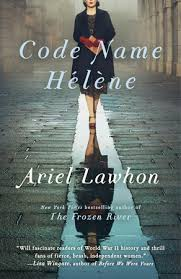
Code Name Helene by Ariel Lawhon

The dual timeline here:

1944: Helene (aka Nancy) finds herself being flown back into France, under the cover of night. From the get-go, she learns that the “rules” don’t count here on the ground and survival is what is of the utmost importance. That and arming, feeding, clothing, and paying the Resistance fighters she is here to safeguard.

1936: Nancy Wake her younger self, one who has boldly talked her way into a job as a journalist (no formal training), one of her first interviews having been with a then little-known, arrogant and aloof politician named Adolf Hitler. Soon after, we are with her as she bears witness to the evil work of his disciples, torturing Jews in a characteristic gruesome fashion in a public square in Vienna. She is immediately spurred on to do something, anything, to fight against this evil force. At the same time, she also attracts the gaze of one of France’s elite and most eligible young men. So as Europe gears up for war, Nancy is falling in love.

This is another magnificent work of historical fiction from the author of The Frozen River (reviewed here relatively recently). We follow larger-than-life Nancy Wake, an Australian national who lived in Paris before the war, just long enough to be tutored by her best friend in the language, the look, and the poise of the French. But Nancy’s accomplishments were all her own. She proved herself in the early days of the occupation by the Nazis, enough to be noticed by the right men in the right positions. Most impressive was the fact that Nancy was able to garner the respect, loyalty, and support of the thousands of men she led in their unofficial battalions of the French Resistance. It was a testament to her courage, bravado, and willingness to put herself in harm’s way for those fighting for justice.

This is most definitely a MUST READ, not only because it is an utterly addictive novel, replete with emotion and suspense, but because it is our duty to honor individuals (and particulary women, who are so often ignored in war stories) who fought so bravely for justice, civility, and democracy.
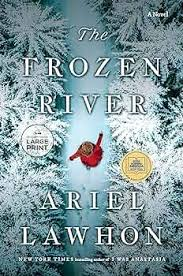
The Frozen River by Ariel Lawhon

It is 1789 and in Hallowell, ME, it is cold. After the night of the dance, a few young men have been caught in the Kennebec River during a quick freeze of its waters, but not before they discover a body just beneath its surface, which they bring to the town tavern (the heart of the town) to be examined. As the midwife and medical professional of the small town, Martha Ballard is called to determine the cause of death, which she pronounces to be murder. The victim is not exactly a popular man in town, as he has recently been accused, along with the judge of the town, to have raped the wife of their minister. And so begin the proceedings, which are clearly biased and contrived. Will justice be rendered at all? And by whom?

This fictional novel is based on the true life of Martha Ballard, a midwife who really did live in this town in the district of Maine (before it was a state), and who delivered hundreds of babies without a single maternal death. Like the Martha of our novel, she too kept a journal – extremely rare for women to do in her time – and this helped to keep her story alive. It was not surprising, therefore, that her progeny also were likeminded caregivers: her great-niece was Clara Barton, the founder of the Red Cross, and her great, great granddaughter, one of the first female physicians in the US, Dr. Mary Hobart.

The narrative itself is embellished with fictional details, however, and it is as captivating as its characters. There are twists and surprises, multiple simultaneous threads, backstories and love stories. Likewise, we come to love not only Martha, but her whole family, and particularly her devoted husband, who supports her in all of her personal and professional pursuits. He supports her, too, in her frustrations and her anguish, as she is unable to prevent the Puritan attitudes (and laws) toward women from playing out in so many unjust ways.

It is a beautiful novel on many levels – historical and literary, legal and ethical. It would make an excellent book for a book club, as there are so many topics/messages/questions to raise for discussion. And it is also just a wonderful read, great for right now, sitting in a warm home, perhaps by a fire, on a weekend afternoon. A book to get lost in.

Another MUST READ for the collection!