The Warmth of Other Suns by Isabel Wilkerson

The Warmth of Other Suns: The Epic Story of America's Great Migration:  Wilkerson, Isabel: 8580001042800: Amazon.com: Books

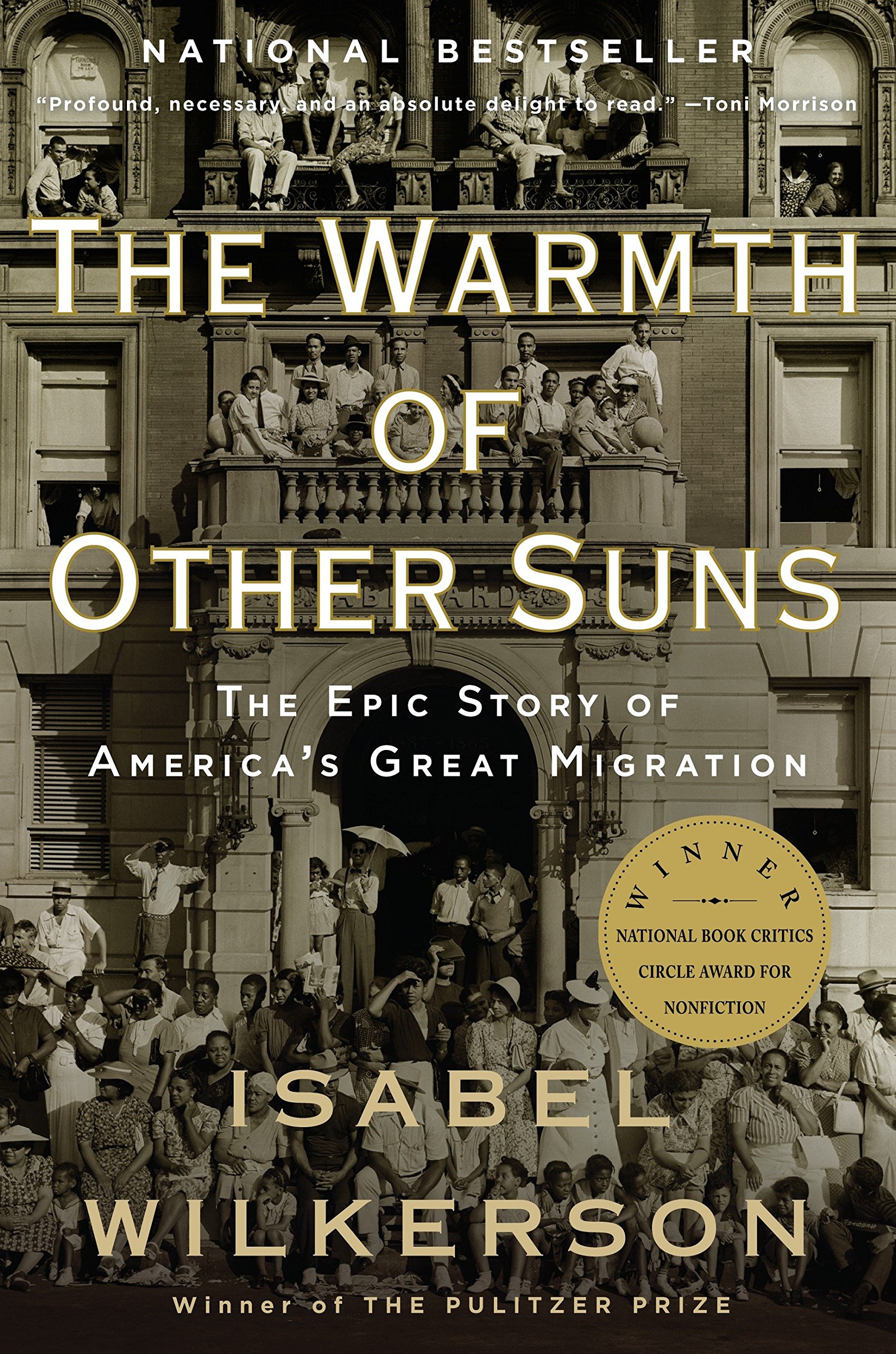
Ida Mae Brandon Gladney, Robert Joseph Pershing Foster, and George Swanson Starling never knew each other, nor did they live in the same time or place — yet they all had something in common: they each participated in the Great Migration and for parallel reasons. Through this gritty chronicle of their lives, we earn a deeper appreciation for how the Jim Crow south drove millions of black folks northward and westward, in desperate search of freedom and civil rights.  We also see how they experienced both successes and failures when they arrived.

This impressive work of non-fiction reads like part novel/part PhD thesis, but as a whole, it works. The parts that tell the story of each of these individuals’ lives are profoundly beautiful and what drive the book forward.   The author delivers their stories with such tenderness and detail that she lifts each of them off of the page and brings them into the room with you, bringing with them their hopes and their heartaches.  And interwoven with their stories is the historical context in which they are living.  The author zooms out to portray the larger picture of what is happening — what wars, economic factors, or local social affairs, sometimes graphic, are impacting our 3 protagonists at the time.  This sometimes gets quite dense, but it definitely contributes a great deal to the depth of the story.  

The larger question is this:  Did those who risked their lives, often sneaking out in the middle of the night,  to migrate to the north/west fare better than those who stayed in the south? I believe this is a complex question and one the author was seeking to answer with the writing of this book.  Those who left were desperately seeking a chance to be recognized as individuals who deserved their civil rights under the law, to be seen as equal to everyone else.  When they arrived in the north and/or west, they were allowed to sit anywhere on the bus and to drink at any water fountain.  But they definitely were not treated as equals to everyone else in their their job searches or their housing purchases.   

I’d be very interested to hear your opinion about the conclusions drawn in this book.  It’s an important discussion.  
The Girl with the Louding Voice by Abi Dare

The thirst for learning instilled into Adunni by her mother has been the driving force for everything she’s done, including continuing attending her small school even when she’s the oldest student there. While her best friend fantasizes about marriage, Adunni only worries about improving her academic skills, so that she can continue to teach others, as she’s done since she was very young. But her dreams come crashing down when her father reveals a proposal he’s made on her behalf – one that threatens not only her education, but any degree of autonomy as well. This sets her on a trajectory that both threatens her but also strengthens her as she sees what she has to do to set herself free.

This very powerful story ignites our deepest sense of injustice and we find ourselves loving and rooting for this heroine, Adunni, at every turn. Because of the poverty into which she was born, her gender, and her cultural milieu in rural Nigeria, she has no power and no agency over her own life. What she does have is intellect, stamina and utter grit, though, and these all serve her well. We love cheering for her and hating her oppressors, and while each character is portrayed with a realistic abundance of depth, we know who is on her side and who isn’t.

What I loved also about this book was the insight into the cultural strata of Nigeria, in both the rural/small town and the big city. There is apparently a vast chasm between the upper class and the lower class, and much corruption filling the space in between. (Pretty much like here in the United States, but I digress…) . Adunni observes more than once, also, that wealth, while it may wield power, it does not, in fact, bring happiness. This is starkly evident to her from observations of her extremely successful but painfully disgruntled boss, Big Madam.

The writing is also striking. It is written as Adunni might think, with her grammar and syntax. It has the singsong, innocent structure of a 14 year old Nigerian girl with an elementary education struggling to be respected. And as she struggles to pursue an education in whatever form she may, the writing develops as she does, and eases subtly into more sophisticated structure.

There are definitely some painful parts to read, and they are not where you expect to find them. There are also many tender moments from characters that are just beautifully written. And throughout, you will be inspired and sad and connected with this young heroine in a way that will surprise you.


Dear Edward by Ann Napolitano

Dear Edward by Ann Napolitano

As the Adler family proceeds to boarding for the flight to LA from NY, Jordan, Eddie’s brother, creates a scene. Feeling empowered by his newfound sense of being an almost-adult, he refuses to walk through the security scanner, holding up the line just enough to inspire annoyance in his parents. The others on the plane have taken notice as well, but proceed to contemplate their own lives, as one does on the “time out” that a flight offers. As the story progresses, and we learn about many of the colorful people on the flight, we also learn how it tragically ends – and how the lone survivor learns to cope.  

In this surprisingly moving story, the author deftly captures the mental paralysis, the constant feeling of being under water, that trauma can instill.  Edward, the teenager who survives, teeters on the verge of falling apart, but is held together by his aunt and uncle and his dear friend next door.  And while this might sound bleak, the story is kindly balanced with the lighter stories of the various passengers of the imperiled flight.  

The writing is quite poignant.  While there are a few moments that are a little unrealistic, we are drawn to Edward and suffer along with him.  But we also drawn to the kind folks who surround and bolster him as he muddles through.   I found myself particularly liking his principal, who, rather than forcing Edward to talk about what was going on inside, just allows Edward to come into his office and help him care for his treasured ferns.  In this quiet, kind act, he offers Edward an island of peace where he can escape the noise of the school he attends.   It is a place where Edward can just be, and not be alone, but just be.  Sometimes this is the most generous and sensitive way in which we can support someone who is in pain.  It is not always easy to do, but it might be the kindest path.

I found myself very choked up by the end of the story, as Edward seems to find his way.  I suspect you will be too.  


The Body Keeps the Score by Bessel van der Kolk, MD

Trauma, in its many forms, can impact people in devastating ways, both mentally and physically, especially when untreated. The way this manifests can be incredibly complex and we are only beginning to understand how and why this is. Dr. van der Kolk, a Harvard University psychiatrist who has treated hundreds of patients with trauma and has himself conducted much research in this area, has in these pages compiled a summary of the issues and the research to date in a palatable, accessible narrative.

What is striking is how physical psychological trauma can be. More importantly, as van der Kolk demonstrates, it is often not until one appreciates the physicality of the experience of the particular trauma, and until one actually experiences it again — with the banging of the heartbeat, and the shortness of the breath, and all of the other uncomfortable attendant bodily sensations — in a safe and nurturing environment where one can process it, can one truly overcome the trauma.

There is a lot of repetition in this book. Ir feels as if the author does not trust the reader to believe his conclusions and he therefore has to drive them home again and again. On the other hand, he does pepper his points with many vignettes and personal stories as examples, and these are what make the book so memorable. There are so many dramatic stories of recovery, it is utterly inspiring.

I will also add that for anyone who uses the DSM (the Diagnostic and Statistical Manual of Mental Disorders), there is some interesting backstory here. What has come to be used as a basis on which official diagnoses are made (and in turn, billing and insurance coverage), was originally intended as general diagnostic guidance only. In addition, there is a lot of money made from the publication of this book.

I highly recommend this book – you will gain insight into others – and perhaps into yourself.

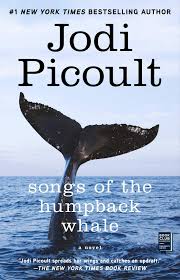
Songs of the Humpback Whale by Jodi Picoult

Songs of the Humpback Whale: A Novel (Wsp Readers Club): Picoult, Jodi:  9780743431019: Amazon.com: Books

Shocking both herself and her husband, Jane has done something she cannot believe and she must get away. To her surprise, her teenage daughter, Rebecca, is ready for her, bags packed, in their car, ready to leave with her. They have no idea where they’re headed, but they get on the road and begin an adventure that will change them forever.

I love Jodi Picoult and have read, I believe, almost all of her books. She has a pattern – not exactly a formula, but a definite style. She meticulously builds a story from the perspective of more than one character, gradually reaching a crescendo that always has a fantastic twist of some kind.

This was not quite that book, however. While normally Picoult’s transitions are smooth and easy to follow, they were not so here. I found that characters were not “properly introduced” and I found myself wondering at times whom I was reading about. And the non-chronological telling of the story, which is normally ok with me, felt choppy here.

This not to say that the entire book was uninteresting. The underlying plot, while a bit far-fetched, was engaging, and as usual, the science was well-researched. The tidbits about whales were actually intriguing and even the details about apple farming was fun to read. Once we did get to know the characters, we did like them. It just took time to figure out who was who.

I’m still a fan, for sure. But this is not the best of the bunch…


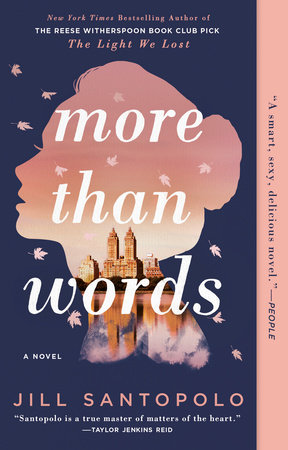
More than Words by Jill Santopolo

Nina has known that while she was passionate about speechwriting for the mayoral campaign,  this could only be a temporary departure from what she has been destined to do.  She knew that at some point she’d need to take the helm of the family dynasty of NYC hotels, but she thought she had more time.  But as her life was changing faster than she’d expected, with her father’s illness rapidly progressing, it seemed that her usual supports were failing her.  The only one who seemed to truly understand her was the one least likely to and the one she could not let anyone else see her turn to.   Or could she?

This was a modestly entertaining read, but honestly, disappointing.    With characters that are entitled, stereotypical, and one-dimensional, a plot that was predictable, and a message that said, in my opinion that if you’re wealthy enough, you can get away with a crime.  Bottom line -in my opinion, it was a mediocre at best.

And that’s about all I have to say about that.


Lily and the Octopus by Steven Rowley

Lily, Ted’s 12 year old dachshund, has been the love of his life from that very first moment when she chose him, by tugging on his shoelace.  She may have been the runt of the litter, but she was brave and wise and she’s been perfect company ever since.   They’ve shared walks on the beach, Saturday night movies and pizza, and discussions about cutest guys – and Ted was very content to continue his life with her.  That is, until, the advent of the octopus, who invaded their lives and turned everything utterly upside down.

This is a very unusual story about love and loss, told as a medley of poetic license, imagination and great tenderness.  Anyone who has ever lived with a pet can relate to the deep bond that forms, and the dependence that runs in both directions.  It appears that Ted may have elevated this bond to a higher level, but the way it is depicted is engaging and endearing and we can all relate to some degree.  And loss is hard, no matter whether what kind of living creature it may be.

My only hesitation in fully recommending this book is that it is somewhat monochromatic.  It is missing a secondary plot line, a more layered approach.  It might have benefitted from a side story about his best friend, Trent, to make him more interesting?  Maybe more about Ted’s sister?  Something…

On the other hand, it was incredibly sweet, it had an ironic crescendo, and quite a bit of heart.  And you will definitely also fall in love with Lily.

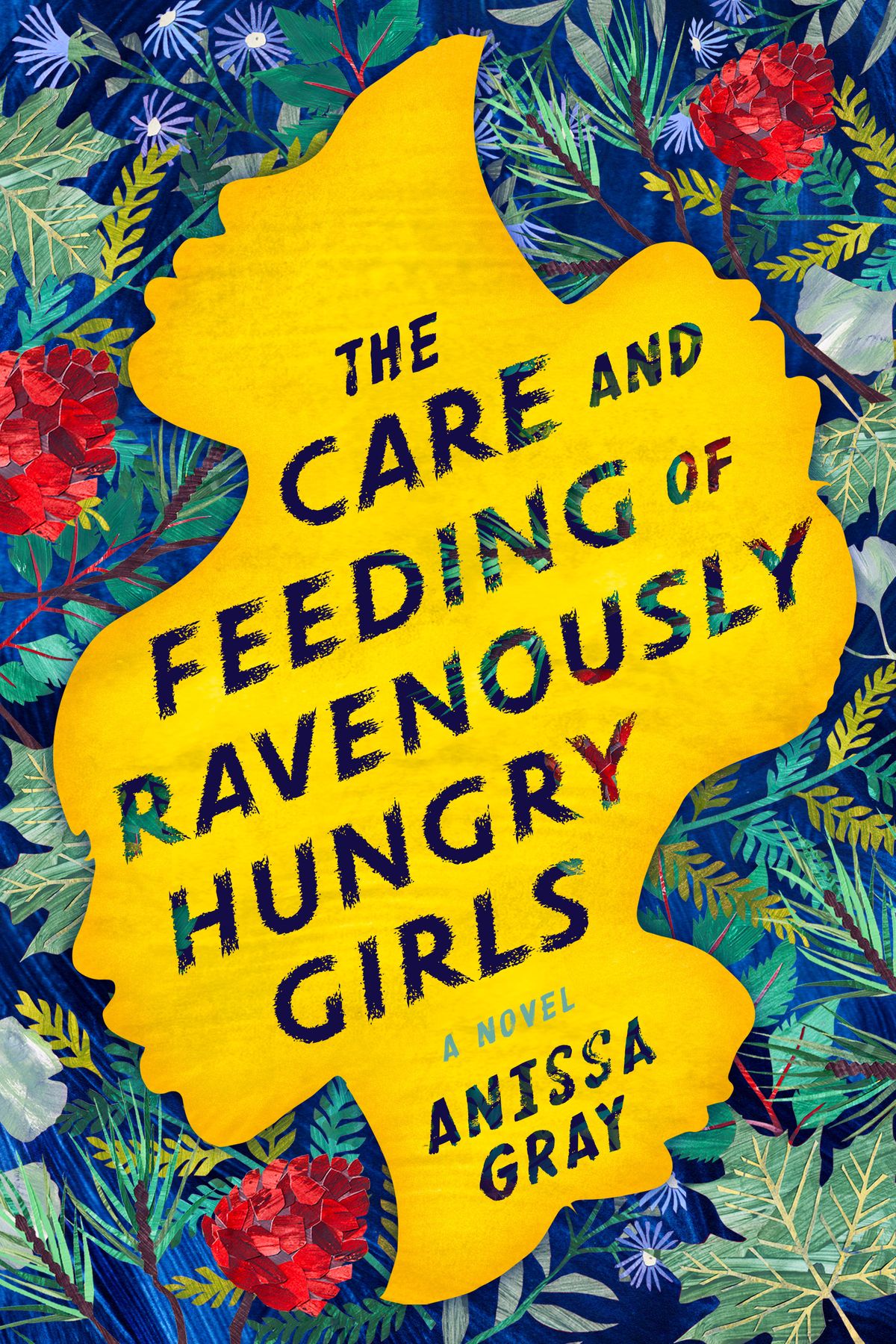
The Care and Feeding of Ravenously Hungry Girls by Anissa Gray

Althea and Proctor are deeply troubled, and it is less about their being imprisoned than about how they got there and what this means now for their family.  On an impulse, and in revenge for longstanding resentment toward her mother, their daughter, Kim, has revealed illegal activity committed by her parents, and they are now all paying the price.   Will they be able to repair the damage that has been wrought, especially with the physical distance they now must endure?  Will Althea’s sisters, who have themselves experienced hardships in their youth, be able to rescue the situation?

This was an engaging narrative from page one.  Each character was a mosaic of her complex past and her present emotional strength, with the overlay of the complicated state of their family story.  No one was a cliche, and no one was a stereotype.  Everyone felt genuine and unique.

I personally appreciated the inclusion of characters of color with eating disorders.  While eating disorders are so common, it is rare that folks who suffer from them are depicted in novels – and rarer still, that people of color with eating disorders are represented.  I have worked with adolescents for almost 30 years and I can attest to the fact that these disorders do not discriminate by race, gender, sexual preference, religion, or socioeconomic strata, despite what the general public believes.  I also loved that this was not the focus of the story – it was just a side issue .  Nonetheless, it was described with tenderness, with sensitivity, and with a true grasp of the suffering that occurs with these conditions.

This was a quick read, it was engaging and honest.  I would definitely recommend it!


So You Want to Talk About Race by Ijeoma Oluo

Yesterday, I went on a long drive with my son to visit my parents, whom I’d not seen since the outbreak of the pandemic.  We’d planned to visit them outdoors, for a backyard hangout just for a couple of hours.  I knew my son would be up for it, as he loves going for long car rides – any excuse to hang out, relax and listen to music together, and he’s on board.  But I couldn’t help thinking throughout the ride about a personal experience shared by Ijeoma Oluo, here in this book, So You Want to Talk About Race.   She described, in vivid detail, the terror of having been targeted by a police officer for “speeding” – she was driving in a car with her 2 brothers (all are black) going ONE mile per hour – yes, ONE!- over the speed limit.  She described to the reader that she and other black drivers can never relax when driving, never fully experience pleasure when driving, on the highway or anywhere, because of the constant fear that hovers over them.  Lurking behind every corner, behind every tree, could be the next random police stop we all hear about, almost on a daily basis, that have notoriously ended up in unwarranted arrests, violence, and even death, without any repercussion to the police responsible.  I realized, yesterday, how I have taken that right to drive so for granted.

So You Want to Talk About Race is yet another outstanding guide which delves into the difficult topic of race and racism.  In this very accessible, well-thought-out book, Oluo neatly explains a wide variety of relevant and complicated topics such as the one described above. She covers many relevant areas, including intersectionality, the school-to-prison pipeline, cultural appropriation, and the model minority myth, to name a few.   Oluo very generously shares with the reader many deeply personal experiences of racism such as the one described above, which give those of us who don’t walk around in skin of color a window into what that is like.  And while I know I will never know exactly what it feels like, I will continue to try to understand, so that I can be as much of an ally as possible.

One topic that Oluo touches on that I have not seen covered in other books I’ve read is “tone policing.”  This refers to the criticism of the angry tone that folks may take when calling out racism and other acts of hate.  I am sure I have been guilty of this myself and am so appreciative of having been made aware of it.  Of course folks are angry!  Of course they are sick of dealing with this! I do not have the right to complain about my discomfort with that.

Again, I also appreciate that book ended on a positive note.  The final chapter is about what we can do to fight racism, what steps we can take to undermine the structures in our country that have supported white supremacy.  It is one thing to learn and to empathize, but  it is so much more to act.  We must do what we can, even in small steps, to help move society forward.

I thank Oluo for this iconic book.  I am sure it was painful to write, but it is a compelling springboard for deep discussion about this urgent topic.

Let’s all keep talking about race. So that hopefully we won’t have to.


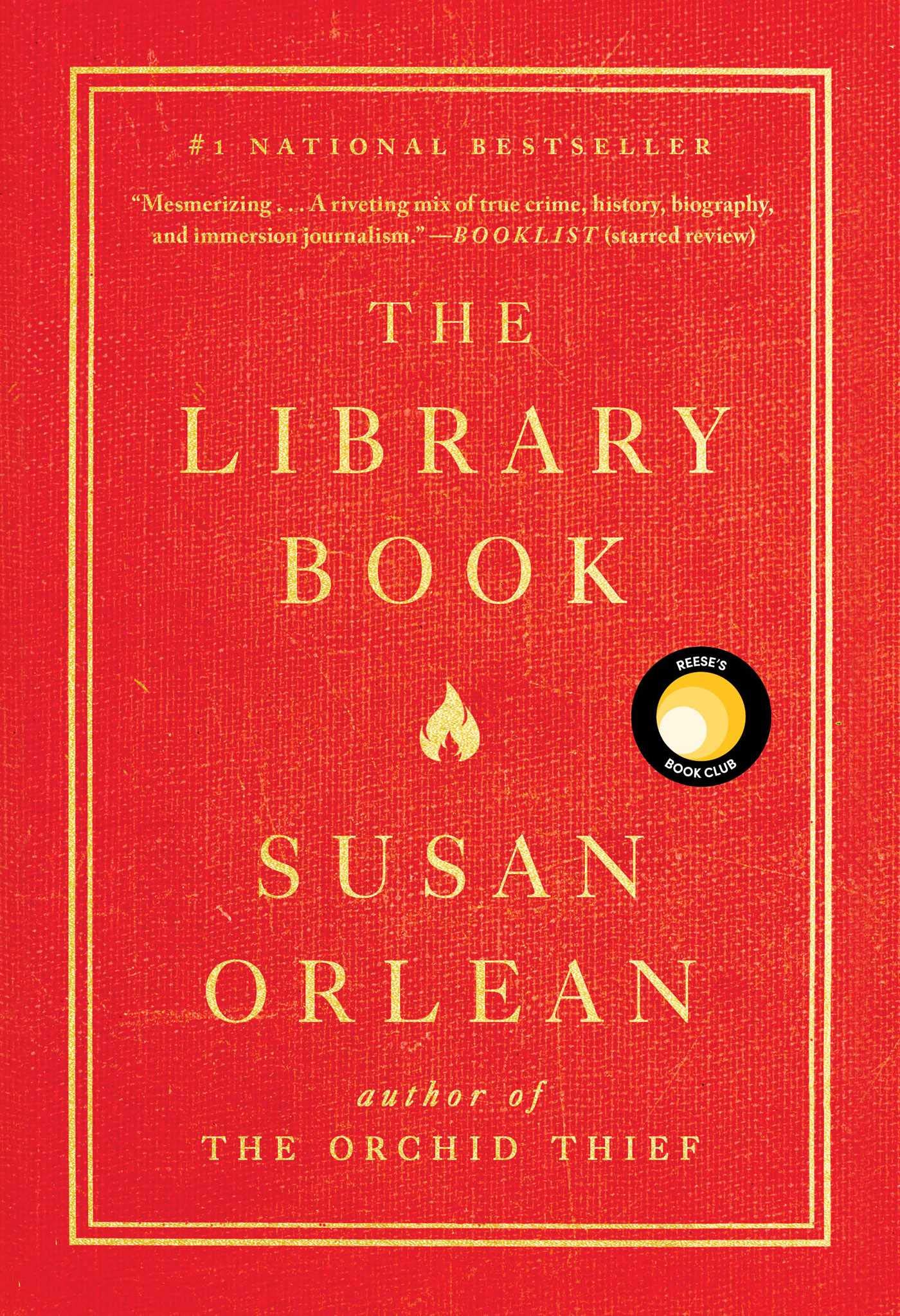
The Library Book by Susan Orlean

The library was a sacred place for Susan Orlean, having grown up visiting one regularly with her mother, and having treasured memories from these times.  So when she learned about the enormous fire that destroyed the Central Library in Los Angeles in 1986, it stirred something in her to investigate what happened, why someone might seek to destroy such a sanctified place.  In doing so, she also learns and then shares with us the history of this library and of its librarians.

This story had the potential to be interesting, and in some parts it was, but there were too many flaws in the writing, sadly – at least in my opinion. The story trajectory felt to me as if it was strapped onto a pool ball after someone yelled, “break.”  The timeline was erratic, skipping back and forth from one time period to another.  The topics switched in rapid fire from the librarians’ histories to the story of Harry Peal (the primary arson suspect), from the architectural details of the construction of the library to the function of libraries in general.  While each part did capture my attention – I love libraries too! —  the transitions were not smooth and it was hard to know what the purpose of the book actually was.  Even the most intriguing part of the story, the investigation into the setting of the fire, was, honestly, anticlimactic and unsatisfying.

That is not to say that I did not learn from this book.  The book exposed many sides of the library that may not be apparent to all – such as the broader functions that they have come to serve in many communities.  Most public libraries have evolved to become community centers and social service resources in many cities and towns throughout the United States, particularly as resources have dried up from other sources.  Librarians have had to become social workers, teachers, career counselors, and public health advocates in this age of limited resources and cutbacks – more a statement of bad government decisions than anything else – but librarians and public libraries have stepped up often to fill the voids in many communities.

Yet, while I did learn, it felt more like work, and I could not help wondering throughout the book what the purpose of the book was. Was it a book about a crime (arson)?  Was it a book about a library?  Was it a book about librarians?  Still not quite sure.

Curious to know what others think!