In this memoir, Lindy West shares her alternatingly traumatic and triumphant experiences as a feminist writer venturing into online journalism. Because she is also fat (her self-description), she also becomes a target in our fat-phobic, one-size-fits-all-definition-of-beauty society and is branded by trolls with repulsive vitriol. When she tries to stand up, for example, against comedians who use rape as a topic for jokes (which is about as funny to most women as I imagine Putin is to most Ukrainians right now), she gets accosted online by the most offensive trolls imaginable, with comments liked by some of her friends. (It is pathetic how quick people are to take sides against those who are perceived as vulnerable.) Lucky for women, she is a strong, smart, and good-hearted person who rises above and sees the forest for the trees, speaking out for all of us. She proceeds to make history in her accomplishments, one troll at a time.
This book is replete with paradoxes. West is vulnerable yet powerful. She puts herself out there, stands up and stands out in a public forum, knowing she’ll open herself up to criticism – and omg, does she – but yet she stands up again and defends herself so strongly that she silences others to a screeching halt. She hears the noise, feels it, but does not allow the noise to infect the clarity of her argument. Despite feeling isolated, she thinks about women in general and not just herself as a woman. She also sees herself as others see her, yet she will not bend to their perception of who she is.
Some may find her story stirring, even jarring. We are not used to hearing women with loud voices. We are not used to hearing women be comfortable and secure in larger bodies. We are not used to hearing women stand up for themselves when they have strong opinions and strong minds, especially when they go against the (male) grain. But I know it’s about time we got used to hearing and appreciating them!
Born in Hyesan, North Korea, Hyeonseo Lee was raised, as all of her peers were, to believe that her country was the “Greatest Nation on Earth.” Indoctrinated from the time she was born to worship the leaders of her country above all else, she witnessed at the age of 7 what happened when one opposed the regime: public execution. But even while she felt the pressure to blend in and follow the party line, she noted that there were, in truth, stark differences in how people lived. While the communists sang about equality among the people, how their government provided for its people, Hyeonseo observed that a family’s social status determined just how much that government actually provided. In reality, it was far from an equal distribution. And while she was privileged to some degree, this privilege did not protect her family from political danger. In this memoir, she shares her utterly harrowing story of her years-long journey toward freedom.
If you’ve followed this blog, you will note that I have been reading quite a bit about various refugee experiences. All of them are impossibly harrowing, but none has read more like a suspense novel than this one. At every turn, this young woman and her family encountered unimaginable peril, always being on the verge of disaster and often experiencing heart-wrenching disappointment and suffering. They were constantly at the mercy of others, usually being preyed upon by corrupt officers and traffickers alike, rarely reaping the courageous generosity of others, even strangers. Most profoundly, once they finally did achieve freedom, they actually had to be taught that humans deserved fundamental human rights in order to understand how deeply their own had been violated.
The bravery and dedication to family demonstrated by this heroine is infinite. She is an inspiration to all of us, particularly in this moment when we are seeing so many fleeing their homes in search of safety. It reminds us that no one chooses to leave their home. One leaves only when there is no other choice.
I’d like to depart from my usual post and add a poem which I found deeply moving (shared with me by an inspirational leader for whom I am so grateful):
Home by Warsan Shire
no one leaves home unless home is the mouth of a shark you only run for the border when you see the whole city running as well
your neighbors running faster than you breath bloody in their throats the boy you went to school with who kissed you dizzy behind the old tin factory is holding a gun bigger than his body you only leave home when home won’t let you stay.
no one leaves home unless home chases you fire under feet hot blood in your belly it’s not something you ever thought of doing until the blade burnt threats into your neck and even then you carried the anthem under your breath only tearing up your passport in an airport toilet sobbing as each mouthful of paper made it clear that you wouldn’t be going back.
you have to understand, that no one puts their children in a boat unless the water is safer than the land no one burns their palms under trains beneath carriages no one spends days and nights in the stomach of a truck feeding on newspaper unless the miles travelled means something more than journey. no one crawls under fences no one wants to be beaten pitied
no one chooses refugee camps or strip searches where your body is left aching or prison, because prison is safer than a city of fire and one prison guard in the night is better than a truckload of men who look like your father no one could take it no one could stomach it no one skin would be tough enough
the go home blacks refugees dirty immigrants asylum seekers sucking our country dry niggers with their hands out they smell strange savage messed up their country and now they want to mess ours up how do the words the dirty looks roll off your backs maybe because the blow is softer than a limb torn off
or the words are more tender than fourteen men between your legs or the insults are easier to swallow than rubble than bone than your child’s body in pieces. i want to go home, but home is the mouth of a shark home is the barrel of the gun and no one would leave home unless home chased you to the shore unless home told you to quicken your legs leave your clothes behind crawl through the desert wade through the oceans drown save be hunger beg forget pride your survival is more important
no one leaves home until home is a sweaty voice in your ear saying — leave, run away from me now i dont know what i’ve become but i know that anywhere is safer than here
In this tender memoir, Trevor Noah shares his experience growing up during the final edge of apartheid in South Africa. Through vividly narrated vignettes, we learn about his complicated relationship with his mother, who is fiercely devoted to him and yet is independent, stubborn and vulnerable. We learn of his early struggles to find himself, and how he must battle against the vicious cycle of poverty that apartheid has inflicted upon his people.
It was suggested to me to listen to the audio version of this book – and this was excellent advice. Hearing Trevor Noah narrate his own story, in his own beautiful, South African accent and fluidly modulating to his family and friends’ voices and accents, is just a gift to yourself.
Noah is a brilliant storyteller. He shares his experiences with such warmth and humor, as if he is sitting with you in your living room, over a cup of your favorite hot tea – but as if he’s sharing his deepest, darkest memories, only with you. He describes in colorful detail some of the most outrageous adventures and unbelievable experiences. But even as he shares his joy and his pain, it is as if he is flickering a smile at you, as if to say, we can still laugh, even as we hurt. This is how we cope.
You will be engrossed and amazed — you will gasp and you will laugh out loud. Don’t just read this one – listen to it!
It’s a “MUST READ” but more than that, it’s a “MUST LISTEN!”
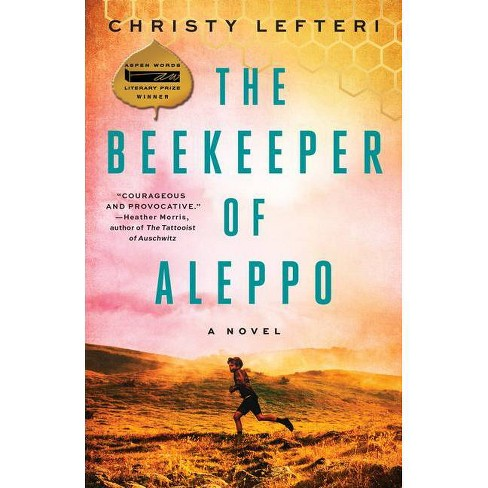
Nuri and his wife, Afra, have survived the arduous trek from Aleppo to the UK, and while they are awaiting their asylum application interview, they are staying in a B & B with immigrants with similarly devastating pasts. This waiting is not easy. Nuri is plagued by flashbacks of their escape from Syria, the trauma and losses they’ve experienced during the war there, and the anxiety about what lies ahead. But because he is seeing this trauma through his own eyes, he is finding it hard to connect with Afra, who is seeing it through her own. The question is whether or not they will find their way back to the family they know they once were.
This is not my first exposure to the refugee experience; though this may be one of the most poignant. I believe what contributes greatly to this is the sensorial nature of the author’s descriptions. We inhale Afra’s rose perfume as Nuri does,. We hear the buzzing of the hives tended to by Nuri and his cousin, Moustafa. And we can envision the stark colors of the drawings created by Afra, even when she cannot. And since we are right there in the sensory experience, we are also with them in their fear, their vulnerability, not knowing whom to trust, wondering where their next meal or shelter will come from or how they will get to the next step of their journey. We feel it in our bones.
In this depiction, we also see the worst of people and the best, as we do in most crises. We see the vultures who prey on the vulnerable, those who profit from those who are destitute and desperate and the corrupt underworld that feed off of this humanitarian nightmare. As Nuri gains the trust of others in his travels, he learns their stories and sees that his situation is not even the worst possible, and he feels deeply, especially for the plight of the many babies and young children refugees. On the other hand, he also encounters many who are kind, those who give food and clothing to the passing refugees, and those who do show compassion and support them in their journey.
I think this is an important read with an understated yet powerful impact that will linger with you long after you turn the last page.
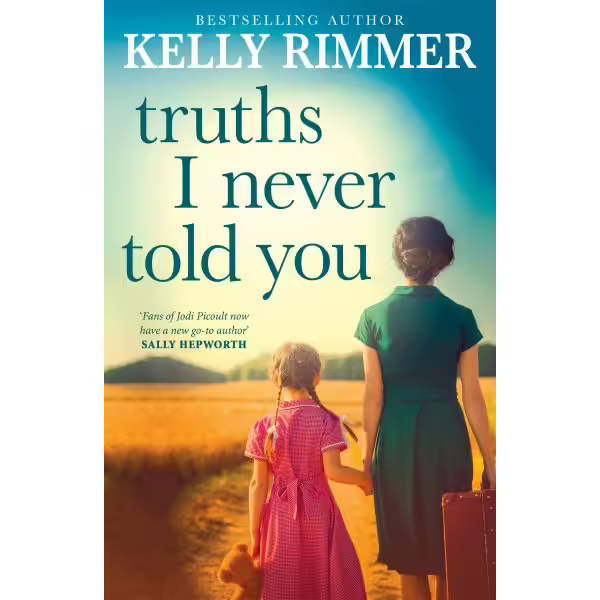
It’s been 2 years since Lexie has heard from her sister, Annie, but she knows that her call can only harbor some tumultuous disaster. Chaos has always followed Annie, ever since their messy youth, and Lexie has always been there to be the adult in the room and to pick up the pieces for her. But this call… this blow may be more than even Lexie may be able to patch back together for her. This may be the one time that Annie may have to rise to the occasion and solve it for herself.
From the first page, we are locked in. Rimmer’s writing is fluid and compassionate although we can sometimes guess where the plot will take us, we are still so fond of these endearing characters that we feel compelled to keep turning the pages and follow them through their painful and hard-earned wins and losses. As the narrative bounces back and forth between Lexie’s current day experience and Annie’s journal entries, we are given a window into both what is happening now and what their explosive past has been like for each of them. And we cannot help but become emotional as this tender and tragic and beautiful story unfolds.
There is so much to unpack here, but I will try not to give too much away as I try to do so. One major theme is the injustice of our patriarchal laws around maternal-child welfare. Our laws that protect the unborn are geared to protect children, yes, but they completely ignore the woman who is hosting the growth of that unborn not-yet-person – and this is obvious throughout this story. This problem with our judicial system is magnified if that woman/host is afflicted with any kind of addiction. She is blamed for having a disease that is out of her control. We do not take away babies from mothers who do not care for their out-of-control gestational diabetes- nor should we! – but we imprison mothers who use illicit substances while pregnant. These mothers all have medical issues that need to be addressed, but because one is considered “bad” and one is considered “medical” we place a moral judgement upon one vs the other. As is pointed out in the novel, we should be spending the money that we use to imprison these women on evidence-based treatment for these mothers, parenting support when the babies are born and on early childhood interventions, if we REALLY want to benefit these children. Children generally do best when they are with their families. This is highlighted here so very starkly and appropriately.
Families are complicated and messy and Rimmer gets this so right. You cannot help but have your heart melt from this one.
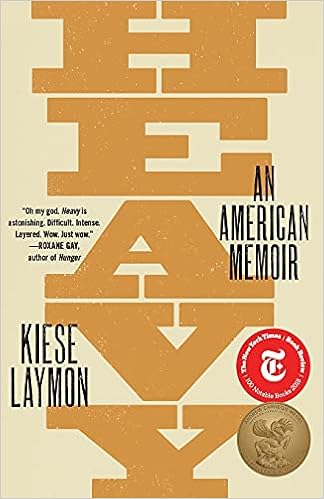
Through this deeply moving memoir, Kiese Laymon shares his experience having grown up as a black male in a larger body in the deep South. He shares his earlier traumas, his fonder memories, and how he has learned to cope with both the times his mother was absent and the times she was present.
This is a such a gritty, revealing memoir that reading it feels almost voyeuristic. Writing it as a letter to his mother, Laymon is so deeply introspective and revelatory that we peer into his private window, we peek inside his heart. We experience his profound sense of pain and powerlessness as he watches the women in his life become victimized by other men. His anger is, sadly, directed inward – as it so often is. It manifests first as binge eating and later as restriction and overexercising. This coping strategy works for him, however, until it doesn’t. Meanwhile, he is able to be as resilient as possible, forging relationships, excelling academically and achieving goals on his terms.
As a side note, I so appreciate that Laymon has come forward with this memoir, because it defiles so many stereotypes of who struggles with eating disorders. As he acknowledges himself, eating disorders are thought to exist only in upper class, white women – and this is just not true. Folks of all genders, races, and socioeconomic strata utilize these behaviors to cope with their lives and one can never assume anyone is free or “protected” because of who they are or appear to be. These are secretive behaviors and cannot be diagnosed by someone’s appearance. And they can be very painful, distracting, and most importantly, life-threatening – never to be taken lightly.
This is also an important memoir from the perspective of understanding racial issues and racism. Laymon shares his encounters with racism and digests them with us, his readers. Both he and his mother, in spite of their obvious intelligence and academic accomplishments, are underpaid and frequently disrespected. But, again, he also places his experiences into context. He understands that even when he’s been treated as less than, he is still not at the bottom of the totem pole, being a male as opposed to a female person of color. His compassionate view of the women in his life enables him to see their utter vulnerability to the forces of bias and power imbalance.
I deeply appreciate this memoir, for all its raw and painful honesty. This is a hard read but well worth the work of it.
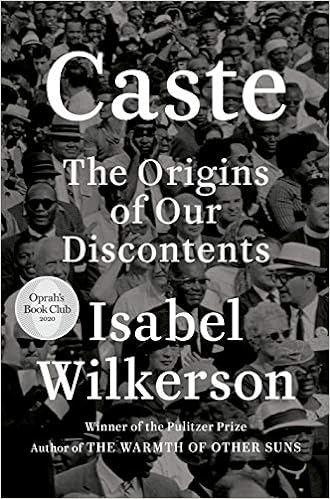
Written by one of the most impactful writers of our time, this non-fiction masterpiece is a stark comparison of the caste system that we live with here in the U.S. and that which has existed in India for hundreds of years and that which enabled the rise of the Third Reich in Germany during World War II. In order to elevate the white, European (Aryan) male in both the U.S. and Germany, it was necessary to establish a scapegoat, or a group of humans deemed less-than, in order to maintain an identity of being higher than. Likewise, in India, it was necessary to invoke religious inspiration to insist that men are created with certain intrinsic value based on the class they are born into, rather than natural, proven talents/abilities. Those at the top convinced themselves (and are continuing to convince themselves) that those at the bottom were content with their lot – or at least, that this was a god-given right which they enshrined. The myriad historical details and the personal accounts only serve to enrich Wilkerson’s thesis and drive her very painful and compelling point home.
While this book is not an easy one to read, it is one of the most important books that help explain this moment we are living in. It is clear that the presidency of Donald Trump was not a cause but a result of a growing fear of white men of losing their power over all others (including women of all colors, by the way) in this country. The continued efforts of Republicans to gerrymander and inflict restrictive voting laws are clear evidence of their flailing attempts to grasp onto those strangleholds they view as their birthright. And, as Wilkerson so rightly points out, these restrictive and terrifying laws and movements, and the rising of the Alt Right, Neo-Nazi, and white supremacy groups, hurt everyone – including the perpetrators – physically and mentally. We all lose.
We owe Wilkerson a debt of gratitude for her years-long, painstaking research and her gorgeous writing that encapsulates it.
Again, everyone MUST READ this book – if you want to understand not only caste but the fundamental history of our country and what is happening in our country today.
In the fall of 2007, Amanda Knox joined the many college juniors who left their campuses to study abroad, Amanda choosing a small town, Perugia, in Italy for her experience. Because her chosen university did not have a dorm for her to live in, she felt fortunate when she stumbled upon an apartment she would ultimately share with 3 other women. Life with the others began quite peacefully, and she formed a comfortable relationship with each of them. What she never imagined was that one of them would be brutally murdered by a stranger, and that she, Amanda, would be wrongfully accused of being the twisted ringleader of this murder.
I felt compelled to read this story, as I’d felt compelled, years before, to listen to this story every time it came on the news, in each of its permutations. When it first was announced in the media, the story was quite bizarre, filled with seedy details of sex and drugs that sounded questionable even back then. And the more it was discussed, the more bizarre and unlikely it sounded.
Reading the actual story was much more painful, however. It was no longer someone far away – it was now someone I was getting to know and empathize with. I hadn’t remembered so many of the actual details of the story – or probably never was given the true ones — nor learned about her personal life before the murder or during the trials. I also didn’t know how much time she served in prison, before she was finally found to be fully innocent. And I also didn’t how the prosecution obtained their evidence and how willfully they pursued a feeble motive/explanation for the events against the weight of the evidence for the defense. It was truly like watching a car wreck – you can’t look at it and at the same time, you can’t look away.
And honestly, even though I knew the ending, there was still a great degree of suspense. The ups and downs were wildly intense and I felt the ride right along with her. When she was trapped inside those walls of the prison, I felt almost as if I was inside there with her. It was almost hard to breathe. At the same time, she showed a courage and hopefulness I’m not sure I would have had.
This was a very quick read that I’d definitely recommend!
Although systemic racism has existed throughout our history, the COVID pandemic has unveiled a razor-sharp light on its ugly face for all to see. The pandemic has unleashed an enormously disproportionate toll on black and brown communities, in terms of illness and of deaths, because of the underlying vulnerabilities in housing, healthcare, education, criminal justice, and economic resources — present because of decades of institutionally sanctioned denial of resources to these communities. The good news is that it has thrust these issues to the forefront of our national conversation, and has inspired uprising and protest against the institutions that support and perpetuate the injustices, particularly within the criminal justice system, which is the most urgent. In support of this effort to undo racism, it is urgent for us to educate ourselves on this topic of racism, because especially we white folks really are particularly stupid when it comes to race.
Dr. Fleming, a professor of sociology and Africana studies at Stonybrook University, is probably one of the best authorities on race and racism. She has studied this topic at Harvard and then additionally in France as she researched their history of colonialism and oppression. More importantly, after returning to the US and exploring broader theories on racism, beyond the more patriarchal and, really, white perspective she’d received in the ivory tower, she learned how deeply rooted racism was in this country. She learned how white supremacist ideas underlie every aspect of our nation, from the laws to the economy, and from education to the health care and housing systems. And she has, so fortunately for us, translated her learning into this extremely accessible, heart-warmingly honest book.
If you’ve been following this blog, you may have noticed that I’ve been trying to do this work. I’ve been trying to read as much as I can about racism and antiracism to try to open my brain to all that I’ve been oblivious to over most of my life. It is hard and uncomfortable, but it is urgent and necessary and, in fact, vital if we even hope to move on and build an antiracist society. And those with the power, those of us who are seen as white, are the ones who need to do this work.
Why do I like this book so much? I love Fleming’s voice. She deftly combines a deeply personal account of her own journey to becoming an active antiracist with frequent injections of scholarly notations and historical perspective. She is unique in that she adds an entire chapter on black women’s and women of color’s issues, which differ further from those of just general people of color. In addition, hearing her views on Barack Obama was quite interesting to me as well – but I will not give up any spoilers, by telling you what those views were. Finally, I love that Fleming gives constructive suggestions on what to do, steps forward, on working on becoming more antiracist. This work is ever-continuing and ever-evolving and not formulaic – it may be very different and very personal to each of us. But her suggestions are topical and relevant and are informed by her research and experience.
I am on a mission to listen, to learn and hopefully to change.
I will continue to read other books on this topic, of course, but so far, this is “the” book. If you’re going to read only one – it might be this one.
This work by Ta-Nehisi Coates, written in the form of a letter to his adolescent son, Samori, is a treatise on his experience as a Black man in America. What Coates is doing here is what so many Black parents in America have needed to do: encourage their children to be cautious in order to preserve the sanctity and safety of their Black bodies. As he states on page 129-130, “When I was eleven my highest priority was the simple security of my body. … already you have expectations,… survival and safety are not enough.” And “What I am saying is that it does not all belong to you, that the beauty in you is not strictly yours and is largely the result of enjoying an abnormal amount of security in your black body.” He is sharing his own past struggles as well as those around him, in order to communicate his concern for his son’s safety, while also communicating generally the plight of living in a body of color in this country.
Unless you have been living under a proverbial rock over the last few months, you have to be aware of the uncovering of the ongoing racism that we have been seeing in our country. I say uncovering because the racism is not new – no, it has been going on since White men arrived on these lands– but it’s once again being exposed for what it is on a national level. While I rarely quote in this blog, I find that Coates’ words are far more poetic and useful than my own here. He says, on page 17, for example, “To be black… was to be naked before the elements of the world… the nakedness is the correct and intended result of the policy, the predictable upshot of people forced for centuries to live under fear.” This, I believe, says it all. This is the institutionalized, ratified, codified racist structure upon which our country was built. It began with the enslavement of a people, evolved into a Jim Crow structure and now exists in the form of a criminal “justice” system that is an entirely purposeful perpetration of a racist segregation of people based on the color of their skin. It’s all the same thing.
And it is our obligation to blow this apart.
I’m still struggling with how we, as individuals can make a difference, but the very first step is understanding how deeply entrenched the problem is. This takes looking both inward at our own implicit biases, which we all have, and examining the structural racism upon which our country has been erected. Understanding the deeply rooted fear of a child for his own bodily security, and then as he grows, for the safety of his peers and then for the safety of his children, as Coates relays here, gives an up-close-and-personal view of what it is like to live in his skin. We feel his terror and we feel his rage over having to feel that terror. This is where we start.
The more I read, the more I understand how little I know.