William Howland was one of many William Howlands, the name being passed down over generations of owners of his large plantation in his southern town. And knowing he had a family name to uphold, he navigated his position with care, guiding those in his life using his money and influence quietly and sparingly. But politics in the south were never easy, especially when they were mixed with racial tensions, and William Howland and his family were not immune to this conundrum, no matter what his influence might bear. Just one small slip, just one small move and your whole life can be blown up before you.
This is a Pulitzer Prize-winning novel that blew me away – not in how amazing it was but in the fact that it won a Pulitzer. Yes, it ultimately was moving and yes, it ultimately was powerful. But my goodness it took getting through about 80% of the story to get to anything that was at all moving or powerful. One should not have to work that hard to get to the “good part!” I can understand that an author has to set the story up and build the foundation. But it should not take 80-85% of the story for anything of any significance to happen.
Moreover, the characters felt distant, not anyone we were able to get to know. William Howland seemed to float through life in a fog – so much so that we were kept from knowing him as well. As for his love and partner, Margaret, another main character, we know great detail about her origins but once she enters his life, she suddenly becomes a figure, a shadow – we lose her, sadly. She loses herself, her identity. This is a wasted opportunity, in my opinion, because she is probably the most interesting character in this story. On the other hand, the author opts rather to focus on William’s granddaughter, Abigail, who is shallow, dull and only seems to wake up at the very end of the story.
I will note that ultimately we do get there. It does build into a climax that is powerful and interesting. It just takes WAY too long to get there.
I apparently differ greatly from the Pulitzer judges of 1965. I’d be curious to hear what others think.
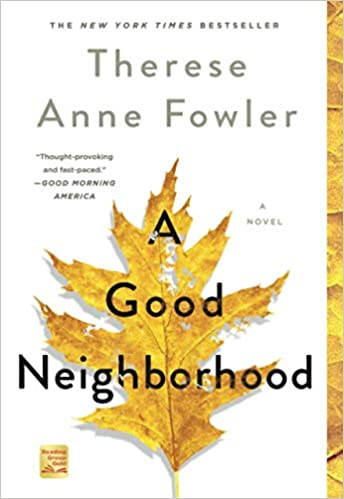
Julia cannot believe how far she’s come. Considering where she started – a teen mom, struggling to keep a roof over her head – she’s feeling almost embarrassed at the size of her new home, with its pool and its technology that her husband Brad insisted on installing. When she meets her new neighbor, Valerie, she learns about the stately old tree whose roots they’ve apparently encroached upon with the building of their pool. She also meets Valerie’s son, Zay. And so does Julia’s daughter, Juniper. And here is where it all starts to get complicated…
I loved this book. Therese Anne Fowler confronts two common themes – climate change and racism, both obviously serious and challenging – but does so without preaching and with warmth, tenderness, and suspense. Creating characters that are entirely relatable, she wraps us up in their lives as if we are living right there in the neighborhood with them. She also uses an extraordinary narrative voice of “we” (presumably the neighborhood voice, perhaps even the book club members from early on in the book) which gives the reader the feeling that we are chatting over coffee with the neighbors about what is happening in our back yard. But we’re also inside the heads of the characters, so we understand their past and why they choose the actions than impact their futures. And just as if we’re watching a bad accident in slow motion, we can’t help yelling for them to not move forward, as we see them heading toward disaster. We are so invested in them because it feels like they really are our neighbors.
One concept that I’d not really heard much of prior to reading this was the “purity pledge” which this book brought to light. This is a vow of celibacy that girls (of course, mostly girls) take during a ceremony in their (often Southern Baptist) Christian church. It was most popular in the 1990’s and was apparently a source of great shame and struggle for so many. Yet another way to oppress women, deny their sexuality, and keep them under wraps, I suppose. (see article in NYT: https://www.nytimes.com/2021/04/06/us/abstinence-pledge-evangelicals.html)
A Good Neighborhood is a quick read, but a valuable one. I’d even go so far as to give it a MUST READ rating. I think the writing is excellent, I think the story is valuable, and the message is critical, especially in this moment.
Grace is on the brink and she doesn’t know where to turn. She knows she can’t be trusted with the care of her own children – she just can’t pull her mind out from under the dense blackness that has taken root there, and she knows that it’ll happen again if she has another child. It’s happened each time before. She just has nowhere to turn.
Decades later, Beth is grappling with her own frustration. She is clearly just stressed – her father is dying, she’s sleep deprived from a new baby, and she’s just not feeling up to going back to work yet. So why is everyone on her case, asking her what’s wrong? She’ll be fine. Won’t she?
The narrative between these two women brings us back and forth through the generations of this vulnerable, tender family and winds us through a beautiful story of love, heartbreak, and resilience.
The difference between these two women is also just one generation, and the epic difference between their generations is the passing of Roe v. Wade. One generation has the luxury of choice – the other lives without any control because they do not have that access.
I find myself writing this post on the morning that the Supreme Court of the US, staggeringly, has announced the repeal of Roe. I am still numb from this, even having tried to brace myself for what I knew was coming, although I still held out hope that some of the judges would come out on the just side of history. But no, the 6 conservative judges’ allegiance to their biased, misogynistic, utterly anti-life, hypocritical base was clearly too strong a tie.
Women will now return to the back alleys, the sepsis-inducing, life-threatening, desperate means of trying to gain control of their lives, which men put them at risk of, once again. Women will have to endure pregnancies they do not want, bear children they’re not ready to care for, and those children will likely live in conditions that are sub-par, to say the least, because those same Conservatives never vote for safeguards for these children once they are born. Hypocrisy at its very gravest.
Health care should be left to health care providers and their patients. Everyone else should stay out of it. Abortion and contraception is health care. Period.
This is a MUST READ at this time – I really wish the SCOTUS judges had read this novel before writing this decision.
Nora cannot reconcile the guilt she feels that while she was relaxing over a celebratory glass of champagne with her roommate, her father was, at that very moment, tossed into the air by an as yet unidentified driver and killed. Nor could she believe, even through her profound grief, any possibility that this was a random accident. All she had to do was convince others to see things from her point of view as well. Would she be able to do this, without any witnesses, without anyone coming forward in her favor? Especially when even her family was willing to accept the party line…?
This is an excruciatingly timely story, as it addresses the deep-seated fear and resentment that so many white folks have toward any immigrant that has achieved any modicum of success. This “replacement” conspiracy theory once again rears its hideous head here. Nora, a smart, talented, but dark-skinned, Muslim girl has been left out and “othered” most of her life, growing up in their desert town near Joshua Tree. Similarly, she’s observed her father, a hard-working immigrant from Casablanca, survive being targeted by racial incidents as well. While Nora has found solace in her music, she’s continued to experience micro-aggressions repeatedly and continues to struggle with navigating her way through.
The author makes excellent use of a rotating narration, imbuing a distinctive and familiar voice to each character. It feels as if we are sitting with the characters, hearing their side of the story as it is told perhaps in an interrogation room to the investigating officer. We come to know each character deeply, understand their passions, and feel their pain. It works.
One character that is particularly endearing is Efrain, the singular witness. I will not give away details about him or his perspective, but he is portrayed beautifully and his struggle over coming forward is both understandable and tragic.
This is an engaging story with a powerful message – a worthy read!
In this memoir, Lindy West shares her alternatingly traumatic and triumphant experiences as a feminist writer venturing into online journalism. Because she is also fat (her self-description), she also becomes a target in our fat-phobic, one-size-fits-all-definition-of-beauty society and is branded by trolls with repulsive vitriol. When she tries to stand up, for example, against comedians who use rape as a topic for jokes (which is about as funny to most women as I imagine Putin is to most Ukrainians right now), she gets accosted online by the most offensive trolls imaginable, with comments liked by some of her friends. (It is pathetic how quick people are to take sides against those who are perceived as vulnerable.) Lucky for women, she is a strong, smart, and good-hearted person who rises above and sees the forest for the trees, speaking out for all of us. She proceeds to make history in her accomplishments, one troll at a time.
This book is replete with paradoxes. West is vulnerable yet powerful. She puts herself out there, stands up and stands out in a public forum, knowing she’ll open herself up to criticism – and omg, does she – but yet she stands up again and defends herself so strongly that she silences others to a screeching halt. She hears the noise, feels it, but does not allow the noise to infect the clarity of her argument. Despite feeling isolated, she thinks about women in general and not just herself as a woman. She also sees herself as others see her, yet she will not bend to their perception of who she is.
Some may find her story stirring, even jarring. We are not used to hearing women with loud voices. We are not used to hearing women be comfortable and secure in larger bodies. We are not used to hearing women stand up for themselves when they have strong opinions and strong minds, especially when they go against the (male) grain. But I know it’s about time we got used to hearing and appreciating them!
Born in Hyesan, North Korea, Hyeonseo Lee was raised, as all of her peers were, to believe that her country was the “Greatest Nation on Earth.” Indoctrinated from the time she was born to worship the leaders of her country above all else, she witnessed at the age of 7 what happened when one opposed the regime: public execution. But even while she felt the pressure to blend in and follow the party line, she noted that there were, in truth, stark differences in how people lived. While the communists sang about equality among the people, how their government provided for its people, Hyeonseo observed that a family’s social status determined just how much that government actually provided. In reality, it was far from an equal distribution. And while she was privileged to some degree, this privilege did not protect her family from political danger. In this memoir, she shares her utterly harrowing story of her years-long journey toward freedom.
If you’ve followed this blog, you will note that I have been reading quite a bit about various refugee experiences. All of them are impossibly harrowing, but none has read more like a suspense novel than this one. At every turn, this young woman and her family encountered unimaginable peril, always being on the verge of disaster and often experiencing heart-wrenching disappointment and suffering. They were constantly at the mercy of others, usually being preyed upon by corrupt officers and traffickers alike, rarely reaping the courageous generosity of others, even strangers. Most profoundly, once they finally did achieve freedom, they actually had to be taught that humans deserved fundamental human rights in order to understand how deeply their own had been violated.
The bravery and dedication to family demonstrated by this heroine is infinite. She is an inspiration to all of us, particularly in this moment when we are seeing so many fleeing their homes in search of safety. It reminds us that no one chooses to leave their home. One leaves only when there is no other choice.
I’d like to depart from my usual post and add a poem which I found deeply moving (shared with me by an inspirational leader for whom I am so grateful):
Home by Warsan Shire
no one leaves home unless home is the mouth of a shark you only run for the border when you see the whole city running as well
your neighbors running faster than you breath bloody in their throats the boy you went to school with who kissed you dizzy behind the old tin factory is holding a gun bigger than his body you only leave home when home won’t let you stay.
no one leaves home unless home chases you fire under feet hot blood in your belly it’s not something you ever thought of doing until the blade burnt threats into your neck and even then you carried the anthem under your breath only tearing up your passport in an airport toilet sobbing as each mouthful of paper made it clear that you wouldn’t be going back.
you have to understand, that no one puts their children in a boat unless the water is safer than the land no one burns their palms under trains beneath carriages no one spends days and nights in the stomach of a truck feeding on newspaper unless the miles travelled means something more than journey. no one crawls under fences no one wants to be beaten pitied
no one chooses refugee camps or strip searches where your body is left aching or prison, because prison is safer than a city of fire and one prison guard in the night is better than a truckload of men who look like your father no one could take it no one could stomach it no one skin would be tough enough
the go home blacks refugees dirty immigrants asylum seekers sucking our country dry niggers with their hands out they smell strange savage messed up their country and now they want to mess ours up how do the words the dirty looks roll off your backs maybe because the blow is softer than a limb torn off
or the words are more tender than fourteen men between your legs or the insults are easier to swallow than rubble than bone than your child’s body in pieces. i want to go home, but home is the mouth of a shark home is the barrel of the gun and no one would leave home unless home chased you to the shore unless home told you to quicken your legs leave your clothes behind crawl through the desert wade through the oceans drown save be hunger beg forget pride your survival is more important
no one leaves home until home is a sweaty voice in your ear saying — leave, run away from me now i dont know what i’ve become but i know that anywhere is safer than here
In this tender memoir, Trevor Noah shares his experience growing up during the final edge of apartheid in South Africa. Through vividly narrated vignettes, we learn about his complicated relationship with his mother, who is fiercely devoted to him and yet is independent, stubborn and vulnerable. We learn of his early struggles to find himself, and how he must battle against the vicious cycle of poverty that apartheid has inflicted upon his people.
It was suggested to me to listen to the audio version of this book – and this was excellent advice. Hearing Trevor Noah narrate his own story, in his own beautiful, South African accent and fluidly modulating to his family and friends’ voices and accents, is just a gift to yourself.
Noah is a brilliant storyteller. He shares his experiences with such warmth and humor, as if he is sitting with you in your living room, over a cup of your favorite hot tea – but as if he’s sharing his deepest, darkest memories, only with you. He describes in colorful detail some of the most outrageous adventures and unbelievable experiences. But even as he shares his joy and his pain, it is as if he is flickering a smile at you, as if to say, we can still laugh, even as we hurt. This is how we cope.
You will be engrossed and amazed — you will gasp and you will laugh out loud. Don’t just read this one – listen to it!
It’s a “MUST READ” but more than that, it’s a “MUST LISTEN!”
Nuri and his wife, Afra, have survived the arduous trek from Aleppo to the UK, and while they are awaiting their asylum application interview, they are staying in a B & B with immigrants with similarly devastating pasts. This waiting is not easy. Nuri is plagued by flashbacks of their escape from Syria, the trauma and losses they’ve experienced during the war there, and the anxiety about what lies ahead. But because he is seeing this trauma through his own eyes, he is finding it hard to connect with Afra, who is seeing it through her own. The question is whether or not they will find their way back to the family they know they once were.
This is not my first exposure to the refugee experience; though this may be one of the most poignant. I believe what contributes greatly to this is the sensorial nature of the author’s descriptions. We inhale Afra’s rose perfume as Nuri does,. We hear the buzzing of the hives tended to by Nuri and his cousin, Moustafa. And we can envision the stark colors of the drawings created by Afra, even when she cannot. And since we are right there in the sensory experience, we are also with them in their fear, their vulnerability, not knowing whom to trust, wondering where their next meal or shelter will come from or how they will get to the next step of their journey. We feel it in our bones.
In this depiction, we also see the worst of people and the best, as we do in most crises. We see the vultures who prey on the vulnerable, those who profit from those who are destitute and desperate and the corrupt underworld that feed off of this humanitarian nightmare. As Nuri gains the trust of others in his travels, he learns their stories and sees that his situation is not even the worst possible, and he feels deeply, especially for the plight of the many babies and young children refugees. On the other hand, he also encounters many who are kind, those who give food and clothing to the passing refugees, and those who do show compassion and support them in their journey.
I think this is an important read with an understated yet powerful impact that will linger with you long after you turn the last page.
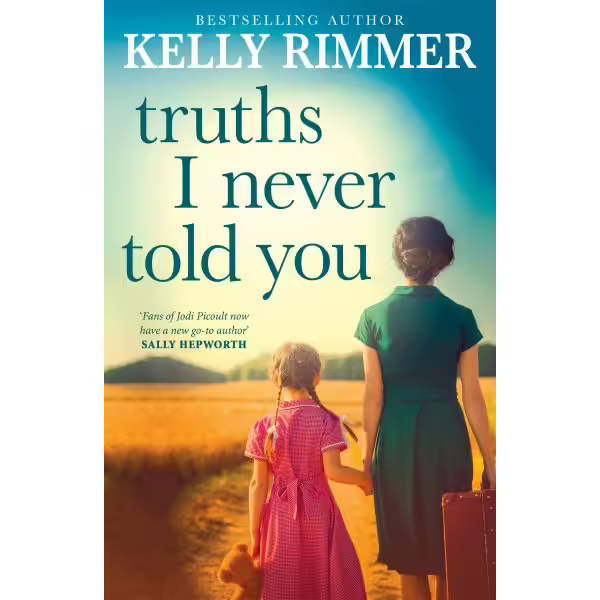
It’s been 2 years since Lexie has heard from her sister, Annie, but she knows that her call can only harbor some tumultuous disaster. Chaos has always followed Annie, ever since their messy youth, and Lexie has always been there to be the adult in the room and to pick up the pieces for her. But this call… this blow may be more than even Lexie may be able to patch back together for her. This may be the one time that Annie may have to rise to the occasion and solve it for herself.
From the first page, we are locked in. Rimmer’s writing is fluid and compassionate although we can sometimes guess where the plot will take us, we are still so fond of these endearing characters that we feel compelled to keep turning the pages and follow them through their painful and hard-earned wins and losses. As the narrative bounces back and forth between Lexie’s current day experience and Annie’s journal entries, we are given a window into both what is happening now and what their explosive past has been like for each of them. And we cannot help but become emotional as this tender and tragic and beautiful story unfolds.
There is so much to unpack here, but I will try not to give too much away as I try to do so. One major theme is the injustice of our patriarchal laws around maternal-child welfare. Our laws that protect the unborn are geared to protect children, yes, but they completely ignore the woman who is hosting the growth of that unborn not-yet-person – and this is obvious throughout this story. This problem with our judicial system is magnified if that woman/host is afflicted with any kind of addiction. She is blamed for having a disease that is out of her control. We do not take away babies from mothers who do not care for their out-of-control gestational diabetes- nor should we! – but we imprison mothers who use illicit substances while pregnant. These mothers all have medical issues that need to be addressed, but because one is considered “bad” and one is considered “medical” we place a moral judgement upon one vs the other. As is pointed out in the novel, we should be spending the money that we use to imprison these women on evidence-based treatment for these mothers, parenting support when the babies are born and on early childhood interventions, if we REALLY want to benefit these children. Children generally do best when they are with their families. This is highlighted here so very starkly and appropriately.
Families are complicated and messy and Rimmer gets this so right. You cannot help but have your heart melt from this one.
Through this deeply moving memoir, Kiese Laymon shares his experience having grown up as a black male in a larger body in the deep South. He shares his earlier traumas, his fonder memories, and how he has learned to cope with both the times his mother was absent and the times she was present.
This is a such a gritty, revealing memoir that reading it feels almost voyeuristic. Writing it as a letter to his mother, Laymon is so deeply introspective and revelatory that we peer into his private window, we peek inside his heart. We experience his profound sense of pain and powerlessness as he watches the women in his life become victimized by other men. His anger is, sadly, directed inward – as it so often is. It manifests first as binge eating and later as restriction and overexercising. This coping strategy works for him, however, until it doesn’t. Meanwhile, he is able to be as resilient as possible, forging relationships, excelling academically and achieving goals on his terms.
As a side note, I so appreciate that Laymon has come forward with this memoir, because it defiles so many stereotypes of who struggles with eating disorders. As he acknowledges himself, eating disorders are thought to exist only in upper class, white women – and this is just not true. Folks of all genders, races, and socioeconomic strata utilize these behaviors to cope with their lives and one can never assume anyone is free or “protected” because of who they are or appear to be. These are secretive behaviors and cannot be diagnosed by someone’s appearance. And they can be very painful, distracting, and most importantly, life-threatening – never to be taken lightly.
This is also an important memoir from the perspective of understanding racial issues and racism. Laymon shares his encounters with racism and digests them with us, his readers. Both he and his mother, in spite of their obvious intelligence and academic accomplishments, are underpaid and frequently disrespected. But, again, he also places his experiences into context. He understands that even when he’s been treated as less than, he is still not at the bottom of the totem pole, being a male as opposed to a female person of color. His compassionate view of the women in his life enables him to see their utter vulnerability to the forces of bias and power imbalance.
I deeply appreciate this memoir, for all its raw and painful honesty. This is a hard read but well worth the work of it.