Young Jane Young by Gabrielle Zevin

Aviva Grossman is young, perhaps naive, and ambitious. She’s smart, but not smart enough to keep herself out of trouble. Her mother, Rachel, will attest to that, for sure. They have been very close, more like friends than mother and daughter, perhaps. But when Aviva comes to Rachel to confess that she is having an affair with a married man – a well-known married man, at least in their part of South Florida, because of his political ambitions – Rachel is every bit Aviva’s mother, you can bet on that. She pleads with her, begs her, implores her to break up with him, even going so far as to try to bribe her, threaten her even. She knows the toll it will take on her reputation. But even Rachel has no clue that Aviva has been keeping an anonymous blog about her experience – and this before most folks even knew what a blog was, when the internet was like a new toy, seemingly harmless. When the affair blows up, Aviva’s life blows up with it. How will she survive?

This book is very Jewish, very South Florida, and steeped in stereotypes. Nonetheless, it is a quick, light, and amusing read. Aviva’s character builds into a relatable, vulnerable woman who earns both our sympathy, our understanding, and our respect. There are often many ways to see a situation, and we are often quick to judge. This is an example of one such situation. And that is the point.

Not ever going to be a Pulitzer Prize winner, but it’s fun and entertaining and has an important message to share.

All The Ways We Said Goodbye by Beatriz Williams, Lauren Willig, and Karen White

Three women in three different time periods: Aurelie in 1914, Daisy in 1942, and Barbara (“Babs”) in 1964 – all connected through unknown ties at The Ritz in Paris. Each trying to survive the havoc that has been wreaked upon their lives because of war and keeping safe an heirloom that is thought to bring safety to France. Each trying to find her place in the world. And each finding that love wins out every time.

If you’ve read any of my posts, you know that I am a HUGE fan of Beatriz Williams’s books, and this older one of hers is no exception. While these characters are not quite as snarky as hers usually are, they are still sharp, kind, and utterly likable. We are caught up in each of their stories, puzzling how they’re connected, and rooting for them as they each battle their challenges. And as each story builds in tension, the switch to the alternate plot line serves to both relieve tension when it becomes taut. But switching also builds suspense, as we must wait further to learn the fate of our beloved characters. Nevertheless, the connections and the intersections gradually come to light, and we get the very satisfying “aha” moments we crave.

As usual, for this author – and her co-authors – this novel is masterfully constructed, artistically drawn, and hard to part with when it ends. Once again, I am in awe of her writing and can’t wait to read the next one!

The Boston Girl by Anita Diamant

Addie Baum has been asked by her granddaughter to relay her life story, and, as this is her favorite granddaughter (Shhh! It’s their secret!), she of course complies. She begins her tale with the story of her own parents as they immigrate from Russia, bringing with them trauma that continues to hangs over them and their children. In searching for an outlet from this stressful home life, Addie finds her way to the Saturday Club, a weekly gathering of young girls of varying backgrounds and cultures. When they head out for a weeklong escape to Rockport, MA, Addie sneaks out of her home to join them, and forms friendships that last her lifetime.

What I love most about this tender and heartfelt story is the voice through which it is told. Between the expressions and the phrasing, I can literally hear my own Jewish grandmothers speaking the words written here. The way Addie expresses her love for her granddaughter, the way she excuses herself when she feels she’s behaved, perhaps, unexpectedly, or when she speaks of something she feels guilt for – it all rings so sweetly familiar.

But it’s also a common, generalizable, second generation experience. Addie feels a constant tension between respecting and seeking the approval from her mother, in particular, and needing to reach outside the family for love, guidance, and a way to find her true self. She carries her mother’s trauma because her mother can’t let it go and she simultaneously cannot live with it because it is toxic. Fortunately for Addie, she does find both mentors and friends who she can rely on for safety, advice, and sheer reason, and she learns to navigate through life, utilizing these connections to help herself and to help others.

It’s a truly lovely story. Highly recommend this one!

The Heaven and Earth Grocery Store by James McBride

Moshe never imagined himself worthy of such a catch as Chona, the beautiful daughter of the owner of the grocery store who, because of her limp, was reading in the back more than she was working in her father’s store. He was actually more focused on getting himself settled, out of debt, financing his theater, which he managed to do by inviting in the Negroes of the community of Chicken Hill as well as the Jews (a radical move in the early 1930’s in Pottstown, PA, where the KKK had its annual parade down the town center). But he managed to win her heart with his openness and his respect for her intelligence and free spirit. And they were happy together, their only disagreement being about where they should live, he believing they should move out of town, as most of their fellow Jews had, and she believing they were already home, with their Negro neighbors who had always been their friends and saw no reason for them to leave. Of course, he gave in to her, as he always had, knowing that their closest friends were right there with them, the Black couple who worked with them day in and day out, Nate and Addie. When this couple approached them with a request for a favor, Chona immediately said yes, setting them up for trouble they had no idea they were in for.

James McBride has a magical way of creating the most colorful characters who are flawed in the most gorgeous way possible. Chona, with her limp, her seizures, and her mysterious illnesses, is the most beloved character in all of Pottstown. Nate, with his inner turmoil and fury, has a quiet and kind exterior that earns him deep respect (and, yes, fear) from all who encounter him. And the bonds that form between these beautiful, sometimes comical, sometimes tragic characters, often of different races, are borne of longstanding histories of common suffering and oppression. By necessity, yes, but also by loyalty and friendship as well.

Herein also lies a commentary on how the mentally ill were treated at the time, which is to say that they were not treated at all, but rather locked away from society, and at the mercy of generally untrained, unkind, and unsupervised caretakers. Utter chaos reigned and heaven help anyone who was brought to one of these facilities. Moreover, it was a random path to finding oneself there, as “diagnosis” was random, not scientific at all. One could be physically ill, deaf, speak a foreign language, or just have a different view of life and find oneself declared mentally ill. And if you were not mentally ill when you first got there, the “treatment” there would ensure that you would be after a short time.

This is a powerful story, there are powerful commentaries on life in the US as non-white folks, and it is well worth the read. Don’t miss it!


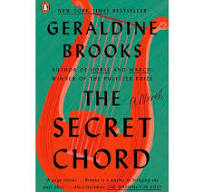
The Secret Chord by Geraldine Brooks

Taken by brute force after the slaughter of his family, Natan, a young boy of ten years, unwittingly reveals his gift as a prophet of the Name. Recognizing his value, David, the leader of the rebel forces being hunted by King Shaul, brings Natan into the fold and keeps him forever by his side as trusted advisor and friend. And it is Natan who narrates this story of David, as he witnesses David gathering strength, power and ultimately the throne over the motley tribes of Israel, revealing David’s wisdom and his failings, his humanity and his vulnerability.

This fictionized version of history is as poetic as it is violent, with scenes of love and of war, scenes of fanfare and of mutiny. The writing is beautiful, with imagery that builds the story in the mind’s eye with crystal clarity. We are given a window into the character of David himself and it is multi-layered and complex. David is a leader, as we all know – but he is deeply flawed, human. He is charismatic, brilliant, musically gifted, and sensitive, and yet his vanity, violence, and blind spots for certain people in his life create his vulnerabilities. Natan becomes his conscience, his guide, and often the only one who will speak truth to him, even as he fears the possible repercussions of his words.

Yet another excellent novel by Geraldine Brooks – though not for the feint of heart. She brings these biblical characters to life and we come to feel what life might have been like at that time for the unstable royalty that was so short-lived in that land.

The World to Come by Dara Horn

This fantastical journey sets out as we meet Ben, shattered by recent events in his life – a  nasty divorce and the painful death of his mother – who is encouraged by his twin sister, Sara, to attend a singles event at an art museum. As it happens, he stumbles upon a Chagall painting there that looks very familiar – so familiar that he is driven to do something impulsive, something that will have lasting implications for both him and his sister.

This story is told in layer upon whimsical layer, with narration as chromatic and surreal as a Chagall painting. The author weaves together the family stories of Ben and Sara’s parents, stories written by their mother, stories about Chagall and an author colleague Der Nister, and dream sequences, sometimes blurring what is real and what is fantasy. The prose is poetic and vivid, creating images that shower into the imagination and that will likely stay with the reader long after the last page is turned. 

There is also biblical referencing that reinforces a strong philosophical message here. Without giving too much away, there are many references to meaningful value of life and making the most of our time here on Earth. Sara’s mother tells her, “Everything counts. Don’t ever let anyone tell you that you’re just rehearsing for your life.” We see different attitudes toward life between Ben and his sister, even between Chagall and his colleague, Der Nister. Some who live life while others who watch others live life.

There is much to keep track of here, as the story winds through its circular path. It can sometimes become challenging, even. Nevertheless, it is definitely worth the challenge, worth the swelling of your imagination, this beautiful tale. Like walking into a painting yourself…


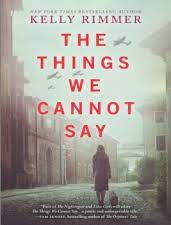
The Things We Cannot Say by Kelly Rimmer

Alina, the youngest of her siblings, is perfectly aware that she is spoiled, but she relishes the doting she receives from both her family and. her beloved crush, Tomasz.  As her world begins to collapse around her, and the Germans invade her poor, industrial Polish town, she learns that she must grow up fast and that being careless of what is happening around her could cost her or someone close to her their life.  

Fast forward to present day, we also meet Alice, struggling to keep up the balance of the life she never quite expected.  The mother of a son with autistic spectrum disorder, Alice finds herself constantly advocating for him, sometimes even with her own husband.  When her grandmother, Babcia, becomes acutely ill and asks of her the one thing she’s ever asked of her, it may push her fully over the edge – or possibly bring her back from it.  

This heart-wrenching story, a work of fiction but laced with details from the author’s Polish, Catholic background, is a beautiful tribute to the utter bravery of Righteous Gentiles who resisted and rebelled against Nazi hatred and violence during WWII in order to save their fellow Polish, Jewish citizens.  The Poles living through the Nazi occupation suffered also and some escaped to other countries.  And the immigrant experience during war carries with it trauma, no matter where one comes from and no matter when it has occurred.

The writing is truly beautiful.  We feel the characters deeply and their emotions become our own.  We experience the pent-up rage that Alice feels as a mother and wife, and while reading, I had to remind myself to breathe, almost as if for her.  We feel Alina’s profound terror, worrying constantly about the safety of her true love, Tomasz, and that of her entire family.  And we almost can’t read quickly enough as the suspense mounts and we learn of the plot twist that is truly unexpected.  It is a clever and warmly woven yarn – just be sure to have the tissues on hand!

This is a hard read, but well worth the journey!  I believe this is a MUST READ! 

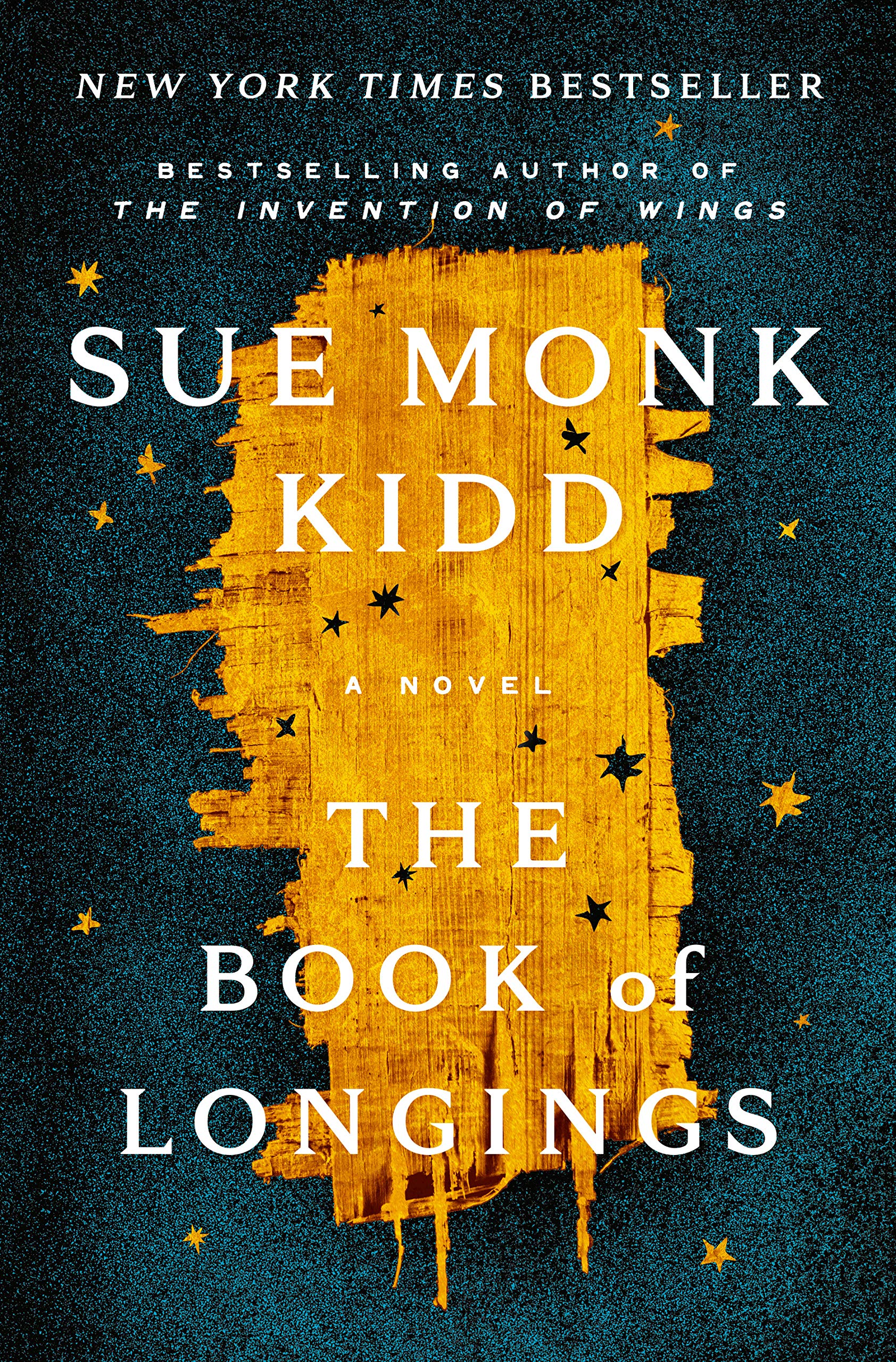
The Book of Longings by Sue Monk Kidd


Amazon.com: The Book of Longings: A Novel: 9780525429760: Kidd, Sue Monk:  Books

Ana is not the typical Jewish girl of her era, the first century, just outside ancient Jerusalem, under Roman rule. She is acutely aware of her powerlessness, even while she is better off than many, with her father being first scribe to the Tetrarch. No, she is still female and still feels the sting of having little agency over her future. While others her age appear to anticipate with wonder their upcoming matches and engagements, she is filled with dread. This is not the life she seeks. Ana is a writer of stories, hungrily stealing away with any papyrus and ink she might snatch from her father’s cache. She documents the pain and the courage that she witnesses in the women around her. She cannot imagine herself with any man – that is, until she stumbles upon the man called Jesus…

This fascinating novel of historical fiction imagines Jesus not as a celibate ascetic, but rather more as a man. He is pious and righteous and utterly generous and he promotes kindness, forgiveness, love and all of the doctrines for which he is known and beloved. But he is also human, with human instincts and human desires.

More importantly, the focus of the novel is not directed toward Jesus, but rather on Ana. The message here, I believe, is that we are ALWAYS hearing about the men. We always hear about how righteous they are and how they opine. Very few women are highlighted in the Bible, for example, and if they are, it is often to let us know whom they have “begotten,” or worse, if they have not been able to “beget.” There is quite a lot of violence toward these women, and there is quite a lot of hushing and rejection of them as well. Ana makes it her business to tell their stories, the stories of her women, not only of the Bible, but also of her peers and her family. She sees it as her mission to ensure that they are not forgotten, as women often are.

The characters depicted here are lifelike and enduring in our minds. We are drawn to Yaltha, Ana’s aunt, for example, because of her untiring loyalty and rebellious spirit. We also have deep sympathy for her because, bit by bit, her dark and tragic history is revealed to us. She has been so mistreated but yet she remains steadfast in her devotion to Ana. We cannot help loving her for this.

This is a beautiful work of imagination and imagery that I believe will stay at least with me for a long time. I’d very much love to hear what others think of it as well!

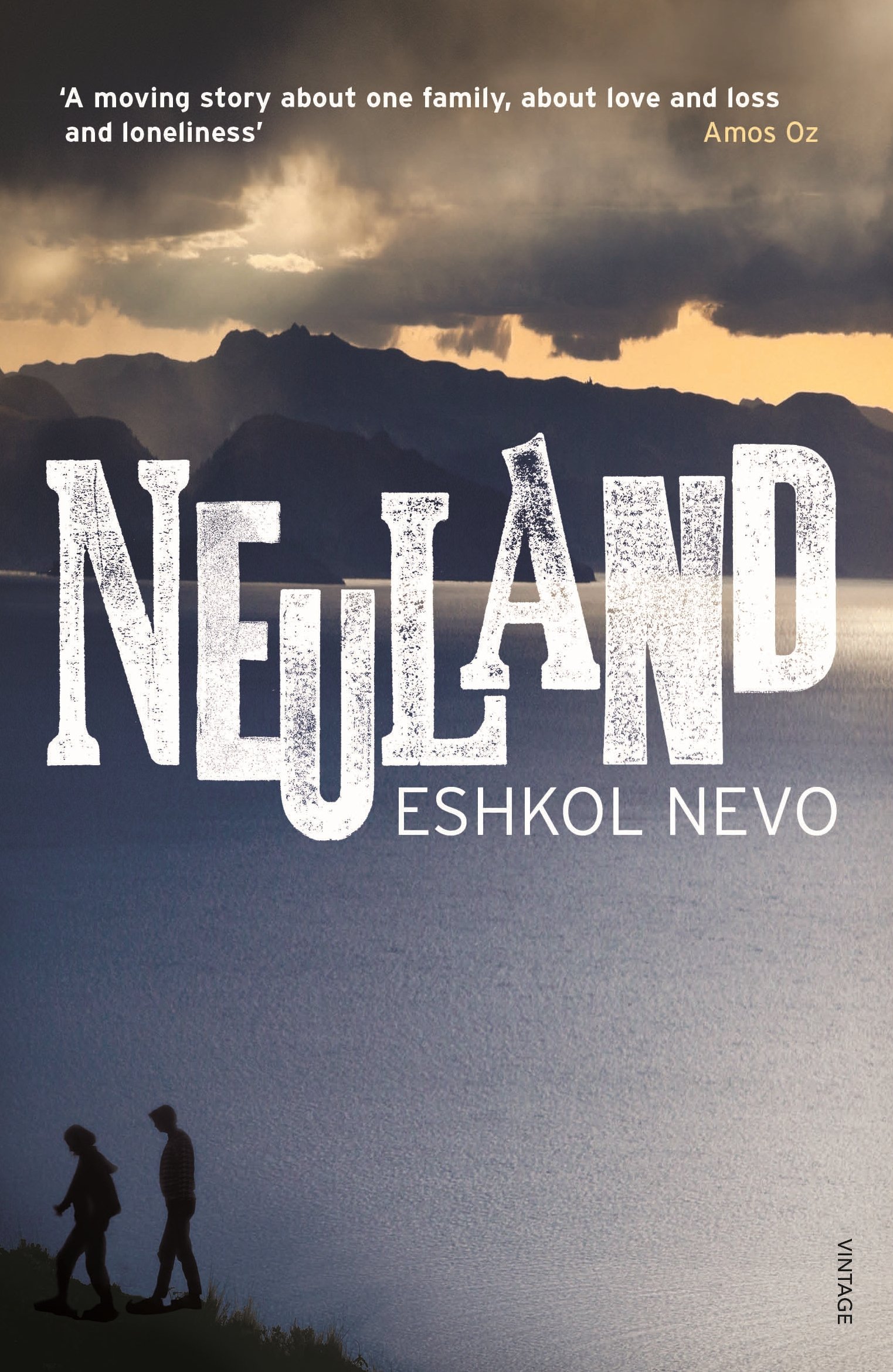
Neuland by Eshkol Nevo

if he thinks about it, Dori has to admit that he has been feeling diminished by his life lately — disconnected from his wife, possibly over-connected with his son Netta, and unrecognized for his passion for teaching history to the next generation.  That is, until he is called upon by his sister to travel from Israel to South America to search for their father, who has just disappeared.  During the course of this search, he encounters Inbar, a young woman who is embarking on a journey of her own, as she seeks to distill her own trauma and sort out her own way forward.  As their paths converge, they bond almost inadvertently and what they discover is quite startling on many levels.

This book was initially hard work.  At least for me, it took about 250-300 pages to become engaged in the lives of the characters enough to really and truly HAVE to see it through.  Once I was there,  however, it definitely reached that “page-turner” level.  Moreover, it grew in complexity as it progressed  It was as if the seeds had to be planted and given time for the roots to take hold.  Once they were firmly embedded, the story was then able to branch out, creating a complex plot line that fully blooms.

One of my favorite characters is Lily, Inbar’s grandmother.  We meet Lily as a grandmother, whose memory is failing.  And we meet her in glimpses of her memories of her younger self, making the arduous trek to Palestine from Europe just before the war.  We see the hopeful young pioneer with a dream of what Erez Yisrael, the Land of Israel, will be: the homeland of the Jews, the refuge for those with no other place to go.  And we see her own personal struggle with choices she makes for herself, for her country, and for her ideals.

There is a lot to digest here in these pages.  There is a lot of discussion about the land of Israel,  where the Jewish homeland should really be and if what is happening now is actually working.  Is Israel today a failed experiment?  Who has the right to make that decision?  Are there too many people in Israel broken by wars there to make these decisions?

This would be a fantastic book for a book club, were it not for the length of the book.  (This tiny review does not at all do it justice. ) On the other hand, since we’re all still pretty much stuck at home anyway, we have time to read very long books!  Maybe give this one a try.  I”d be curious to hear what others think about it.   We’ll have a mini-book club discussion right here on this blog…


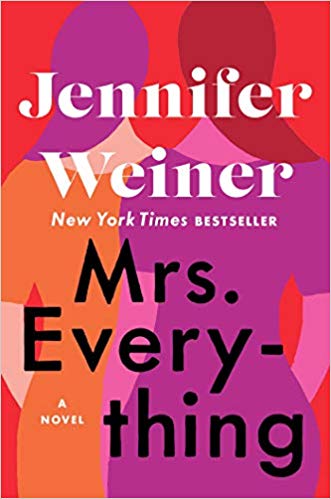
Mrs. Everything by Jennifer Weiner

Jo and Bethie are so excited to move into their new home on Alhambra Street in Detroit in 1950.  It is a very big day for the family.  And once again,  Jo is unable to perform in a “ladylike” way and disappoints her mother.  Why can’t she be more like her sister, who seems to just know how to be the perfect little girl?  From Bethie’s point of view, however, being the pretty little girl may hold some power, but it also comes at some formidable peril.  As the two sisters grow and navigate the decades of the 50’s, 60’s, 70’s, and so on, we have the privilege of following along with them on their turbulent, sometimes traumatic, and occasionally victorious journeys.

This is an epic novel for Jennifer Weiner, who has traced these decades of history with warmth and insight, from the perspective of these two sisters who struggle over these decades to find themselves.  Jo and Bethie, and the other characters woven around them, are so real that when they lose themselves, we feel lost as well, and when they hurt, we hurt.  They are flawed and vulnerable and often become collateral damage in each others’ sisterly wake.  But we find ourselves also moving on when they do and rejoicing at their successes as our own.

Herein Weiner is also giving voice to women, who have evolved over these decades and yet not evolved, whose roles have expanded and yet not expanded.  Weiner addresses the many ways in which women are expected to fulfill all roles – mother, homemaker, breadwinner, and wife, and yet find time for themselves, to feel fulfilled and to fall in line with society’s expectations.  She loops in race and prejudice,  primarily from the perspective of the Jewish experience of a people who have been targeted but who also have their own stereotypical racial biases.  In addition, she also gives voice to the women who have experienced sexual violence and sexual harassment over these decades and how it impacts and informs their entire life experience.  It is quite symbolic that Jell-O, the quintessential 1950’s, traditional Thanksgiving side dish associated with Jo’s worst adolescent evening is later in the novel thrown all over an emblem of her daughter’s supposed progress.  Jell-O becomes a symbolic fuck-you to all of the supposed progress, calling out the hypocrisy in the idea that things have changed enough.

At first glance, this novel might be written off as a simple story of two sisters, but it is in fact an articulate commentary on the struggle of women for power vs being overpowered and for status vs the status quo.  It also directs us to be hopeful for future generations, especially if we stick together and have each others’ backs.