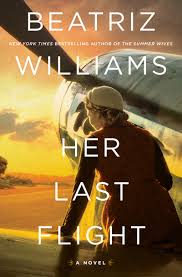
Her Last Flight by Beatriz Williams

Amazon.com: Her Last Flight: A Novel (9780062834782): Williams, Beatriz:  Books

As a photojournalist, Janey Everett has learned how to use everything she has to get information. In pursuing the backstory of the perilous crash of Sam Mallory, whom, she knew, was considered the best pilot of his time, she is determined to stop at nothing to get to the details. She knows that her only hope is to find the elusive Irene Foster, once his co-pilot, and thought to be lost at sea years prior. But Janey follows her instincts as well as the trail of rumors that she may just be alive. And as Janey chases her story, we are also brought back in time to follow Irene’s. Both women, through their narratives, reveal how courage and grit can lead to a life lived as one’s true self.

Once again, Beatriz Williams has knocked it out of the park with this book. Don’t let her breezy, familiar, and accessible style fool you. This is a heavy book – historical fiction, fully researched and chock full of detail that make it feel as real as any biography might. There is subtle reference to blood and war and the ugliness of humanity, just as in other historical fiction novels. But here, because the references are kept so subtle, they really hit you more when you look back on the story and realize all that you’ve just taken in.

Usually what I love most about Williams’ writing is her gorgeous, fallible, earthy characters. Generally, the main character is a strong female, who is in full control (how refreshing!!). She may make a few less-than-ideal choices, but she is smart, witty, somehow vulnerable, courageous and resilient. Nevertheless, in this novel, I was enthralled by the plot as well, as there were as many twists to it as I imagine there were in a flight demo by Mallory himself. It was as driving as it was passionate.

There is no question whether I’d recommend this book. I’d say it’s even a MUST READ!


.
 

The Girl with the Louding Voice by Abi Dare

The thirst for learning instilled into Adunni by her mother has been the driving force for everything she’s done, including continuing attending her small school even when she’s the oldest student there. While her best friend fantasizes about marriage, Adunni only worries about improving her academic skills, so that she can continue to teach others, as she’s done since she was very young. But her dreams come crashing down when her father reveals a proposal he’s made on her behalf – one that threatens not only her education, but any degree of autonomy as well. This sets her on a trajectory that both threatens her but also strengthens her as she sees what she has to do to set herself free.

This very powerful story ignites our deepest sense of injustice and we find ourselves loving and rooting for this heroine, Adunni, at every turn. Because of the poverty into which she was born, her gender, and her cultural milieu in rural Nigeria, she has no power and no agency over her own life. What she does have is intellect, stamina and utter grit, though, and these all serve her well. We love cheering for her and hating her oppressors, and while each character is portrayed with a realistic abundance of depth, we know who is on her side and who isn’t.

What I loved also about this book was the insight into the cultural strata of Nigeria, in both the rural/small town and the big city. There is apparently a vast chasm between the upper class and the lower class, and much corruption filling the space in between. (Pretty much like here in the United States, but I digress…) . Adunni observes more than once, also, that wealth, while it may wield power, it does not, in fact, bring happiness. This is starkly evident to her from observations of her extremely successful but painfully disgruntled boss, Big Madam.

The writing is also striking. It is written as Adunni might think, with her grammar and syntax. It has the singsong, innocent structure of a 14 year old Nigerian girl with an elementary education struggling to be respected. And as she struggles to pursue an education in whatever form she may, the writing develops as she does, and eases subtly into more sophisticated structure.

There are definitely some painful parts to read, and they are not where you expect to find them. There are also many tender moments from characters that are just beautifully written. And throughout, you will be inspired and sad and connected with this young heroine in a way that will surprise you.


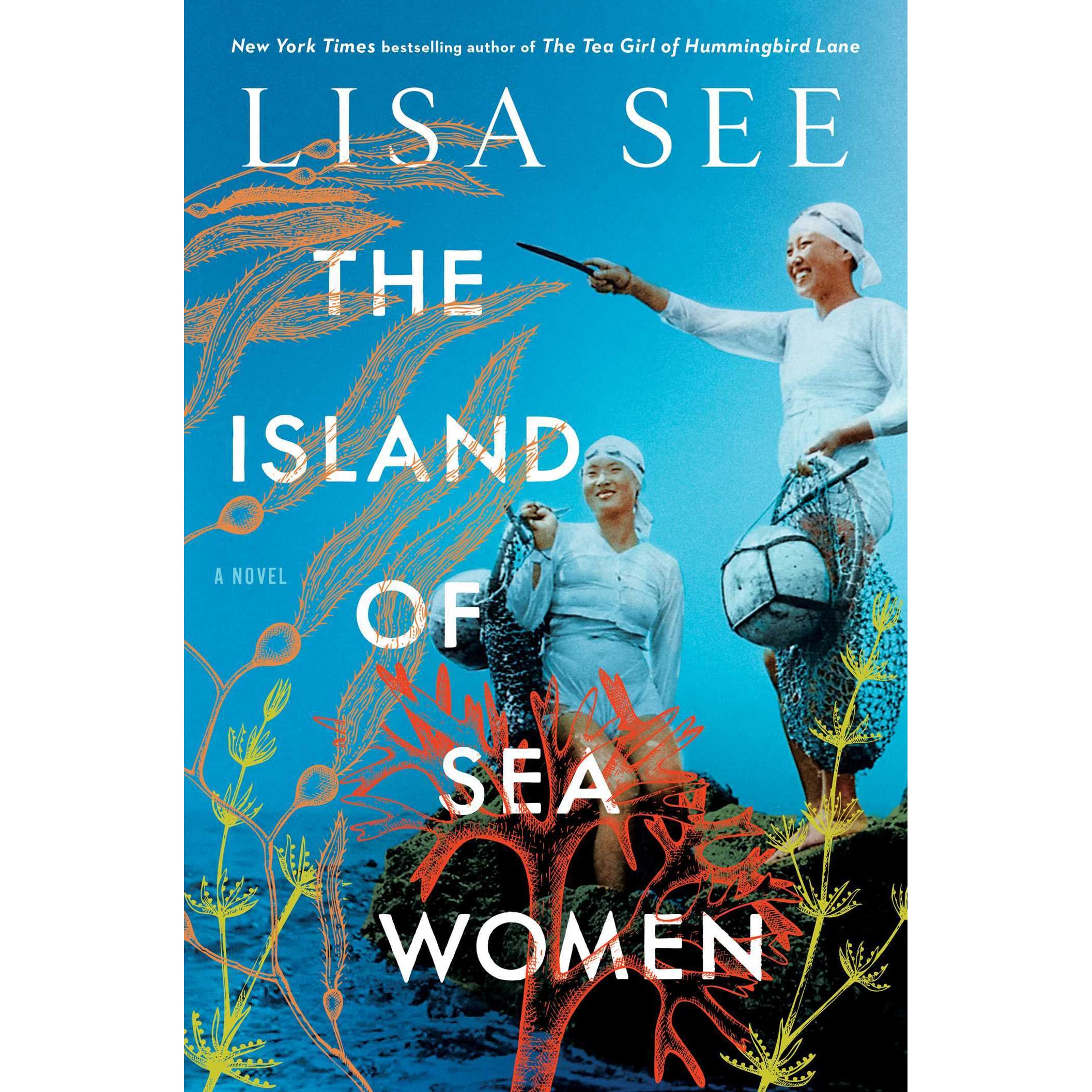
The Island of Sea Women by Lisa See

Young-sook has no time for talking – she has always busied herself with diving and collecting food from the sea on her Korean island of Jeju, and today is no different.  She usually has no patience for the tourists, but this family who is approaching her is different.  This family appears familiar, somehow.  When they begin to question her and mention the name of a woman from her past, they wash her whole personal history back to her in a wave that crashes over everything she ever understood about herself.

Lisa See has a gift for depicting historical fiction and here, again, she paints vivid cultural details into the well-researched,  deeply emotional saga of Young-sook.   By going back through the history of this fictional character, See recounts the history of the island of Jeju, caught in the middle of the two world wars, the Korean War, and the division of the Koreas.  She recounts the impact of the colonialism of the Japanese and then, essentially,  of the Americans on Korea, and the massacres that occurred on the island of Jeju during the power disputes.   This is history about which I personally have been quite ignorant and I am thankful I have learned, painful as it was.

What was beautiful was the passion with which See imbues her characters, which gives the story its energy.  The women of the island are the breadwinners, who dive in the ocean for food – with no oxygen tanks, no equipment, just each other as their safety net.  They are the farmers, who toil the land for the food they grow to support the families as well.  While the women were not normally educated, they supported the family in a practical way, and made the fundamental decisions for the family, such as the matchmaking, and saw themselves as responsible for the survival of the families in every sense of the word.  They also have a fiery passion for each other, as in the love that Young-sook and her friend Mi-ja have for each other- not a lovers’ passion, but a pure and devoted friendship that may even surpass many lovers’ relationships in their depth and trust.

This is a beautiful story in every way – the story itself and the telling of it.  Give yourself this gift!


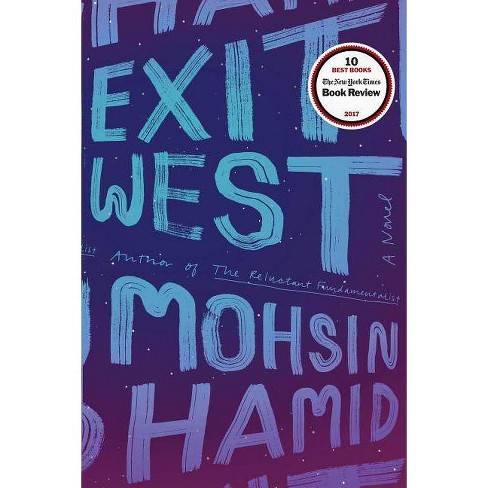
Exit West by Mohsin Hamid

Saeed and Nadia have met at a difficult time.  It is just as their city is being overrun by militants who gradually infiltrate their city.   As the violence worsens, they become more desperate to find a way out.  But do they leave without Saeed’s dear parents?  And how do they escape, when all the exit doors seem to be closed to them?  As they find their way together, they learn about how the world may open up doors, but that there may not be a welcome mat waiting for them at the other side.

I had very mixed feelings as I progressed through the pages of this book.  On one hand, it does open the reader to the very gritty, naked reality of the immigrant experience of these past few years. While we are not told where the couple is running from (and details are vague throughout this book), we can guess Afghanistan or Pakistan as most likely.  As the couple move to new lands, they experience some support, but mostly harsh conditions and resentment and prejudice by the “nativists” in each of the countries to which they flee.  At one point, Nadia even wonders if it was worth running from their oppressors, having only come to another country in which she is being oppressed.

On the other hand, because the writing is so sparse on details, it feels somewhat disconnected from the characters themselves, and I felt almost less invested in their story because of this.  We like them both, Saeed and Nadia, but we don’t get inside their heads.  We don’t feel what is deep in their hearts – they are a sort of neutral territory.  And when random characters are introduced, some from across the world, in random order, with tiny, yet interesting stories of their own with no connection whatsoever to the story at hand – I am just not sure where those come from or why they are included.  It is either strange editing or I am just not smart enough to get it.  (It is probably the latter, I admit.)

On the other hand, again, there are some details I like and think are creative.  I like that Saeed and Nadia are the only characters to be given names, while all the other characters are identified by their descriptions only.  It is a powerfully literary way to  further isolate them – and their experience is certainly isolating — as they travel through each “door” into each new country, into each new opportunity.

As you see, I am truly going back and forth on this one, as I did while I was reading it.  It is an interesting read, but I am still not sure whether I liked it or not. If nothing else, it has stimulated much thought – so that counts for a lot, right?

I’d love to know what others think about this one!


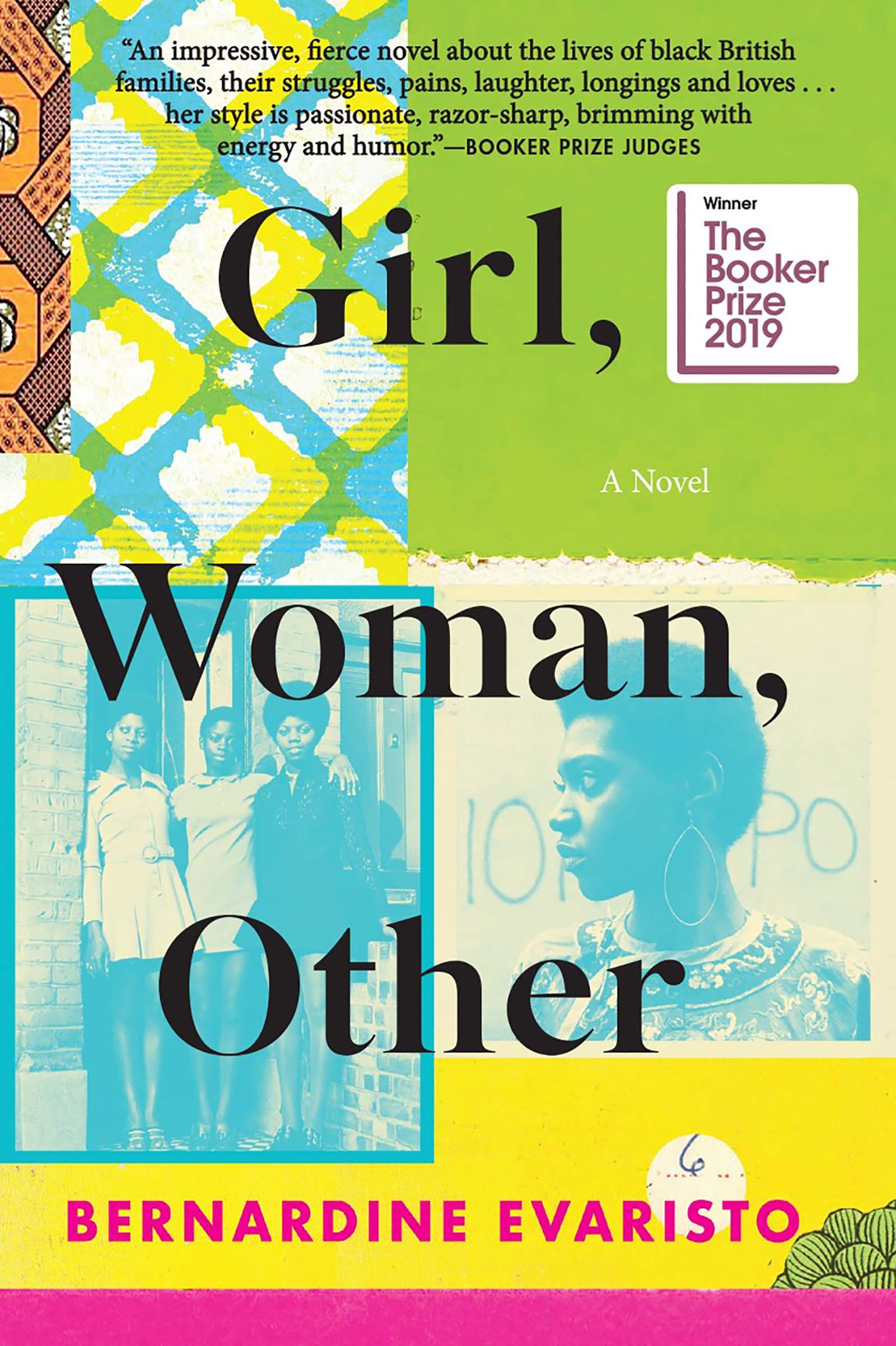
Girl, Woman, Other by Bernadine Evaristo

Amma is anxious.  Tonight is the opening of her newest play, and although she’s been doing this for years, she’s never before opened in the National Theatre.  This feels so much more colossal, so more auspicious than anything else she’s undertaken.  She thinks back to her modest beginnings, when she partnered with Dominique, an independent, creative woman like herself with ambitious dreams and a personality to match.  And she thinks about all the people who will be there for her.  And we will meet many of these people as the book unfolds, and we will hear each of their stories unwind through the pages as they all wind back to Amma.

Everything about this book is unique.

The writing is almost without punctuation, written as if it is one, very long, run-on, but poetic sentence.  However, it is divided by starting new lines,

very

strategically.

While I admit this took a bit of getting used to at first, I found it worked – and actually made the writing extremely powerful.

Most of the characters are women of color, often of mixed heritage, and often identify as LGBTQI – and each is given a deeply vivid story to tell.  While most experience racism of some kind, they confront it in many different ways, and most finding a way to either rise above or cut right through.  There are many characters – and to be honest, I did find it sometimes hard to keep track of them all – but each had her/their beauty, each was sympathetic in some way, and each was was someone you came to think of as an actual, tactile person.

It is easy to see how this book won the Booker Prize in 2019, as it is beautifully composed, with gorgeous characters and with a memorable round of stories to tell.  It will keep you glued and it will warm your heart.

I”ve got another MUST READ for you!

The Women in Black by Madeleine St. John

As the Christmas season approaches, it is decided that two new temporary hires will be added to the the Ladies’ Frocks Department at Goode’s department store, in Sydney, Australia (circa 1950).    This creates quite a buzz among the staff, who are fairly set in their routines and social circles.  As we come to know each of the women and her personal challenges, we see how the influx of these new women brings with it a fresh air for each woman’s life circumstance.   Bonds form and there is a warm embrace that envelops around the Ladies’ department of Goode’s after all.

I was looking for a lighter novel to read on the beach, and this was a placeholder.  It is definitely light, sometimes funny, and the characters hold charm, for sure.  The writing aims for an old-timey, 1950’s-ish tone, with a nostalgic air.

On the other hand, it is hard to read this without feeling that it is somewhat vacuous.  The message here is clear that no female character can achieve fullness in their life without being  married to a man, even if that man is dull and insensitive.  And even if a woman is smart, it is up to her father (yes, of course, another male) to determine if she is allowed to foster that intelligence to its fullest.  Everyone here with any power is male.  And I do understand that this was the 1950’s but I am not convinced that all that much has changed.

I suppose I am just tired of acquiescing to the fact of this power scenario, and going along with the status quo without calling it out.  I can’t do it anymore.  And maybe if we start calling it out in the books we read, we’ll gain confidence in calling it out in real life as well.


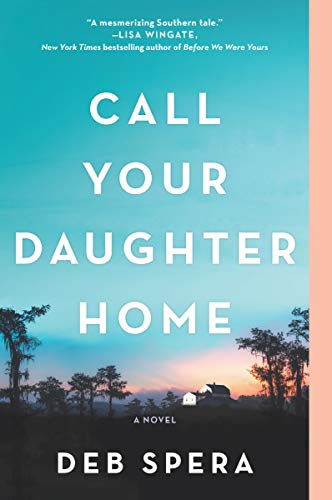
Call Your Daughter Home by Deb Spera

The 1920’s may have been “roarin'” for some, but it didn’t take the stock market crash to bring financial despair to Gertrude and her girls. No, she had that thrust upon her much earlier, with the boll weevil devastation of her husband’s cotton crops a year earlier and his drowning himself in alcohol for comfort.   Now, all she can do to save her four daughters from abject starvation, is to leave them with others until she comes up with an urgent action plan.  As she enacts her plan, and without meaning to, she draws in the support of two other women, Oretta and Annie, who are confronting their own, shared, past.  Very quickly, she finds herself slowly enabling them to be strengthened by her evolving strength.

This is a gorgeously written novel that is engaging from the very first words.  What is most magnetic are the characters – they are so beautiful and private,  vulnerable and proud – they pull you right in.  You just wish for the opportunity sit with each one, to drink sweet tea and to talk for hours.  Oretta, especially.  Oretta has worked for Annie all her life, as has her own mother.   She is kind, gentle, compassionate and wise, and has had losses and loves that have shaped her.   She is the person who would take in a young, sick child,  a perfect stranger, and care for her as her own.

There are so many layers tucked into the pages of this work of historical fiction, which make it so strong.  Layers of plot lines, layers of personality traits to each of the characters, even layers of voices.  I am in awe at the ability of a writer to incorporate all of this into a novel without it saddling the novel with sagging detail.  This one moves quickly, keeps the reader always engaged, and leaves you wanting more time with it.

Although this is a painful story and the details are difficult, I very highly recommend this book – and give it a rare MUST READ!

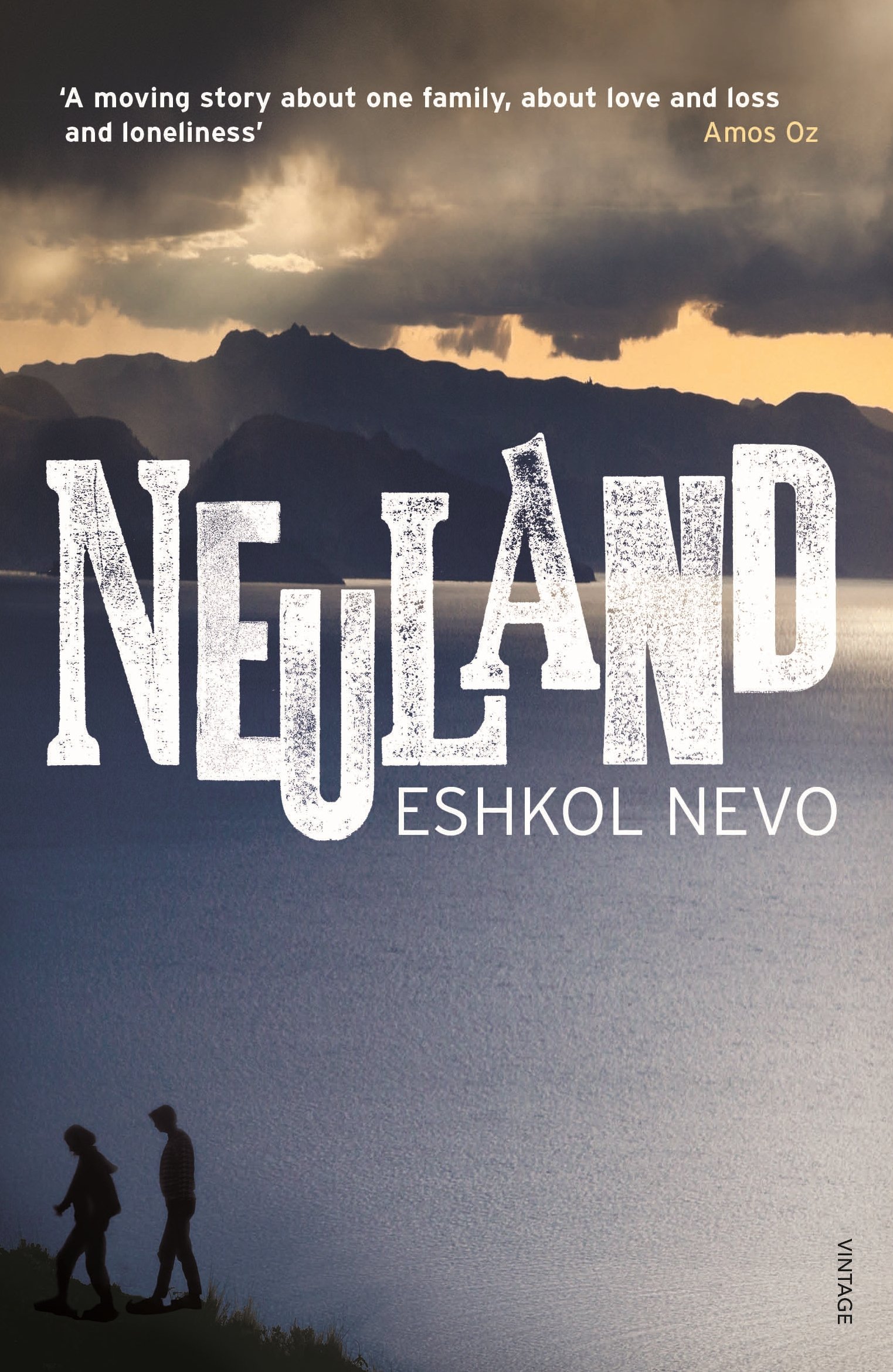
Neuland by Eshkol Nevo

if he thinks about it, Dori has to admit that he has been feeling diminished by his life lately — disconnected from his wife, possibly over-connected with his son Netta, and unrecognized for his passion for teaching history to the next generation.  That is, until he is called upon by his sister to travel from Israel to South America to search for their father, who has just disappeared.  During the course of this search, he encounters Inbar, a young woman who is embarking on a journey of her own, as she seeks to distill her own trauma and sort out her own way forward.  As their paths converge, they bond almost inadvertently and what they discover is quite startling on many levels.

This book was initially hard work.  At least for me, it took about 250-300 pages to become engaged in the lives of the characters enough to really and truly HAVE to see it through.  Once I was there,  however, it definitely reached that “page-turner” level.  Moreover, it grew in complexity as it progressed  It was as if the seeds had to be planted and given time for the roots to take hold.  Once they were firmly embedded, the story was then able to branch out, creating a complex plot line that fully blooms.

One of my favorite characters is Lily, Inbar’s grandmother.  We meet Lily as a grandmother, whose memory is failing.  And we meet her in glimpses of her memories of her younger self, making the arduous trek to Palestine from Europe just before the war.  We see the hopeful young pioneer with a dream of what Erez Yisrael, the Land of Israel, will be: the homeland of the Jews, the refuge for those with no other place to go.  And we see her own personal struggle with choices she makes for herself, for her country, and for her ideals.

There is a lot to digest here in these pages.  There is a lot of discussion about the land of Israel,  where the Jewish homeland should really be and if what is happening now is actually working.  Is Israel today a failed experiment?  Who has the right to make that decision?  Are there too many people in Israel broken by wars there to make these decisions?

This would be a fantastic book for a book club, were it not for the length of the book.  (This tiny review does not at all do it justice. ) On the other hand, since we’re all still pretty much stuck at home anyway, we have time to read very long books!  Maybe give this one a try.  I”d be curious to hear what others think about it.   We’ll have a mini-book club discussion right here on this blog…


Manhattan Beach by Jennifer Egan

While Anna has always been curious about her father’s “errands” for work, she has never questioned them.  On the contrary, she adores accompanying her father and loves that he entrusts her with knowing how to conduct herself with his business associates.  So why is it that she suddenly has become too old to continue to go? Does he not trust her anymore?

On the other hand, life has become quite complicated for her father,  Eddie.  He’d thought he’d figured out a way to save them from the poverty that surrounded New Yorkers in the late 1930’s, but it has become more complicated than he’d predicted.   And no one in the family really understands.  And he must protect them from understanding fully.

This is a hugely ambitious novel of historical fiction takes place just before and during WWII, primarily in New York harbor, focusing on the New York Naval Yard.  Once Anna has grown, she is employed in the building of the warships in the Yard, and becomes entangled, in her own way, in the complicated world her father has left behind.

It is a bit of work, this novel.  This is not an easy read.  There is a lot of technical wording and esoteric jargon — seafaring-related –that admittedly flew right over my head.  Sometimes this is a bit mind-numbing, I have to admit, but after awhile, it sinks in subconsciously.

On the other hand, it is likely that this very detail is what ultimately creates the understanding of the drama that builds up in later half of the book.  It is the excruciating detail that enables us to visualize exactly what is going on when each of the characters encounter their respective dangers and we are right there experiencing those dangers with them.

I also loved these characters.  Anna is a strong, painfully lonely character who is an admirable story heroine.  She fights for what she wants to do, works hard and abides ridicule and interminable prejudice in order to achieve her goals, earning the respect of her male peers by her endurance.  The reader adores cheering her on.

So I suppose I am encouraging patience and adherence for this book – it does pay off in the end for a dramatic and heartfelt story line.  You will have to be willing to learn a lot about ships, sailing, and naval structure, but you will glean a reading experience with tenderness, complex characters, and a build-up to great suspense.


The Imperfectionists by Tom Rachman

Welcome to the chaotic world of the newsroom, circa mid-1900’s, as reporters capture the world in all its form and color onto pages of printed black and white, for an English language, international newspaper set in Rome.  These newspeople, while famed to be wildly aggressive and competitively ambitious, of course also have frailties and vulnerabilities that come with being human.  In the vignettes that are strung throughout this work, each of the characters — some reporters, some editors, some business folk — has a back story that is as poignant as the news they work together to bring to the outside world.  The question is, how long will their fledgling paper be able to survive?

This sometimes disturbing, often endearing novel reads almost like a compilation of short stories, as the vignettes almost seem to stand on their own.  On the other hand, they clearly tie together, with characters often making cameo appearances in each others’ stories. The writing style is beautifully unfeigned and gritty.  The characters are, as the title implies, imperfect, and their lives are as well.   Each of their stories is surprising and unpredictable – truly refreshing!  But we come to know them, develop an affection for them, and empathize with them – we can relate to them because they are so human and so real.  By the end, we have a feeling of almost having ourselves sat with them at the broken desks of the newsroom and inhaled, alongside them, the smoky odor of its stained carpet.

I respect the way the author has allowed problems to be left unresolved in many of these vignettes.  For example, there is a 40-something year-old woman who finds truly imperfect love.  We see very clearly that her situation is not the healthiest one.  The lover she has chosen is pretty much a jerk, actually. and our hearts break a little for her.  When a friend tries to help her see how she is being taken advantage of, and she reacts by breaking off the friendship, we lament this as a willful blindness.  But I believe the author’s point here is, do we really know what is best for someone else?  Who are we to judge?

There are many cringeworthy moments in this novel – as there are in life.  And that is the point.  And that is what I love about this book.

Come read, cringe, revel, and just live with these characters.  They will enrich you as genuine people (not fake ones) do.