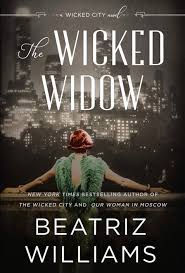
NYC 1990’s: Ella has just moved into her own tiny apartment in the Village. Not by choice, mind you – but what’s a girl to do when her husband cheats on her with a prostitute in her own apartment building? Thankfully, she has a job she likes and she can quickly move on. And the super/musician who lives on the top floor with whom she has just had a strange but flirty interaction in the laundry room just might be the right distraction for her…
NYC 1920’s: Gin is living in a tiny apartment in the Village and frequents a speakeasy where she has found a fast but comfortable crowd to match her fast and comfortable wit. Having escaped her western Maryland home, she has made her way to this rather questionable boarding house, if it can be described as such, and found a position in a typing pool down on Wall Street. But her side hustle has gotten her mixed up in some other exploits that may threaten everything she understands about NY and how it operates.
These strong and savvy female heroines are written as only Beatriz Williams can: snarky of wit and soft of heart. Combine that with a plot that is replete with intrigue, suspense, and surprise – not to mention historical context – well, you definitely have my attention. And my attention was held from beginning to end – could not put it down.
And it’s a trilogy! Wow! So get ready to hear about numbers 2 and 3, because I am planning to actually read them in direct order – something I rarely do. But for Williams, one of my favs, I am doing it.
You know I have to make anything by her a MUST READ, so once again, this one is added to that list. Just for the fun of it!
Grace feels literally swept off her feet by her new beau, Charles. He’s way out of her league and she cannot fathom what he sees in her, but she is grateful for his attention. He is just so handsome, debonaire, quite the socialite – it feels hard to keep up. If only his mother and sister would show her just a little more warmth, just a little more approval, she’d feel a bit more comfortable about it all. But he’s so reassuring that she feels marriage to him will work everything out in the end. When she is further overshadowed, even dominated by Charles, she begins to question her judgement, but the oncoming war makes her hesitate to make any changes in her life. When Charles is called to serve, Grace sees herself become empowered to stand more firmly and independently than she ever thought possible.
This is a unique perspective on the second World War: that of the impact on the women “left behind.” While they were often victims of the violence, they were also fighting battles of their own, juggling the care of their homes and families with having to survive both emotionally and financially. As many of them had to earn livings while their husbands were sent off to battle, others also volunteered in the many services that supported the war efforts, bolstering the soldiers’ supplies and also participating in espionage and technical maneuvers. Their support was often disregarded and minimized, but they contributed enormously to the effort, and many discovered a new self-worth through their work. They discovered that there was more to life than being subservient to their husbands, and that they were able to find gratification and fulfillment through work outside the home as well as inside it.
Grace grows tremendously throughout the narrative, and her growth is aided by the characters around her. Her sister-in-law, Florence, is a particularly complex character, who teaches Grace humility in the most unexpected and enlightening way. Florence is brutally frank, curt, and awkward, which Grace interprets as hostile. As the story unfolds, we learn that while Florence is, indeed, awkward and frank, she also has justification for her anger, even if it need not be directed toward Grace. Eventually, Grace learns this as well, and she learns to accept folks more and more for who they are, becoming more accepting, less judgmental. We learn much from Grace’s lessons.
There are so many layers to this story, so many lovely characters, so many threads. I am in awe of how the author has woven the story in such a way as to create a world in which we are so entangled, so engaged that we cannot put the book down and yet are stricken when it ends. This is how all books should be.
Definitely read this one! I guess this is a MUST READ!
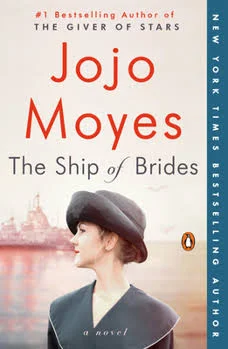
In the aftermath of WWII, when many soldiers were returning home to England from wherever they’d been serving during the war, there were also many women being brought to England as well – namely, the brides these soldiers had acquired while in service to their country. This story hones in on four women from Australia from quite disparate backgrounds: Jean, a poor but very outgoing and lively bride; Avice, a privileged society girl breaking away from her family for the first time; Margaret, a farmer’s daughter who’s been caring for her brothers and father since the painful loss of her mother; and Frances, a very reserved and quiet nurse with a mysterious past. As these four women share very cramped quarters on a ship to London, they also share their past, their anxieties about their futures, and many unsettling experiences on their adventure across the oceans to their new destinations.
This is a fascinating piece of historical fiction that is beautifully narrated by Moyes. From the very first paragraph we are transported back in time, into the lives of each of these very different but equally engaging characters. While we might connect with some over others, they each display their own quirks and vulnerabilities, each having their darker side, their frustrations – their humanity. Each of these women is also subject to the norms of her time: the assumptions, the judgements, and the limitations thrust upon her in that era. This is depicted in many ways, both subtle and overt.
I loved this book and am reluctant to say more about it because I don’t want to give any of it away. I highly recommend it and, yes, I believe it is a MUST READ! Read and enjoy!
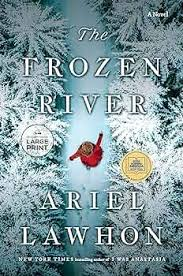
It is 1789 and in Hallowell, ME, it is cold. After the night of the dance, a few young men have been caught in the Kennebec River during a quick freeze of its waters, but not before they discover a body just beneath its surface, which they bring to the town tavern (the heart of the town) to be examined. As the midwife and medical professional of the small town, Martha Ballard is called to determine the cause of death, which she pronounces to be murder. The victim is not exactly a popular man in town, as he has recently been accused, along with the judge of the town, to have raped the wife of their minister. And so begin the proceedings, which are clearly biased and contrived. Will justice be rendered at all? And by whom?
This fictional novel is based on the true life of Martha Ballard, a midwife who really did live in this town in the district of Maine (before it was a state), and who delivered hundreds of babies without a single maternal death. Like the Martha of our novel, she too kept a journal – extremely rare for women to do in her time – and this helped to keep her story alive. It was not surprising, therefore, that her progeny also were likeminded caregivers: her great-niece was Clara Barton, the founder of the Red Cross, and her great, great granddaughter, one of the first female physicians in the US, Dr. Mary Hobart.
The narrative itself is embellished with fictional details, however, and it is as captivating as its characters. There are twists and surprises, multiple simultaneous threads, backstories and love stories. Likewise, we come to love not only Martha, but her whole family, and particularly her devoted husband, who supports her in all of her personal and professional pursuits. He supports her, too, in her frustrations and her anguish, as she is unable to prevent the Puritan attitudes (and laws) toward women from playing out in so many unjust ways.
It is a beautiful novel on many levels – historical and literary, legal and ethical. It would make an excellent book for a book club, as there are so many topics/messages/questions to raise for discussion. And it is also just a wonderful read, great for right now, sitting in a warm home, perhaps by a fire, on a weekend afternoon. A book to get lost in.
Louise has awoken to every senior counselor’s worst nightmare – one of her campers has gone missing. And just to make it worse – it is the daughter of the owners of the camp. She had relied on her CIT last night to ensure that her campers had remained safely tucked into their beds, and that, she now realizes, was her first mistake. After immediately running up to the camp director’s cabin to report the incident, it is rapidly apparent how complicated this will become. In fact, Louise has no idea how far-reaching and how very, very complicated it truly is.
First off, yes, this book did live up to the hype it is getting. It is ABSOLUTELY as much of a unputdownable read, as everyone says it is. The writing is so crisp, creating a plot that is as twisty, layered, and surprising as it is suspenseful. One might worry that the way the author uses the technique of alternating the character and time perspective could potentially be confusing, but I found it to embellish the story and enrich it. And while it is very plot-driven, we also come to feel compassion for a few of the characters as well.
One particularly sympathetic character is the mother of the lost camper, Alice Van Laar. She has been convinced by everyone around her that her value is based solely on her appearance, rather than anything to do with her personality or her intelligence, and thus her self-esteem is tragically low. She has been so gaslighted, particularly by her husband, that even in times when we would expect her to assert herself, she is so filled with self-doubt that she can not allow herself to do so. Her loneliness is palpable.
This is utterly a MUST READ, because you just must give yourself this gift. It is one of those stories that is tragic in ways you won’t expect, and fulfilling in ways you will enjoy to the fullest.
Melina has just been trying to find her voice, mainly through telling stories, composing plays. She has viewed Professor Buford only as a supportive mentor, encouraging her and recommending her to submit her plays to contests, even at the cost of snide looks and remarks from most of her peers. That is, until now, when she suddenly and heartbreakingly sees through his gestures, his attention. But why is it that she must rely on these men around her – mentors, critics, producers – to herald her into the world of theater? When she learns from her father about an ancestor, many generations prior, who was the first female poet to publish in England, she becomes a bit obsessed to research more about her, and finds, to her shock, that she was more than just a minor poet. She finds evidence that her predecessor, Emilia Bassano, may have struggled, just as she is, to be given a platform. It may be that she actually did succeed, however – and it may be that she did so through the name of the most famous poet/playwright of her time.
This is a thoroughly researched, courageous argument that suggests that William Shakespeare had ghostwriters – and that it is quite likely that at least one of them, if not the primary one, was Emilia Bassano. As the plot unfolds through both Emilia’s and Melina’s stories, we hear cogent explanations of how Emilia had more insight, exposure, and concrete, detailed knowledge of the history, characters, and locations of the plays that Shakespeare himself would not have had privy to. (And there was, of course, no internet then for him to access this information…) I will not go into these details, as this is part of the joy of reading this novel, but suffice it to say, I was convinced of the need to question everything I’ve ever understood to be the “works of William Shakespeare.”
Even if you’re not convinced to at least question the origin of the works – and I would find it hard to believe you could not – there is still a beautiful, tragic, and thoughtful story embedded here in this novel. Both Emilia’a and Melina’s characters are passionate and strong and yet vulnerable. We love them, cheer for them, even cry for them. Each story is powerful in its own right; but the idea to cast them as parallels is, in my opinion, pure genius. It highlights the problematic issue that, my god, even when we think things have changed so much after all these decades – centuries! – things have really not changed all that much after all.
I think that, for many reasons, this is a MUST READ. I think as a stand-alone novel, it is outstanding. But for its historical and literary significance, its brave questioning of what we know to be the suppression of women’s voices throughout the ages, it is enlightening and essential.
I believe it’s important to know that the full title of this book by the former, conservative Republican senator from Nebraska, Ben Sasse, is actually: Them; Why We Hate Each Other and How To Heal. I am not conservative, nor have I ever voted Republican – but this is exactly why I was curious about reading this book.
What Sasse observes in this book, and what we can all see quite clearly, is that our country is so painfully divided, so diametrically polarized. We are distrustful of the news outlets that are available to us either because 1) they are run by an intellectual elite or 2) they have become faithful only to the almighty dollar, dependent on the outrageous and extremism that is clickbait. Those who turn to social media for their news are even more vulnerable, because they are most likely getting their information from Russian bots or from some creative teenager in the basement of their midwestern parents’ home. Furthermore, the idea of community, from which we derive identity, security, – happiness even – has all but dissolved as we become more mobile in search of the perfect job, the ideal opportunity to earn more money, the next best thing.
Not to worry, though. There are answers. Of course, they don’t come easily and they don’t come quickly. The answers take time, effort, energy and lots of commitment. We have to want to heal. We have to want to come back together. We have to want to have those difficult conversations that will enable us to find what we have in common that will bring us together. We have to be able to say, “OK, I disagree with you on X and Y, but I agree with you on Z, so let’s start there.” We have to be able to come together with folks we have differences with and be in community with those people, because we are stronger together than we are apart.
The bottom line is that if we continue along this fractured, divided path – we become vulnerable to our real enemies. Putin is just sitting and watching with glee, noting all of our polarization and waiting for just the right moment to pounce. United we stand, remember?
So, I figured that reading literature such as this, written by someone who comes from a world so different from mine, with a political philosophy so opposite from mine, was a first step. And it was a good one. There was much more that I agreed with than I disagreed with, to my surprise. While I completely disagree with his opinions on abortion or the ACA, I agree with his overarching premises and I hope that others will read what he has to say here.
I think this is a MUST READ. I think work like this will do much to save our country. We are in deep need of more like this.
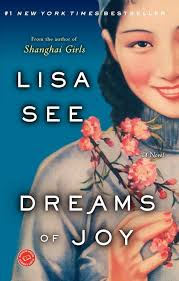
Already reeling from the death of the man she’s known to be her father, Joy has also just learned some shocking news about her mother, Pearl. These two events challenge Joy’s identity to her core. At the same time, as the 1950’s American government is targeting those suspected of being Communists, some, particularly those on college campuses, feel that Socialism can be the ideal of equality and fairness. Following this ideal, Joy makes the impulsive decision to leave the comforts of what she’s known as home to embark on a journey to find her true birth father, to seek her Chinese roots, to relinquish her capitalist excesses, and to enter Mao’s People’s Republic of China. What she finds there shocks her even more.
With her usual skillful style, Lisa See has managed to compose yet another beautiful family saga, depicting family relationships at both their worst and their best, while incorporating a significant historical moment that is not frequently highlighted. Her mother, Pearl, on learning that Joy has left for China, follows her daughter there, even if it may put her own safety in jeopardy. She knows that Joy is young, that does not understand the consequences of her actions to the fullest, that she has never experienced the heavy hand of Communist rule. And if she is being honest, finding Joy’s father is of interest to her to, as they have a complicated history as well. The relationships depicted here are tender, beautiful, and authentic.
History plays a large role in this saga as well. China’s “Great Leap Forward” is anything but — but this is the era in which Joy finds herself. Initially, she tries to find the grace in it: the idealism of the communal life, the simplicity of the farm, the romance in the hard work. She also finds meaning in the art she’s able to produce there through which she can express herself, at least within the confines of the dictated rules. As time progresses, however, she sees the rampant deception. She begins to see that even when the rules are failing the people miserably, they are forced to abide the whims of their dictator, even at the cost of their very lives. When Joy becomes responsible for the life of another, this is where she can no longer abide this lie.
There is much darkness depicted here, but it is a frighteningly timely and realistic story. We are now in a moment when so many are following another wannabe fascist – a worshipper of Putin, of Kim Jong Un, of Hitler – and these followers are ignoring the harm he has done and has the potential to continue to do. He has already threatened to imprison his enemies – a classic fascist move. People make excuses for him – but we’ve seen him do this already in his first presidency. It’s an authentic threat. We need to learn both from other countries’ pasts such as that depicted here and our own past. This can happen again and this can happen here. We have the power to stop it with our votes. But this may not be the case for long if he is elected…
I hope you will read this novel. It is a beautiful family saga as well as a harsh warning for the world and for our country in particular. A MUST READ for this moment!
On the eve of October 6th, 2023, Amir Tibon and his wife Miri thought that all they had to worry about was how their 3-year old daughter, Galia, would perform in her dance for their kibbutz celebration the next day. She’d rehearsed with her kindergarten that evening but no one knew how these little ones would do in front of an audience, even among the familiar faces of their close-knit community. They had no idea that the next morning would begin the most harrowing ordeal of their lives: the invasion of the lush, peaceful green of their kibbutz by hundreds of armed Hamas terrorists who had the mission of killing, maiming, burning, and capturing as many Israelis as they possibly could. Amir and Miri rushed immediately into Galia’s and Carmel’s(1 year old) bedroom, also their “safe room,” a room built to protect them against rocket shelling but certainly not machine gun blasts or fire explosions (many safe rooms did not have locks on the doors). This is where they waited, in the dark, with a few water bottles, no bathroom, food or electricity for 9 hours while they heard screaming and gunshots just outside their door. All they knew was that Amir’s father was coming to rescue them. But when? And how?
This is not only a MUST READ, but should be compulsory for everyone who believes they have formed an opinion about the conflict between Israel and Hamas/Iran/Hezbollah. For while Tibon, a journalist for Haaretz for many years tells his and his family’s heroic story, he also tells the backstory of Hamas, of Israel, of Netanyahu, and how it came to be that we are here in this hideous quagmire in which we find ourselves. He of course tells his own story from his own perspective. He cannot do otherwise. But he tells the historical perspective with journalistic integrity, having done extensive research, interviewed many on all sides, and does so with an honesty that is almost uncomfortably brutal.
What comes to light, is that there have been clear and present signs, over the past many years, that have been ignored, most shamefully by Netanayu and his enablers, that this attack by Hamas was inevitable and imminent. Qatar had been funding Hamas for years, with the tacit agreement -even encouragement – by Netanyahu. While this funding was supposed to go to the civilians of Gaza to improve their lives, to build schools, parks, businesses, hospitals, community centers, etc., it instead went to the construction of the notorious, massive, high-tech tunnel system. Hamas used these tunnels not only to import ammunition and money, but also to hide its planning, readying for this military attack on Israel. And while it did not accomplish all it set out to do, it accomplished the capturing of hundreds of hostages, many of whom are still, a year later, being held down in cages in these dark, dank, airless, food-less tunnels to this day.
And it is clear that while both sides have a claim to the land, and there are some on both sides who seek peace, the years of wars and militancy have pushed more to the extreme on both sides. Even while hundreds of thousands of Israelis have been protesting in the streets against the extreme right-wing government in Israel, there are still thousands of Israelis who are extremists in their own right. Many of the settlers in the West Bank have carried out horrific terrorist attacks on their Palestinian neighbors – a disgrace in the name of religion. But just as evil, if not more so because of scale and scope, is the terrorism that has been ongoing by Palestinian extremists, Hamas included, who have been holding their own citizens hostage, in a sense, using them as human shields, as well as carrying out horrific terrorist acts on Israelis in the name of their religion as well.
Bottom line, this is a fraught, complicated, nuanced issue where many have sought to establish compromise and too many have interfered. Extremists on both sides have refused to accede the middle ground, to see any path to compromise. On the few monumental occasions when we’ve bravely come close, extremists have thwarted these attempts. It feels hopeless.
But all we have is hope, so we have to continue to hope.
There is a solution: there could be 2 states, side by side, if extremists on both sides would lay down their arms and compromise. It would take a replacement of both current governments – Hamas and Netanyahu’s government – to proceed to that ideal. It would take Iran’s government changing and staying out of the current mix.
It might take a miracle to open those Gates of Gaza.
Frankie wants to make her parents proud. The idea that women can be heroes too, whispered in her ear by her brother’s friend, has never occurred to her before, but when it is uttered, it hits her like a breath of fresh air. What better way to make her father, especially, proud than to join his “wall of heroes” by enlisting and serving her country as an army nurse in Vietnam? What she finds, as she disembarks from that first plane, is nothing like she’d ever imagined. And what she encounters there, whether she likes it or not, will stay with her for the rest of her life.
Here is yet another MUST READ, gifted to us from Kristin Hannah. It is not an easy one. It is harsh but realistic in its graphic detail of the horrors of the Vietnam war. It is a constant reminder, again and again, of what is lost in each and every battle. It also is historically and acutely accurate in its documentation of how horrifically veterans of this war were treated upon return to their country after their service, as if it were their choice to continue the war that most were drafted to serve in. More importantly, for this story, it documents how horrifically the WOMEN veterans of the war were treated. These women were denied their very existence there. Frankie was told, again and again, “There were no women in Vietnam,” when in fact, there were thousands of women in Vietnam – nurses, and support staff – serving their country, endangering their lives, and witnessing the trauma every day of their lives there.
Is the story all doom and gloom? No, of course not. It is also a story about love. Frankie finds so many versions of love. She finds beautiful friendships that last her lifetime. She opens her heart enough to have it broken time and again, which hurts but also helps her to grow. She also learns to appreciate that love can be demonstrated in many ways, even if it is not how we’d prefer. Frankie also learns to love herself, as she succeeds and fails and succeeds again.
It is an inspiring, gruesome, and heartwarming saga of a woman’s search for meaning and for herself. It is hard – perhaps impossible – not to love this book.