Caleb’s Crossing by Geraldine Brooks

Bethia is thirsty for knowledge, hoping to absorb anything she overhears her father teaching her brother, Makepeace. Now that she is primarily responsible for the household, since the tragic death of her beloved mother, she is no longer privy to formal education. In fact, she was fortunate to have any at all, given her female status in the 1600’s in Puritanical New England, specifically on the island of what is now known as Martha’s Vineyard. What her father did not know, was that she had also formed a hidden friendship with a native American boy, a “salvage” as they were referred to. It was him with whom she was able to feel her true self, exploring the island, arguing points of philosophy, and exchanging details of their respective cultures. This would prove to benefit them both – as they would both later utilize these skills and mutual understanding to move forward in their lives, and ultimately effect the course of history.

This work of fiction is based on the true life of Caleb Cheeshahteaumuck, the first Native American to attend Harvard College. It is a fictionalized version of his path to obtain the training and the knowledge necessary to matriculate, based on both historical research and the author’s imagination. It is a dramatic story, replete with those who supported him and those who intended him harm. And while we wished him success in his venture, it was unclear if his venture itself was his own undoing.

Throughout the story, the author raises the eternal question of whether integration into mainstream society is a positive or a negative – if it ultimately saves or destroys. For the Native American at this time in their history, when the English were just beginning to overcome them in numbers and in force, it was an extremely dangerous and solemn state. The English were focused particularly on trying to convert the native tribes to Christianity, feeling they were saving the souls of these “salvages,” yet never accepting them fully as their own. On the other hand, the author frequently highlights the ways in which the native cultures uniquely valued the preservation of the land, the full and economical use of the animals they had to kill, and their intimate knowledge of uses of native herbs and plants for food or for healing.

Hearing the story from the perspective of Bethia was also powerful. Women at the time were no more than chattel, and her experience was a strong example of this. Going from a carefree young child who had free range of the island to one who quickly had to adapt to running a household – and worse – we follow her through the full experience of being given little if any agency over her own life decisions.

While the writing here is solid, I have liked other of Brooks’ books more. I believe this book could have been edited down a bit, and more might have happened earlier to keep things moving more quickly. Nevertheless, it is a compelling story and one of tremendous import to tell. A worthwhile read.

Mad Honey by Jodi Picoult and Jennifer Finney Boylan

Olivia has done what she can to protect her son, Asher. Raising him as a single mom, providing him a safe home even when money was tight – she has given him all that she could. And he has seemed to flourish, excelling privately in art and more outwardly both socially and in hockey, a sport quite popular among his peers in his New Hampshire high school. When attractive, somewhat shy, newcomer to the school, Lily, arrived, he was in the right place at the right time, introduced to her by his closest, oldest friend and they immediately hit it off. Little did anyone know how it would lead to a fatal incident and a court case that would upend all of their lives.

Out of a literal dream of Boylan’s, grew the coming together of two talents to compose a powerful and insightful work of literature. In this novel, we find every important element: complex character development, the spinning of a suspenseful plot that is constructed both backwards and forwards – and actually works! – and an opportunity to learn. We learn about beekeeping – which is interesting at times but does get perhaps a bit too detailed at other times, in my opinion – and we learn about the experience of being trans, which is, also in my opinion, invaluable.

I find it fascinating how two authors can come together and write a novel that reads so seamlessly. It demonstrates collaboration at its finest. Clearly they have each edited each other’s work such that there is a united style that is woven throughout and it gives the novel a single tone and clear voice.

I also deeply appreciate what we learn from the perspective of the trans voice. While I have personally worked some in this area, I feel I always have more to learn and I always appreciate when I am helped by those who are generous enough to share their experience with those of us cis folks who have had the privilege to have not struggled with these issues. It is not their responsibility to do the work for me, and at the same time, I am grateful to be able to benefit from their thoughts and experience so that I may become better.

This is an important story in so many ways, not the least of which is that it’s a gripping, powerful, and enlightening read. Highly recommend this one!!

The Cherry Bombers by Sarai Walker

Sylvia Wren is quite content to hide away from the world in the Santa Fe haven she’s created with her partner, Lola. While the world knows her art, they do not know her, as she has striven to keep herself as private as she possibly can, knowing only the few she’s had to interact with by necessity – her lovely neighbors (who check in on her, especially when Lola is away), her lawyer, and her agent. All her correspondence is taken care of by someone she’s hired to do just that – so she isn’t sure how this one journalist has managed to penetrate this wall she’s build around her. How did she manage to find out anything about her past? How did she manage to connect those very ancient dots, to dig into who Sylvia really is? Might it be time for this to happen?

While using a highly unusual means of doing so, this story quite dramatically illustrates the outrageously imbalanced and distorted view that society has taken throughout the years when it comes to the mental health of women vs men. When women have presented in any way different, unusual or ever-so-slightly out of whatever the box society has chosen to place them at that time or place, they are deemed “crazy” or “insane” and are either locked away, tortured or murdered for who they are. (Look no further than the Salem witch trials to see a perfect example of this.) In this story, when a mother who predicts the danger her daughters are about to encounter, no one listens and worse, even when she’s right, they attempt to explain away her validated predictions and deem HER as the one who is insane. Again and again and again.

There are certainly many unconventional moments that one has to stretch the imagination to abide. And I also know that there are many things that occur in this world that we cannot explain with our current understanding of the world. But there is also kindness, and patience, and learning from our past. And there is also the knowledge that our past is littered with a patriarchy that has dominated society too often to our detriment. (See all the wars that have occurred throughout history…)

This is a wildly inventive story, full of imagery that will spark your creative inclination. It also carries quite a bit of mystery and suspense. Read it with an open mind and you will receive a worthwhile message here.


Say the Right Thing by Kenji Yoshino and David Glasgow

There have been so many excellent (and some not-so-excellent) books written about racism, how to be an antiracist, and diversity and inclusion. Many of us have been in trainings, whether through work or community opportunities, to inspire and instill in us an understanding of structural racism and power dynamics. But even while we may have come to have a basic understanding of these concepts, few books lay out the tools of how to be an ally and/or to stay in a growth mindset in such a practical, non-judgmental and concrete way as Yoshino and Glasgow have done here in Say the Right Thing. In addition, the advice here is generalizable to all non-dominant groups – not just racial groups. And, as they point out, almost every one of us may find ourselves in a situation where we are the culprits engaging in non-inclusive behavior, and later be either at the receiving end of it or as an ally. Through vivid vignettes, humble stories about themselves, and relevant research concepts, we are given advice on how to handle each of these scenarios.

What I appreciate most about the writing here is the humility with which the authors share this essential information. While they are both highly qualified to be writing this book – both are attorneys, educators, and come from non-dominant communities – they also acknowledge their own privileges and that we all may fall into spaces of privilege relative to others. Their focus, therefore, is not how to understand the position of the “other” but rather to understand our own obligation to react appropriately when issues arise. We are obligated to check our own reaction if we are challenged by someone about an act we may commit – even unwittingly – and to keep ourselves open to learning how to do better always. They also acknowledge how hard this can be, as almost always our unwitting acts are not with evil intent. But of course, good intent does not preclude harm.

It is an easy read, full of concrete suggestions, and utterly important in this moment of divisiveness and fracture – when communication is essential and understanding is the key to bringing this country back together.

Another MUST READ, I believe.

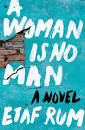
A Woman is No Man by Etaf Rum

Isra has the dreams typical of a young teenager, but hers, she finds, are thwarted time and again, by her mother’s insistence on her adhering to the strict rules of her people. Traditional Palestinian women do not have choices – they are born into the world as disappointments – disappointments first that they are not boys, and disappointments second that they must be groomed forever to be married off as soon as they can be readied. She has been told this ever since she can remember and even though she has dreams of romance, fostered by the books she sneaks into her home, she knows, deep down, that her fate is as her mother’s – she will be a wife, a mother, and no more.

Fast forward, we also follow her daughter, Deya, who is struggling with the same challenges. She is an avid reader, wants desperately to attend college rather than just to get married, but the grandmother who is raising her is insistent that she must marry. This is what traditional Palestinian women do and if she does not, the whole family is shamed. It would affect not only her but her younger sisters as well. And then where would they be? Is Deya trapped? Is Isra trapped? How is one woman’s fate tied to the other?

While I found this story a bit repetitive and almost as predictable, it was, at that same time, a powerful dive into the lives of women of this insular world. Just as with women in extreme Orthodox Jewish communities, women in these isolated Muslim communities are treated as if they have only one purpose – to serve the men in their lives and to procreate to produce, ideally, more men. They are not valued as individuals but rather for their ability to cook, clean, and to service the men. Worse, because they are not valued, they are also not treated with respect and the physical, verbal and psychological abuse they endure can be overwhelming, if not fatal. Of course, this does not represent all Palestinians – just as it does not represent all Jews – but there are communities of insular, extremely religious sects for which this does apply and it is important for these issues to be brought to light. Not just for the young women whose lives are at risk, but for society as a whole.

What I found so fascinating was how very similar the cultures are – Palestinians and Jews in their extreme, religious forms. While politically there are so many tensions between Palestinians and Israelis, religiously there are so many parallels. To those who hold on to the strictest interpretation of their religious texts, whether the Torah or the Quran, life remains as it was centuries ago. There is no value to educating women because they have a specific and limited role in the home and the community and must be guarded at all times. The purity of the woman is the ultimate value and if she stains that in any way (and any stain is her fault, even when it’s not)- even if it is by the pursuit of education alone – that brings a shame upon the family that is a black mark and taints her (and any further siblings’, of course) ability to marry, her ultimate purpose. Any adverse event is covered up in secrecy, denied, and buried so as to avoid any shame to the family – again, to maximize the marriageability of the children.

And escape is hard – because they are not given any opportunity to develop skills that they can use in the outside world.

I think this is an important read to expose this underbelly of a culture that can be colorful and beautiful and otherwise rich with historic value.


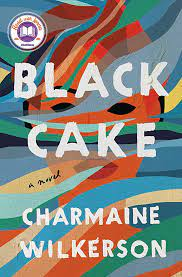
Black Cake by Charmaine Wilkerson

Bennie and Byron are both devastated over the loss of their mother. Still, they cannot imagine why they are here, sitting with Mr. Mitch, their mother’s lawyer, just a day before her funeral. What could he possibly have to tell them that they do not already know – she’s their mother, after all. And just because Bennie has felt she’s had to separate herself from her home and family for the past several years after a hurtful Thanksgiving feud, that doesn’t mean she doesn’t know her own mother. Or does it? As Benny and Byron listen to the recording their mother prepared for them just prior to her death, they learn about her real past and how this will impact their lives in the future.

I should have loved this novel. It was told from a 360 degree narrative that I love – the perspective of different voices, involving different time periods. It is enriched with sensory descriptions and with beautiful cultural imagery, particularly when describing Eleanor’s (their mom’s) Caribbean roots. There are messages of environmental and political importance that were worthy of being elevated.

But what was missing, at least for me, was a deep connection to the characters. Maybe it’s that we are told about a palpable anger and resentment between the siblings that permeates the tone of the story, but I feel we don’t really get to know those siblings all that well. We get quick peeks into their lives, brief snippets of their struggles.  Byron in his constant state of sullenness is the overachieving Black male, having to outrun his peers just to get ahead. Bennie is the opposite: trying to find herself because she doesn’t fit neatly into any box. But not only is the storytelling somewhat dispassionate, but it is also choppy. We don’t really get to feel their feelings, we don’t see their more tender sides. Little wonder we (or I at least) can’t connect.

What I find here is a great idea with such rich potential, but I do not believe it was as well-executed as it deserved. The story deserved characters served up with deep love, empathy and much more heart. I just didn’t feel that here.


Horse by Geraldine Brooks

Jarret, an enslaved Black boy in the South, may be small, but he knows his horses and he knows how their lineage matters. This is what his father has taught him and what he recites with him each night as they sit on their porch on warm, Southern nights. When Jarret witnesses the birth of his newest beauty, Darley, he and the horse form a bond that will last for decades.

Fast forward to 2019, and we meet Jess, who has found herself working at the Smithsonian, far from her home in Australia. From a young age, Jess has been fascinated with the bone structures of animals, and she is now working to prepare them for analysis and study at one of the world’s most venerable American institutions. It is here where her path crosses with Theo, an art history graduate student at Georgetown, writing his thesis and researching articles for a magazine for the same institution. When their research brings them together, they find that there is more that they share than their interest in a horse that lived a very long time ago.

This is one of those novels that you yearn to keep reading to know what will happen, but you also don’t want to keep reading because you don’t want it to end.

There is so much that has been packed into this extensively-researched novel that there is so much to unpack. First, I learned so much about horses and horse racing. Not familiar with this world, I learned about the breeding of the horses, how their treatment and mistreatment has evolved, and how important their anatomy is to how effectively they can race. There is a love of animals that is expressed throughout this novel that I share quite deeply.

The story also depicts racism, as it existed during the 1800’s, when slavery was still legal in this country, and as it still very much exists today. We see how Jarret is treated as an enslaved young man, which varies depending on who has ownership of him (and what they believe they can get from him). We cannot help but compare him to how Theo, our graduate student at Georgetown, is treated in current day, where he experiences almost daily comments, micro-aggressions (which are often not very “micro” at all). Both men are highly intelligent, experts in their fields, and are respected – but over and over again, encounter obstacles purely because of the color of their skin.

But don’t be fooled – the learning is all so easy. It comes through a beautiful story, with beloved characters and a heartfelt and moving plot. And even if you’ve never been on a horse or never watched one race, you will fall in love with Lexington (nee Darley)!

This is 100% a MUST READ! Loved it!

The Personal Librarian by Marie Benedict and Victoria Christopher Murray

Belle da Costa Greene is never happier than when she’s holed up among Princeton’s trove of ancient texts, soaking in the artistry of the lettering inside these relics and conjuring up the historical context in which they were printed. Since childhood, she’s been passionate about the art and literary relics of the Medieval and Renaissance eras, and so when her old friend, Junius is about to show her a unique specimen in the Princeton library, she almost shudders to think how fortunate she is to be able to see this ancient text up close. She is not prepared, however, for his offer of a recommendation for the position that will, ultimately change the course of her entire life: to be the personal librarian to his uncle, the one and only JP Morgan. For any woman, this would be an intimidating position, for this was not a position women were offered. But for Belle, there is a complicating factor that would make her uniquely unsuited – so she is bound to keep her true identity hidden from the world. But can she do this when it is so dangerous for both her and her family?

This is the fictionalized story of an actual woman, born Belle Marion Greener, who made her way into New York society by virtue of her ardent passion for the preservation of art, her intellectual prowess, and her social guile. Her earliest memories were of leafing through art history textbooks with her father, and her curiosity for learning that sprouted from this never waned. Though a woman, she was granted access to the library at Princeton, working with the trove of sacred texts that were housed there, and from there she was referred to interview with the larger-than-life collector of art and ancient texts and artifacts, JP Morgan. Impressed with both her fund of knowledge and her pure moxie, he not only hired her but gave her license to maintain and expand his collection as she saw appropriate. Together, they amassed one of the world’s largest and most impressive collection of ancient texts, bibles, and artwork.

What I will not spoil here is the secret that Belle must keep – I will keep that secret along with her. But suffice it to say, that this secret stays with her and directs the course of her life. She is not free to do as she wishes nor is she free to be who she really is in order to secure her career and maintain the security of her family. Because of the era she lives in, she is tied to the social mores and prejudices of the moment and cannot risk revealing her true identity. She is caught between two worlds and she must make her choice, which she does for the sake of herself and for others who depend on her. Even while she struggles, she finds that it is the way it must be and she ultimately makes a sort of peace with it. But at many junctures, it impacts heavily upon her in very deep and cutting ways.

On the lighter side, this story does give an insider peek into the life of the Gilded Age of art and high society and how social status was brokered at this time. It was a sort of precarious time, whether you were in or out, depending on what people were saying about you, whether you bought the appropriate art, had the “right” taste, or your money came from the right source. There was also the beginning of hope for women, suffrage and equality, with women like Belle who broke into what had been a man’s world. She was certainly a pioneer in her field, showing that she did not have to relinquish her femininity to be successful in her dealing in the art world.  She just had to be so much smarter – which she apparently was!

This is an entertaining and educational read, both. Great fodder for all you historical fiction fans!!

Demon Copperhead by Barbara Kingsolver

From the very moment of his birth in the narrow, rented trailer home where his teen mom went into an early labor, Damon already felt the stacking of the cards against him. His father already six feet under only six months prior, Damon learned early to try to hide his mom’s alcohol even as he hid from her poor choices in men. He also knew when to escape to the Peggots’, their kindly neighbors and grandparents of his ally, Maggot. But he lost his battle to protect his mom when “Stoner” moved in. While his mom believed this newest partner might provide stability, Damon saw that what he actually provided was constant tension and outright physical warfare. This was the beginning of a journey for Damon that led him through the nightmare of the foster care system, which would test him to the limits of both his weaknesses and his strengths.

Barbara Kingsolver has always been one of my favorite authors and, again, she has proved this justified. As she recreates the narrative of David Copperfield through the voice of a young, poor, Appalachian boy at the brink of the opioid crisis, she does so with authenticity, respect, a love of this part of the land and its people, and, yes, even humor. It is a hard story. Damon, or “Demon” as he is nicknamed, is abandoned into the foster care system and left to his own creative devices and survival instincts at an excruciatingly young age. We follow him through his minimal ups and prolonged downs and we see that he has, in spite of his circumstances, a kind heart and an artistic soul. We come to love him and see his failings as the failings of the system that has tried to eat him alive, rather than his own personal ones. We see how these failings have been built on generations of systemic exploitation and vulnerability.

Kingsolver, through this narrative, brings to light a few important messages. One is how the large mining magnates exploited so much of Appalachia without regard to the land or the people who lived there. They created dependence on the corporations for everything. The people were owned by these corporations, but not protected by them, as their health, education, and welfare were not at all the company’s concern. And once the land was stripped of its use, it was abandoned, as were the people who lived there, leaving only poverty in its wake.

So it is not shocking that Purdue Pharma sought to prey also on this vulnerable population, sending out its sales reps like missionaries to these communities who were middle and lower-middle class without great access to adequate health care. Few on the receiving end were insured, so much of their health care was in the form of emergency room or in-hospital care only. The providers there were sold the BS that Purdue Pharma was dishing out on pain management: that they had invented the miracle panacea for pain relief through Oxycontin and that it was, miraculously, non-addictive. Well, we know how that fable goes…

What I believe I loved most about this story, and what Kingsolver does so tenderly, is highlight the beauty of both this region and the folks who live there. She describes the landscapes: the steep waterfalls, the green mountains, the valleys and rocky streams -and the fauna and flora that thrive there. How even if poverty exists there, folks are able to farm a patch of land to grow vegetables, hunt for food, or knit themselves a few sweaters for the cold weather – and that they do so for each other in their close-knit communities – because there are still close-knit communities where everyone knows everyone else, and have known their parents and grandparents as well.

This is a uniquely gorgeous novel – one that should not be passed up. This is, without a doubt, a MUST READ!

(And I think it’s also time for me to revisit the original David Copperfield as well!)

Where We Came From by Oscar Cesares

Orly is feeling a bit resentful. His older brother gets to go to camp and his best friend gets to travel to Europe, while Orly finds himself being driven to his godmother’s home in her small town of Brownsville, TX for 3 long weeks. Not that he has anything against his godmother, Nina, but it isn’t exactly his first choice for a summer vacation plan. And for her part, Nina feels badly for the boy, having to spend his time with her, especially given her current situation. She would love to take him to places he’d enjoy, but on top of caring for her mother, which already is a burden, she has the added weight of the current secret hiding in the little house in her backyard, which she cannot share with him, nor with anyone else, for that matter. It’s just too dangerous. But how long can she really keep this secret from a curious, intelligent, and adolescent-brained boy?

This novel tackles the very complex and tragic issue of immigration over our shared border with Mexico, where on one side there are drug cartels openly wreaking havoc on their streets and on the other are either coyotes who prey on desperate refugees or border patrol agents hunting them down just to send them back all over again. Nina suddenly finds herself trapped in the middle, embroiled inadvertently in this dangerous, messy business. While trying to be compassionate and humane, she also must consider the safety and security of her own family as well – and it is complicated. Added to the mix a young boy whose life is on the line – it becomes that much more complex.

This is such an incredibly important book to bring to the attention of the world – and to bring down to a human level. These refugees are human beings, not numbers or statistics. No one leaves their home, their family, their communities, or those who share their native customs and celebrations unless they are utterly desperate and feel that their lives are truly threatened. We are morally obligated to show these individuals compassion and understanding – especially since most of us here in the US are descendants of those who were in similar circumstances at one time or another.

On the other hand, where I felt this book fell short was in bringing sufficient warmth, humor, and fire to these characters. We care but we are not dependent on what happens to them. While we understand that Orly is lonely, it does not become our loneliness. While we understand that he is grieving for his mother, it does not become our grief. The characters all remain one step outside, even as we want to know them more intimately. We are granted glimpses of Nina and her more glamorous past, but we still are not let inside, not really. And this keeping us at arm’s length keeps the story just that side of attachment to it.

This is a story I wanted to love, to be awakened by, to be energized by.  It is important, timely, and relevant. But I did not, was not –  not as I could have been.