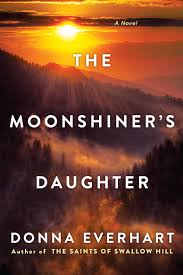
The Moonshiner’s Daughter by Donna Everhart

Ever since witnessing her mother’s violent death at the age of 4, Jessie has resented her father’s source of income – that of making moonshine. As Jessie remembers it, there was an explosion at one of the stills that caused her mother’s death and she feels that this was – and still is – the root of all their family’s ills. In fact, if it weren’t for their continued success, there wouldn’t be the ongoing competition with the evil Murry family, which is wreaking havoc on their lives at the moment. Can’t her father see this? Perhaps Jessie has to take matters into her own hands and make it all stop, once and for all.

This is the painful story of a young teen – depressed, with rock-bottom self esteem and an outsider in her own family. Her character is complex as she is kind and striving to be good but she is also lonely and angry and terrified. She has no support, until her school nurse takes an interest in her and becomes her strongest ally. But the plot thickens and the suspense intensifies as the rivalry with the Murry family amps up. This also focuses blame back to Jessie, with her own family suspecting her of sabotaging their success.

Jessie then turns, as many do, to her only reliable form of soothing: food. But this comes in the form of bingeing, followed by purging and then periods of fasting. The author very graphically but astutely depicts this cycling, describing the determined push during the fast even as the physical symptoms can overwhelm, the numbness during the binges, and the self-loathing, guilt and mortification of the purging. It is unsatisfying because it is not filling the true void that is present, but it is a way to cope. And it becomes addictive.

This is a gritty, authentic novel that depicts a family in crisis that cannot communicate, leading to devastating consequences. The writing is extraordinary, the plot suspenseful, and the characters colorful. It is not a light read, though, so not for the beach. Perhaps more for when you’re already back from vacation?

Happiness Falls by Angie Kim

“We didn’t call the police right away” laments Mia as she begins to unravel the tale of what happens after her autistic, non-speaking younger brother Eugene, returns from his therapeutic exercise in the park without their father. Eugene is clearly traumatized by what has happened in the park, as demonstrated by his persistent jumping to calm himself for hours and hours, but the family is unable to assess from him what exactly has occurred. As the family searches for their father/husband, in what becomes a missing person mystery, they also learn more about both him and about Eugene – and while the lessons become harder and harder, they also bring the family closer and closer.

As Mia reflects on her search for her father and the family’s approach to figuring out what might have occurred between Eugene and him in the park, Mia realizes that she has been self-absorbed, as a 20 year-old college student might be, as well as biased, as any of us might be.  As she learns more about her father and what he’s been analyzing during his time as a stay-at-home dad, she cycles through various reactions. Similarly, as it slowly dawns on her that her brother Eugene, is capable of much deeper thought than she’d previously understood, she has a mixture of emotions as well. Because her brother is right in front of her, this becomes a crucial part of the story.  Not only does she realize that one’s ability to speak may not be reflective of their verbal skills (they may just not have the ability to actually  vocalize their internal dialogue), but moreover, that one’s verbal skills are not the full picture of one’s overall intelligence, as she’d presumed. 

I certainly appreciated this book for opening my eyes to the possible deeper intelligence of those I may have judged erroneously as having less intelligence just because of their challenges with communication. Whether it is a language barrier because of a foreign nationality, a look that is different from our own, or behaviors/movements that do not match those we may associate with “normal” (whatever that might mean). we presume, judge, and miscalculate others’ abilities based on biases about which we are not even conscious. These feed into our understanding of those around us and we may be dismissive — even rude —  without even realizing we are being so. It is so important that we open our minds and our hearts to these possibilities, because only then can we become aware and hopefully prevent these insults, offenses to others. And in this moment of polarization, the more we can come together, the better.

And not to worry – there is of course also a story here, with a plot, characters, and suspense. It is not preachy, nor bogged down in too much detail. We do empathize with Mia as she parses out her discoveries. and we also develop a strong attachment for Eugene as we discover his personality, his humor. There is warmth without the saccharine. 

A definitely recommended read!  


Mad Honey by Jodi Picoult and Jennifer Finney Boylan

Olivia has done what she can to protect her son, Asher. Raising him as a single mom, providing him a safe home even when money was tight – she has given him all that she could. And he has seemed to flourish, excelling privately in art and more outwardly both socially and in hockey, a sport quite popular among his peers in his New Hampshire high school. When attractive, somewhat shy, newcomer to the school, Lily, arrived, he was in the right place at the right time, introduced to her by his closest, oldest friend and they immediately hit it off. Little did anyone know how it would lead to a fatal incident and a court case that would upend all of their lives.

Out of a literal dream of Boylan’s, grew the coming together of two talents to compose a powerful and insightful work of literature. In this novel, we find every important element: complex character development, the spinning of a suspenseful plot that is constructed both backwards and forwards – and actually works! – and an opportunity to learn. We learn about beekeeping – which is interesting at times but does get perhaps a bit too detailed at other times, in my opinion – and we learn about the experience of being trans, which is, also in my opinion, invaluable.

I find it fascinating how two authors can come together and write a novel that reads so seamlessly. It demonstrates collaboration at its finest. Clearly they have each edited each other’s work such that there is a united style that is woven throughout and it gives the novel a single tone and clear voice.

I also deeply appreciate what we learn from the perspective of the trans voice. While I have personally worked some in this area, I feel I always have more to learn and I always appreciate when I am helped by those who are generous enough to share their experience with those of us cis folks who have had the privilege to have not struggled with these issues. It is not their responsibility to do the work for me, and at the same time, I am grateful to be able to benefit from their thoughts and experience so that I may become better.

This is an important story in so many ways, not the least of which is that it’s a gripping, powerful, and enlightening read. Highly recommend this one!!

Tomorrow and Tomorrow and Tomorrow by Gabrielle Zevin

Sadie is full of resentment, even though she can’t admit it. She’s given up her summer to be with her sister – and that’s ok, I mean, her sister is battling cancer, for god’s sake. She’s doing her best to be out of everyone’s way, when she comes upon a quiet boy named Sam, who, it appears, likes to game as much as she does. In fact, as his nurse has observed, Sadie is the first person Sam has actually spoken to since his horrible accident and his multiple foot surgeries. When the nurse requests that Sadie come back and game with him some more, trying to pry him further out of his shell, she encourages the development of a friendship that will go through many lives – almost like those of the characters they become in their games.

I am not a gamer, in any way, shape or form. But I loved this book and found it relatable on all of its levels. While gaming is the language the characters use to communicate, we sense their vastly deeper connection to each other, the love they feel. We also experience their pain and understand how they rely on gaming to escape this pain – to dive into worlds that are dreamlike, fantastical and utterly distracting in order to just get through. As they create games for others, they use this knowledge to create alternate realities for others to escape as well.

I also love how the plot unfolds. It surprises, interrupts, detours, and restarts – almost as if in a game itself. Because of this, it captures our imagination but also feels as real as one’s own heartbeat. It is simultaneously lyrical and tactile. The characters are both idyllic and deeply flawed.

I believe this is a MUST READ – a creative, imaginative, and very modern love story!

Where We Came From by Oscar Cesares

Orly is feeling a bit resentful. His older brother gets to go to camp and his best friend gets to travel to Europe, while Orly finds himself being driven to his godmother’s home in her small town of Brownsville, TX for 3 long weeks. Not that he has anything against his godmother, Nina, but it isn’t exactly his first choice for a summer vacation plan. And for her part, Nina feels badly for the boy, having to spend his time with her, especially given her current situation. She would love to take him to places he’d enjoy, but on top of caring for her mother, which already is a burden, she has the added weight of the current secret hiding in the little house in her backyard, which she cannot share with him, nor with anyone else, for that matter. It’s just too dangerous. But how long can she really keep this secret from a curious, intelligent, and adolescent-brained boy?

This novel tackles the very complex and tragic issue of immigration over our shared border with Mexico, where on one side there are drug cartels openly wreaking havoc on their streets and on the other are either coyotes who prey on desperate refugees or border patrol agents hunting them down just to send them back all over again. Nina suddenly finds herself trapped in the middle, embroiled inadvertently in this dangerous, messy business. While trying to be compassionate and humane, she also must consider the safety and security of her own family as well – and it is complicated. Added to the mix a young boy whose life is on the line – it becomes that much more complex.

This is such an incredibly important book to bring to the attention of the world – and to bring down to a human level. These refugees are human beings, not numbers or statistics. No one leaves their home, their family, their communities, or those who share their native customs and celebrations unless they are utterly desperate and feel that their lives are truly threatened. We are morally obligated to show these individuals compassion and understanding – especially since most of us here in the US are descendants of those who were in similar circumstances at one time or another.

On the other hand, where I felt this book fell short was in bringing sufficient warmth, humor, and fire to these characters. We care but we are not dependent on what happens to them. While we understand that Orly is lonely, it does not become our loneliness. While we understand that he is grieving for his mother, it does not become our grief. The characters all remain one step outside, even as we want to know them more intimately. We are granted glimpses of Nina and her more glamorous past, but we still are not let inside, not really. And this keeping us at arm’s length keeps the story just that side of attachment to it.

This is a story I wanted to love, to be awakened by, to be energized by.  It is important, timely, and relevant. But I did not, was not –  not as I could have been.


The Art of Losing by Lizzy Mason

Harley’s only wish is that she could unwind the clock, just reverse time to the moment before she made the impulsive decision to leave her best friend’s party before assuring her sister had a ride home with someone other than her own drunken boyfriend, Mike. Maybe then her sister, Audrey, would not be in the Neuro ICU in a coma, having just barely survived a near-fatal car accident. And although it was not Harley at the wheel, she feels so much responsibility for the whole mess, it may as well have been. Overwhelmed with anger and guilt, Harley muddles through Audrey’s recovery, all the while sorting out issues around her relationships, substance use, and how to manage and express her own very complicated feelings.

Written as a young adult novel by an author who has experienced addiction and rehab treatment herself, this novel seeks to provide a wake-up call for those who try to deny that those in their teens can be addicts, and/or that just alcohol alone can be a drug that can endanger lives. Many minimize the risks of teenage binge drinking that is seen both in high schools and on college campuses, but it in fact takes a huge toll on both the physical and the psychological health of those affected (and often those around them as well) – and alcohol intoxication is a cause of 30% of fatal car accidents in the US. Only when one takes treatment seriously, whether through residential or intensive outpatient rehab or through regular group meetings like AA, can one begin to find a path toward recovery.

Unfortunately, while the message here is crucial, the story itself is part after-school special, part soap opera. The characters are a bit flat and over-privileged (every teen has their own car, somehow), and the plot just misses the mark in plausibility. For example, we learn that somehow, just when Harley realizes her boyfriend is really a dick, she discovers that her literal “boy next door” is really the love of her life? Really? Way too pre-packaged, in my opinion. Why does she need another boyfriend anyway? I would have loved to see her come to an understanding of herself without another guy in the picture, all on her own. That was a bit disappointing…

In spite of my misgivings about the delivery, this novel still raises truly valuable messaging around addressing mental heath treatment, particularly addiction and substance use. If it can sway even one young person to confront their own issue, to turn to someone for help, then the author will have accomplished tremendous good.


The Map of Salt and Stars by Zeyn Joukhadar

The Map of Salt and Stars | Book by Zeyn Joukhadar | Official Publisher  Page | Simon & Schuster

Nour has already been uprooted with her family from New York to Syria, after the death of her beloved father.  It has been hard to feel grounded, not to feel out of place, as she’s struggled to learn the language that comes so easily to her older sisters who had the advantage of having been born there.  When disaster strikes, however, they must leave once again, and Nour must find the strength to search for the place she will ultimately call home, as well as determine who she really is.  What guides and inspires Nour is her memory of the fantastical legend of Rawiya, who sets out to study the art of mapmaking, facing her own challenges and adventures.  

 It is stories like this one that brings the migrant crisis to a human level.  We might read about thousands of people crossing deserts, oceans, and barbed-wired borders in search of freedom or safety,  and it might be hard for us to connect to these realities.  But when we come to know a 12-year-old girl, with 2 older sisters, who has painful memories of her deceased father, who feels out of place and awkward and is stuck in her own dreams and her father’s stories, we connect with her.  And when she travels we travel and when she is in danger, we are in danger.   And it’s hard and it hurts – and that makes it human.  And that is the power of fiction – it makes things real. 

What works in the novel is the simultaneous tale of Rawiya,.  It serves as an emotional release from the intensity of Nour’s journey- almost a literary breath, if you will.  More than that, though, it gives an opportunity to highlight the mystical and historic richness of the lands through which Nour is traversing.   These lands of Arabia are vibrant and full of legend, and the story brings this to light.  

Again, this is hard to read, but it is poetically written, colorful and imaginative.  A journey of its own.   


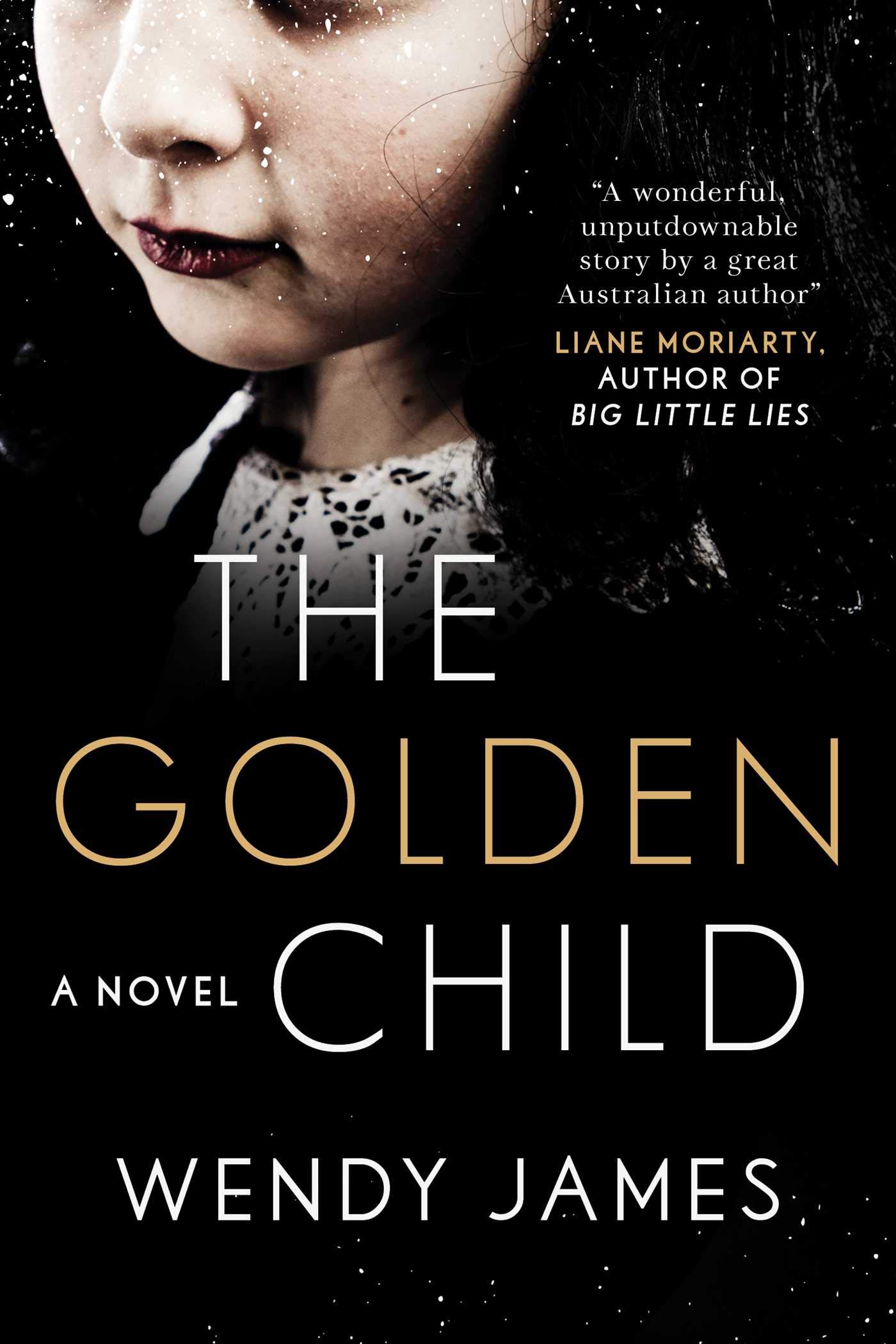
The Golden Child by Wendy James

The Golden Child: A Novel: James, Wendy: 9781510737914: Amazon.com: Books

Charlotte is what many would call a “queen bee.” She is always at the center of activity– pretty, smart, and sporty, with many friends who admire her — while her older, yet more sedate sister, Lucy, seems happy just to hang on the sidelines. Their mother, Beth, has been preoccupied with their upcoming return from New Jersey to Australia, so while there have been some signals of trouble, it hasn’t felt like much more than normal “girl stuff” to her. Could it be that she’s missed something enormous, even in her own daughter?

This is a disturbing and yet utterly engaging novel that anyone who’s ever known or ever been an adolescent girl can relate to. (And if you’ve ever been a mom of one, it tugs at your heart strings like few stories do.) It highlights the cruelty of the adolescent girl dynamic, the targeting of others for random imperfections, quirks, or non-conformities and the ostracizing of others for the least infraction of an ever-changing, “accepted” norm. In the age of social media, it is magnified a million-fold and it is irreversible. And horrifying.

The writing here is crisp and engaging and the characters, while somewhat stereotypical, are still extremely plausible. The author also utilizes the technique of incorporating blog posts from the characters to interject their innermost thoughts, which adds both a deeper dimension and a clever diversion to the plot. It’s an intriguing read that keeps you turning the pages – with a satisfying twist of events right up until the very end.

This is not a “MUST READ” but it’s quick, slightly disturbing, and yet intriguing one, if you have the time.

Waiting to Be Heard: A Memoir by Amanda Knox

Waiting to Be Heard: A Memoir by Amanda Knox

In the fall of 2007, Amanda Knox joined the many college juniors who left their campuses to study abroad, Amanda choosing a small town, Perugia, in Italy for her experience. Because her chosen university did not have a dorm for her to live in, she felt fortunate when she stumbled upon an apartment she would ultimately share with 3 other women. Life with the others began quite peacefully, and she formed a comfortable relationship with each of them. What she never imagined was that one of them would be brutally murdered by a stranger, and that she, Amanda, would be wrongfully accused of being the twisted ringleader of this murder.

I felt compelled to read this story, as I’d felt compelled, years before, to listen to this story every time it came on the news, in each of its permutations. When it first was announced in the media, the story was quite bizarre, filled with seedy details of sex and drugs that sounded questionable even back then. And the more it was discussed, the more bizarre and unlikely it sounded.

Reading the actual story was much more painful, however. It was no longer someone far away – it was now someone I was getting to know and empathize with. I hadn’t remembered so many of the actual details of the story – or probably never was given the true ones — nor learned about her personal life before the murder or during the trials. I also didn’t know how much time she served in prison, before she was finally found to be fully innocent. And I also didn’t how the prosecution obtained their evidence and how willfully they pursued a feeble motive/explanation for the events against the weight of the evidence for the defense. It was truly like watching a car wreck – you can’t look at it and at the same time, you can’t look away.

And honestly, even though I knew the ending, there was still a great degree of suspense. The ups and downs were wildly intense and I felt the ride right along with her. When she was trapped inside those walls of the prison, I felt almost as if I was inside there with her.  It was almost hard to breathe. At the same time, she showed a courage and hopefulness I’m not sure I would have had.

This was a very quick read that I’d definitely recommend!


Dear Edward by Ann Napolitano

Dear Edward by Ann Napolitano

As the Adler family proceeds to boarding for the flight to LA from NY, Jordan, Eddie’s brother, creates a scene. Feeling empowered by his newfound sense of being an almost-adult, he refuses to walk through the security scanner, holding up the line just enough to inspire annoyance in his parents. The others on the plane have taken notice as well, but proceed to contemplate their own lives, as one does on the “time out” that a flight offers. As the story progresses, and we learn about many of the colorful people on the flight, we also learn how it tragically ends – and how the lone survivor learns to cope.  

In this surprisingly moving story, the author deftly captures the mental paralysis, the constant feeling of being under water, that trauma can instill.  Edward, the teenager who survives, teeters on the verge of falling apart, but is held together by his aunt and uncle and his dear friend next door.  And while this might sound bleak, the story is kindly balanced with the lighter stories of the various passengers of the imperiled flight.  

The writing is quite poignant.  While there are a few moments that are a little unrealistic, we are drawn to Edward and suffer along with him.  But we also drawn to the kind folks who surround and bolster him as he muddles through.   I found myself particularly liking his principal, who, rather than forcing Edward to talk about what was going on inside, just allows Edward to come into his office and help him care for his treasured ferns.  In this quiet, kind act, he offers Edward an island of peace where he can escape the noise of the school he attends.   It is a place where Edward can just be, and not be alone, but just be.  Sometimes this is the most generous and sensitive way in which we can support someone who is in pain.  It is not always easy to do, but it might be the kindest path.

I found myself very choked up by the end of the story, as Edward seems to find his way.  I suspect you will be too.