The Vacationers by Emma Straub

Franny is so ready to be away from New York City – but is she ready to be on an island with her family for two whole weeks?  How will this work, given all that has happened with her husband, Jim?  Will they be able to maintain the wall of secrecy they’ve maintained from their son, Bobby?  Will Charles, Franny’s best friend, and his husband, be the buffer she hopes they’ll be?  As it turns out, Franny is not the only one anxious about the trip, and we learn from each of the vacationers that the aspirations they bring with them on this journey impacts both themselves and each other.

This was a perfect summer read – light but with substance, honest but with some fluff, and gritty but with humor.  I was definitely engaged.  I found myself giggling at some points, but also found myself feeling tenderness for some of the characters at many points as well.  And maybe there was a little of the idealistic here, a little “fantasy,” with the setting on the island of Mallorca, the beautiful house, the mountains, the characters who forgive easily, etc., but isn’t that what fiction is for?

At this moment, when things are so dark, with an ongoing pandemic, with the uncovering of decades of racial injustice, with a frightening election on the horizon, this is a wonderful escape into a sunnier place.  Let yourself vacation here!


Such a Fun Age by Kiley Reid

Emira was in the midst of celebrating one of her best friends’ 26th birthday, when she was called, late at night, to come babysit for little Briar.  Pleading an emergency that would bring police to the home, Mrs. Chamberlain wanted Briar out of the house.  Needing the cash, and actually adoring spending time with Briar for whatever reason, Emira arrived in heels and her short skirt to take Briar to the grocery store where Briar was entranced with the nut selection.  When an off-duty security officer created an outrageous scene over what Emira was doing with Briar in the grocery store late at night, this led to an uprooting in Emira’s life that she never would have ever imagined.

On the surface, this is a fun read, full of twists and cringe-worthy moments.  It’s almost as if we are seeing the characters on their way to driving into a virtual car crash before they actually do – we see them heading toward it, we feel it coming, we are, in our minds, trying to stop them and we can’t. And it isn’t exactly a crash, and it isn’t fatal, and so we can ride with them and enjoy the irony of the moments as they careen into each other, so to speak.

But look a little deeper and you see that layered in these pages is a much stronger message.  Once again, we see the White folks telling the Black woman (Emira) what is best for her, what she should be doing with her life, as if they know.  They are blind to their own shortcomings, but dole out guidance and, indeed, intervene on her behalf, uninvited.  Believing themselves “nice,” they are merely patronizing and using her as a symbol of their liberal leanings.  A scene I know is not unique.

This book is powerful in its subtlety and will be far reaching because of its accessibility. Highly recommend this one!


The Women in Black by Madeleine St. John

As the Christmas season approaches, it is decided that two new temporary hires will be added to the the Ladies’ Frocks Department at Goode’s department store, in Sydney, Australia (circa 1950).    This creates quite a buzz among the staff, who are fairly set in their routines and social circles.  As we come to know each of the women and her personal challenges, we see how the influx of these new women brings with it a fresh air for each woman’s life circumstance.   Bonds form and there is a warm embrace that envelops around the Ladies’ department of Goode’s after all.

I was looking for a lighter novel to read on the beach, and this was a placeholder.  It is definitely light, sometimes funny, and the characters hold charm, for sure.  The writing aims for an old-timey, 1950’s-ish tone, with a nostalgic air.

On the other hand, it is hard to read this without feeling that it is somewhat vacuous.  The message here is clear that no female character can achieve fullness in their life without being  married to a man, even if that man is dull and insensitive.  And even if a woman is smart, it is up to her father (yes, of course, another male) to determine if she is allowed to foster that intelligence to its fullest.  Everyone here with any power is male.  And I do understand that this was the 1950’s but I am not convinced that all that much has changed.

I suppose I am just tired of acquiescing to the fact of this power scenario, and going along with the status quo without calling it out.  I can’t do it anymore.  And maybe if we start calling it out in the books we read, we’ll gain confidence in calling it out in real life as well.


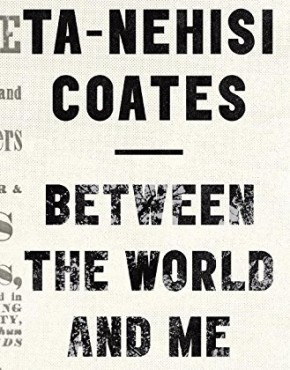
Between the World and Me by Ta-Nahisi Coates

This work by Ta-Nehisi Coates, written in the form of a letter to his adolescent son, Samori, is a treatise on his experience as a Black man in America.  What Coates is doing here is what so many Black parents in America have needed to do:  encourage their children to be cautious in order to preserve the sanctity and safety of their Black bodies.   As he states on page 129-130, “When I was eleven my highest priority was the simple security of my body.  … already you have expectations,…  survival and safety are not enough.”  And “What I am saying is that it does not all belong to you, that the beauty in you is not strictly yours and is largely the result of enjoying an abnormal amount of security in your black body.”  He is sharing his own past struggles as well as those around him, in order to communicate his concern for his son’s safety, while also communicating generally the plight of living in a body of color in this country.

Unless you have been living under a proverbial rock over the last few months, you have to be aware of the uncovering of the ongoing racism that we have been seeing in our country.  I say uncovering because the racism is not new – no, it has been going on since White men arrived on these lands–  but it’s once again being exposed for what it is on a national level.  While I rarely quote in this blog, I find that Coates’ words are far more poetic and useful than my own here.  He says, on page 17,  for example, “To be black… was to be naked before the elements of the world…  the nakedness is the correct and intended result of the policy, the predictable upshot of people forced for centuries to live under fear.”  This, I believe, says it all.  This is the institutionalized, ratified, codified racist structure upon which our country was built.  It began with the enslavement of a people, evolved into a Jim Crow structure and now exists in the form of a criminal “justice” system that is an entirely purposeful perpetration of a racist segregation of people based on the color of their skin.  It’s all the same thing.

And it is our obligation to blow this apart.

I’m still struggling with how we, as individuals can make a difference, but the very first step is understanding how deeply entrenched the problem is.  This takes looking both inward at our own implicit biases, which we all have, and examining the structural racism upon which our country has been erected.  Understanding the deeply rooted fear of a child for his own bodily security, and then as he grows, for the safety of his peers and then for the safety of his children, as Coates relays here, gives an up-close-and-personal view of what it is like to live in his skin.  We feel his terror and we feel his rage over having to feel that terror.  This is where we start.

The more I read, the more I understand how little I know.


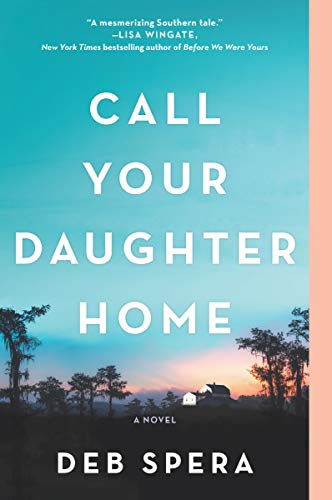
Call Your Daughter Home by Deb Spera

The 1920’s may have been “roarin'” for some, but it didn’t take the stock market crash to bring financial despair to Gertrude and her girls. No, she had that thrust upon her much earlier, with the boll weevil devastation of her husband’s cotton crops a year earlier and his drowning himself in alcohol for comfort.   Now, all she can do to save her four daughters from abject starvation, is to leave them with others until she comes up with an urgent action plan.  As she enacts her plan, and without meaning to, she draws in the support of two other women, Oretta and Annie, who are confronting their own, shared, past.  Very quickly, she finds herself slowly enabling them to be strengthened by her evolving strength.

This is a gorgeously written novel that is engaging from the very first words.  What is most magnetic are the characters – they are so beautiful and private,  vulnerable and proud – they pull you right in.  You just wish for the opportunity sit with each one, to drink sweet tea and to talk for hours.  Oretta, especially.  Oretta has worked for Annie all her life, as has her own mother.   She is kind, gentle, compassionate and wise, and has had losses and loves that have shaped her.   She is the person who would take in a young, sick child,  a perfect stranger, and care for her as her own.

There are so many layers tucked into the pages of this work of historical fiction, which make it so strong.  Layers of plot lines, layers of personality traits to each of the characters, even layers of voices.  I am in awe at the ability of a writer to incorporate all of this into a novel without it saddling the novel with sagging detail.  This one moves quickly, keeps the reader always engaged, and leaves you wanting more time with it.

Although this is a painful story and the details are difficult, I very highly recommend this book – and give it a rare MUST READ!

White Fragility by Robin DiAngelo

The more I read, the more I understand how little I know.  Many books have taught me this, but few as starkly as this one.  And in this moment in our history, I feel it is imperative for all white folks to be reading books like this one – at the very least this one.  Because racism is our problem.

Robin DiAngelo,  through trainings and lectures on racism and working with people of color, has helped both herself and many others become aware of the phenomenon of white fragility.  Because the power of white folks over black folks is so fundamental to the structure of our society, white folks have the luxury of being able to tune it out while black folks cannot.  What DiAngelo focuses on in this book is the responsibility of us white folks to do our own work and to take responsibility for our own part in the perpetuation of this power differential, which is racism.

One of the first steps is to separate the notion that being racist or committing racist acts falls into the binary of the good/bad person.  As DiAngelo points out, our images of racists are generally from the 1960’s, when we see white people brutally attacking black people, and we equate all racist acts with those people.  On the other hand, we have to realize that we as white folks inadvertently commit acts of racism frequently, and while our intentions may not be bad or hurtful, it does not mitigate the fact that the impact of our actions or words may still be.  This does not make us bad people – but it does make us racists and it does still mean we’ve committed racist acts.  We are still responsible for having committed them and are still responsible for changing our behavior and avoiding these acts in the future.

What are we to do?  As I am continuing to learn here, we are responsible to learn about the history of racism, the systemic ways in which white folks have had power over black folks since 1619 in the U.S., and how we need to get over ourselves.  We have to learn to let down our defenses, be open to criticism, and be curious and honest about learning how to be better and more just.  It’s not about being nicer, but more sensitive and responsive to the other.  As DiAngelo states in the book: “Stopping our racist patterns must be more important than working to convince others that we don’t have them.”  And this is hard.  We will make mistakes.  But if we don’t try, we will not make any progress toward achieving a more equitable space for others and a more just society.

And everybody benefits from a just society.

Let this book be the beginning of our work.


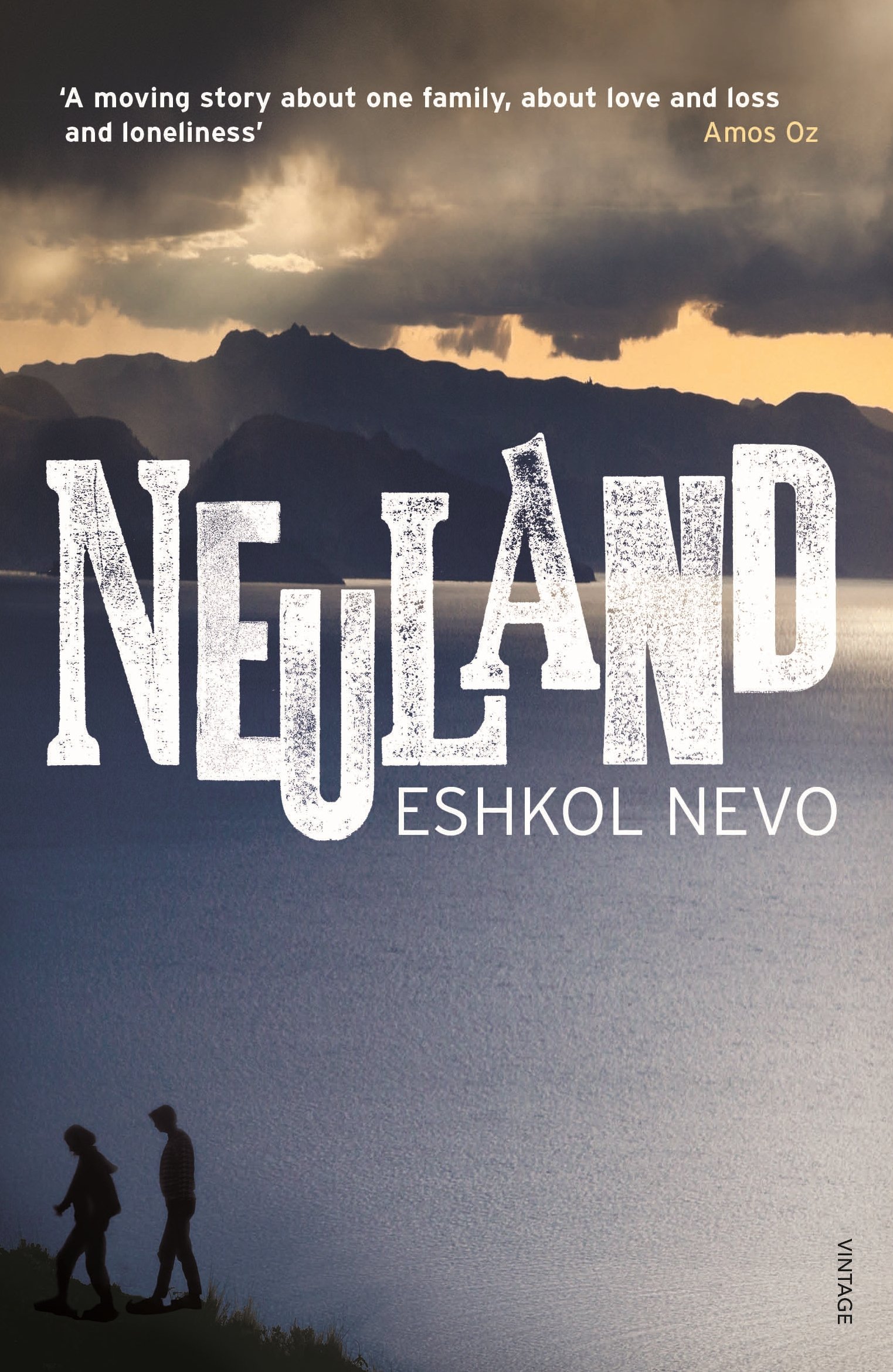
Neuland by Eshkol Nevo

if he thinks about it, Dori has to admit that he has been feeling diminished by his life lately — disconnected from his wife, possibly over-connected with his son Netta, and unrecognized for his passion for teaching history to the next generation.  That is, until he is called upon by his sister to travel from Israel to South America to search for their father, who has just disappeared.  During the course of this search, he encounters Inbar, a young woman who is embarking on a journey of her own, as she seeks to distill her own trauma and sort out her own way forward.  As their paths converge, they bond almost inadvertently and what they discover is quite startling on many levels.

This book was initially hard work.  At least for me, it took about 250-300 pages to become engaged in the lives of the characters enough to really and truly HAVE to see it through.  Once I was there,  however, it definitely reached that “page-turner” level.  Moreover, it grew in complexity as it progressed  It was as if the seeds had to be planted and given time for the roots to take hold.  Once they were firmly embedded, the story was then able to branch out, creating a complex plot line that fully blooms.

One of my favorite characters is Lily, Inbar’s grandmother.  We meet Lily as a grandmother, whose memory is failing.  And we meet her in glimpses of her memories of her younger self, making the arduous trek to Palestine from Europe just before the war.  We see the hopeful young pioneer with a dream of what Erez Yisrael, the Land of Israel, will be: the homeland of the Jews, the refuge for those with no other place to go.  And we see her own personal struggle with choices she makes for herself, for her country, and for her ideals.

There is a lot to digest here in these pages.  There is a lot of discussion about the land of Israel,  where the Jewish homeland should really be and if what is happening now is actually working.  Is Israel today a failed experiment?  Who has the right to make that decision?  Are there too many people in Israel broken by wars there to make these decisions?

This would be a fantastic book for a book club, were it not for the length of the book.  (This tiny review does not at all do it justice. ) On the other hand, since we’re all still pretty much stuck at home anyway, we have time to read very long books!  Maybe give this one a try.  I”d be curious to hear what others think about it.   We’ll have a mini-book club discussion right here on this blog…


The Seven Husbands of Evelyn Hugo by Taylor Jenkins Reid

Monique cannot understand why she has been personally requested to conduct the interview of the legendary movie star, Evelyn Hugo for Vivant Magazine.  It is not as if she’s made a shining name for herself there.   Beside her one truly great piece about assisted suicide, she hasn’t written all that much she’s terribly proud of — but perhaps this is finally her big break.  And what a story this should prove to be!  Seven husbands!  (Monique cannot abide her even one…) This should get someone’s attention…

Taylor Jenkins Reid seems always to employ an inventive method of telling a story.  Here it is a story within a story, as we sit side by side with Monique, drinking in Evelyn’s pour.  And it enables us to get to know both women, their stories and their struggles, as they get to know each other. And what stories they have to share!

Both characters defy the stereotype, the norm.  Evelyn is unapologetically ambitious, which I love seeing in a female heroine.  So refreshing!  Evelyn Hugo aggressively goes after what she wants, is smart about it, and knows who she is dealing with at all times.  And while she suffers consequences of her actions sometimes, she does not wallow in self-pity.  She pulls herself up and moves on.  She is the ultimate cool, and we love rooting for her.

This is a warm, engaging, and honest read with characters who you will miss as soon as you come to the final page.  Even the husbands are ok (well, some of them ..!)


Cork Dork by Bianca Bosker

What would it be like to quit your job and spend a year studying wine?  No, I mean, really studying it – not just drinking it.  Learning how to appreciate the various aromas, textures, degrees of alcohol, tannins, and acidity and be able to blind taste them and name the grape, the label and the year it was made without peeking at the label!  What might it be like to hang with the sommeliers of New York’s finest restaurants to learn what is considered important in the service of these wines?  Or to research where all these crazy, lofty ways of describing wines came from.  Well, Bianca Bosker has done this and she’s been kind enough to share her journey with us in the pages of Cork Dork.

In her quest to become a sommelier, Bosker smells everything in her kitchen in her home and in her city.  She insinuates herself in the world of the sommelier by befriending a top somm who brings her to blind tastings and allows her to witness the training that each somm puts themself through.  Trailing other waiters, working in a wine cellar in a restaurant, getting to taste a vast quantity of fancy and less than fancy wines, Bosker widens her scope of experience very quickly.  She travels around the country and around the world in this quest, visiting restaurants, vineyards, and scientists who help her understand how she can best go about understanding and perfecting her art.

What makes a good wine good?  What makes a good sommelier good?  What makes a good wine description good?  These are questions she seeks to answer during the course of the book and she seeks out answers from many different sources.  Throughout the whole time, she is studying and practicing and honing her tasting and olfactory skills, trying to prep for the certification exam.  And while she learns, so do we, as she sketches out for us her findings.

I do have to confess, that I do think some of the descriptions are bullshit, as she even cops to; however, I do respect the devotion and the obsession that the sommelier does have to go through to become certified in this field.  And now I have a newfound appreciation of exactly what that entails!

Manhattan Beach by Jennifer Egan

While Anna has always been curious about her father’s “errands” for work, she has never questioned them.  On the contrary, she adores accompanying her father and loves that he entrusts her with knowing how to conduct herself with his business associates.  So why is it that she suddenly has become too old to continue to go? Does he not trust her anymore?

On the other hand, life has become quite complicated for her father,  Eddie.  He’d thought he’d figured out a way to save them from the poverty that surrounded New Yorkers in the late 1930’s, but it has become more complicated than he’d predicted.   And no one in the family really understands.  And he must protect them from understanding fully.

This is a hugely ambitious novel of historical fiction takes place just before and during WWII, primarily in New York harbor, focusing on the New York Naval Yard.  Once Anna has grown, she is employed in the building of the warships in the Yard, and becomes entangled, in her own way, in the complicated world her father has left behind.

It is a bit of work, this novel.  This is not an easy read.  There is a lot of technical wording and esoteric jargon — seafaring-related –that admittedly flew right over my head.  Sometimes this is a bit mind-numbing, I have to admit, but after awhile, it sinks in subconsciously.

On the other hand, it is likely that this very detail is what ultimately creates the understanding of the drama that builds up in later half of the book.  It is the excruciating detail that enables us to visualize exactly what is going on when each of the characters encounter their respective dangers and we are right there experiencing those dangers with them.

I also loved these characters.  Anna is a strong, painfully lonely character who is an admirable story heroine.  She fights for what she wants to do, works hard and abides ridicule and interminable prejudice in order to achieve her goals, earning the respect of her male peers by her endurance.  The reader adores cheering her on.

So I suppose I am encouraging patience and adherence for this book – it does pay off in the end for a dramatic and heartfelt story line.  You will have to be willing to learn a lot about ships, sailing, and naval structure, but you will glean a reading experience with tenderness, complex characters, and a build-up to great suspense.