The House Party by Rita Cameron

Aah, the year is finally winding down for the students at New Falls High School and they are ready to party.  Will and his older brother Trip are definitely on board, but when they arrive with the beer, they are a bit surprised to find that this one is taking place at the fancy new house being built on the river. Well, Will deserves to party just like the rest of them, doesn’t he? He’s worked so hard to get to where he is – a senior, with a well-deserved acceptance to Princeton and a scholarship from the town’s board. Little does he know how out of control this particular party would get – and how it would impact the course of his life, his family’s, and the lives of the couple building this new home.

This novel, set in a small suburb of Philadelphia just prior to the economic crash of 2008, is a well-crafted indictment of the “lawnmower parent,” the parent who smooths the way for their child at all cost. (Usually wealthy and/or privileged, these parents don’t allow their children to suffer any consequences of their actions; hence these children do not learn that they are to be held accountable for what they do.) We hear the story from the perspective of the teenagers – who are mostly of age (18 or older) – but we also hear it from the perspective of the homeowners who are building their dream house – which, of course, gets demolished. We feel for the children who, yes, have made a mistake and their futures are at risk. But we also understand that they need to be held accountable and restitution made for the damage they’ve created.

We also feel for those who are more vulnerable, those with less means. Even in a town that prides itself on the peaceful blending of the working class and the “newer money” families at the high school, there is a clear division between who the DA’s office deems disposable and who is protected, who can be targeted and whose reputation must be preserved. Meanwhile, we see how quickly this status can change, with the onset of the troubles of the couple who are building the home. No one is immune to this possibility.

This is such an engaging read with a social commentary so important, I believe, that I would consider this a MUST READ. I’d be curious to hear what others think!

 

Honor by Thrity Umrigar

Much to Smita’s dismay, she has been brought back prematurely from her vacation in the Maldives to India, where she’s sworn to herself not to return. And worse, she has been brought back not to tend to her friend, as she’d believed, but rather to take over her friend’s news story that is quite controversial. The story is that of Meena, a Hindu woman who dared to marry a Muslim man. Seeing this as a slight against their honor, Meena’s brothers sought vengeance and torched her husband to death and left Meena maimed by the fire. She is now awaiting the verdict of their revived murder trial and Smita must cover the story. But at what emotional cost to herself?

This is an extraordinarily trying narrative to take in – not only as a woman, but as a human. The repugnant misogyny and collusion chronicled here is not unique to India, but exists around the globe, and is promoted, even exalted throughout. So often, whether in the name of God, religious extremism,  or just “family honor”, women are treated as if they are either property of men or as if they do not exist at all. Even here in our first world country it exists, where women’s rights are being chipped away daily, leaving us with less pay, less agency over our bodies, our choices, our rights to be our truest selves in this world.

The writing here is crisp, the imagery vivid, and the characters capture our hearts immediately. We are curious about Smita’s struggle with her homeland and her story is also extremely powerful, also rooted in hateful extremism. It is clear why she is a journalist and why she seeks to document the world’s troubles. She has been borne of them and has lived them.

This novel is well-written and while it is a painful book to ingest, it carries a message that must be heard. I very highly recommend it – but definitely not a “beach read!”

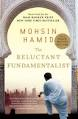
The Reluctant Fundamentalist by Mohsin Hamid

In this novel, we meet Changez, as he relates the story of his youth to an American stranger he meets in a public square in Pakistan. We hear about his journey to Princeton and then to New York, his successes and struggles as he moves forward academically, socially and romantically. We also learn about how his experience as a brown man following the attacks on the Twin Towers become pivotal to his relationship with America as a whole.

What is most unique about this book is the voice used to tell the tale. Changez is sitting with the American, whose name we never learn, and we hear his side of the conversation throughout the narrative. It is a wonderful way to convey the story, in that we can envision the two men, dining at a table in the market square, as the light dims with the passage of time.

While this conversation scene is fairly tranquil, the subject matter is not. Changez is subjected to constant “othering” during his stay in the US. Even prior to the World Trade attacks, he is never quite included in social circles, never quite one of the crowd. Even in his romantic relationship, which is more imaginary than real, he is never loved or appreciated for who he is, but rather tokenized and used. One can certainly understand the rage that gradually builds and builds until he finally, much to his own surprise, implodes.

This is an iconic work. It is a quick read, but has so much to teach us packed into its pages.

The Forgotten Room by Karen White, Beatriz Williams and Lauren Willig

In the midst of the Gilded Age, when most young women are focused on ballrooms and bridal gowns, Olive is focused on revenge. It is clear to her that her father had been wronged, cheated out of his rightful earnings from his hard work as the architect of the magnificent Pratt mansion and she is determined to expose this travesty.

Lucy is also connected to the Pratt mansion, living there when it becomes a boarding house for “respectable ladies” in the 1920’s. She, too, is on a personal mission – to see where her mother’s heart has always been during her lifetime, because it has been apparent to Lucy that it has not fully been with Lucy and her father. In fact, Lucy wonders if the man she knows to be her father is actually, in fact, her true father.

Finally, there is Kate, a doctor during the second World War, linked also to the Pratt mansion when it is again adapted to function as a hospital for wounded soldiers. When a stunning soldier is brought in on a stormy night with a leg infected so severely it may require amputation, she is startled by the way he seems to recognize her and how he feels familiar to her as well.

As the story unfolds, we learn how these three women are connected, how their lives and their loves have been thwarted, and how the Pratt family fortune and misfortune has impacted so many others.

While I am not familiar with the other two authors, I love anything by Beatriz Williams, and this novel is no exception. Each segment of the narrative is captivating as a stand-alone story, with each of these strong, independent women capturing our hearts with their missions, their wills, and their defiance. But to weave the story together with the three of them is quite the ingenious feat – and it is done both smoothly and powerfully.

I highly recommend this book – it has romance, intrigue, and is just beautifully written. Not only a great summer read, but a just a great read.


Caleb’s Crossing by Geraldine Brooks

Bethia is thirsty for knowledge, hoping to absorb anything she overhears her father teaching her brother, Makepeace. Now that she is primarily responsible for the household, since the tragic death of her beloved mother, she is no longer privy to formal education. In fact, she was fortunate to have any at all, given her female status in the 1600’s in Puritanical New England, specifically on the island of what is now known as Martha’s Vineyard. What her father did not know, was that she had also formed a hidden friendship with a native American boy, a “salvage” as they were referred to. It was him with whom she was able to feel her true self, exploring the island, arguing points of philosophy, and exchanging details of their respective cultures. This would prove to benefit them both – as they would both later utilize these skills and mutual understanding to move forward in their lives, and ultimately effect the course of history.

This work of fiction is based on the true life of Caleb Cheeshahteaumuck, the first Native American to attend Harvard College. It is a fictionalized version of his path to obtain the training and the knowledge necessary to matriculate, based on both historical research and the author’s imagination. It is a dramatic story, replete with those who supported him and those who intended him harm. And while we wished him success in his venture, it was unclear if his venture itself was his own undoing.

Throughout the story, the author raises the eternal question of whether integration into mainstream society is a positive or a negative – if it ultimately saves or destroys. For the Native American at this time in their history, when the English were just beginning to overcome them in numbers and in force, it was an extremely dangerous and solemn state. The English were focused particularly on trying to convert the native tribes to Christianity, feeling they were saving the souls of these “salvages,” yet never accepting them fully as their own. On the other hand, the author frequently highlights the ways in which the native cultures uniquely valued the preservation of the land, the full and economical use of the animals they had to kill, and their intimate knowledge of uses of native herbs and plants for food or for healing.

Hearing the story from the perspective of Bethia was also powerful. Women at the time were no more than chattel, and her experience was a strong example of this. Going from a carefree young child who had free range of the island to one who quickly had to adapt to running a household – and worse – we follow her through the full experience of being given little if any agency over her own life decisions.

While the writing here is solid, I have liked other of Brooks’ books more. I believe this book could have been edited down a bit, and more might have happened earlier to keep things moving more quickly. Nevertheless, it is a compelling story and one of tremendous import to tell. A worthwhile read.

Skylight Confessions by Alice Hoffman

Believing strongly in fate, Arlyn takes it as a sign that the lost young man who arrives at her door, on the night of her father’s funeral, is the one she is destined to be with. She believes this so strongly that she follows him back to his dorm room at Yale, convincing him that they are to be together. And while part of him is captivated by her long, blood-red hair and pale white skin, his more rational side feels trapped by her vehemence that they are each other’s destiny. Is it true that they are meant to be together? The way in which this impacts their lives carries forward for generations.

What I found most striking about this book was how disappointed I was in the quality of the writing. Usually a fan of Hoffman’s writing, I found this to be written in a flat, pedestrian tone, using repetitive sentence structure, and with little in the way of variation in description. While some of the imagery was unique, it was droned again and again. The dialogue verged on vacuous.

The characters constructed here are all sad, ensuring that the overall tone remains depressing as well. The most tragic character is Sam, Arlyn’s oldest child, who is brilliant, sensitive, and unique. Because his father has distanced himself from Sam, and Sam is acutely aware of this, Sam has a deeply embedded bitterness. When he loses his mother – the only one who truly sees him and truly loves him – at an early age, it devastates him. He is a lost soul and his only recourse is to numb himself with any substance that will do so. We understand this and pity him for this, even as we see him destroy himself.

Clearly this was not a favorite – I did complete it, but it was hard to do so. Hopefully the next one will be better!

The Mothers by Brit Bennett

As the women (or “mothers”) of the Upper Room, a church at the heart of the Black community in Oceanside, CA look on, Nadia Turner, reeling from the recent death of her mother, drifts from the school where she’s previously been so successful, into the arms of Luke Sheppard, the preacher’s son. They watch as she devolves into a lost soul, wrangling with her grief, unraveling the ties with her friends and even with her father with whom she’d been close. When a crisis arises between Luke and herself, it seems to create a hole in her heart that she spends the next years of her life seeking to fill – and burning bridges and breaking hearts in her wake.

What is most unique about this book is the voice created by “The Women.” We are told this story by the community of women who have been watching Nadia and Luke since they were young, as so often occurs in tightly-knit communities, where everyone knows everyone else’s business – or at least believe they do. The tone is, in this way, kept lighter, and at the same time more familiar. I believe no matter your heritage, we can all relate to that sisterhood of women in some segment of our lives who maintain a running commentary about us: who we’re becoming and what we are thought to be doing – and judging us without trying to appear as though they are doing so. I could not help smiling throughout these sections.

And thank goodness for these sections because the main thread of the story is quite sad. Nadia’s journey is tragic, her life having been pierced by so many losses which she was unable to process with anyone who could be helpful to her. Because her father was so deeply entrenched in his own grief, muddling his way through, he was unavailable to her, leaving her to cope in the only way she could – looking for love and affection from whomever she could find it. She continued to be a lonely figure, unable to fully give of herself because her “self” had become so deeply wounded.

This is an important story, told in a uniquely creative way – an absolutely worthy read!

The Huntress by Kate Quinn

Although he’d found many former Nazi criminals already, Ian was not yet satisfied. No, the Huntress, as he’d come to refer to her, was unique and the quest for finding her burned inside him like none other. So when Nina reappeared before him and his unsuspecting business partner Tony, with her own yearning for revenge against the Huntress, it felt as if they had no choice but to pursue her no matter where it would lead them.

And meanwhile, on the other side of the “pond,” Jordan, a young woman trying to pursue a career in photography but caught up in both her father’s antique business and his personal life, was developing her own concerns. While she was happy and trying to be open-minded about her father’s newfound love, there was something just a bit off about her father’s new lady friend that Jordan could not quite put her finger on. With her camera always at the ready, Jordan followed her instincts and did what she had to do to protect herself and what became her family.

Kate Quinn is an absolute master of combining significant historical fiction with hair-twisting suspense. The characters she creates are ones whom we get to understand almost better than ourselves, and we love them for their failures, their vulnerabilities and their grit. Nina is one such character, who is tough, brusk, even rude – but we understand her because of her history which we gradually become privy to. And because we develop this attachment to her, we cannot bear to see her hurt again. It is because we care so much about each of the characters that the suspense is that much more heightened. And the construction of the plot is woven around these gorgeous characters so well – it just becomes impossible to put this book down.

While this may not necessarily be a MUST READ, it is certainly close – and I’d highly recommend it as a should definitely read if you like suspense, historical fiction – or just want to enjoy a completely engrossing and addicting novel!

Mad Honey by Jodi Picoult and Jennifer Finney Boylan

Olivia has done what she can to protect her son, Asher. Raising him as a single mom, providing him a safe home even when money was tight – she has given him all that she could. And he has seemed to flourish, excelling privately in art and more outwardly both socially and in hockey, a sport quite popular among his peers in his New Hampshire high school. When attractive, somewhat shy, newcomer to the school, Lily, arrived, he was in the right place at the right time, introduced to her by his closest, oldest friend and they immediately hit it off. Little did anyone know how it would lead to a fatal incident and a court case that would upend all of their lives.

Out of a literal dream of Boylan’s, grew the coming together of two talents to compose a powerful and insightful work of literature. In this novel, we find every important element: complex character development, the spinning of a suspenseful plot that is constructed both backwards and forwards – and actually works! – and an opportunity to learn. We learn about beekeeping – which is interesting at times but does get perhaps a bit too detailed at other times, in my opinion – and we learn about the experience of being trans, which is, also in my opinion, invaluable.

I find it fascinating how two authors can come together and write a novel that reads so seamlessly. It demonstrates collaboration at its finest. Clearly they have each edited each other’s work such that there is a united style that is woven throughout and it gives the novel a single tone and clear voice.

I also deeply appreciate what we learn from the perspective of the trans voice. While I have personally worked some in this area, I feel I always have more to learn and I always appreciate when I am helped by those who are generous enough to share their experience with those of us cis folks who have had the privilege to have not struggled with these issues. It is not their responsibility to do the work for me, and at the same time, I am grateful to be able to benefit from their thoughts and experience so that I may become better.

This is an important story in so many ways, not the least of which is that it’s a gripping, powerful, and enlightening read. Highly recommend this one!!

The Mitford Affair by Marie Benedict

Nancy Mitford is at a loss. She cannot fathom how her 2 younger sisters, Diana and Unity, have been so sucked into the not-so-underground fascist movement that is brewing among a segment of the British elite in their 1930’s lives in London. It is shocking, that Diana, in particular, once the literal belle of every ball can now be hanging on every word of her precious leader, M. Where will this lead? How far will they take these outlandish and extreme ideas? And will it drive a divide between the once very close sisters? As their story unfolds, so too does the dark history of this movement among the British just prior to the outbreak of World War II.

Based on the lives of a real family of sisters (and a brother) who were among the withering elite of Britain just prior to the outset of the second World War – and who were also, significantly, cousins of Winston Churchill – this fascinating historical fiction novel teaches us much about the existence of fascism in England at this time. The leader of the movement, M, is portrayed as an ego-ridden, single-minded, albeit charismatic speaker who is willing to use any means available to accomplish his goal -allying himself with the despicable likes of Mussolini and Hitler. Because he is so desperate for financial backing, he is manipulated into acceding even to denounce the Jews, whom he had not been against initially.

Parts of this novel were physically painful to read. Depictions of Hitler as charming and cultured went against every fiber of my being, having very personal connections to the destruction that he and his Nazi regime have wrought. But at the same time, I feel it is incumbent upon us to appreciate how history might have swung so easily in a different direction had strong and ethical individuals not stood up to him and his regime and done the right thing, fighting against tyranny and preventing further cruelty and harm that might have occurred.

And it is so relevant today. Do we not see folks voting for those who stand for tyranny just because they also threaten their wallets? Do we not see folks defending fascists who disguise themselves as ordinary Americans just because they might agree with them on issues that make them a bit uncomfortable? We are threatened just as deeply today as the Brits were during those dark hours before the war. We have to be alert for the signs – and reading books like this help us to stay on our toes.

Marie Benedict chooses fascinating people to write about- she has done so once again here. As difficult a read as this is, I would highly recommend it.