The Tattooist of Auschwitz by Heather Morris


Every time I tell myself that I cannot read another Holocaust story because they are just too painful, another one comes along and lures me into its grasp. This one was another such story…

Lale, from Slovakia, volunteered in 1942 to work for the Germans in order to save his family from being deported (or so he was told). He, along with a cavalry of other young, fit men, were loaded onto cattle cars, given no food or water for days, and then unloaded onto the grounds of Auschwitz-Birkenau. On that very first day, he vowed to himself that he would survive, so that he could bear witness to the unimaginable cruelty that he and his fellow Jews (and others) were experiencing at the hands of the Germans. Lucky for him, he was picked out by the tattooist to be an apprentice and he became the main tattooist in the camp, making himself useful to the Germans. And in this hellhole of hate, Lale manages to not only inspire hope in others, but he manages to find love as well. His story is nothing short of miraculous.

I believe that the important message to take away from these stories of history is two-fold. I do believe that it reminds us to keep our eyes open – this can, indeed happen again. Not only has anti-semitism risen, but hatred for anyone who is “other” is so obviously rising (just look at the daily tweets from our so-called president). So we have to be vigilant, speak out, and vote for those who will be inclusive and bring people together.

But the other message I think this story highlights is that kindness wins. Lale shared the food he managed to procure with so many — and he was loved – and actually rewarded, in turn, for his thoughtfulness. He risked his life for others and when he could, he saved lives. He befriended everyone, no matter who they were. He became particularly friendly with the Romany – the Gypsies – who lived next to him for a time. Because he was curious and not judgmental, he became close to them and benefitted from their friendship as well. Through so many close calls and suspenseful moments, it was acts of kindness that enabled him to survive – his kindness and kindness from others. Kindness wins.

This is a remarkable story. Worth the read!
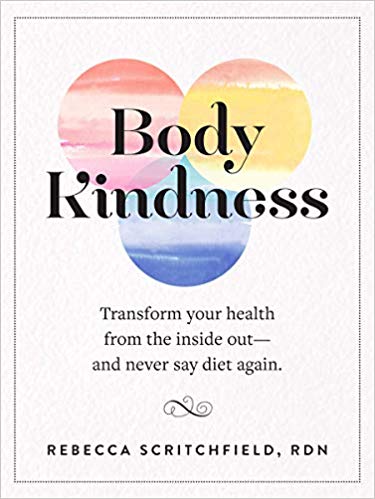
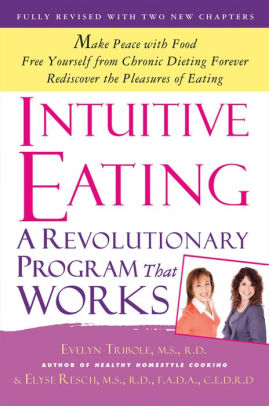
Body Kindness by Rebecca Scritchfield AND Intuitive Eating by Evelyn Tribole

These two complementary books are revolutionary in their importance.  Dieting and dieting culture has overtaken most developed countries and has become a billion dollar industry.  Most importantly, however, it has probably been what has contributed most to what is known today as the “obesity epidemic” among health care providers, and yet, what do most health care providers prescribe as an antidote?  More diets!

The newest and best science is pointing toward the fact that diets cause more harm than good, and just about every diet counts.  Whenever you tell someone not to eat something, what does that person then, instinctively crave?  Whatever it is you’ve forbidden them, of course!  And after restricting whatever it is you’re restricting – calories, carbs, fat – it doesn’t really matter – after losing weight, the body seeks to regain the weight, by doing whatever it takes.  So people tend to regain the weight, plus!  And yo-yoing is worse for you than just being a bit overweight, in terms of causing more inflammation and heart disease, diabetes, hypertension, and the unwanted health consequences of the overweight in the first place.

Because let’s face it, if we’d just accept ourselves in the less-than-“Twiggy”-as-ideal-bodies, we’d not have to worry about the dieting.  Our priority should really be about health.  And if it’s really and truly about health, then we’d throw away the scales and talk about fruits and vegetables and whole foods and exercise and that would be that.  We’d not be supporting Weight Watchers, and NutriSystem, and Jenny Craig and all the others who are making millions and preying on those of us who have fallen for these very smart business models.

So what do these books say?  Basically, that we were born with the internal cues that tell us when we’re hungry and when we’re full and we have to try to reach back in to find those signals and respond again to them.  To do this, we must trust that our bodies are really good at this and it’s ok to respond to them, even if they sometimes tell us that it’s ok to have a slice of cake because it looks delicious and we love this kind of cake and even if they tell us not to finish everything on our plate because we’re actually full.  The books also encourage movement of any kind, not just punishing workouts at a gym and give guidance on how to avoid emotional eating which many find quite challenging.  And they also encourage one to dig deep and find a way to care for oneself – that is, to carve out time to really see to one’s own needs that are being superficially cared for by food but that if tended to more deeply, then food won’t need to serve as a pacifier.

I think that almost every woman I’ve met has dieted at some point in her life.  So many would find either of these interesting and helpful.

Let’s try to move our conversations away from how we look to what we can achieve!!

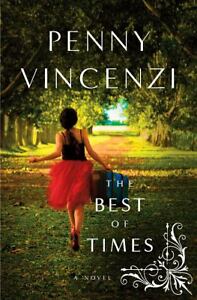
The Best of Times by Penny Vincenzi

A complicated motor vehicle accident involving a “lorry” (semi) and many cars is the focal point of this novel.  We learn a bit about each of the characters that are involved as a prelude to the accident, and then it happens, sort of in slow motion, almost as they experience it.   But it is the aftermath that carries each story line (and there are many that intertwine).  The accident complicates and devastates, but in some ways revives and empowers.  In every case, it changes the course of each of the lives of those involved in it.

There are quite a few characters, but the author does a wonderful job of endearing each of them to the reader, such that it is easy to keep track and stay interested in each of their trajectories.  And transitions are particularly smooth.    And because there are so many different story lines, the book never, ever gets dull.  Honestly,  a few of the characters are so charming and feel so real that by the end you’d like to invite them over for tea!

This is an utterly delightful novel that I very highly recommend!


Where the Crawdads Sing by Delia Owens

where the crawdads sing

At only age 5, Kya watched her mother carry her suitcase and walk away from their shack in the swamp, without even a glance back.  Most of her siblings already having gone, her older brother Jodie, her protector and confidant, soon said his goodbye as well.  It was then down to only Kya and her father, Jake, who was as stingy and unpredictable as his disability checks.   Fortunately, Jodie had coached her well on how to navigate her way around the swamp, how to make herself disappear, and most importantly, how to appreciate the natural wonders around her.  Because of the caring eye of a few who did look out for her, Kya  did become much more than merely the “Marsh Girl.”   But did the Marsh Girl also become someone capable of murder?

This is a riveting story, yet one told with subtlety and beauty and utter sadness.  The innocent heartbreak of young Kya just tears at your heart and you can’t help feeling her loneliness yourself.  Because the writing feels so intimate, as Kya grows, you feel her loss and vulnerability and her few victories personally, as if going through them yourself.  And the analogies from nature all around her are quite striking.

My favorite writing technique of flipping from one time period to another is used in this story to full advantage.  Going from when Kya is tiny and left alone to fast forward, when  a dead body is found in the marsh, helps to lay down the root of a suspense that grows over the course of the story.  It doesn’t play much of a role in the earlier part of the book, because we are so taken with little Kya, but it builds greatly later on as it comes to a crescendo.  It’s really quite patiently and beautifully constructed.

If you haven’t guessed already, this is definitely a “MUST READ.”  It’s beautiful, well-written, so very sad, but also suspenseful – definitely could not put it down!  Highly recommend it!


Bad Blood: Secrets and Lies in a Silicon Valley Startup by John Careyou

bad blood

This is the fascinating tale of one of the most outrageous scams in Silicon Valley – and the most outrageous part is that it is true!  It is the story of Elizabeth Holmes and her startup, Theranos.  Elizabeth Holmes started out at Stamford, as an engineering student, but impatient to get started earning her first millions, she  quickly decided to drop out and start her own company.  She had in mind that because she had a fear of needles, she would develop a laboratory testing device that could run multiple tests on a small drop of blood from a finger stick specimen, taken by a device that would be relatively painless.  However, what began as a good idea, ballooned into a project that because of blind arrogance, deaf ears to any guidance or advice, paranoia, and pure irrational greed, broke laws and broke lives and caused irreparable harm to so many.  And it appears that, like most narcissists,  Elizabeth Holmes was completely unrepentant, seeing herself as the victim.

What is wonderful about this story is that it is told by the investigative reporter who broke the story for the Wall Street Journal, which gives both credibility and an insider’s perspective.  Careyou writes with vivid detail, laying out the gradual development of the background on Elizabeth Holmes, how she came to start the company, and how she ruled it, along with her henchman (and apparent lover) Sunny Balwani, with an iron fist, firing immediately anyone who disagreed with anything she said or did (even if they were looking out for her benefit and the welfare of the company).  He tracks her ascent to stardom, and it was nothing short of that.  People worshipped her – just as she worshipped Steve Jobs and took on much of his persona, even adopting his notorious black turtlenecks and deeper voice.  And because she had their attention, she was able to convince so many to invest in her dream.  Unfortunately, that is all it was.  She could not make it a reality, and because she could not face this, she faked it and lied to the world that it was.

This is a tragic story of how greed and ego took precedence over peoples’ health and welfare, and lawyers, Silicon Valley giants, politicians, and others bought right into it, swindled by a young, polished liar.  And, as Careyou acknowledges, the true heroes of the story are those who stood up to her and her pit bull lawyers and despite being tormented and hounded, told the public the truth. It is because of these brave people that these crackpot lab testing facilities were not expanded and put into more locations throughout the country and led to hurt even more individuals than they already did.

The details will just astound you!


My Name is Mahtob by Mahtob Mahmoody

my-name-is-mahtob

Many years ago, I watched a movie called Not Without My Daughter, with Sally Field.  Have you seen it?

It was a true story about an American woman married to an Iranian man and together they had a 5 year old daughter named Mahtob.  They lived in Michigan and were happily married, until he suggested they take a 2-week vacation to visit his relatives in Iran.  This was just after the Iranian revolution during which the Ayatolah Khomeini overthrew the Shah.  Once they were in Iran, it became clear that Sayyed, the father, had no intention of taking his family back to America.  He embraced the law of the land, which claimed that women and children were the property of the man of the family, and he held them hostage, watching their every move and threatening them with their lives if they disobeyed him.  They lived like this for almost 18 months, until Betty, Mahtob’s mother, was able to earn his trust enough to be allowed to go shopping in the market and make secret contact with an underground network of people who were able to help her and Mahtob finally and miraculously escape.

I remember having had nightmares about this movie for months after seeing it.  And now here is the epilogue…

This is the story from Mahtob, the daughter, herself.  She recounts her story, as the daughter of these two very different parents.  She shares her early memories of America, in a very loving home, with tender memories of her father at the start.  She recalls a subtle shift in his attitude toward his culture and religion just before their leaving for Iran.  But the change in his attitude was like a tidal wave once they landed in Iran, and the loving father that she knew essentially disappeared, replaced by a monster, in her eyes – one who beat up her beloved mother, who threatened her mother, and who separated Mahtob from her mother for days at a time.  And that’s when she learned to hate.

What I did not realized was that the story did not end with their escape from Iran.  This mother and child had to endure years of terror, fearing a kidnapping by her father – or worse! – their whole lives.  And the impact spread to everyone around them.

Betty Mahmoody coped by using their experience  to advocate for others in this situation.  She fought for federal laws that protected children against international parental kidnapping, which President Clinton passed.  And she travelled around the country and around the world, personally supporting  many families who were in the same situation that she had been in.

This is a very, very hard book to read emotionally but it is an important one, I believe.  It serves as a portrait of the convergence of mental illness and religious fanaticism, which is a  terrifying combination.

It  brought it all back for me, but it also brought closure as well.  It seemed to have done so for Mahtob herself.

Becoming by Michelle Obama

becoming

When Michelle Obama was quite young, she began to learn to play the piano, taught by her very strict aunt who lived downstairs.  The piano on which she studied and practiced had chips and imperfections that enabled her always to find the middle C, sort of grounding her and guiding her.  When she had her first formal recital, she suddenly found herself seated at a perfect, symmetric and distinctly un-chipped piano, and had to pause and figure out what to do to find her way.  With the help of her teacher/aunt, she managed to steady herself and to play her piece with great success.  This became a sort of metaphor for her life.  Michelle Obama has always worked hard, relied on important mentors to guide her, and whenever she encountered obstacles, she leaned on those she loved and who loved her to help her regain her center of gravity and succeed in a dramatic fashion.

Mrs. Obama’s story is a rags to riches story in some ways, but in many ways it is not.  It is true that she was raised in a poor neighborhood in Chicago and she may not have had much in the way of what money could buy.  On the other hand, however, she was rich in the ways that really mattered.  She had a loving family with mother, father and brother and many extended family members who were quite close and affectionate.  Her mother strongly advocated for her so that she was able to access an excellent education, which enabled her to attend Princeton and Harvard Law School, where she was able to raise her financial standing, in spite of where she came from.  She acquired an incredibly strong work ethic and was generous about helping others come along with her, rather than stepping on others to get ahead.  Her constant mission was to find mentors to assist her with moving forward, but also to then pay it forward and mentor others in return.  And each position that she held after her first job out of law school helped her to dive deeper and deeper into fields in which she could do good for others, which seemed to always be her driving force.

The discouraging part for me, of course, is the contrast between what was then and what is now.  The Obama’s were devoted to their country, both working so very hard to try to make things better for the people they were serving, both working to expand human rights, to give access to health care, to create jobs and improve the environment and to promote peace.  Barack Obama surrounded himself with wise advisers and listened to the advice of others and was thoughtful and respectful to others and read incessantly to learn as much as he could about an issue so that he could make the most informed decision.

Sadly, this is not what is happening in our White House now.

So while this book was inspiring, it was also quite sad, as it reminded me of what we’ve lost since 2016.

The Obamas were smart, dedicated to our country and to humanity, and were a class act.   I hope we find our way back to this again.


The Atomic City Girls by Janet Beard

the atomic city girls

June  has just arrived in Oak Ridge, Tennessee, circa 1944.  It is a town that has just been built, but does not exist on a map, and the job she’s been hired to do involves monitoring gauges on machines she is not even told the purpose of.  Her roommate, Cici, is more seasoned and while she could care less about the purpose of her job, her real purpose is to search for a husband among the many soldiers who are stationed right here in Oak Ridge.  Meanwhile, Joe, a Negro construction worker who has also come to the town looking for opportunity, misses his family deeply and just means to keep his head down and earn as much as he can in order to send his good wage home, while trying to keep his younger friend out of trouble.  Eventually, these lives converge as their mission in Oak Ridge comes to a crescendo, and they all become swept up in a historical moment in our dark history.

This is an effective historical fiction novel about a very bleak moment in the history of the world.  While it deals with this global issue, it tells the story through the lens of fictional but realistic individuals who were involved in the production of this most destructive weapon ever created – and used! – on our planet.  It relates the social and political class and racial issues that were on everyone’s minds at the time, whether it was finding a husband for the women who did not have access to higher paying jobs, or accessing decent housing because of one’s skin color.  It also reveals the attitudes towards the final product of Oak Ridge of each of the participants, which varied widely from pride to guilt.  The army’s secrecy throughout the whole project is stunningly creepy.

I’d recommend this book as a both an important piece of historical fiction, and as just an engrossing read.  I listened to it on CD and it held my attention the whole way through!


Black Girl/White Girl by Joyce Carol Oates

black girl:white girl

Generva Meade has come from a family who assisted with the Underground Railroad and who is deeply entrenched in the Civil Rights movement, and she is currently assigned, her freshman year, to live with a conservative, religious black roommate at the prestigious Schuyler College where her family has donated founding money.  She is very excited to get to know her roommate, Minette, and is sorely disappointed when she sees that her roommate does not reciprocate this enthusiasm.  In fact, her roommate, she finds, is sullen, angry, and a fierce loner – scorning white and black girls in their dorm alike.  Generva is undaunted, however, and pursues the friendship in spite of the coldness with which every attempt at kindness is greeted.  When Minette becomes the target of hate pranks, Generva is her staunchest protector, even as Minette ignores her help.  And as the year progresses, and Minette’s situation worsens, Generva is also confronting her own family distress, with her mother’s unraveling as her father’s past transgressions are catching up to him (as is the FBI).  The final incident of Minette’s tragedy pushes Generva to face her own past as her family faces theirs.

I rarely listen to books on tape, but this was the result of a very long car ride – and I’m not sure if that tainted my view on this book or not.  It is a difficult story, both emotionally and technically.  There are many tangents, that are later significant but that are sometimes hard to follow.  The story is also steeped in history, shameful and bleak, and had many references to the attempts on the part of many whites who tried to help, but who expect more appreciation than they are deserving of.

The character of Minette is a tragic one.  She is trapped between the world of her conservative, Christian, independent and proud Black heritage and the more modern, socially-focused black girls in her dorm.  She refused to socialize with the other black girls just because they were black like she was, but this left her alone and deeply depressed.  She also refused any help with her studies, even as she was struggling academically, which further plummeted her self-esteem.  As she became the target of racial incidents, it became more and more heartbreaking to see how alone she was.  Generva could not comprehend why Minette would continue to repel her kindness.  It is not entirely clear if Minette’s ignoring of Generva is from a resentment of white privilege or just from her own self-absorption from depression – or perhaps both.

This story had the potential to be excellent, however, it feels like it tries a bit too hard.  The nagging earnestness on the part of Generva that is borne of her own family history and connections and her own wish to rid herself of that white guilt becomes cloying,  At least this reader/listener shouted more than once, “Just leave her alone!”  It is unclear why she would continue to try, when repelled so many times, when she would have had other friends in other groups.  Why did she need to befriend only this one girl?  Was it the challenge?  Was it because she was black?  Was it because her family was so disconnected from her as she was growing up and that gave her so little self-esteem? Was it her own sense of guilt from her family’s activities?

If you are psychologically inclined, you might be interested in reading this, as there is a lot of depth here.  But if you are looking for a quick, entertaining, light read, this is not the book for you!


This Is How it Always Is by Laurie Frankel

this is how it always is

This is the poignant story of a loving family: parents, Rosie and Penn, and their 5 boys; that is, they believed they had 5 boys until the youngest, Claude, declared that he wanted to bring a purse to kindergarten instead of a lunchbox. Gradually, it became clearer that Claude was much happier in dresses than pants and identified more with the princess in his father’s bedtime fairytale than the prince.  While his parents and brothers were accepting of this, they were fearful that people around him were not, and they went to great lengths to protect Claude, who eventually called herself Poppy.  As the story unfolds, we learn that while intentions may be pure, our actions may not be in others’ best interests and over-protection can lead to inadvertent harm.

This is a fictional story, but it has all the markings of a story that is true.   Every character is endowed with a dynamic, vulnerable, and big-hearted quirkiness that makes all of them larger than life.  We come to love each member of this family almost as our own.  The story is enriched with some detail of how Claude/Poppy’s experience affects the other members of the family – as it certainly would – and their own struggles with growing and seeking their own identities.  And most genuinely, Poppy’s struggle is not straightforward – she is not sure what her journey will be like or where it will end.  This is the true meaning of a non-binary identity.  One does not have to be male or female.  While this may be hard for  many to comprehend, it is even harder for others to squeeze themselves into one or the other, and I believe because of that, we all just have to get over ourselves and accept the vast space in-between.

I loved this novel, both for the message within and for the beauty of the story on its own merit.  It is a story of a family dealing with a secret that they learn doesn’t have to be a secret.  It is a story of a family learning to cope with difference, which most families have to deal with on some level, as no one is exactly like anyone else anyway.  And it is a story about love and family bonds that keep a family tied together no matter what.