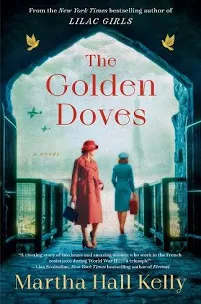
Three women in three different time periods: Aurelie in 1914, Daisy in 1942, and Barbara (“Babs”) in 1964 – all connected through unknown ties at The Ritz in Paris. Each trying to survive the havoc that has been wreaked upon their lives because of war and keeping safe an heirloom that is thought to bring safety to France. Each trying to find her place in the world. And each finding that love wins out every time.
If you’ve read any of my posts, you know that I am a HUGE fan of Beatriz Williams’s books, and this older one of hers is no exception. While these characters are not quite as snarky as hers usually are, they are still sharp, kind, and utterly likable. We are caught up in each of their stories, puzzling how they’re connected, and rooting for them as they each battle their challenges. And as each story builds in tension, the switch to the alternate plot line serves to both relieve tension when it becomes taut. But switching also builds suspense, as we must wait further to learn the fate of our beloved characters. Nevertheless, the connections and the intersections gradually come to light, and we get the very satisfying “aha” moments we crave.
As usual, for this author – and her co-authors – this novel is masterfully constructed, artistically drawn, and hard to part with when it ends. Once again, I am in awe of her writing and can’t wait to read the next one!
Ellie, aged 7, has just lost her father and feels as if her whole world has changed. She and her mother can no longer stay in their enormous home in the center of Tehran and must move to the “down” side of town. Nevertheless, while her mother is distraught over this and worries about their place in society, Ellie is actually excited to see children playing in the street, thrilled at the possibility of learning to play hopscotch, and dreams of meeting her ideal, best friend. When she walks in on the first day of her new school and is greeted by a spunky girl with dark, curly hair who shocks her with her outgoing nature, she thinks that this is not who she imagines will be her best friend. Ellie learns quickly that Homa, this warm, bright, honest, and fiercely loyal girl might just be that very friend.
This is a beautiful story of friendship, hardship, and loyalty. The two unlikely friends, Ellie and Homa, are as different as two girls might be – but perhaps it is because of this that they are amused by each other and get along. Ellie, self-aware in her materialism and superficiality, is nevertheless caught up in their friendship and feels a bond with Homa in spite of her absence of passion for the politics of the day. Nevertheless, she admires Homa – and is worried for her – for her passion and strength in seeking to promote human rights, particularly women’s rights. This is at the heart of both their friendship and their schism.
I actually love the way Ellie portrays herself as superficial, wanting what many want, and being self-aware about it. She is terrified of having to go back to being dependent on someone to pay her bills, to live in squalor, to have to need/want. She fears poverty, lack of power. And she admits to being afraid of being imprisoned, as we all are, at heart. So many novels are written with the main character as the brave one, the fighter, the hero. I love that in this one, the main character is the one who is the worrier, the caregiver, the friend. She is the one who has faults, is honorable, honest, and self aware, but who is supportive and can be helpful when the time is right. While many are brave and undertake righteous causes, fighting for freedom against oppressive and suppressive governments (such as that of the Shah’s and later that of the Ayatollah’s), not everyone is meant for that. I think that by creating an admirable, honorable, human and faulty main character for this tale, we can perhaps see ourselves identifying with that fear and relate to those that can help, those who support the heroes, the fighters.
This also gives a background to the story of the women of Iran. It is not only a historical context but a warning to all of us. It happened in Iran with extremists who toppled a democratically elected government, violently forcing themselves into power and overturning years of fighting for women’s rights in just moments. We in the US think we are so safe from this, but here we are, already fighting for power to make medical decisions over our own bodies. It starts there. Where will it end? If it happened in Iran, it can happen here as well.
I think this is an important read for not only women but men everywhere, and particularly here in the US and particularly now in this uncertain moment. We are experiencing no less than an undoing of our democracy in small (and not-so-small) steps. We need to pay attention and learn from other countries and other individuals’ experiences. Or there may be no where else to go…
Josie is not happy about her assignment in 1950’s Texas – enabling ex-Nazi scientists to be coddled within the secretive, US government research program – but what is she to do? Allow the Soviets to access their expertise first? She knows she must go along with it, given that her mentor, Karl, has been pressuring her to not let her past at Ravensbruck cloud her judgement as an agent. She finds she is truly missing her days working with her unlikely best friend, Arlette.
We then meet Arlette as she works alongside other Ravensbruck survivors in a tiny cafe in Paris, outwardly appearing content with her lot, just about making ends meet. But inside, she is still struggling day in and day out, not knowing if her son, Willie, lost to her in the camp, is dead or alive. When a handsome stranger walks into the cafe, promising information on her son, she is given a new hope that feels both unreal and terrifying.
This is a brilliantly written historical fiction novel about a time when those who committed some of the most heinous crimes of the twentieth century literally got away with (worse than) murder. Nazi war criminals responsible for the maiming and murders of thousands were given a pass by sympathizers across Europe who funneled them by way of Austria or Italy (sometimes even the Vatican) through the Alps, into hotels where they waited, often for months in plain sight, until receiving false papers to get to South America (often Argentina), to live out their days in peace. Even some of the most notorious, such as Mengele, known for his unconscionable experiments on humans, escaped justice in this way. There were many agents who did seek justice, however, to try to bring these gutless criminals to justice.
But even if the story were not about such a monumental topic, it would still be a standalone epic novel. The crafting of the plot, the gradual reveals in the “before” and “current” (with current being 1952) telling, the way we can’t help falling in love with both Josie and Arlette, and the way we are continuously surprised by the plot up to the very final page – all make for an outstanding, suspenseful page-turner of a book.
And yes, you’ve guessed it: this one is absolutely a MUST READ! Because although it is a painful subject, and some of it is truly hard to read, I feel you absolutely must read it. If not for the historical value, for the literary value alone!
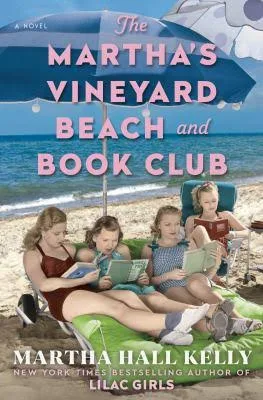
World War II is currently raging and the US has just been drawn in as well. Feeling somewhat removed, on the island of Martha’s Vineyard, are the Smith sisters, are Candace and Briar, who are just trying to get through their days. But Briar in particular is keenly aware of the rumors of German U-boats encircling the island and when she reports seeing them, she’s merely ridiculed for it. After a stranger washes up onto their beach and soldiers move to the island to begin training maneuvers, their lives become more complicated than they could have ever imagined.
Fast forward to today, we meet Mari Starwood who has just arrived onto the Vineyard. She has given herself 24 hours to take advantage of a golden opportunity to have an art lesson with the famous but reclusive Elizabeth Devereaux and she plans to turn right back around, back to her life in LA. While her passion is art and painting, her real life is weighed down by her tedious employment as a barista and a very lukewarm relationship. What she finds on the island is a story that is as unexpected as it is enchanting, and she finds it may be harder to leave than she ever thought possible.
This is an historical fiction novel – loosely based on actual events and real individuals – written so beautifully that it will have you burning that proverbial midnight oil until the end. You will come to relate to each of the characters, appreciate them for their quirky New England ways (and I can say that as an original New Englander). You will appreciate the suspense that the plot builds, as we are continuously guessing who can be trusted, who might potentially give away the dark secret the sisters must hide. And you will love the characters for their loyalty, particularly as the sisters grow closer as the strain of their situation necessitates their cooperation.
This novel is yet another great work by the author Martha Hall Kelly. I am a true fan!
New to New York City, Alice will not let her mid-western naivete hold her back from achieving her dreams of becoming a professional photographer. She uses her one connection, her late mother’s old friend, to find her first job, as assistant to the newly appointed Editor-in-Chief, Helen Gurley Brown, and cannot believe her luck. She is immediately thrown into the deep end, as the magazine and its funders have predicted utter failure. But Gurley Brown, in spite of her own behind-closed-doors self-doubt, has radical ideas that may change the magazine forever.
While Alice’s character is fictional, Helen Gurley Brown’s is not – and this story is based on her dramatic rise from author of a fairly controversial book to the savior of Cosmo Magazine. Apparently, Cosmo’s roots were much more literary, with major authors contributing stories and early chapters of successful novels. Just before Gurley Brown arrived, however, it had sunken to a paltry readership and teetered on closing. Gurley Brown brought a new slant to the magazine, appealing to the young, independent working woman, but with the goal of enabling her to be able to make herself more appealing to male partners. And while this did not sit well with many in the women’s movement (this was the 60’s after all), it did strike a chord in enough women to turn the magazine around in quite a dramatic way.
Even while we might guess the ultimate outcome of the story, the telling is excellent. The characters are interesting, multifaceted and just fun to read. And our heroine, Alice, always loyal and true, simultaneously grows stronger and bolder over every page. We root for her, cry with her, and celebrate her success.
It’s a great historical fiction novel that celebrates the 1960’s and the women’s movement, in all its contradictions, messiness, and glory.
NYC 1990’s: Ella has just moved into her own tiny apartment in the Village. Not by choice, mind you – but what’s a girl to do when her husband cheats on her with a prostitute in her own apartment building? Thankfully, she has a job she likes and she can quickly move on. And the super/musician who lives on the top floor with whom she has just had a strange but flirty interaction in the laundry room just might be the right distraction for her…
NYC 1920’s: Gin is living in a tiny apartment in the Village and frequents a speakeasy where she has found a fast but comfortable crowd to match her fast and comfortable wit. Having escaped her western Maryland home, she has made her way to this rather questionable boarding house, if it can be described as such, and found a position in a typing pool down on Wall Street. But her side hustle has gotten her mixed up in some other exploits that may threaten everything she understands about NY and how it operates.
These strong and savvy female heroines are written as only Beatriz Williams can: snarky of wit and soft of heart. Combine that with a plot that is replete with intrigue, suspense, and surprise – not to mention historical context – well, you definitely have my attention. And my attention was held from beginning to end – could not put it down.
And it’s a trilogy! Wow! So get ready to hear about numbers 2 and 3, because I am planning to actually read them in direct order – something I rarely do. But for Williams, one of my favs, I am doing it.
You know I have to make anything by her a MUST READ, so once again, this one is added to that list. Just for the fun of it!
Charlotte Cross is determined to make her own way, create a name for herself in the male-dominated space of 1930’s archeology. The only woman on her expedition, and a student studying abroad, she understood she was fortunate just to be in the presence of some of the most distinguished archeologists and Egyptologists in the world, but she still bristled when she was put off by some of the men on the dig. Not so by Henry, however, who showed her unusual kindness, who respected her the way the most senior member did.
Fast forward to 1978, we meet Charlotte in her later years, working at the Metropolitan Museum in NYC in the Egyptology research department, but her life is quite different then. She is keeping secrets that have been held close for decades. Why can’t she go back to Egypt? What is gripping her so tightly? The newest hire, Annie, who has a complicated life of her own may be the key to helping to unlock Charlotte’s secrets…
This story, which appropriately glorifies the Met Museum and its treasures, is a fascinating look at how ancient history is pieced together, one archeological find at a time. As Charlotte theorizes about a female pharaoh and her reign and how its glory was erased by her successors, contradicting her boss’s famed research, she encounters obstacles that not only threaten her research, but threaten her safety and the safety of her family. In this way, the story builds suspense and tension while educating and deepening our understanding of the culture and values of Egypt and its people. And while she and Annie are an unlikely pair, they make an endearing team, balancing each other and caring almost like the mother and daughter that each is searching for in life.
Here’s another historic NYC building around which Davis has managed to build an intense, engaging story. Hope you enjoy this as much as I did!
New York, 1913: Laura Lyons feels restless. She knows she has a good life, privileged to live in the apartment deep within the vast dimensions of the New York Public Library with her husband, Jack, and two young children. But she craves more. Perhaps if she could obtain a Master’s in journalism, she might be able to contribute to the family income so that Jack won’t feel as much financial pressure as he has been.
New York, 1993: Sadie is beside herself with excitement. She has just been chosen, over her co-worker (and former love interest) Claude, to be curator over the newest exhibit of the Berg Collection, a planned showcase of the library’s collection of their most prized rare books and artifacts. Her mood collapses, however, when she learns that someone has stolen one of the books in their collection – and now, on her watch. As she does some digging, she learns that this is not the first time this has happened in the library’s history…
This is a beautifully rendered story that engenders a deep appreciation for the magnificent New York Public Library building on Fifth Avenue. In telling the stories of both characters, Laura and Sadie, who are both colorful, smart, and ambitious women, the author also portrays the inner workings and operations of the building itself. We learn of how this main branch functions: as a keeper of books, relics, documents – not for lending out, but for preserving, so that anyone may utilize whatever is kept there for research purposes. There are precious first editions, handwritten documents by famous authors parsing out their thoughts, and random items used by the authors as well. More importantly, there are millions of books, both famous and not, kept under tight security, so that our culture, our knowledge, our history is guarded.
The stories themselves are also poignant and, of course, come to intersect. Laura is plagued by the sexism and narrow-mindedness of her era and she learns to fight against them with her pen. She is also torn because it is a hard fight and there are hard choices to make. Sadie’s story is more suspenseful and we find her tracking down the stolen books and the thief in very surprising turns of events.
All in all, this makes a great read – highly recommend this one!!
Grace feels literally swept off her feet by her new beau, Charles. He’s way out of her league and she cannot fathom what he sees in her, but she is grateful for his attention. He is just so handsome, debonaire, quite the socialite – it feels hard to keep up. If only his mother and sister would show her just a little more warmth, just a little more approval, she’d feel a bit more comfortable about it all. But he’s so reassuring that she feels marriage to him will work everything out in the end. When she is further overshadowed, even dominated by Charles, she begins to question her judgement, but the oncoming war makes her hesitate to make any changes in her life. When Charles is called to serve, Grace sees herself become empowered to stand more firmly and independently than she ever thought possible.
This is a unique perspective on the second World War: that of the impact on the women “left behind.” While they were often victims of the violence, they were also fighting battles of their own, juggling the care of their homes and families with having to survive both emotionally and financially. As many of them had to earn livings while their husbands were sent off to battle, others also volunteered in the many services that supported the war efforts, bolstering the soldiers’ supplies and also participating in espionage and technical maneuvers. Their support was often disregarded and minimized, but they contributed enormously to the effort, and many discovered a new self-worth through their work. They discovered that there was more to life than being subservient to their husbands, and that they were able to find gratification and fulfillment through work outside the home as well as inside it.
Grace grows tremendously throughout the narrative, and her growth is aided by the characters around her. Her sister-in-law, Florence, is a particularly complex character, who teaches Grace humility in the most unexpected and enlightening way. Florence is brutally frank, curt, and awkward, which Grace interprets as hostile. As the story unfolds, we learn that while Florence is, indeed, awkward and frank, she also has justification for her anger, even if it need not be directed toward Grace. Eventually, Grace learns this as well, and she learns to accept folks more and more for who they are, becoming more accepting, less judgmental. We learn much from Grace’s lessons.
There are so many layers to this story, so many lovely characters, so many threads. I am in awe of how the author has woven the story in such a way as to create a world in which we are so entangled, so engaged that we cannot put the book down and yet are stricken when it ends. This is how all books should be.
Definitely read this one! I guess this is a MUST READ!
Aaron Levy cannot believe he will have to abide the sullen nature of his new mentor, just to be able to have a peek at the rabbinical documents and letters found under the stairs of an historic home outside London. Helen Watts, this new professor he’s been asked to assist, seems not to have smiling nor social graces in her repertoire. In truth, he realizes as time passes, that they both have issues to work out as they work together to uncover the secrets that have been buried under these stairs for centuries… And centuries ago, in the 16oo’s, after taking 2 orphans to London with him as he fled the Spanish Inquisition, Rabbi HaCoen Mendes, blind, but trying to teach a few students, has compromised and allowed one of these orphans to be his scribe. Ester, the bookish adolescent who dreams of nothing but to study and learn as much as she can as any boy might, has taken her seat at the writing table and begun to scribe the rabbi’s letters for him. But as she grows older and reaches the age of marriage, this becomes more and more controversial and Ester devises a plan almost in spite of herself.
This is a magnificently crafted work of historical fiction. The author weaves the plot by gracefully swinging back and forth between the modern day historians and the original characters, layering each of the characters’ stories on each others’ in order to build the connections — and the suspense as well. And as the story builds, the characters deepen, and they each become much more sympathetic in their own ways. As the scribe Ester becomes more and more real to the two historians, both Aaron and Helen become more and more human themselves and discover that each of them has used history as a way to escape their own humanness.
The writing in this book is brilliant. It is beautiful, rich, and full. The characters are complicated and imperfect and human and they are hard to leave when you finish the book.
You will also learn a lot of history from this book. The time is the 1600’s, when there were many who had just fled the Inquisition. People were terrified to speak their minds, fearing that if they said anything against any church, they’d be tortured and killed. Women had one role in society and that was to marry and raise a family – and if they did not marry, their lot was to struggle and do housework for someone who was married and it was a hard life if you chose that route. And then came the plague in London, which devastated much of the population. It was a gruesome time.
But in spite of the ugliness of the time, the beauty lies in the resilience of the people living through it – and that is what is captured here in this story.