The Ride by Kostya Kennedy

Most people likely assume, as I have, that Paul Revere merely rode one night, alone, shouting, “The British are coming, the British are coming!” to alert the American militia to ready themselves against the beginning of the War of Independence – and that was that. Most people do not know that Paul Revere actually had a long history of trusted connections with the founding fathers based in the Boston area, namely John Hancock, Samuel Adams, John Adams, and the Reverend Jonas Clarke, and that he rode on many occasions to deliver vital information in secret to the various players involved in coordinating efforts to liberate America from the ever-encroaching British. In fact, if he had shouted that the British were coming as loudly as we imagine from the common lore, he would have been found out and captured, thwarting his effort to get the word out, ensuring failure of his mission altogether. Here in this deeply researched and warmly shared tale of the life and accomplishments of Paul Revere and his compatriots, we learn what actually happened that night, long ago, at the birth of this nation.

Usually a sports writer, Kostya, Kennedy has chosen a topic that is still well within his arena, as he gives life to the ride itself, to Revere’s background, to his connections, and to his industriousness. He answers the question of why Paul Revere? Why was he chosen to deliver this message? Why was he, above all others, trusted? And although there were others who helped him on that fateful night in April of 1775, he was the primary source of intel because of who he was, how reliable he’d proven himself, how sociable and believable he could be, and what a skilled rider he had become. Kennedy sets the stage for us, gives us the background, the complex historical details leading up to that fateful night, and builds the suspense for us so that we truly understand the weight and the danger of Revere’s mission, of the Ride.

This is definitely a part of history on which I am weak – but it is so important for us to understand. In this moment when our democracy is being challenged on so many fronts, I feel it is crucial for us to appreciate how hard-won it was. Thousands of lives were lost to win this delicate, precious freedom we take so for granted. Paul Revere was just one of our heroes, but there were so many. We must learn about them, celebrate them, revere them as it were – and not take them or democracy itself for granted. Because it is fragile. It can be lost. And then we will all be lost.

Ina Garten: A Memoir; Be Ready When the Luck Happens

In this memoir, Ina Garten, of Barefoot Contessa fame, shares her story, her breakthrough into the world of epicurean cuisine. And while she shares some vignettes of the challenges she faced along the way as well as the hard work and long hours she put in – especially in the beginning of her career -it is clear that she was fortunate enough to frequently happen to be in the right place at the right time, both in her personal life and her professional life.

I had heard much ado about this book, and so had very much been anticipating reading it… which made it doubly disappointing when I found myself giving up on it around page 100. I so rarely abandon books, but I decided it was not worth my continuing to plow through the pages of Garten’s self adulation. I found it repetitive and dull and kept waiting for the bigger stories that would make the book worthwhile. Perhaps I should have stuck with it, as there may have been more glamorous parts, but honestly, glamour doesn’t impress me as much as genuine reflection. Even when Garten discloses difficulties with her father’s temperament, which of course must have been painful, she keeps it, I felt, at the very surface. We don’t really get to the heart of it, what it really meant to her and to her family more than it meant much time for her in her room, avoiding him. It feels like she tried to paint a picture for us, but it was in a vague black and white. I was seeking color.

Again, perhaps I gave up too early, but I will live with that. I’d love to hear your reactions, particularly if you’ve read it and loved it!

In the Dream House by Carmen Maria Machado

In this memoir, Machado shares her experience of a relationship with a beautiful woman that begins as dream-like and erotic and devolves into terrifying and abusive. Through a course of poetic essays, with the Dream House imagery as theme, she portrays how she is entranced, then entrapped, and then, finally, enraged enough to free herself from the woman who has gripped her heart and fractured it in two.

This is, apparently, one of the rare portrayals of queer relationship violence/abuse that is documented by literary means. While books about heterosexual abuse abound, the queer community has been more silent on this topic. It is not uncommon for a marginalized community to feel a loyalty such as this, to hold itself to a higher standard, to try to appear to have achieved a higher ideal. Doing so is an understandable way to try to protect those in the community from further criticism, because, surely, they receive enough as it is. However, by doing so, it denies those who identify as queer as having others believe them , understand their plight, and have others who openly support and identify with them when it does occur. And spousal abuse/relationship abuse can happen to anyone – anyone is vulnerable, no matter your gender identity, your sexual preference, your race, your religion, your ability, your size. This is the harsh reality.

The writing here is poetic and ethereal. The image of the Dream House as both positive and negative images captures the internal struggle of the victim of abuse and the subsequent gaslighting. There can be so much wonder and love and light, but there is also so much darkness and hatred and doom – and it can change in a heartbeat from one extreme to the other. The victim walks on eggshells, constantly apologizing for her own existence. She feels she must have brought this on herself, she must deserve what is happening, because, really, what else could it be? How could someone love her so much in one moment but then hate her so much in another? Maybe if she just acts better, IS better, she can make it right. But of course, it is not her – it is her abuser who is at fault. This is so painfully hard to see when you are in it.

Machado has very generously opened her heart to us. I hope that others come forward with their stories as well in order to create the supportive community that is necessary to acknowledge that this can happen to anyone, queer or otherwise.


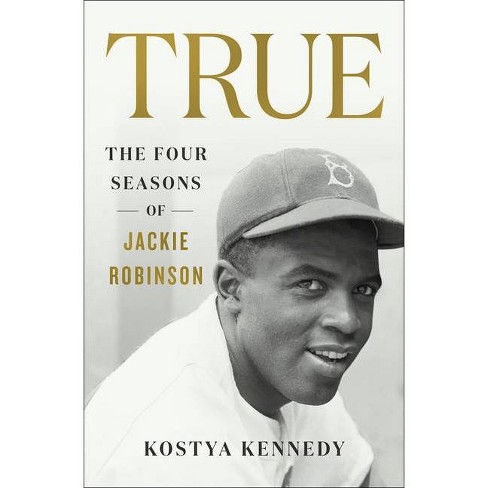
True: The Four Seasons of Jackie Robinson by Kostya Kennedy

Jackie Robinson broke barriers. He broke through barriers when he joined the Montreal Royals, and then he broke through even more dramatically in the US when he joined the all-White, Major Leagues, as a Brooklyn Dodger. With his unique batting stance, his gutsy base-stealing, and his overall agility and competitive exuberance, he was a shining light for his team and for anyone lucky enough to be in the stands to watch him play. And while he encountered innumerable incidents of racism, he always maintained a calm demeanor even as he spoke his mind plainly. Through his larger-than-life image of poise and strength of character, he and his wife, Rachel, became integral to the advancement of civil rights in our country.

In this colorful depiction of the life of Jackie Robinson, we are given an insider’s view of his life and his struggles, his victories and his pain. Kennedy, through extensive research and a clear understanding of the game, gives us not only detailed descriptions of pivotal games played by Robinson – helping us to feel almost as if we ourselves are sitting in the stands – but also how Robinson must have felt during those games. We are deeply disappointed and hurt alongside Robinson during tours in the South, as he eyes his fellow teammates remaining on their bus destined for their all-White luxurious hotels, when he has to get off the bus to stay at a Blacks-only hotel or private home. We feel the resentment he feels as he continues to see, year after year, no Black managers or team officials in spite of his continued advocacy for this. But we are also thrilled by his wins and inspired by his accomplishments.

What I loved about this biography of Jackie Robinson was the tribute given to his wife, Rachel. It seemed that Robinson himself gave her so much credit for his success – and that was evident here in this book. Theirs was a true love story; they seemed to be a genuine team in love and in life. While she was a homemaker for much of his baseball career, she was trained as a nurse and an educator, and she returned to working once their children were grown. Later, she also helped to forge the advocacy and fundraising he began, long after his death.

You definitely have to have an interest in baseball to get through this book, as there are many detailed descriptions of games, plays, and players. But if you do, you will also learn quite a bit about how baseball lived as a metaphor for many, particularly those in the 1940’s and 1950’s, in Jackie Robinson’s heyday, for some movement toward the advancement of civil rights in this country.

The Personal Librarian by Marie Benedict and Victoria Christopher Murray

Belle da Costa Greene is never happier than when she’s holed up among Princeton’s trove of ancient texts, soaking in the artistry of the lettering inside these relics and conjuring up the historical context in which they were printed. Since childhood, she’s been passionate about the art and literary relics of the Medieval and Renaissance eras, and so when her old friend, Junius is about to show her a unique specimen in the Princeton library, she almost shudders to think how fortunate she is to be able to see this ancient text up close. She is not prepared, however, for his offer of a recommendation for the position that will, ultimately change the course of her entire life: to be the personal librarian to his uncle, the one and only JP Morgan. For any woman, this would be an intimidating position, for this was not a position women were offered. But for Belle, there is a complicating factor that would make her uniquely unsuited – so she is bound to keep her true identity hidden from the world. But can she do this when it is so dangerous for both her and her family?

This is the fictionalized story of an actual woman, born Belle Marion Greener, who made her way into New York society by virtue of her ardent passion for the preservation of art, her intellectual prowess, and her social guile. Her earliest memories were of leafing through art history textbooks with her father, and her curiosity for learning that sprouted from this never waned. Though a woman, she was granted access to the library at Princeton, working with the trove of sacred texts that were housed there, and from there she was referred to interview with the larger-than-life collector of art and ancient texts and artifacts, JP Morgan. Impressed with both her fund of knowledge and her pure moxie, he not only hired her but gave her license to maintain and expand his collection as she saw appropriate. Together, they amassed one of the world’s largest and most impressive collection of ancient texts, bibles, and artwork.

What I will not spoil here is the secret that Belle must keep – I will keep that secret along with her. But suffice it to say, that this secret stays with her and directs the course of her life. She is not free to do as she wishes nor is she free to be who she really is in order to secure her career and maintain the security of her family. Because of the era she lives in, she is tied to the social mores and prejudices of the moment and cannot risk revealing her true identity. She is caught between two worlds and she must make her choice, which she does for the sake of herself and for others who depend on her. Even while she struggles, she finds that it is the way it must be and she ultimately makes a sort of peace with it. But at many junctures, it impacts heavily upon her in very deep and cutting ways.

On the lighter side, this story does give an insider peek into the life of the Gilded Age of art and high society and how social status was brokered at this time. It was a sort of precarious time, whether you were in or out, depending on what people were saying about you, whether you bought the appropriate art, had the “right” taste, or your money came from the right source. There was also the beginning of hope for women, suffrage and equality, with women like Belle who broke into what had been a man’s world. She was certainly a pioneer in her field, showing that she did not have to relinquish her femininity to be successful in her dealing in the art world.  She just had to be so much smarter – which she apparently was!

This is an entertaining and educational read, both. Great fodder for all you historical fiction fans!!

The Girl with Seven Names by Hyeonseo Lee

Born in Hyesan, North Korea, Hyeonseo Lee was raised, as all of her peers were, to believe that her country was the “Greatest Nation on Earth.” Indoctrinated from the time she was born to worship the leaders of her country above all else, she witnessed at the age of 7 what happened when one opposed the regime: public execution. But even while she felt the pressure to blend in and follow the party line, she noted that there were, in truth, stark differences in how people lived. While the communists sang about equality among the people, how their government provided for its people, Hyeonseo observed that a family’s social status determined just how much that government actually provided. In reality, it was far from an equal distribution. And while she was privileged to some degree, this privilege did not protect her family from political danger. In this memoir, she shares her utterly harrowing story of her years-long journey toward freedom.

If you’ve followed this blog, you will note that I have been reading quite a bit about various refugee experiences. All of them are impossibly harrowing, but none has read more like a suspense novel than this one. At every turn, this young woman and her family encountered unimaginable peril, always being on the verge of disaster and often experiencing heart-wrenching disappointment and suffering. They were constantly at the mercy of others, usually being preyed upon by corrupt officers and traffickers alike, rarely reaping the courageous generosity of others, even strangers. Most profoundly, once they finally did achieve freedom, they actually had to be taught that humans deserved fundamental human rights in order to understand how deeply their own had been violated.

The bravery and dedication to family demonstrated by this heroine is infinite. She is an inspiration to all of us, particularly in this moment when we are seeing so many fleeing their homes in search of safety. It reminds us that no one chooses to leave their home. One leaves only when there is no other choice.

I’d like to depart from my usual post and add a poem which I found deeply moving (shared with me by an inspirational leader for whom I am so grateful):

Home by Warsan Shire

no one leaves home unless
home is the mouth of a shark
you only run for the border
when you see the whole city running as well

your neighbors running faster than you
breath bloody in their throats
the boy you went to school with
who kissed you dizzy behind the old tin factory
is holding a gun bigger than his body
you only leave home
when home won’t let you stay.

no one leaves home unless home chases you
fire under feet
hot blood in your belly
it’s not something you ever thought of doing
until the blade burnt threats into
your neck
and even then you carried the anthem under
your breath
only tearing up your passport in an airport toilet
sobbing as each mouthful of paper
made it clear that you wouldn’t be going back.

you have to understand,
that no one puts their children in a boat
unless the water is safer than the land
no one burns their palms
under trains
beneath carriages
no one spends days and nights in the stomach of a truck
feeding on newspaper unless the miles travelled
means something more than journey.
no one crawls under fences
no one wants to be beaten
pitied

no one chooses refugee camps
or strip searches where your
body is left aching
or prison,
because prison is safer
than a city of fire
and one prison guard
in the night
is better than a truckload
of men who look like your father
no one could take it
no one could stomach it
no one skin would be tough enough

the
go home blacks
refugees
dirty immigrants
asylum seekers
sucking our country dry
niggers with their hands out
they smell strange
savage
messed up their country and now they want
to mess ours up
how do the words
the dirty looks
roll off your backs
maybe because the blow is softer
than a limb torn off

or the words are more tender
than fourteen men between
your legs
or the insults are easier
to swallow
than rubble
than bone
than your child’s body
in pieces.
i want to go home,
but home is the mouth of a shark
home is the barrel of the gun
and no one would leave home
unless home chased you to the shore
unless home told you
to quicken your legs
leave your clothes behind
crawl through the desert
wade through the oceans
drown
save
be hunger
beg
forget pride
your survival is more important

no one leaves home until home is a sweaty voice in your ear
saying —
leave,
run away from me now
i dont know what i’ve become
but i know that anywhere
is safer than here


Born a Crime by Trevor Noah

In this tender memoir, Trevor Noah shares his experience growing up during the final edge of apartheid in South Africa. Through vividly narrated vignettes, we learn about his complicated relationship with his mother, who is fiercely devoted to him and yet is independent, stubborn and vulnerable. We learn of his early struggles to find himself, and how he must battle against the vicious cycle of poverty that apartheid has inflicted upon his people.  

It was suggested to me to listen to the audio version of this book – and this was excellent advice.  Hearing Trevor Noah narrate his own story, in his own beautiful, South African accent and fluidly modulating to his family and friends’ voices and accents, is just a gift to yourself. 

Noah is a brilliant storyteller.  He shares his experiences with such warmth and humor, as if he is sitting with you in your living room, over a cup of your favorite hot tea – but as if he’s sharing his deepest, darkest memories, only with you.  He describes in colorful detail some of the most outrageous adventures and unbelievable experiences.  But even as he shares his joy and his pain, it is as if he is flickering a smile at you, as if to say, we can still laugh, even as we hurt.  This is how we cope.

You will be engrossed and amazed — you will gasp and you will laugh out loud.  Don’t just read this one – listen to it!  

It’s a “MUST READ” but more than that, it’s a “MUST LISTEN!”


An Invisible Thread by Laura Schroff and Alex Tresniowski

An Invisible Thread Sews Together An Unusual Friendship – CW50 Detroit


Laura was no stranger to the streets of Manhattan in the mid-1980’s, but something made her stop and turn around after passing a small, skinny, Black boy asking for money on one fateful Monday afternoon.  His name was Maurice, and he was half-starved, and when she invited him for lunch at McDonald’s, he accepted.  Laura was careful not to pry too far, but could see that Maurice was fending largely for himself, and she was unsure if she’d ever even see him again or how that would happen.  To her amazement, though, she did, every Monday from then on.  From this bloomed an unlikely friendship that became a blessing for both Laura and Maurice.  

This is a true story that is told from Laura’s perspective, but gives a great deal of background from Maurice’s family experience as well.  Both of them have experienced a great deal of family trauma, although Maurice’s is quite dire, with most of his family falling victim to the devastating crack epidemic of the 1980’s.  While Maurice is clearly loved by his family, particularly his mother and grandmother, they are both usually too ill to properly care for him and he is often left to his own,  skillful, but youthful devices.  When Laura meets him, he is living in a crowded single room with many drug-addicted relatives where there is no routine, no structure, and never any food in the fridge.  Laura is the first person to ask him what he might consider being when he grows up, giving him a first glimpse of the possibility of a real future for himself, besides what he sees in his family.  

On one hand, this story is inspiring.  Laura speaks freely about how she has gained as much from the relationship as she has given.  While she truly has given, whether in lunches made in brown paper bags – signifying to Maurice a show of love and care for him – or clothing, or just a periodic respite from his tumultuous family life, she has also received.  She has not had relationships where she was able to have children, and I believe Maurice was sort of like a son to her.  She was able to lavish attention, occasional gifts and intermittently share her wisdom with him, the way she might with a son, and she felt gratification in this.  And certainly, Maurice was given something of a lifeline, in that he was shown a different possibility for how his life might be – that he did not have to follow the path of his family and that he could choose a steadier, healthier, and safer path for himself.  And he did.

On the other hand, the story being written as it was also feels a bit self-congratulatory and almost cringe-worthy.  We’re here again, with another white woman “saving'” a Black boy – and it just feels a bit uncomfortable to read about this.  Laura is truly generous and giving – but why does she have to write about it?  While “a portion” of the proceeds from the book are destined for the No Kid Hungry non-profit group, it still feels a bit strange. 

I’d be very curious to hear what others feel about this book and this issue.  I invite your comments!  I am truly torn over this one! 


Transcendent Kingdom by Yaa Gyasi

Transcendent Kingdom by Yaa Gyasi: 9781984899767 | PenguinRandomHouse.com:  Books

Gifty is striving to complete her final doctoral thesis in neuroscience on addictive behaviors. She knows she’s obsessing over her data, and that she needs to move on to the writing of the final paper, but her past has come back to haunt her and she is stuck.  It may be that the visit from her mother, drowning in her own pain, will nudge her forward.  Or will it be her sifting through her old journals from her youth?  Somehow, Gifty works through a resolution and confronts the deeply painful religious, emotional and philosophical issues that are holding her back. 

This memoir is a recounting of a second generation immigrant from Ghana who suffers multiple layers of trauma during her childhood,  while seeking and finding little community support in her small town, Southern evangelical church.  Needless to say, her struggle is complicated.

One recurrent theme is the conflict she feels between religion and science.  Having memorized large swaths of scripture for her mother’s approval and having limited experience outside her small, Bible belt town in Alabama until college, she has a deeply ingrained emotional connection to her religion and to a traditional belief in God.  On the other hand, her more cerebral side has rejected much of the dogma the church espouses; whether the narrow views on sexuality, the scorning of evolutionary theory, or the criticism of science in general.  So when a fellow student criticizes those who are religious, she is not quite sure what to feel, but she is simultaneously insulted and embarrassed.  She identifies with those being criticized but also sees why they are being so.   

The other inescapable message here is the devastation that occurs when a family member has an addiction. Not only does the addict suffer, but everyone around him suffers as well.  When Nana, Gifty’s brother disappears, she and her mother spend hours searching for him to try to bring him home to safety.  When he is not functioning, the whole family is not able to function.  And the cycling and unpredictability has devastating effects on everyone for years to come. 

This very real story hits hard and is a hard read.  We are very fortunate that the author has chosen to share her experience with us.  

A Long Petal of the Sea by Isabel Allende

A Long Petal of the Sea: A Novel: Allende, Isabel, Caistor, Nick,  Hopkinson, Amanda: 9781984820150: Amazon.com: Books

Victor Dalmau has found himself rooted, with only a few years of medical training, in the trenches of the Spanish Civil War, repairing the wounds of the Republicans fighting the Fascists who are seeking to rule Spain.  While he is useless with a gun —  quite unlike his brother Guillem, the consummate warrior — he finds purpose in healing those who are, and he supports them in their calling.  Little does he know how deeply he would continue to feel the pain of injustice and persecution and how this early mission would direct the trajectory of his life and that of his family. 

This is a beautifully written novel, based on the true story of one survivor of the Spanish Civil War.  After this war,  thousands fled first to France, were placed in dreadful concentration camps, and two thousand fortunate souls were rescued by the poet Neruda on a ship to Chile called the Winnipeg.  In Chile, they were welcomed and given refuge and opportunity and allowed to flourish until there was political unrest there as well.  Our hero, Victor, embodies the strong, immigrant character: hardworking, valuing family above all else, and devoted to the preservation of humanity and justice.    

I am so thankful to have read this novel.  In my ignorance of history, I have never known much about this tragic era in our world’s history.   Learning it through the eyes of these gorgeous characters was, in my view, the best way to attempt to correct this, because the facts are interwoven with deep emotion, and this is how they are best etched into our memories.  And while this is not necessarily an absolute/comprehensive and final look, it is certainly a great start to learning about this dark moment in Spain, France and South America.  

And even while enlightening us about the historical period, the author does not neglect to interweave a complex plot, with suspense, subplots, and even romance that bear surprise twists.  She keeps us intrigued with each step of Victor’s harrowing journey.  

This is an important read for those who are are unaware of this period of history – and even for those who aren’t.  And while I don’t like to overload the “MUST READ’s,” this has to be placed there – sorry!