Rubyfruit Jungle by Rita Mae Brown

Molly is smart and she is tough. She knows she’s different from those around her but she truly doesn’t care. While her mother, Carrie, and her best friend, Leroy, try in their own ways to convince her to bend to what is “acceptable,” especially when it comes to both gender and sexual stereotyped norms, she remains true to herself.  And this is no simple task, not in the early 1950’s and not in rural Pennsylvania, nor on the Florida coast.  It is clear to Molly that she must make it out of her small town to survive, but how she accomplishes this and what she finds when she gets there shows that life can be challenging wherever we may find ourselves.

This was a groundbreaking book in 1973, but of course it was initially ignored and kept underground because of its unabashed celebration of lesbian sex. Only a few years later, when a more established publisher took on the title did the book become more widely sold and gain something of its current notoriety. Now, of course, there are many books about this topic and it is less of a standout, but it must be acknowledged for its pioneering spirit and daring language. Few ventured into this terrain at the time; few were brave enough to “out” themselves when it was not only not fashionable but it could actually be quite dangerous to do so. But doing so clearly spoke to millions of folks who either identified with the characters or felt they needed to learn more. Doing so opened up a world of dialogue about the topic, freeing many to speak their truth and to acknowledge what might be in their hearts. 

That said, the story itself is quite depressing. It feels as if there is a constant tugging at the heart, a constant thrum of defeat. Molly has high hopes, high expectations of herself and while she works hard and keeps herself focused on her goals, she has one obstacle thrown at her after another. Whether her family, her friends, her lovers, or her so-called mentors, everyone seems to disappoint. However realistic it is, in her world at that time, it is a hard story to take in. No matter her incredible achievements,  she lived in a world where men ruled unchecked and women had no legal protections. 

This novel functions as a crucial reminder of some rights we take for granted – and some that we should be continuing to fight for. 


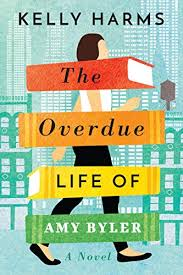
The Overdue Life of Amy Byler by Kelly Harms

Amy has had it rough over the past 3 years. After 18 years of marriage, her husband flew to Hong Kong on a business trip and never returned. Now, suddenly, he’s appeared, in a local pharmacy of all places, after all this time. What can he possibly be doing here? And what can she say to him? Does she want him back after all he’s done? Or not done, as the case may be? And what about the kids? His proposal of giving her a week away from them while he tries to reconnect with the kids at first glance is outrageous, but gradually, the idea grows on her. It just happens to coincide with a conference she’s been interested in attending in NYC, where her oldest, bestie happens to live. Could she actually do this? Could she leave her kids who she’s been sole caretaker for a whole week? Give herself this tiny gift?

I present you here with another perfect summer read – light, with just enough substance so you don’t have to feel too guilty spending your time in the sun leafing – and laughing- through these pages. And while there are a few emotional moments, there are a couple of moments where the giggles will slip out from you, in spite of yourself.

Amy’s adventure in NYC exemplifies the wish of many moms: Just a brief escape from the constant pressure of bearing responsibility for everyone else’s happiness. And it’s not that we don’t adore our loved ones – of course not! But caring for them, while of course working to earn money to support them, ensuring they have balanced meals, clean (and acceptable) clothes, and are kept safe — well, it’s a constant drumroll in the back of one’s mind that can build into a crescendo that becomes explosive unless one can let off steam every once in awhile. If one is not given a break, one can actually break.

It is also a lesson in how to ask for help. We, none of us, can live our lives without others. Man is not an island, as we know, and it is not a sign of weakness, but rather of humanity, that we need help from time to time. Asking advice, support, even an extra hand, not only helps the one asking but also gifts the one helping the opportunity to help, which is always, truly, a gift.

This is a very sweet story that is fun to read and gives you a chance to relax yourself. Give yourself this gift!


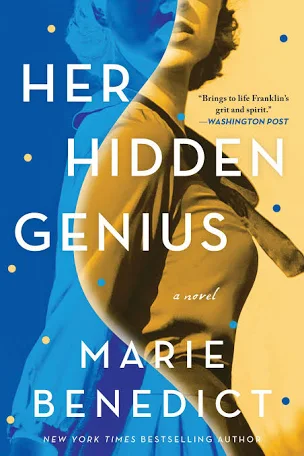
Her Hidden Genius by Marie Benedict

Seeking to pursue a career in basic science research in an environment where she would be accepted as an equal to her male peers – not an easy task in post-WWII 1940’s – Rosalind Franklin moved from London to Paris. On arrival, she felt immediately welcomed by all of her fellow researchers in the x-ray crystallography lab. She quickly began her painstaking work of pursuing the identification of carbon-based structures via this type of X-ray imaging, and became known for her meticulousness, hard work, and dedication. After an uncomfortable incident in the lab between herself and one of her superiors, however, she felt compelled to leave this otherwise congenial environment to return to London. There, she was thrust into a competitive race to use her perfected techniques to identify the structure of DNA. Only gender discrimination prevented her from achieving the fame that Watson and Crick did, as it was Franklin’s research that truly uncovered the secret to DNA’s structure.

This deeply researched fictionalized story is a profound tribute to Rosalind Franklin, a woman who contributed so much to what we know about the structure of carbons, DNA and RNA. Only now, decades later, are we understanding the ways in which she was robbed of the respect and acclaim that was her due. The men around her took credit for her work, her discoveries, her hard-won labor, and she had no recourse at the time because she was a woman and would be looked upon as a complainer, a shrew. She was denied the status of a full professorship, and with that, the ability to achieve rights to her own grants and her own laboratory. She was always beholden to the men around her, who were often her intellectual inferiors.

I also never knew her family situation, which came through in this story as well. First, she was Jewish, which influenced where she was able to go and when. During the second World War, she certainly could not go into Paris – not until the Germans were overthrown by the Allies – and so her training began initially in London. Moreover, while she was simultaneously fending off the pressures from her male colleagues in the lab, she was also quelling her family’s efforts to bring her to more “ladylike” pursuits, as they saw them – doing charity work, marrying and raising a family. Because she saw these as being incongruous with her deep ambition to pursue science, she resisted pressure from all sides.

This is a beautiful tribute to a true hero in our history – one who should be acknowledged and celebrated for her brilliance, dedication, and contributions to science, to medicine, and to the betterment of mankind.

The Thing Around Your Neck by Chimamanda Ngozi Adichie

Here I have fallen again into another book of short stories – but luckily so. While, again, I am generally not a fan of them, these stories are virtually novels unto themselves. Not in physical length, but in the depth of characters the author creates and in the lives and experiences they convey. We have a writer attending a workshop surrounded by writers afraid to stand up to the man in charge who is inappropriate and sexist and racist, out of fear they will threaten their own opportunities. We read about a young bride of an arranged marriage, newly brought to New York from Nigeria, about her disappointments and resentments. And we read about a young woman trying to come to terms with the death of her brother, so many years prior.

The many characters and the many stories here bring us closer to understanding the African experience in America and the African experience in Africa. We are exposed to the conflict that often arises from clashing cultures, religions, origins, and beliefs – and how each character must struggle to identify where they fit into the world where these conflicts exist. Just as exists anywhere, there is conflict between old and young, between man and woman, between one culture and another. The human experience, on display so vividly in these pages, is finding what our role is in that morass and how we resolve our differences with those around us. It is both specific to these cultures and generalizable to almost anyone living in the world.

Of course there are some stories I enjoyed more than others, but that is to be expected. On the whole, however, I found these stories to be powerful, deeply moving, and well worth the experience of going out of my comfort zone to read short stories in spite of myself. I encourage you to do the same!


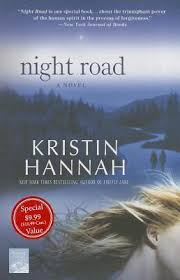
Night Road by Kristin Hannah

Mia Farraday has not always hidden in the shadow of her twin, Zach, but since middle school, she’s felt that life has just given her lemons when he’s been handed the lemonade. While Zach is the popular one with friends surrounding him constantly, she’s the one with the braces, the acne, and clearly no sense of what is normal because she cannot seem to attract anyone to her side. That is, until Lexi approaches her during lunchtime on their first day of high school, in spite of Mia warning that it might be “social suicide” to do so. Lexi, for her part, is used to being on the outs, as she has been in foster care until only a couple of weeks ago, so she’s just glad to find someone who will deign to speak to her. The two instantly bond, and while Mia and Zach’s mom, Jude is leery – Mia’s been hurt before – she finds it in her heart to accept Lexi for the kind and genuine friend she is to Mia. That is, until tragedy ensues. And how could she possibly find it in her heart to accept her then?

This is a heart-wrenching story of love and friendship that is challenged in unfathomable ways. We are brought into their world as one would be a warm hug, charmed by their love for each other even as we see their imperfections, their enmeshment. Jude is a loving mother but is overinvolved, overprotective, and enabling. Mia and Zach are quite different from each other but are not necessarily given the space to be so. And they accept Lexi for who she is, they see her kindness, her ability to give and to love and take her in as another member of the Farraday family. Until…

This is also a story of how pain distorts us. We all grieve in different ways, we all need to cope in different time frames. Some of us pull others to ourselves for support, others push away. Most of us need support even when we don’t realize it, however, and that is the key. We all need to recognize this need in others and see that when others strike out, are mean, or act out, it may be coming from a place of pain.

The other point that is underscored appropriately here is a word of advice for parents of teens (which I highlight from a professional perspective as well). When you are advising your teens on going out, no matter how much you trust them, no matter what their story is, tell them this: if they sense they are unsafe for any reason (alcohol, drugs, sexual encounter – whatever), that you will come get them at any time of day or night, NO QUESTIONS ASKED AND WITH NO CONSEQUENCES. And mean it! Follow through. No consequences, no questions asked. Full stop. You may be saving your kid’s life.

Another powerful, heartbreaker by Kristin Hannah…!


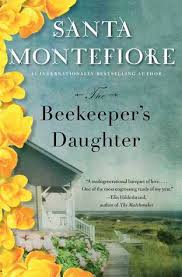
The Beekeeper’s Daughter by Santa Montefiore

Grace is a bit appalled by how quick her peers are to judge the young folk of their tiny island off of Cape Cod. She knows that she has not been a saint – nor can anyone else make that claim – so she is never one to judge. So she tries to be compassionate when her own daughter becomes the target of some of the island’s whisperings, when her daughter is seen cavorting with a singer in a band staying on the island to record an album. Though she knows how this will end, she remains supportive of her daughter. But Grace has no idea how deeply her own history is tied to her daughter’s broken heart.

This is a sweetly presented narrative about love, love lost, and love rediscovered in unpredicted ways. In both mom and daughter, we see how love lost can impact actions that have repercussions for years to come. We see how honesty could unleash suppressed love and we see how love can heal and help us through our darkest moments.

We also learn here about the magic of bees. They are truly a remarkable resource on so many levels. Not only do they create honey for all of us, but they do so as a team. They work together, devoting themselves to the benefit of the hive, saving the queen and her eggs so that the hive can survive. If they sense danger, they sting the encroaching threat, giving their lives for the benefit of the whole. We in our “me”-focused culture can learn much from this concept. When we give, when we think of others, when we do for others, we feel a sense of gratification that is uplifting and rewarding. When this is not the motivation behind these generous acts, it becomes a byproduct of them.

This is a tender story that I would definitely recommend bringing with you on your next vacation.

All We Ever Wanted by Emily Griffin

Nina is appalled and ashamed. How can Finch, her son, the one she’s only known to be a “good kid,” have possibly been involved in the treacherous deed he’s been accused of? Similarly, Lyla, from her perspective, cannot fathom that the guy she’s been crushing on for so long would do that to her either. it just couldn’t be. And even if he did, what’s the big deal? Why is her father freaking out? He’ll only make it worse… And from Lyla’s dad’s perspective, this legitimizes his general mistrust of the world. As they each confront the traumatic incident they have endured, their worlds explode in different directions, yet somehow converge as well.

This novel tackles a number of complicated issues: adolescent impulse sexting, class and wealth privilege, racism, and sexism. It does so in a non-preachy, non-threatening manner, albeit with a few cliches. But with charming characters (well, mostly)and a few unexpected surprises in the plot, the novel tells a good story, engages the reader and keeps us guessing until the last page.

There is also a good argument amidst these pages for keeping smart phone use to a minimum among young folks. I know there is a movement among some youth to move the the old flip phones and I am all for it. Having cameras at hand to document every moment of one’s life often interferes with actually LIVING one’s life, being IN one’s life. Moreover, in the hands of impulsive adolescents, who do not have fully developed frontal cortexes, it may not be the best idea to have access to both cameras and texting ability and/or social media.

This is a solid read, great for either book club discussions or just a lighter read under your umbrella with your toes in the sand. Either way, I believe you’ll enjoy it!


The Rumor by Elin Hilderbrand

Nantucket is a small island – perhaps too small, as those who live there year round seem to run out of things to talk about and perhaps create stories about others that may or may not even be true. For example, when Madeline gets a bit desperate to break her writer’s block and rents a space for herself in which to write, the neighbors begin to buzz about why she might need a place for herself. Just about everything becomes misconstrued, except for the actual, factual controversial actions taking place…

Grab your sunglasses, towel and sunblock, as you will definitely want to bring this one along with you to the beach this summer! This fun, lighthearted novel with its colorful characters, twisty plot, and sarcastic narrative will warm your heart, make you smile, and distract you from all the insanity that is going on in the “real world.” It is just substantive enough to keep you completely intrigued, but yet light enough to not get too anxious or worried about the characters. And really, don’t we have enough anxiety and worry right about now?

If you’re looking for something to read while on vacation – or just looking to feel like you’re on vacation! – here’s just the novel for you!

The Au Pair by Emma Rous

There is something niggling at Seraphine as she mourns her father’s recent death. She’s been perusing their family photos and as one in particular catches her eye – one with her mother and only one newborn when she’s a twin – it has made her question her identity, whether she is really who she thinks she is. As she digs a bit into her family’s murky past, she finds there is more uncertainty and confusion than she ever could have imagined.

It’s a bit hard to describe this novel – I sort of liked it until I didn’t…

There is a lot of trust necessary for the reading of this book. While we are told that Seraphine has been teased most of her life that she doesn’t belong, that she’s not really part of her family – we are not really clear why just this one photo suddenly triggers her sudden exploration of her past. But we go with it, we trust the author. We are not really told much in the way of detail about Seraphine’s life, what she does for a living even, and how she has the free time to do the stalking she does to investigate the details of her past. Again, we go with it. And her findings are just too clean, just too easy, in my mind. But ok, again, we go with it.

If we go with it, as we do, there is an actual build up of suspense. We do want to find out what is going on with her past. We get a double story, from her and then from the au pair who was witness to the events leading up to the birth of the twins and to what really happened with Seraphine’s mother, which is an essential element to the mystery. This creates a nice back and forth, a crescendo to the narration. We are waiting and want to know. We’re with the author on this one.

But in the final moments is where the author really loses our trust completely. The explanation, the pinnacle to the story, is so outrageously implausible, that it is just an outright disappointment. And even here, many of the details are obscured and lost to us.

So while there is some suspense, it is, on the whole, so deeply unsatisfying, I cannot in good conscience, recommend this book. Sorry!

The Patron Saint of Liars by Ann Patchett

Finding herself married to a man she doesn’t love and pregnant with his child, Rose does the only thing she truly does love to do: she drives. She abandons her life – and her mother, whom she does love deeply – and drives herself across the country to a home for unwed mothers with the plan to give up her baby as soon as it is born. It is not at all in her plan to grow attached to anyone there, not to the kind, elderly sister who works with her in the kitchen, not to her naive roommate, and certainly not to the older, giant of a groundskeeper who barely says a word to anyone. And it is definitely not her plan to stay. But things don’t always happen as we plan them…

This is Ann Patchett’s first novel, and it is just as understated and pensive as her later books. Her characters, central to her story and artfully developed, are also mysterious and opaque, perhaps even to themselves. Everyone around Rose yearns to connect with her, to get to know her, her story. She is beautiful, quiet, hardworking and devoted to the few things she loves, but she keeps her secrets close. At the same time, Rose struggles with trying to know herself, and cannot forgive herself for her past.

What I also love about Patchett’s stories is that they end with some finality but also with some parts left to the reader’s imagination. And this in just the right proportion. I think this is a hard line to walk for authors, and Patchett has found that perfect balance, in my opinion.

This is an excellent story, with deeply moving characters that you will not forget for a time. Enjoy it!