The Map of Salt and Stars by Zeyn Joukhadar

The Map of Salt and Stars | Book by Zeyn Joukhadar | Official Publisher  Page | Simon & Schuster

Nour has already been uprooted with her family from New York to Syria, after the death of her beloved father.  It has been hard to feel grounded, not to feel out of place, as she’s struggled to learn the language that comes so easily to her older sisters who had the advantage of having been born there.  When disaster strikes, however, they must leave once again, and Nour must find the strength to search for the place she will ultimately call home, as well as determine who she really is.  What guides and inspires Nour is her memory of the fantastical legend of Rawiya, who sets out to study the art of mapmaking, facing her own challenges and adventures.  

 It is stories like this one that brings the migrant crisis to a human level.  We might read about thousands of people crossing deserts, oceans, and barbed-wired borders in search of freedom or safety,  and it might be hard for us to connect to these realities.  But when we come to know a 12-year-old girl, with 2 older sisters, who has painful memories of her deceased father, who feels out of place and awkward and is stuck in her own dreams and her father’s stories, we connect with her.  And when she travels we travel and when she is in danger, we are in danger.   And it’s hard and it hurts – and that makes it human.  And that is the power of fiction – it makes things real. 

What works in the novel is the simultaneous tale of Rawiya,.  It serves as an emotional release from the intensity of Nour’s journey- almost a literary breath, if you will.  More than that, though, it gives an opportunity to highlight the mystical and historic richness of the lands through which Nour is traversing.   These lands of Arabia are vibrant and full of legend, and the story brings this to light.  

Again, this is hard to read, but it is poetically written, colorful and imaginative.  A journey of its own.   


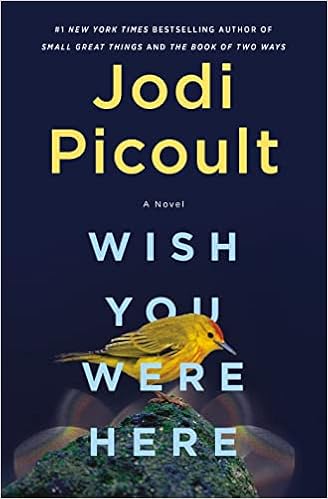
Wish You Were Here by Jodi Picoult

Wish You Were Here: A Novel: Picoult, Jodi: 9781984818416: Amazon.com: Books

It is March, 2020, and Diane may have just made the faux pas of her career.  She’d been on such a positive trajectory, climbing the ladder in the art business world just as she’d planned.  In fact, most of her life was going as planned – her life with Finn, her boyfriend, their New York, fast-paced, busy lives — really everything.  But now, who knows?  This would be the perfect time to get away to the Galapagos, as she and Finn had planned,  Unfortunately, it doesn’t look as though Finn will be able to get away, as this novel coronavirus has coopted his surgical training, and all hands are on deck for caring for Covid patients at the hospital.  Should she go on her own, as he’s suggested? The next few months will turn their lives upside-down, as they have done for all of us – but not nearly in the way you will expect!

When I realized that this book was taking place during Covid, I was apprehensive about reading it.  We’ve all been through it and we’re all pretty over it – to say the very least!  The masks, the distancing, the isolation – enough already!!  

But actually, this story has a novel plot line, with ample twists and turns that keep it fresh.  Covid is only a part of the story.  There are gorgeous natural scenes in the Galapagos that engage our imagination.  There are characters who are experiencing familial issues that are unrelated to the pandemic that will distract you from thinking about your mask and your disinfectant.  And there is deep discussion about art that always highlights our humanity.  

Most importantly, this narrative suggests we strive to seek our own silver lining from the pandemic.  Diane finds hers, in her relationship with her mother, in her self-discovery, in her appreciation of living in the moment.  While there has been devastating loss, unspeakable fractionation within our population, and the unearthing of so much injustice during this pandemic, there has also been newfound light.  There has been a slowing down, a “time out,” so to speak, during which we’ve had a chance to reevaluate and reassess.  There has been more intensive time with some loved ones, even while there has been time away from others, which can give us time to appreciate each other on a whole different level.  There’s been time to appreciate what we do have.  

Yes, this may all sound a little pollyannish, but I am, at the end of the day, an optimist.  It helps me to find something good even in things that are hard.   

How exactly is this expressed in the story?  I guess you’ll have to read it to find out…!


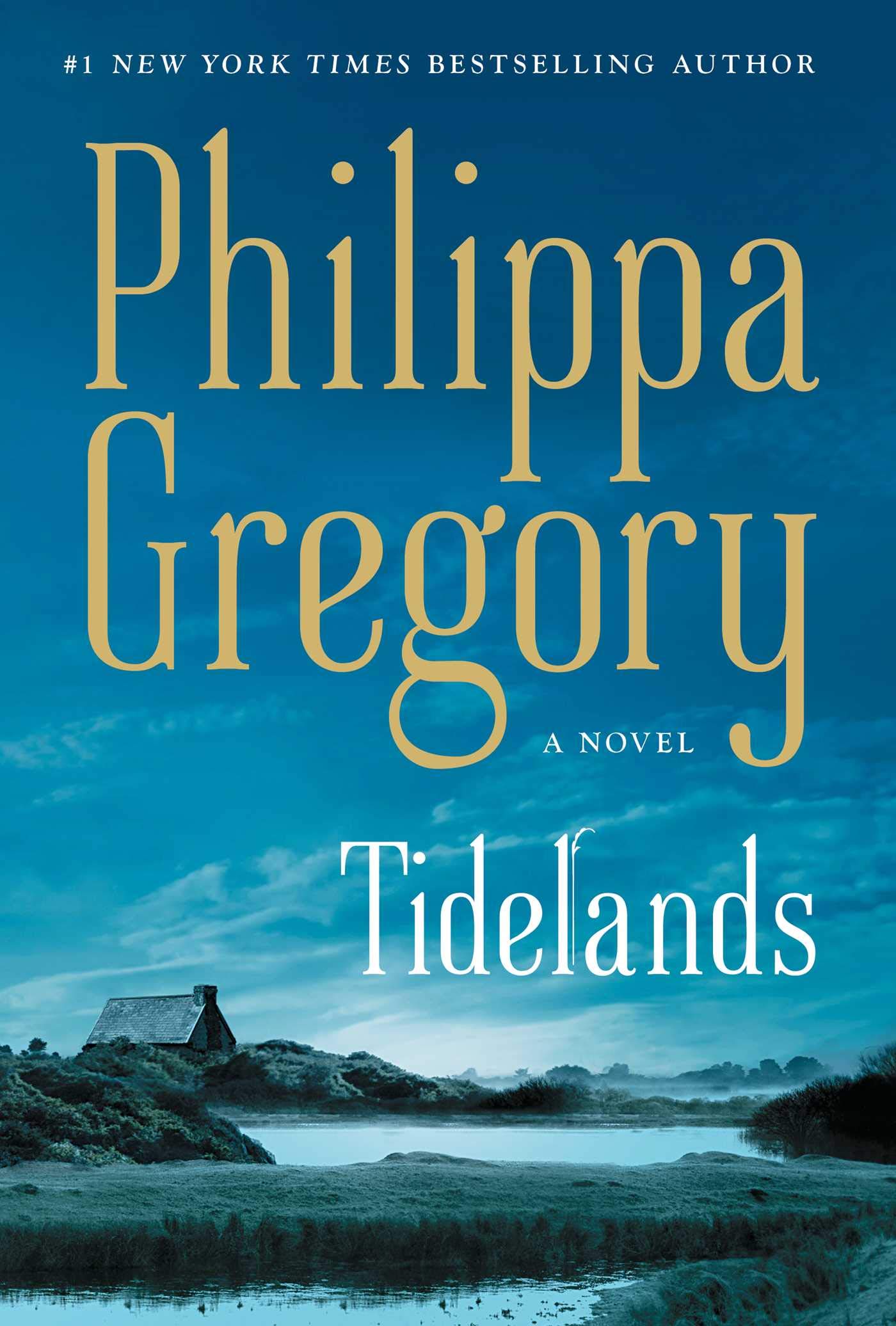
Tidelands by Philippa Gregory

Tidelands (1) (The Fairmile Series): Gregory, Philippa: 9781501187155:  Amazon.com: Books


Alinor was very alone in the graveyard on a windy, cold night, wondering if her husband was going to be returning to her or if he had died at sea, when suddenly she found herself faced with a finely dressed gentleman of the cloth.  She quickly recovered herself and sprung into action, feeling compassion for this young man who was clearly in danger of his life.  What she could not foresee was that saving him would have an impact on her future and the future of both of her children.  And what she will not know if this would be for better or for worse. 

I was reminded by this novel was that some of the best stories require patience to reveal themselves as such.  It took time to build the world in which Alinor lived, that of great political conflict, as revolutionaries were rebelling against King Charles in the 1600’s in England.  Even as Alinor tried to stay out of the fray, it was impossible, as she was inextricably caught between her brother who fought for the freedom of the ordinary man and her lover who served the king he believed was ordained by his Lord directly.  And the fray was mundane as well, with her tiny, provincial, seaside town being fertile ground for festering grudges and jealousies.  The tidelands, as her land was called, because of the sand on which she lived which flooded and eroded with the ocean forces, was a beautiful metaphor for the shifting alliances she found herself exposed to.  As these conflicts both large and small grew, so too did the literary tension, such that it really grew hard for the reader to look away.

This is a lush, striking story with beautiful imagery, forceful characters and great power.  The question now is, do I read the next one in the series now or save it for later???


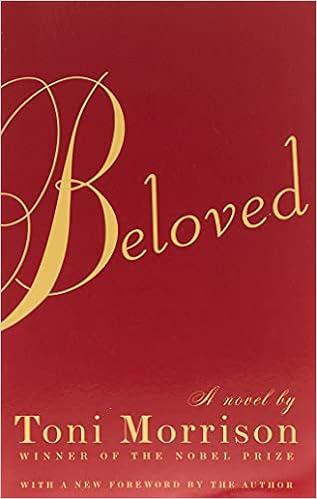
Beloved by Toni Morrison

Beloved: Toni Morrison: 9781400033416: Amazon.com: Books

Denver and Sethe have found a rhythm in their isolated existence..  Even while they are haunted by an occasional eerie noise or movement from the unexpected, and even as they mourn the loss of Baby Suggs, their mother/grandmother, they have figured out a way to work and live and get through the days.   It is only the arrival of Paul D who stirs up old trauma for Sethe, throwing her back into her past, forcing her to relive old horrors.  And it is very unclear if their unusual little family will be able to leave the past behind and move forward.  

Toni Morrison’s Pulitzer prize-winning Beloved, is beautiful, poetic, lofty, erratic, layered, and extremely hard to understand without guidance.   It is likely that repeated readings are necessary to glean the most meaning from the text  Because it was not set up as a traditional story might be, it was hard to get oriented to the characters, — who they were, where they were,  and how they were related to each other.  Once I did muddle through the first, maybe 10%,  of the book, however, I was then able to appreciate the book for all its magnificent power.  

There is a story here, but a non-linear one and one that mixes in much superstition, supernatural, and memory.  In truth, it is a lyrical platform in which to lament the horrors of enslavement, the way in which enslavement robs us of our humanity.  It is loosely based on a true story of a woman who, rather than allow her daughter to be captured and be enslaved, murdered her instead.   This  unthinkable act forces us to examine just how desperate a mother could be to choose death over a life of ownership by another individual.  To choose death rather than not having freedom to choose whom one may love and form attachment to.  To choose death over a life of being chained, both figuratively and literally.  

Most powerful for me were the sparks of memories of Paul D and of Sethe as they went about their day to day on “Sweet Home,” the plantation where they’d originally met.  Paul D harks back to a memory of overhearing an assessment of his monetary worth, as if one could place such a figure on a life.  At another moment, Sethe remembers overhearing Schoolteacher showing his pupils how to list Sethe’s human qualities on one side of a page and her animal qualities on the other, reducing her to only partly human.  There is physical brutality described as well, but I believe these more insidious crimes reveal more about how these individuals were perceived and how these perceptions seeped into their souls– even more so than the physical harm that befell them. 

I feel that I’ve gotten so much from having read this book.  If reading can impart some degree of empathy,  Sethe’s story is an important place to start.    

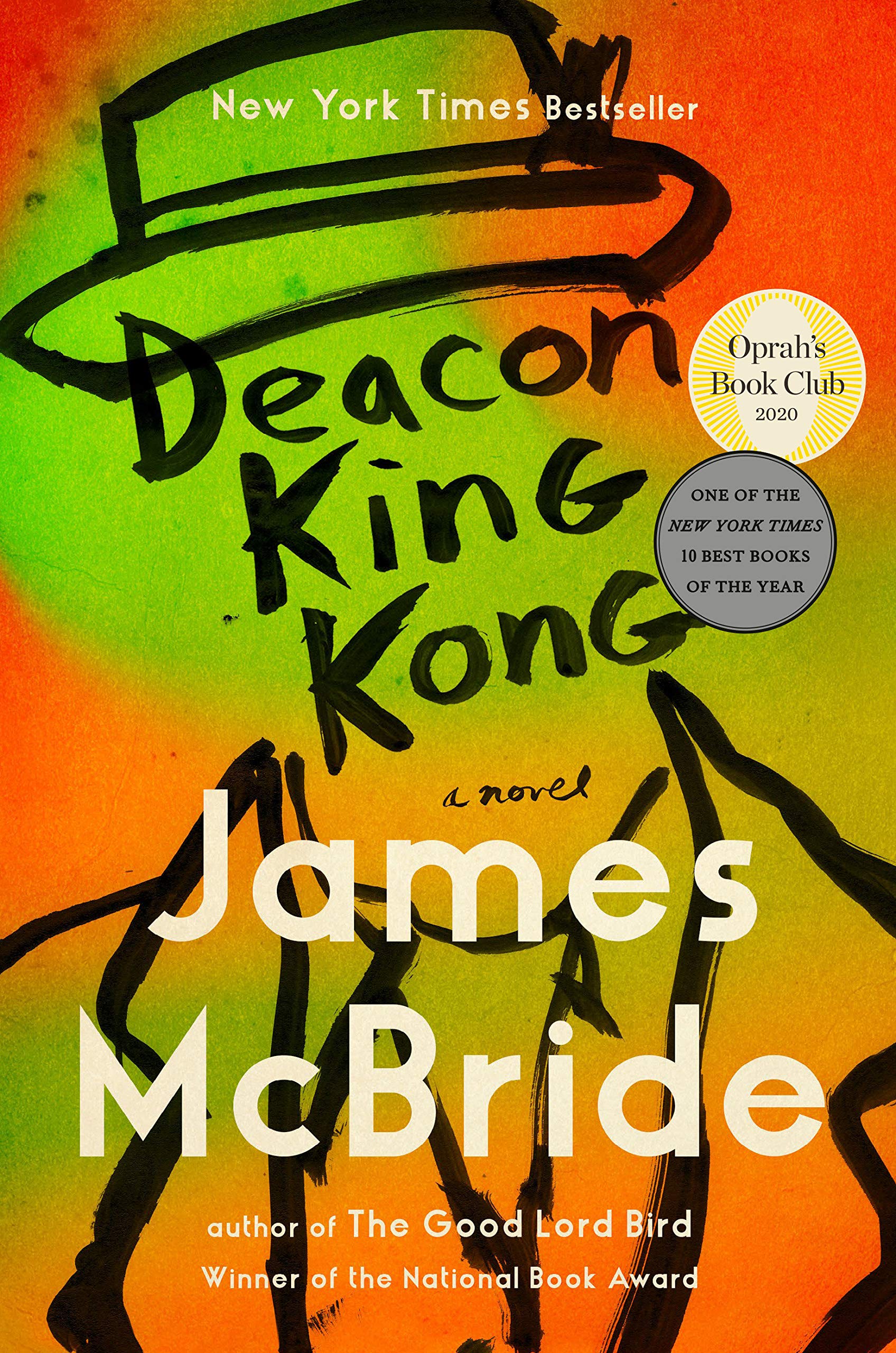
Deacon King Kong by James McBride

Amazon.com: Deacon King Kong: A Novel: 9780735216723: McBride, James: Books

What could possibly possess that bumbling, mumbling, stumbling old man, Sportcoat — everyone is thinking — to walk to the middle of the crowded flagpole square, here in Brooklyn in 1969, and shoot Deems Clemens in broad daylight? Everyone knows that Deems has grown up to be the lead drug dealer in the neighborhood, in spite of their communal dream that he’d use his brilliant baseball arm to pitch his way out of there. Now they all have to worry about protecting Sportcoat, even if he himself doesn’t seem to even remember having done the deed and isn’t being at all cooperative about laying low. How will he manage to evade revenge, now that this seems to have triggered a much more magnified response among the parties involved. What could Sportcoat have been thinking?

As Sportcoat meanders through the buildings of the Cause Houses, he brings us with him on a journey that feels random but is, in fact, a meticulously and methodically crafted tale. His warm and breezy manner is deceptive, and unless you’re paying close attention to his intoxicated rambling, you might miss his astute observations and profound wisdom. Other characters, too, have surprising depth and heart and casually drop the clues that create the cleverly drawn story that entangles them all. The “Elephant,” or Tommy Elefante, the son who inherits his father’s, um… let’s say, “import/export” business in the neighborhood, is another such player. As we peer into his heart, we know he’s committed some foul deeds, but he’s also been consistent and honest, which, in his business – and really in any business – counts for a lot. We feel their internal struggles, and we are privy to the reconciliation with their pasts.

There is so much that is subtly brilliant about this novel, it, no doubt, deserves to be read more than once. McBride’s writing enables us to easily fall in love with his characters, their wonderful names, their gritty dialogue, and their wildly human vulnerabilities. We feel trapped with them, inside their lanes, trying desperately to break out of the stereotypical cards that are dealt them. Each of them is in his or her segment of the same neighborhood, managing the social and economic forces that are trying to pit neighbor against neighbor in Brooklyn, 1969. Because of the poignant writing, we are right there with them, feeling their pain, laughing along with their victories.

This novel is utterly beautiful, in all its gritty splendor. An absolute MUST-READ!

The Book of Longings by Sue Monk Kidd


Amazon.com: The Book of Longings: A Novel: 9780525429760: Kidd, Sue Monk:  Books

Ana is not the typical Jewish girl of her era, the first century, just outside ancient Jerusalem, under Roman rule. She is acutely aware of her powerlessness, even while she is better off than many, with her father being first scribe to the Tetrarch. No, she is still female and still feels the sting of having little agency over her future. While others her age appear to anticipate with wonder their upcoming matches and engagements, she is filled with dread. This is not the life she seeks. Ana is a writer of stories, hungrily stealing away with any papyrus and ink she might snatch from her father’s cache. She documents the pain and the courage that she witnesses in the women around her. She cannot imagine herself with any man – that is, until she stumbles upon the man called Jesus…

This fascinating novel of historical fiction imagines Jesus not as a celibate ascetic, but rather more as a man. He is pious and righteous and utterly generous and he promotes kindness, forgiveness, love and all of the doctrines for which he is known and beloved. But he is also human, with human instincts and human desires.

More importantly, the focus of the novel is not directed toward Jesus, but rather on Ana. The message here, I believe, is that we are ALWAYS hearing about the men. We always hear about how righteous they are and how they opine. Very few women are highlighted in the Bible, for example, and if they are, it is often to let us know whom they have “begotten,” or worse, if they have not been able to “beget.” There is quite a lot of violence toward these women, and there is quite a lot of hushing and rejection of them as well. Ana makes it her business to tell their stories, the stories of her women, not only of the Bible, but also of her peers and her family. She sees it as her mission to ensure that they are not forgotten, as women often are.

The characters depicted here are lifelike and enduring in our minds. We are drawn to Yaltha, Ana’s aunt, for example, because of her untiring loyalty and rebellious spirit. We also have deep sympathy for her because, bit by bit, her dark and tragic history is revealed to us. She has been so mistreated but yet she remains steadfast in her devotion to Ana. We cannot help loving her for this.

This is a beautiful work of imagination and imagery that I believe will stay at least with me for a long time. I’d very much love to hear what others think of it as well!

China Boy by Gus Lee

Amazon.com: China Boy: 9780452271586: Lee, Gus: Books

Kai has had a tender beginning, with a loving mother who has nurtured him, even favoring him as the “Only Son” among his sisters.  Now, however, he finds himself at a much harsher juncture, being the tiny, nearsighted, vulnerable target of all the neighborhood bullies.  Caught between his family tradition and his worldly circumstance, Kai struggles to overcome his daily obstacles, utilizing strength he never knew he had.

On its face, this is a potentially beautiful story, but I felt it was disappointingly told.  While Chinese history and culture from the 1940’s was colorfully embroidered into Kai’s family/back story, this background encompasses over half of the book.  Admittedly, some of it was interesting and deepened the context, but there is both redundancy and repetitiveness throughout.  Further,  while we endure every gory detail of each of Kai’s beatings, there is only minimal detail about his relationships with his sisters.  Kai’s sister, Jane, for example, is a strong, willful character who stands up to her stepmother.  I would have loved to have heard more about her and her relationship with Kai.  She is, unfortunately though, kept at bay.  Likewise, we know even less about his 2 older sisters.  

Similarly, once we do (finally) get to the plot, there is not much there that we cannot predict.  While Kai is a very endearing character, and we do root for him, we know where the story will take us before we get to the ending.  No surprises, no twists.  Nothing.

There is so much potential in the idea of this story.  Was it the writing?  The editing?  Not sure, but at least in my opinion, someone failed.  


A Long Petal of the Sea by Isabel Allende

A Long Petal of the Sea: A Novel: Allende, Isabel, Caistor, Nick,  Hopkinson, Amanda: 9781984820150: Amazon.com: Books

Victor Dalmau has found himself rooted, with only a few years of medical training, in the trenches of the Spanish Civil War, repairing the wounds of the Republicans fighting the Fascists who are seeking to rule Spain.  While he is useless with a gun —  quite unlike his brother Guillem, the consummate warrior — he finds purpose in healing those who are, and he supports them in their calling.  Little does he know how deeply he would continue to feel the pain of injustice and persecution and how this early mission would direct the trajectory of his life and that of his family. 

This is a beautifully written novel, based on the true story of one survivor of the Spanish Civil War.  After this war,  thousands fled first to France, were placed in dreadful concentration camps, and two thousand fortunate souls were rescued by the poet Neruda on a ship to Chile called the Winnipeg.  In Chile, they were welcomed and given refuge and opportunity and allowed to flourish until there was political unrest there as well.  Our hero, Victor, embodies the strong, immigrant character: hardworking, valuing family above all else, and devoted to the preservation of humanity and justice.    

I am so thankful to have read this novel.  In my ignorance of history, I have never known much about this tragic era in our world’s history.   Learning it through the eyes of these gorgeous characters was, in my view, the best way to attempt to correct this, because the facts are interwoven with deep emotion, and this is how they are best etched into our memories.  And while this is not necessarily an absolute/comprehensive and final look, it is certainly a great start to learning about this dark moment in Spain, France and South America.  

And even while enlightening us about the historical period, the author does not neglect to interweave a complex plot, with suspense, subplots, and even romance that bear surprise twists.  She keeps us intrigued with each step of Victor’s harrowing journey.  

This is an important read for those who are are unaware of this period of history – and even for those who aren’t.  And while I don’t like to overload the “MUST READ’s,” this has to be placed there – sorry!


Our Woman in Moscow by Beatriz Williams

Amazon.com: Our Woman in Moscow: A Novel (9780063090231): Williams,  Beatriz: Books

Ruth has always been more like an older sister than a twin to Iris, guarding her and shielding her to the extent that she could, especially after losing both their parents. When in Rome at the start of WWII, Ruth is fully aware that Iris is falling for this seemingly noble Sasha Digby, but she still believes it safest for Iris to leave when the Americans are evacuated. When Iris defies Ruth, she incises a rift between the sisters that cuts deep and festers for years. So why is it Ruth whom Iris calls upon when she is suddenly lost in the abyss of Communist post-WWII Russia? Will Ruth be able to save her sister this time?

Beatriz Williams never, ever disappoints. Using her chatty, familiar, and utterly engaging storytelling style she has created a truly suspenseful historical fiction masterpiece in Our Woman of Moscow. The secrecy and counterintelligence of the post-WWII era is a centerpiece of the novel and sadly, feels eerily relevant today, as we are still at war, albeit virtually, with suppressive, paranoid Communist regimes.

What I love so much about Williams’ books is that her female characters are strong women of substance and dominate the plots. And while there are a few good men, so to speak, there are many who are weak and vulnerable. Most importantly, here in particular, the men– and even some women– are duped primarily because of their preconceived notions about women. This is the sweetest part.

Another MUST READ by Beatriz Williams!

The Brilliant Life of Eudora Honeysett by Annie Lyons

The Brilliant Life of Eudora Honeysett: A Novel: Lyons, Annie:  9780063026063: Amazon.com: Books

Eudora Honeysett is 85 years old and she is done. She is still of sound mind and, while she may have slowed down a bit, she still swims her daily laps at the community pool and she can still care for herself, by herself, thank you very much. She has seen how death can be an ugly, drawn-out affair, having witnessed her own mother’s experience- and that is not for her. So Eudora makes arrangements for her own plan of action. And she will not let anything deter her, not even her brand new and surprising friends, such as they are – the boisterous young neighbor called Rose, and the awkwardly emotional gentleman, Stanley.

This delightful novel is very much A Man Called Ove meets Eleanor Oliphant is Completely Fine. Eudora is a woman who’s had it tough, who has sacrificed much for others over the years, and at her older age of 85 is finally, if awkwardly, speaking up for herself. Much of her straightforwardness is cringeworthy, but, at the same time, it is so refreshingly stunning and true. And while one might expect her to repel others with her manner of speaking, she actually manages to endear them to her. (Could it be that our world is seeking this more genuine form of communication? That we are all just looking for honesty and kindness, rather than flattery or banality?)

The author has created utterly beautiful characters. Rose, Eudora’s 10-year old neighbor and adopted “BFF,” illuminates the pages of this novel. Her outrageously clashing fashion statements are clearly imprinted in the reader’s mind, and we cannot help laughing along as Rose enriches Eudora’s wardrobe (as well as her life) with color. As they are both unique in their own ways, they can appreciate each other for this – and accept each other as they are. And the relationship between them is tender and lovely and loving.

And, again, we meet another death doula! (I had never heard of this career path before the Picoult novel, and now here is the second novel with a death doula.) Once again, there is frank discussion about death and that one can choose to die with dignity and love and honesty instead of with machines and tubes and disconnection. So often, we are reluctant to face our mortality and so we do not plan for it. We deny the possibility, so we avoid discussing what we want. We do not complete the forms, we do not discuss our wishes. And then when it comes down to it, we end up where we may not want to be. The death doula can be the escort through this process of confronting those difficult conversations, those difficult moments, and to ease that time, for whenever it might arrive. For it will, of course, at some point, for us all.

This is a wonderful novel – on so many levels. Give yourself this gift – you will not be sorry!