The Other Americans by Laila Lalami

Nora cannot reconcile the guilt she feels that while she was relaxing over a celebratory glass of champagne with her roommate, her father was, at that very moment, tossed into the air by an as yet unidentified driver and killed. Nor could she believe, even through her profound grief, any possibility that this was a random accident. All she had to do was convince others to see things from her point of view as well. Would she be able to do this, without any witnesses, without anyone coming forward in her favor? Especially when even her family was willing to accept the party line…?

This is an excruciatingly timely story, as it addresses the deep-seated fear and resentment that so many white folks have toward any immigrant that has achieved any modicum of success. This “replacement” conspiracy theory once again rears its hideous head here.  Nora, a smart, talented, but dark-skinned, Muslim girl has been left out and “othered” most of her life, growing up in their desert town near Joshua Tree. Similarly, she’s observed her father, a hard-working immigrant from Casablanca, survive being targeted by racial incidents as well. While Nora has found solace in her music, she’s continued to experience micro-aggressions repeatedly and continues to struggle with navigating her way through. 

The author makes excellent use of a rotating narration, imbuing a distinctive and familiar voice to each character.  It feels as if we are sitting with the characters, hearing their side of the story as it is told perhaps in an interrogation room to the investigating officer.  We come to know each character deeply, understand their passions, and feel their pain. It works.

One character that is particularly endearing is Efrain, the singular witness. I will not give away details about him or his perspective, but he is portrayed beautifully and his struggle over coming forward is both understandable and tragic.

This is an engaging story with a powerful message – a worthy read! 


Homegoing by Yaa Gyasi

This epic tale begins with the birth of Effia, born during a fire that devastated her father’s crops, a harbinger of the impact that fire would have on generations to come. And as we learn about the generations that follow, we also learn about the history of the warring tribes that inhabit the Gold Coast of Africa as well as the movement of enslaved Black men and women to America and their experience through generations there.

This is another work of genius by Gyasi. Through many endearing characters and colorful and impassioned scenes, we learn about the history of the peoples of current day Ghana as well as how so many came to be enslaved in America. We learn, too, about their experience of continued oppression beyond the years of slavery in the US as well. The stories are so tactile and sharply painted, the reader cannot help but feel a connection to the many characters, as if we are traveling along the family’s lineage ourselves, through each generation.

And Gyasi omits nothing. She includes the dark reality for those who migrated north seeking relief from enslavement only to find continued prejudice and rejection in different forms. She includes the ugly truth about our history of replacing slavery with mass incarceration. She writes about our American reality now and how, in spite of some change and advancement, divides persist.

It’s a beautifully rendered portrait of the not-so-beautiful history of Ghana and the history of our country. Yes, another MUST-READ.


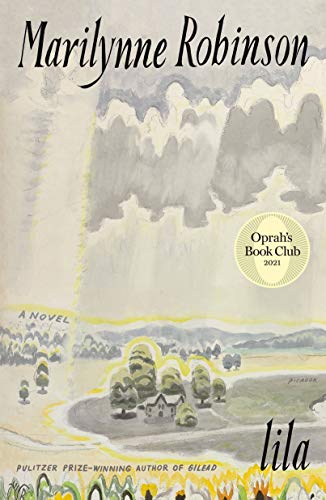
Lila by Marilynne Robinson


Lila (Oprah's Book Club): A Novel - Kindle edition by Robinson, Marilynne.  Literature & Fiction Kindle eBooks @ Amazon.com.

Lila is still trying to reconcile that she is here, now, in Gilead, married to the “old man,” John Ames, the respected preacher of this tiny village, especially given her meandering, even sordid past. If he knew the details, would he have so quickly and without judgement have been willing to baptize her? Would he still love her?  Is she willing to risk telling him her secrets? Lila continues to hold herself close, even as she gradually learns about love and trust from the very gentle and kind John Ames.

This is a beautiful prequel to Gilead, very gently revealing the traumatic story of Lila’s youth. We gain insight into her quiet and independent nature, reading about the tender but precarious relationship she had with her beloved Doll, the woman who snatched her away from her house of origin and who raised her and protected her as a mother lioness would protect her young.  We also are with Lila as she struggles to reconcile the ironies of organized religious precepts with the practical realities of the everyman’s day-to-day life.

Once again, Robinson’s writing is exquisite. She is able to quietly release the painful details of Lila’s life just as one might accidentally drop a pearl every now and then from a fine string. She creates images and characters that are imprinted in Lila’s mind, and so too, are imprinted in ours. We feel her loneliness and we are empathetic when Lila can only feel mean, because we are entirely with her in her lived experience. And the intermixing of philosophy and theology and storytelling is so subtle that we are contemplating it without even being aware.

If you’ve read Gilead, you must read Lila – it will only enhance your understanding of the story and of yourself. 


The World to Come by Dara Horn

This fantastical journey sets out as we meet Ben, shattered by recent events in his life – a  nasty divorce and the painful death of his mother – who is encouraged by his twin sister, Sara, to attend a singles event at an art museum. As it happens, he stumbles upon a Chagall painting there that looks very familiar – so familiar that he is driven to do something impulsive, something that will have lasting implications for both him and his sister.

This story is told in layer upon whimsical layer, with narration as chromatic and surreal as a Chagall painting. The author weaves together the family stories of Ben and Sara’s parents, stories written by their mother, stories about Chagall and an author colleague Der Nister, and dream sequences, sometimes blurring what is real and what is fantasy. The prose is poetic and vivid, creating images that shower into the imagination and that will likely stay with the reader long after the last page is turned. 

There is also biblical referencing that reinforces a strong philosophical message here. Without giving too much away, there are many references to meaningful value of life and making the most of our time here on Earth. Sara’s mother tells her, “Everything counts. Don’t ever let anyone tell you that you’re just rehearsing for your life.” We see different attitudes toward life between Ben and his sister, even between Chagall and his colleague, Der Nister. Some who live life while others who watch others live life.

There is much to keep track of here, as the story winds through its circular path. It can sometimes become challenging, even. Nevertheless, it is definitely worth the challenge, worth the swelling of your imagination, this beautiful tale. Like walking into a painting yourself…


Sunflower Sisters by Martha Hall Kelly

On their route back to their hotel after a Sunday service at the African Free Church in Charleston, SC in the year 1859, Mother, Mary and Georgy Woolsey come upon a wagon transporting children – babies – to be sold at auction that afternoon. Horrified, they stay to observe what they’d never seen in their home town of New York City, and although they could not mitigate the cruelty of that moment, Mother slips her business card to their mother, hoping to give her a place of future refuge, a focus for hope. Georgy takes this a step further, by signing up to train and work as a nurse, bravely and passionately caring for soldiers who fight for the freedom of these enslaved individuals. Georgy’s story ultimately intertwines with the stories of both Jemma, an enslaved young woman on the Peeler Plantation in Maryland, and Anne-May, the young plantation owner.  As their stories unfold, so do those of the battles of the Civil War, the atrocities of slavery, the profiteering of spies, and the ultimate path to justice and freedom. 

This is an intricately woven, thoroughly researched, historical fiction novel based on the actual, courageous lives of the Woolsey women of Connecticut and New York City.  Georgy’s character is real, and while some of her exploits are fiction, much of what is written is based upon her actual life experience.  She is a strong-willed and fiercely independent character, and is not caught up in the superficial exploits of her wealthy cohorts.  While many look down at her for pursuing a nursing career, and while the male nurses and many doctors around her treat her and her female colleagues with brutal disgust, she plods along and doles out the outstanding, compassionate care she is trained to deliver.  

On the other hand, Jemma and Anne-May are not real people, but rather, created as representative characters that are typical of their era.  Jemma, a young and strong-willed woman, born into enslavement and treated harshly most of her life, carries trauma both physical and psychological with stolid forbearance. She keeps fighting for what she believes in, but she is also realistic and understands more than most man’s capacity for evil. And Anne-May happens to be one of the ones to show her how deeply this capacity runs. 

One of the most moving parts, for me, was a scene in which Jemma finds herself in the warm embrace of the Woolsey sisters. Finally finding a moment of respite from her terrifying world, she is given a chance to experience freedom in a way she’s never felt before. Sadly, she finds herself under a new kind of oppression. While there is good intention and care, she is still being told what to read, what to think and what to do. In a dramatic moment, she blurts out in anger, asking to be left alone to decide these things for herself.  As often happens, one of the sisters takes offense, because of her well-intentioned motives, not realizing that her actions and their repercussions are independent of her intention.  Only Georgy is able to take in what she is saying and their bond tightens because of it. This is a powerful moment that resonates still today.

In this gorgeous novel you will find breathless suspense, moments of deep sorrow, and dramatic scenes of triumph, and each of the characters will bring you on a journey you will love being on with them.  Martha Hall Kelly has absolutely done it again, with this third in the series about this awe-inspiring family and has created another MUST READ for us all.  These are truly gifts she has bestowed on us – and I for one am grateful. 


The Four Winds by Kristin Hannah

Although she’s been told she’s worth nothing her whole life, Elsa still dreams of a world in which she might accomplish something worthwhile. Being 25 and unmarried in the early 1930’s is a pretty clear indication that chances are slim that you will be leaving your family home at all. No, you’ll likely be under the thumb of your overbearing, critical mother and father your whole life. Unless you take action. Unless you do something drastic – like maybe buy that bolt of bold, red silk and sew yourself that beautiful, lavish dress and just sneak out for that night on the town and pretend you’re like everyone else– to hell with what they say. Be brave, her doting grandfather used to say to her. Well, she just might. Little does Elsa know that being brave will have to carry her through all of what comes thereafter, as she takes each next step, wanted or not.

In The Four Winds, Kristin Hannah has written what will inevitably come to be known as a great American novel, a sort of Grapes of Wrath narrated through the voice of a woman. We are lured inside the head and the heart of our heroine, Elsa, a modest, resourceful, and hard-working woman, bitterly rejected by her own family. She easily earns our sympathy, as she gradually gains her own strength, visualizing her own purpose. We feel love when she is finally loved and we shed tears when she is hurt, and we applaud her as she overcomes one arduous obstacle after another.

This is also a story of a dark era in our history. The Dust Bowl crisis during the Great Depression was a tragic consequence of the prolonged drought that occurred during the 1930’s, and layered onto the economic crisis of the Depression, it could not have come at a worse time. Scorched farmlands bankrupted thousands, and, lured by advertisements for jobs, too many fled west and found only steeper poverty and absent resources. The narrative starkly highlights the failure of our country to adequately provide for those who were left with nothing.  This left those who were more fortunate, empowered by their vigilante groups, to demonstrate only anger and hatred toward these folks who were starving for work, starving to have the opportunity to help themselves. 

I love that the women here are strong characters. Elsa grows into a strong character as she comes to know herself. Her daughter, Loreda, is born strong – rebellious, with a righteous anger that is sometimes misdirected but always idealistic. And there is Elsa’s mother-in-law, Rose, with her quieter strength – a woman who is fiercely loyal, uncomplaining, and who has the softest heart and is present when it matters. These are beautiful characters who will likely stay with you long after you finish turning the pages of this novel.

This story will singe a hole in your heart, but it will also fill it with admiration for the souls who fought for others, to raise up the unfortunate. It also reminds us how frequently history does repeat itself and how important it is to learn from the past.

A definite MUST READ – and a future classic.


Tiny Little Thing by Beatriz Williams

Tiny has always been the perfect everything – the perfect daughter, the perfect sister, and now she’s expected to be the perfect wife as well.  And Frank requires the perfect wife – doesn’t he? – if he is to be elected to congress, as he should be. But what about Tiny? What about what she really wants? Does it matter? Should she make it matter?

Beatriz Williams never fails to deliver the most lovable characters, impeccable writing packed with humor and expectation, and a twist that assures that she is always one step ahead of you. You will find yourself giggling at her sarcastic phrasing – so often brilliant – even in those thrilling moments when you cannot stop turning the pages.  And you will relish in that delicious tension of not being able to read quickly enough to get to know what happens and not being able to read slowly enough to make the joy of it last longer. 

And please don’t mistake this for fluff.  There are subtle but important issues here.  Williams intentionally elevates strong female protagonists, and Tiny is yet another.  She struggles here for independence, and in the mid-1960’s, this is no easy mission. It wasn’t done, not in the family she married into, not in the social sphere in which she circulated. Women were only just beginning to break out of the 1950’s housewife-who-always-had-dinner-on-the-table-and-a-martini-waiting-for-her-husband-at-the-end-of-his-workday stereotype. Even as Tiny frets over how she cares too much what others think of her, she realizes that she must depart from what is expected of her in order to preserve her true self. 

This may not be a “MUST READ” but you really must read this – it is pure delight!

The Beekeeper of Aleppo by Christy Lefteri

Nuri and his wife, Afra, have survived the arduous trek from Aleppo to the UK, and while they are awaiting their asylum application interview, they are staying in a B & B with immigrants with similarly devastating pasts. This waiting is not easy. Nuri is plagued by flashbacks of their escape from Syria, the trauma and losses they’ve experienced during the war there, and the anxiety about what lies ahead. But because he is seeing this trauma through his own eyes, he is finding it hard to connect with Afra, who is seeing it through her own. The question is whether or not they will find their way back to the family they know they once were.

This is not my first exposure to the refugee experience; though this may be one of the most poignant. I believe what contributes greatly to this is the sensorial nature of the author’s descriptions.   We inhale Afra’s rose perfume as Nuri does,.  We hear the buzzing of the hives tended to by Nuri and his cousin, Moustafa.  And we can envision the stark colors of the drawings created by Afra, even when she cannot. And since we are right there in the sensory experience, we are also with them in their fear, their vulnerability, not knowing whom to trust, wondering where their next meal or shelter will come from or how they will get to the next step of their journey. We feel it in our bones.

In this depiction, we also see the worst of people and the best, as we do in most crises.  We see the vultures who prey on the vulnerable, those who profit from those who are destitute and desperate and the corrupt underworld that feed off of this humanitarian nightmare.  As Nuri gains the trust of others in his travels, he learns their stories and sees that his situation is not even the worst possible, and he feels deeply, especially for the plight of the many babies and young children refugees.  On the other hand, he also encounters many who are kind, those who give food and clothing to the passing refugees, and those who do show compassion and support them in their journey. 

I think this is an important read with an understated yet powerful impact that will linger with you long after you turn the last page.  


The Things We Cannot Say by Kelly Rimmer

Alina, the youngest of her siblings, is perfectly aware that she is spoiled, but she relishes the doting she receives from both her family and. her beloved crush, Tomasz.  As her world begins to collapse around her, and the Germans invade her poor, industrial Polish town, she learns that she must grow up fast and that being careless of what is happening around her could cost her or someone close to her their life.  

Fast forward to present day, we also meet Alice, struggling to keep up the balance of the life she never quite expected.  The mother of a son with autistic spectrum disorder, Alice finds herself constantly advocating for him, sometimes even with her own husband.  When her grandmother, Babcia, becomes acutely ill and asks of her the one thing she’s ever asked of her, it may push her fully over the edge – or possibly bring her back from it.  

This heart-wrenching story, a work of fiction but laced with details from the author’s Polish, Catholic background, is a beautiful tribute to the utter bravery of Righteous Gentiles who resisted and rebelled against Nazi hatred and violence during WWII in order to save their fellow Polish, Jewish citizens.  The Poles living through the Nazi occupation suffered also and some escaped to other countries.  And the immigrant experience during war carries with it trauma, no matter where one comes from and no matter when it has occurred.

The writing is truly beautiful.  We feel the characters deeply and their emotions become our own.  We experience the pent-up rage that Alice feels as a mother and wife, and while reading, I had to remind myself to breathe, almost as if for her.  We feel Alina’s profound terror, worrying constantly about the safety of her true love, Tomasz, and that of her entire family.  And we almost can’t read quickly enough as the suspense mounts and we learn of the plot twist that is truly unexpected.  It is a clever and warmly woven yarn – just be sure to have the tissues on hand!

This is a hard read, but well worth the journey!  I believe this is a MUST READ! 

The Lincoln Highway by Amor Towles

The Lincoln Highway: A Novel: Towles, Amor: 9780735222359: Amazon.com: Books

After being escorted home by the warden of Salina, the juvenile detention center where he has just served, Emmett arrived with a fairly clear plan for starting anew, for himself and his younger brother, Billy,  Since the premature death of their father, the only parent who’d been around for the past number of years, it was now up to Emmett to see to Billy’s care and he planned to take that responsibility very seriously.  He did not, however, anticipate that 9-year-old Billy would have an equally precise idea about what their future plan should entail.  Nor did he anticipate the complicated route on which they would find themselves traveling.  

There are many reasons that I am not an author, but Amor Towles is one of them.  Many authors intimidate me, with their uncanny ability to weave together intricate plot lines, such that they push the borders of one’s imagination.  Others are able to conjure sentences that are like pearls on a string, poetry within prose, at which I can only marvel. Towles is able to accomplish both, which is the gift he shared with us in A Gentleman in Moscow, and again shares with us here. 

And the characters are as multi-dimensional as the people we know in our lives.  Duchess, one of Emmett’s associates from Salina, is a profound and complex character, and this novel is every bit about his journey as it is Emmett’s. Duchess who is the consummate showman, is always polite and upbeat and outwardly generous, is inwardly broken.  We know not to trust him but we like him in spite of ourselves; we know he has a heart, but that heart has been fractured over and over and over.  He too is on a mission, and his is understandable but misguided.

I love that Billy —  the youngest, most idealistic, and the one guided by a book of heroes — is also the character in the story with the most common sense.  Billy is the one who sees through all the nonsense that the others struggle with.  While everyone else sees themselves as his protectors, Billy is actually the one who remains calm, keeps the most level head, and pays attention to the details that matter most.  We can all learn from Billy.

The writing, the characters, the journey – give this gift to yourself.  And be glad that Amor Towles is the author, and not me! 

A definite MUST-READ!